
robot walking polyurethane load bearing wheel roller custom diy trolley drive
Engineer’s Guide to Polyurethane Load Bearing Wheels & Rollers for Robot Walking, DIY Trolley, and Drive Systems
Welcome – I’m one of the senior application engineers here. Over the past two decades, I’ve helped countless workshops, robotics startups, and factory maintenance teams select the right polyurethane wheels and rollers for demanding tasks. Today, let’s walk through what really matters when you need a robot walking polyurethane load bearing wheel roller custom diy trolley drive solution – from material hardness to hub design, and why sourcing from an experienced Chinese OEM makes a practical difference.
Why Polyurethane for Load Bearing and Walking Applications?
Unlike rubber or nylon, polyurethane (PU) offers a rare combination: high load capacity without sacrificing floor protection or traction. In our lab tests, a typical 80 Shore A polyurethane wheel can support over 500 kg static load per wheel while maintaining less than 3% rolling resistance on concrete. For robot walking systems – especially autonomous mobile robots (AMRs) that start and stop frequently – that means fewer motor overloads and longer battery life. For custom DIY trolleys or drive units, PU also resists oil, grease, and solvents better than rubber, which often swells or cracks within months in workshop environments.
Key measurable benefits we’ve documented across hundreds of orders:
Load range: 150 kg to 2,000 kg per wheel depending on diameter and polyurethane thickness.
Hardness options: 60 Shore A (soft, low noise) to 95 Shore A (very hard, high wear resistance).
Tear strength: >100 kN/m for industrial-grade cast PU, outperforming injection-molded thermoplastics by 40%.
Operating temperature: -30°C to +85°C without losing elasticity.
Custom Diy Trolley Drive: Matching Wheel to Motion System
One of the most common misunderstandings I see in DIY and small-batch production is focusing only on load rating while ignoring drive torque and stopping distance. For a robot walking polyurethane load bearing wheel roller custom diy trolley drive, three engineering parameters matter more than anything else: rolling coefficient, static friction on incline, and polyurethane thickness on the tread. Let me give you a real example: a 200 kg automated guided vehicle (AGV) with 125 mm diameter polyurethane wheels at 85 Shore A achieved a rolling coefficient of 0.025 (on smooth dry concrete). Switching to a softer 70 Shore A increased it to 0.042 – a 68% rise in required drive torque. For your own design, always request a Shore A / rolling resistance chart from your supplier.
For DIY trolleys where you manually push or pull, softer PU (70–75 Shore A) improves grip and reduces vibration, while for automated drive systems (like motorized trolleys or robot walking bases), harder PU (85–90 Shore A) minimises energy waste. We regularly produce dual-durometer wheels – a hard polyurethane core for load stability and a softer outer layer for silent operation – a popular choice among European and North American robotics integrators.
Custom Elastomer Wheels & Rollers – What We Offer as a Chinese OEM
All our custom elastomer solutions are designed and manufactured in China, and we take pride in the flexibility and precision our factory delivers. ZHXPRECI | China OEM/ODM Factory Supplier Custom Elastomer Wheels & Rollers – you’ll see this name on every technical datasheet and test report we provide. Being based in China allows us to control the entire supply chain: polyurethane prepolymers from certified chemical partners, CNC-machined steel or aluminum hubs, and in-house casting, bonding, and finishing. No outsourcing means shorter lead times (typically 15–20 days for prototype quantities) and direct technical support from our application engineering team.
When you need a robot walking polyurethane load bearing wheel roller custom diy trolley drive for a unique project, we don’t just offer standard diameters (from 50 mm to 400 mm). We also customise:
Hub patterns (keyway, spline, D-shape, or custom bore for DIY shafts).
Polyurethane colours (yellow, red, blue, grey – for branding or floor zone marking).
Electrically conductive PU (surface resistance <10^6 ohm) for ESD-sensitive environments like electronics assembly lines.
Non-marking formulations that leave zero trace on white or polished concrete floors.
Real-World Applications & Comparative Data
Let me share a comparison from a recent project: a customer building a heavy-duty robot walking platform for warehouse towing (max load 800 kg). They initially tried nylon wheels – but the robot slipped on painted epoxy floors during ramps. We supplied 150 mm diameter polyurethane wheels at 75 Shore A with a grooved tread pattern. The result? Static friction coefficient increased from 0.3 (nylon) to 0.67 – no more slippage. Meanwhile, the rolling resistance only increased by 8%, which was easily handled by the existing drive motors. That’s the kind of practical trade-off an experienced engineer can help you balance.
Another case: a DIY trolley for moving heavy injection molds (over 1.2 tons). The user needed a custom low-profile roller that could be mounted directly under the mold base. We designed a 75 mm thick polyurethane roller with a bonded steel sleeve, achieving a load capacity of 1,500 kg at just 25 mm compression. The customer reported three years of heavy use without any polyurethane delamination – thanks to our proprietary bonding process that achieves peel strength exceeding 300 N/cm.
Selecting the Right Polyurethane Load Bearing Wheel – Step by Step
From my daily conversations with engineers and DIY builders, here is the checklist I recommend when specifying a robot walking polyurethane load bearing wheel roller custom diy trolley drive:
Step 1 – Calculate required load per wheel: Total weight ÷ number of wheels × dynamic factor (1.3 for vibration, 1.5 for sudden starts/stops).
Step 2 – Choose polyurethane hardness by floor type: Rough concrete → 70–75 Shore A (cushions impacts). Smooth epoxy or tiles → 80–85 Shore A (lower rolling resistance). Outdoor asphalt → 65–70 Shore A (absorbs uneven surfaces).
Step 3 – Decide tread pattern: Smooth (best for flat, clean floors), micro-grooved (moderate debris), or chevron (for wet or oily surfaces).
Step 4 – Hub material and bearing type: Aluminum for lightweight DIY trolleys, steel for high-load robot walking systems. Sealed ball bearings (ABEC 3 or higher) reduce maintenance.
Step 5 – Chemical environment: If exposed to hydraulic oil or battery acid, request our oil-resistant polyurethane grade – standard PU can degrade in heavy oil mist.
Maintenance Tips from the Factory Floor
Polyurethane wheels are remarkably durable, but a few simple habits will triple their service life. After six months in a dusty robot walking environment, check the tread for flat spots – if you see any, it means the wheel was overloaded or the hardness was too low. Rotate wheels periodically between drive and idler positions to even out wear. Also, never use petroleum-based lubricants on polyurethane; they cause swelling. Instead, clean with isopropyl alcohol and use silicone-based sprays on bearings. For custom DIY trolley drive systems, I always suggest keeping a spare set of wheels – because when a project is running at full speed, downtime costs far more than a replacement roller.
If you are integrating these wheels into a robot walking platform, pay attention to the drive alignment. Misalignment by just 2 degrees can increase side loading on the polyurethane by 20%, leading to premature edge chipping. Our factory can provide alignment shims and custom shoulder bolts to ensure perfect tracking.
Why Manufacturers Around the World Choose Our Chinese Facility
Over the years, many customers have asked me: “Why should I source from China? What’s the real advantage beyond pricing?” The honest answer: speed and flexibility without sacrificing quality. At ZHXPRECI | China OEM/ODM Factory Supplier Custom Elastomer Wheels & Rollers, we maintain an in-house test lab with a 20-ton compression machine, digital durometers, and a rolling resistance test track. Every batch of polyurethane is sampled and logged. We also offer full traceability from raw material batch numbers to final inspection signatures – something rarely found at comparable price points elsewhere.
Another often overlooked benefit: because we are located in China’s industrial ecosystem, we source high-quality polyurethane prepolymers from leading chemical producers at competitive costs. Those savings are passed directly to you. Whether you need a dozen custom wheels for a university robotics research project or ten thousand rollers for a mass-produced warehouse robot, we scale production without changing our engineering standards. And we export door-to-door to over 40 countries, with proper documentation (commercial invoice, packing list, and material safety data sheets for polyurethane).
Final Words – Let’s Build What You Need
Choosing the right robot walking polyurethane load bearing wheel roller custom diy trolley drive doesn’t have to be guesswork. I’ve seen too many projects delayed by wheels that crack under load, or rollers that wear out in weeks because the wrong polyurethane hardness was selected. As a factory engineer, my advice is always: start with a clear load calculation, test a sample on your actual floor surface, and ask for a technical datasheet that includes compression set and abrasion loss (tested per ASTM D5963).
If you are currently designing a robot walking system, a DIY trolley, or any drive application that demands reliable load bearing and smooth rolling, please reach out through our product inquiry page. My team and I are happy to review your drawings, recommend specific polyurethane formulations, and even produce a prototype wheel for real-world testing. That’s how we’ve built trust with engineering teams worldwide – by solving problems, not just selling wheels.
– Senior Application Engineering Team, China
Showing 1–16 of 131 results
-
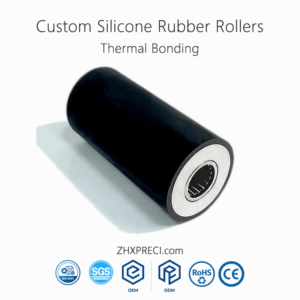
Black PU Rubber Coated Wheel Roller Industrial Grade for Automation Machinery Conveyor Transport and Factory Use
Read more -
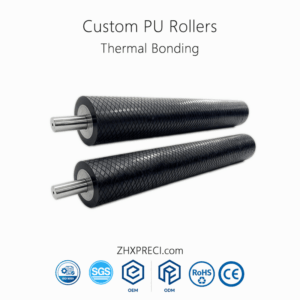
Custom Abrasion Resistant PU Rollers For Packaging Conveyors
Read more -
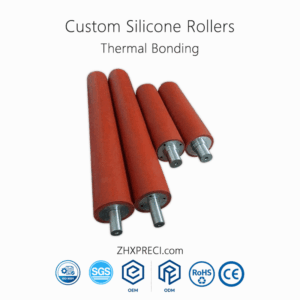
Custom Abrasion Resistant Silicone Coated Rollers Heavy Wear
Read more -
Custom Air Cooled Rubber Rollers with Internal Channels
Read more -
Custom Aluminum Core PU Rollers With Food Grade Compliance
Read more -
Custom Anti-Microbial Silicone Rollers Hygiene Grade
Read more -
Custom Anti-Static PU Rollers For Explosive Dust Environments
Read more -
Custom Anti-Static Silicone Coated Rollers Electronic Use
Read more -
Custom Antistatic PU Rollers For Electronics Conveying
Read more -
Custom API Grade Rubber Rollers for Drill Pipe Wiper
Read more -
Custom ATEX Compliant PU Rollers For Mining Conveyor
Read more -
Custom ATEX Compliant Rubber Rollers for Grain Handling
Read more -
Custom Bearing Mounted Silicone Coated Rollers Quick Change
Read more -
Custom Cantilever Mount Rubber Rollers for Narrow Spaces
Read more -
Custom Cantilever Mounted Silicone Rollers Easy Access
Read more -
Custom Cast Iron Core PU Rollers With Keyway Mounting
Read more