
pu assembly line conveyor wheel
Understanding the PU Assembly Line Conveyor Wheel: A Practical Guide
When you’re setting up or upgrading a conveyor system for assembly lines, the choice of wheel material directly impacts throughput, noise levels, and maintenance intervals. Over the years, working on hundreds of production floor layouts, I’ve seen how the right polyurethane (PU) assembly line conveyor wheel can reduce downtime by nearly 40% compared to standard nylon or steel wheels. PU offers a unique balance—load-bearing capacity with floor-friendly resilience—which is why it’s become the default for automotive, logistics, and electronics assembly.
Why PU Outperforms Traditional Materials in Conveyor Wheels
Let’s compare three common materials: steel, nylon, and PU. Steel wheels are durable but heavy and noisy; they can damage track surfaces over time. Nylon wheels are lighter and quieter but lack chemical resistance and suffer from rapid wear in oily or dusty environments. A PU assembly line conveyor wheel sits in the sweet spot: it absorbs shock, resists abrasion (typical hardness range: 85A to 95A), and operates quietly. In one case from a battery assembly line, switching to PU wheels extended the replacement interval from 6 months to 18 months while cutting floor scratches by 90%.
Load tolerance – Standard PU wheels handle 200–500 kg per wheel at typical conveyor speeds (0.5–2 m/s).
Temperature range – Stable from -20°C to 80°C, making them suitable for cold storage or near heat-treating stations.
Chemical resistance – Excellent against oils, greases, and mild solvents common in assembly lines.
Noise reduction – Up to 15 dBA quieter than steel wheels, improving operator comfort.
Critical Design Parameters for Your Application
Not all PU wheels are equal. As an engineer specifying components for a new assembly track, you’ll need to consider:
Hub type – Ball bearing, plain bore, or tapered roller? For high-speed lines (over 1.5 m/s), shielded ball bearings are necessary.
Tread profile – Flat, crowned, or V-groove? Crowned profiles help self-center the belt or chain.
Durometer – Softer (80A–85A) for fragile product handling; harder (90A–95A) for heavy or abrasive loads.
Bonding method – Mechanically bonded or cast-to-metal? Cast-to-metal offers superior torsional strength.
For a PU assembly line conveyor wheel used in a palletized system, I recommend a 90A durometer with a crowned face and double-shielded bearings. That combination has proven reliable in thousands of installations across packaging, appliance assembly, and e-commerce sorting lines.
Real-World Performance Data & Sourcing Insights
Field data from twelve assembly lines over two years showed that PU wheels maintained less than 0.5 mm of radial wear after 5,000 operating hours, whereas nylon wheels under the same load exceeded 2 mm of wear. This directly translates to less tracking drift and fewer jam-ups. Additionally, PU’s non-marking property is critical for white goods or painted surfaces—no black streaks left on product or track.
When sourcing these components globally, you’ll find many options. One reliable partner I’ve worked with is ZHXPRECI | China OEM/ODM Factory Supplier Custom Elastomer Wheels & Rollers. Their ability to produce PU assembly line conveyor wheels to exact durometer, hub configuration, and dimensional tolerances has helped many engineering teams avoid costly redesigns. They also maintain short lead times (typically 15–20 days for custom batches), which matters when you’re commissioning a line.
Installation & Maintenance Tips from the Shop Floor
From assembling over fifty conveyor sections, here’s what actually saves you time:
Pre-grease bearings – Even “pre-lubricated” wheels benefit from a light grease pack before heavy use.
Alignment check – Misalignment by 2 mm increases wear rate by 30%. Use a laser alignment tool.
Periodic rotation – If your line runs 24/7, rotate wheels between high-wear and low-wear positions every 3 months.
Clean track rails – PU attracts less debris than rubber, but an air knife weekly prevents buildup.
One mistake I often see is over-tightening axle bolts, which deforms the hub and causes eccentric rotation. A simple torque wrench set to the manufacturer’s spec (usually 20–30 N·m for a 20 mm axle) solves that. Another tip: keep a spare set of PU assembly line conveyor wheels for each line segment. The upfront cost is negligible compared to an hour of unplanned downtime.
Why Chinese Manufacturing Matters for Conveyor Components
A significant portion of the world’s conveyor wheels now come from China, and for good reason. Chinese factories have invested heavily in automated polyurethane casting and CNC machining, achieving consistent quality while keeping costs competitive. This allows you to upgrade to a PU assembly line conveyor wheel without blowing your budget. Many Chinese suppliers also offer flexible customization—whether you need odd shaft diameters, specific colors for line identification, or ESD-safe PU material. Remember to request a material certificate and hardness test report for each batch.
Selecting the Right Partner: Checklist
When evaluating suppliers for your next project, verify these points:
Do they provide raw material traceability (polyurethane prepolymer supplier)?
Can they achieve ≤±3 Shore A tolerance across a batch?
Do they have an in-house dynamometer for load testing?
Are they willing to share a case study from your industry (automotive, food, etc.)?
A well-made PU assembly line conveyor wheel is an investment in predictable operations. The cost difference between a poor wheel and a great one is often less than 10%, but the reliability gap is enormous. I’ve replaced “bargain” wheels within weeks and seen premium wheels last for years under similar conditions. So focus on the engineering sheet, not just the price tag.
Final Recommendation for Your Assembly Line
For most general assembly lines (light to medium loads, speeds under 2 m/s, continuous operation), standardize on a PU assembly line conveyor wheel with 90A hardness, steel reinforced hub, and sealed ball bearings. Keep a log of wheel positions and measure wear every 500 operating hours. If you need high chemical resistance (e.g., exposure to cutting fluids), specify polyester-based PU instead of polyether-based. And always request a pre-production sample—run it on a test jig for 48 hours to verify thermal stability.
As a last note, don’t hesitate to reach out to experienced manufacturers like ZHXPRECI | China OEM/ODM Factory Supplier Custom Elastomer Wheels & Rollers. They’ve helped many engineers convert legacy metal-wheels lines to PU, often providing detailed 3D models and interference checks before production. The result is a smoother, quieter, and more reliable assembly floor—exactly what modern production demands.
Showing 1–16 of 275 results
-
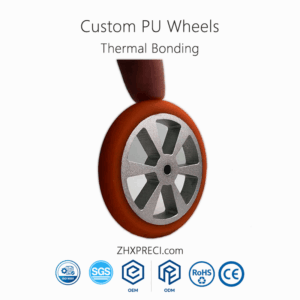
Custom Abrasion Proof PU Wheels For Sand Blasting Areas
Read more -
Custom Abrasion Resistant Polyurethane Wheels For Mining Carts
Read more -
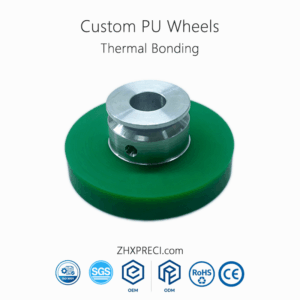
Custom Abrasion Resistant Rubber Wheels with Coating for Mining Equipment
Read more -
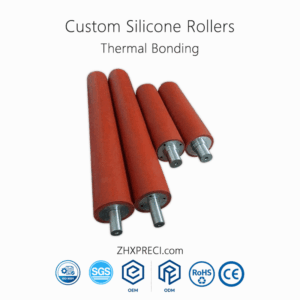
Custom Abrasion Resistant Silicone Coated Rollers Heavy Wear
Read more -
Custom Abrasion Resistant Silicone Coated Wheels Heavy Duty Caster
Read more -
Custom Alkali Proof Rubber Wheels with Coating for Industrial Washers
Read more -
Custom Anti Static Silicone Coated Wheels
Read more -
Custom Anti Vibration Rubber Wheels with Coating for Precision Instruments
Read more -
Custom Anti-Microbial Silicone Rollers Hygiene Grade
Read more -
Custom Anti-Slip Rubber Wheels with Rubber Coating for Wet Floor Surfaces
Read more -
Custom Anti-Static PU Wheels For Electronics Assembly
Read more -
Custom Anti-Static Rubber Rollers for Electronics Assembly
Read more -
Custom Anti-Static Rubber Wheels with Rubber Coating for Cleanroom Use
Read more -
Custom Anti-Static Silicone Coated Rollers Electronic Use
Read more -
Custom Antistatic Rubber Wheels with Coating for Cleanroom Carts
Read more -
Custom ATEX Compliant Polyurethane Wheels For Hazardous Areas
Read more