


Description
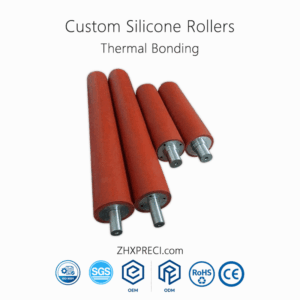
Custom Anti-Static Rubber Rollers for Electronics Assembly
Why Choose This Product
Anti-static rubber rollers are critical in electronics assembly because even a small electrostatic discharge can ruin a costly component. Our rollers are manufactured with a proprietary conductive rubber blend that maintains consistent surface resistance across the full production batch, helping you reduce defect rates and improve overall yields. This means fewer rejects on your line and more reliable end products for your customers.
The aluminum or steel core options provide excellent dimensional stability and support higher load capacity than all-rubber alternatives, which is especially important for long rollers in printed circuit board handling equipment. Because we control the formula and machining process in our own facility, we can keep tolerances tight and deliver reliable rollers that perform evenly across the entire web width. ISO9001 certified production and batch-level resistance testing give you confidence for large-scale orders.
Typical applications: PCB conveyors, electronics assembly lines, film and paper handling equipment, pick-and-place machines, and other static-sensitive production environments.
Technical Specifications
Custom anti-static rubber rollers for electronics assembly are available in a wide range of sizes and technical options. The table below lists the common specification range; please confirm your exact dimensions and surface resistance requirements with our engineers for a professional recommendation.
| Custom Anti-Static Rubber Roller – For Electronics Assembly Line | |
|---|---|
| Product Type | Custom anti-static rubber roller |
| Outer Diameter | 10–300 mm (custom) |
| Roller Width | 100–1500 mm (custom) |
| Surface Resistance | 10⁶–10⁹ Ω (conductive grade) |
| Hardness | Shore A 40–90 |
| Core Material | Steel / Aluminum / Stainless steel |
| Rubber Base | NBR / EPDM / Silicone / Conductive compound |
| Working Temperature | -10°C to +80°C |
| Surface Finish | Smooth, matte, or custom pattern |
| Color | Black / Custom |
| Typical Application | PCB conveyors, electronics assembly lines, film and paper handling |
✔ Customizable outer diameter & width. ✔ Stable 10⁶–10⁹ Ω surface resistance for safe ESD control. ✔ Full certifications & OEM/ODM support – contact us for bulk orders.
Details Images


In the full product gallery, you will find close-up views of the conductive rubber surface, the machined steel or aluminum core, and the available mounting options. These detail views help confirm the surface finish, roll straightness, and edge treatment before you place an order. If you need additional photos of a specific diameter, width, or mounting style, our sales team is happy to arrange them for your review.
Material Properties
The conductive rubber compounds used in our China factory are formulated to give stable anti-static performance without compromising mechanical strength. Each batch is tested for surface resistance and hardness so that procurement teams can rely on consistent quality for repeat orders. In practice, a tighter surface resistance range within the 10⁶–10⁹ Ω window gives you more predictable ESD control across different line speeds and humidity levels, which helps maintain consistent yield in sensitive PCB assembly areas.
| Property | Test Result | Practical Benefit |
|---|---|---|
| Surface Resistance | 10⁶–10⁹ Ω | Stable static dissipation for electronics environments |
| Abrasion Resistance | Low weight loss after 1000 cycles | Longer service life, reduced roller replacement frequency |
| Hardness Range | Shore A 40–90 | Flexible selection for soft contact or high-pressure applications |
| Temperature Resistance | -10°C to +80°C | Suitable for continuous operation in assembly lines |
| Tear Strength | Reinforced compound | Less edge damage during installation and use |
Each batch is tested for surface resistance and hardness so that procurement teams can rely on consistent quality for repeat orders. Custom hardness from Shore A 40 to 90 is available from our factory, with formulation adjustments for oil resistance or higher conductivity.
About Our Factory – China OEM/ODM Manufacturer
About Us

Customers Visiting

Customers from Europe, North America, and Southeast Asia often visit our factory to audit the production line and confirm quality control procedures before placing large orders. If you plan to visit China, you are welcome to stop by our facility to discuss your custom anti-static rubber roller project and see our manufacturing process firsthand.
Thank you for visiting our product page. We are a China-based manufacturer specializing in custom rubber rollers since 2012. Our factory of 12,000 square meters is equipped with precision CNC roller machining, grinding, and dynamic balancing equipment. We supply anti-static and conductive rollers to customers in the electronics, packaging, printing, and textile industries. As a professional custom solution provider, we work closely with clients from initial material selection through prototyping and mass production. With years of export experience, we understand the importance of consistent quality, clear communication, and realistic delivery schedules. Wholesale orders are welcome with competitive direct pricing.
Factory & Equipment
Our manufacturing plant includes CNC machining centers, automatic rubber mixing mills, roller grinding and polishing machines, and dynamic balancing testers. The production process follows a clear quality control flow: incoming material inspection, rubber compounding and mixing, core machining, rubber bonding and curing, grinding, balancing, and final surface resistance testing. This controlled workflow helps ensure that every custom anti-static rubber roller meets the agreed specification before it is packed for shipment.
Our Factory Workshop with Professional Equipment


Our Certifications (ISO9001, RoHS, Testing Reports)
Our factory is ISO9001 certified, and our conductive rubber rollers can be tested to meet RoHS requirements for electronics industry applications. We provide material test reports and surface resistance inspection records with each shipment. For customers who need independent verification, third-party inspection such as SGS or BV is also accepted.

Production & Inventory Policy
Lead time: Actual delivery schedules are affected by raw material supply, availability of processing equipment, and seasonal production peaks. We provide a reliable delivery estimate after order confirmation and keep you updated on any changes.
Stock status: In principle, we do not keep finished goods in stock, though some fast-moving standard sizes are available from time to time. Actual inventory levels change with sales and production activity, so please contact us to confirm real-time availability before placing an order.
Bulk & urgent orders: For large-volume orders or tight deadlines, we recommend contacting us early to discuss capacity and scheduling. We will do our best to align with your timeline.
Frequently Asked Questions
1. What customization options are available for anti-static rubber rollers?
Yes, we produce custom anti-static rubber rollers for electronics assembly with customized outer diameter, width, hardness, color, surface pattern, core type, and surface resistance range. The typical resistance target is 10⁶–10⁹ Ω, and we adjust the conductive filler content in our compound to match your value. You can also choose NBR, EPDM, or silicone base material depending on your operating temperature and chemical environment.
2. Can you help us choose the right rubber hardness?
Yes. Softer rollers around Shore A 40–50 are usually chosen when gentle contact is needed, while harder rollers from Shore A 70–90 provide better wear resistance and load capacity. Our engineers can recommend a suitable range based on your line speed, pressure, and the materials being handled. This is part of our professional custom solution service.
3. What is the MOQ for custom rollers?
The MOQ depends on the size and complexity of the roller. For standard diameters and widths, we are flexible and can accept small trial orders so you can validate the quality. For mass production, typical MOQs start from 100 pieces, but we are always open to discussing a reasonable quantity that suits your project needs.
4. What is your lead time?
After confirming the drawing and specification, prototypes usually take 10–15 days, and mass production takes around 20–30 days depending on order quantity and current production schedule. For urgent orders, please contact our sales team early so we can check capacity and give you an honest estimation.
5. How do you control quality during mass production?
We inspect incoming materials, check rubber hardness and surface resistance after curing, grind the rollers to final dimensions, and run dynamic balancing where required. Each roller is individually measured, and test records are kept for full traceability. ISO9001 procedures apply to every order.
6. Do your anti-static rubber rollers meet industry certifications?
Our factory is ISO9001 certified, and our compounds are tested according to RoHS requirements. We can provide a material test report and surface resistance test data with the shipment. Third-party inspections are also welcome if your compliance team requires them.
7. How do you set prices for volume orders?
Because we are the factory, we can offer competitive wholesale pricing based on material cost and production volume. We will provide a clear quotation with itemized details, and for larger quantities the unit price is usually reduced. Please send us your specification and target quantity for a price suggestion.
Looking for a reliable manufacturing partner for custom anti-static rubber rollers?
Get in touch for quick quotes, custom samples, and volume discounts. Our engineers can also provide expert advice on material selection and roller design to support your project from prototype to mass production.
Reviews
There are no reviews yet.