
Custom Non-Marking Silicone Rubber Wheels
Custom silicone wheels for AGV, cleanroom & floor-sensitive use.
- 30-500kg load
- 40-80A hardness
- 50-500mm dia
- -40 to +200°C temp
- ISO/REACH cert
Showing 1–16 of 76 results
-
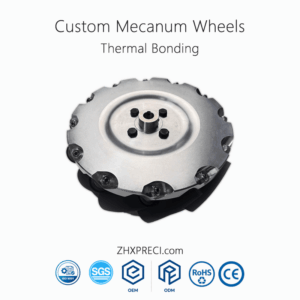
6 Inch Mecanum Wheel for AGV Robot Omni Directional Drive System High Precision Control Smooth Movement Stable Performance
Read more -
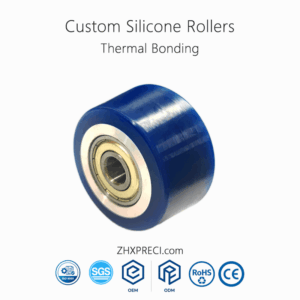
Blue Customized Silicone Rubber Coated Roller & High Quality Drive Guide Roller
Read more -
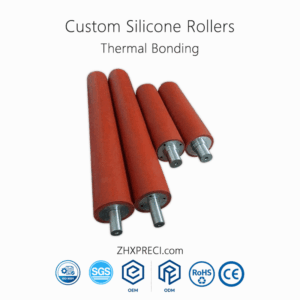
Custom Abrasion Resistant Silicone Coated Rollers Heavy Wear
Read more -
Custom Anti-Microbial Silicone Rollers Hygiene Grade
Read more -
Custom Anti-Static Silicone Coated Rollers Electronic Use
Read more -
Custom ATEX Compliant Silicone Wheels Hazardous Area
Read more -
Custom Bearing Mounted Silicone Coated Rollers Quick Change
Read more -
Custom Bracket Mount Silicone Wheels Easy Installation
Read more -
Custom Cantilever Mounted Silicone Rollers Easy Access
Read more -
Custom CE Certified Silicone Rollers European Market
Read more -
Custom Chemical Resistant Silicone Coated Rollers Process Use
Read more -
Custom Cleanroom Compatible Silicone Rollers Particle Free
Read more -
Custom Cold Resistant Silicone Rollers Low Temperature
Read more -
Custom Compact Size Silicone Wheels Space Saving
Read more -
Custom Compression Resistant Silicone Rollers Durable Shape
Read more -
Custom Conductive Silicone Coated Rollers Static Elimination
Read more
Understanding Custom Non-Marking Silicone Rubber Wheels
Industrial mobility solutions often demand a balance between floor protection, load capacity, and operational silence. Custom non-marking silicone rubber wheels address these requirements by combining the inherent elasticity of silicone with tailored design parameters. Unlike standard polyurethane or nylon alternatives, silicone rubber offers a unique set of physical properties—wide service temperature range, controlled compression set, and excellent resistance to ozone and weathering—that make it suitable for sensitive environments such as cleanrooms, automated guided vehicle (AGV) systems, food processing lines, and medical equipment platforms. Manufacturers and engineers frequently select these wheels when floor marking is unacceptable and when consistent rolling resistance under varying loads is critical.
When sourcing from a specialised manufacturer, the term "custom" extends beyond mere size adjustments. It encompasses compound formulation (e.g., hardness from 40 to 80 Shore A), tread profile design (flat, crowned, or grooved), hub materials (aluminium, steel, or high-temperature thermoplastics), and bearing configurations (precision ball, roller, or plain). This level of customisation ensures that the final wheel matches the specific torque, speed, and environmental exposure of the intended application. The phrase "Custom Non-Marking Silicone Rubber Wheels from ZHXPRECI | China OEM/ODM Factory Manufacturer Supplier Custom Elastomer Wheels & Rollers" captures the comprehensive service scope—from material selection to prototyping and volume production—that procurement professionals look for in a reliable partner.
What Are Non-Marking Silicone Rubber Wheels?
Non-marking silicone rubber wheels are engineered castors and drive wheels that do not leave dark streaks, scuffs, or colour transfer on floors. This characteristic is achieved through the selection of high-purity silicone polymers and non-migratory fillers. Unlike conventional rubber compounds that contain carbon black or metallic oxides—which can shed particles under load—silicone-based formulations are inherently clean. They exhibit low abrasion loss and minimal surface adhesion, meaning that even under high dynamic loads or in high-temperature environments, the wheel maintains its integrity without depositing residues. For facilities with epoxy-coated concrete, vinyl tiles, or polished stone surfaces, this feature reduces maintenance costs and extends the floor's service life.
Furthermore, the term "rubber" in this context refers to the elastomeric nature of silicone—it is not a hydrocarbon rubber such as EPDM or nitrile. Silicone rubber retains its elasticity across a broad temperature span, typically from -40°C to +200°C, with specialised formulations reaching higher peaks. This thermal stability ensures that the wheels perform predictably in cold storage warehouses as well as in hot ovens or near heat-sealing equipment. The non-marking property is not an after-treatment; it is intrinsic to the polymer structure, making it durable and repeatable throughout the wheel's service life.
How to Select the Right Custom Silicone Rubber Wheel
Selecting an appropriate wheel involves a systematic evaluation of operating conditions. Begin by defining the maximum static and dynamic loads per wheel. Silicone rubber wheels are available in load capacities ranging from a few kilograms to over a tonne, depending on the core design and compound hardness. Softer compounds (40–50 Shore A) provide better shock absorption and are ideal for fragile loads or uneven flooring, while harder compounds (70–80 Shore A) reduce rolling resistance and are preferred for high-speed, continuous motion applications. Next, consider the operating temperature. Standard silicone compounds cover most industrial environments, but for extreme heat or aggressive chemical exposure, fluorosilicone or peroxide-cured systems may be recommended.
Wheel diameter and tread width directly affect the ground contact area and thus the pressure distribution. A wider tread reduces the ground pressure, which is beneficial for soft flooring, while a narrower tread allows for better manoeuvrability. Hub mounting options—such as keyway, set screw, or taper lock—must match the driven shaft or axle design. Finally, discuss the environmental factors: UV exposure, steam cleaning, and contact with oils or solvents can all influence the final material selection. It is always advisable to provide the manufacturer with a detailed application profile, including cycle times, acceleration rates, and any regulatory requirements (e.g., FDA compliance for food contact). This collaborative approach ensures that the final product aligns with the mechanical and safety expectations, and the lead time is subject to order quantity, current production schedule, and final specification confirmation.
Key Technical Parameters Based on Industry Standards
Based on common elastomer testing methods (ASTM D2240, ASTM D412, and DIN 53505), silicone rubber wheels typically exhibit tensile strength in the range of 6 to 10 MPa and elongation at break between 300% and 600%. Tear strength, measured using the trouser or crescent test, generally falls between 15 and 40 kN/m, depending on the filler system. The compression set after 22 hours at 175°C is usually under 20% for high-consistency silicone rubbers, ensuring that the wheel retains its shape even after prolonged static loading. These values are presented as general guidance; actual performance will vary with the chosen formulation and curing conditions.
For rolling resistance, silicone wheels demonstrate slightly higher coefficients of friction on dry surfaces compared to polyurethane, but they offer superior smoothness and quiet operation. In terms of abrasion resistance, silicone rubber is not as durable as polyurethane in high-slip applications; however, when correctly designed with a sufficient tread thickness and proper hardness, it provides a service life that well justifies its selection for clean and marking-sensitive environments. Electrical resistivity is another consideration: silicone rubber is generally insulating, but conductive or anti-static grades can be produced by incorporating specific conductive fillers, making the wheels suitable for electronic assembly lines where static discharge control is necessary.
Customisation Capabilities and Design Flexibility
Custom Non-Marking Silicone Rubber Wheels from ZHXPRECI | China OEM/ODM Factory Manufacturer Supplier Custom Elastomer Wheels & Rollers can be produced in diameters from 50 mm to 500 mm and tread widths from 20 mm to 150 mm, with tolerances typically held to ±0.5 mm on critical dimensions. The company offers a range of bore sizes, keyway profiles, and fastening options to suit both standard and bespoke axle systems. For applications requiring weight reduction, aluminium hubs are preferred; for heavy loads, ductile iron or steel hubs provide the necessary strength. The tread can be bonded to the hub using a high-strength adhesive system or mechanically interlocked, depending on the torque transmission requirements.
Beyond geometry, the colour of silicone rubber wheels can be customised—from natural translucent to any RAL or Pantone shade—without affecting the non-marking property, as long as the pigments are properly dispersed and do not migrate to the surface. This feature is particularly valuable for colour-coded logistics or aesthetic consistency in medical and hospitality equipment. Prototyping services are available, with initial samples produced using compression or injection moulding, followed by accelerated life testing to validate the design. The company's engineering team works closely with clients to fine-tune the compound, often adjusting the crosslinker type or filler loading to achieve specific damping characteristics or chemical resistance profiles.
Common Applications and Industry Use Cases
Due to their cleanliness and thermal stability, non-marking silicone rubber wheels are widely used in automated material handling systems, including AGVs and automated storage and retrieval systems (AS/RS). In food and beverage production, they are employed on trolleys and conveyors that must withstand periodic washdowns with hot water and mild detergents. In the pharmaceutical sector, wheels for cleanroom equipment are often specified to minimise particle generation and to resist sterilisation agents. Similarly, in electronics manufacturing, anti-static variants help protect sensitive components from electrostatic discharge. Other notable applications include textile machinery, paper converting lines, and hospital beds and stretchers where quiet rolling and floor protection are paramount.
For each of these industries, the common denominator is the requirement for reliable, consistent performance with minimal maintenance. Silicone wheels do not harden or crack under UV exposure, nor do they suffer from the plasticiser migration seen in some PVC or elastomer blends. This results in a longer useful life and reduced frequency of replacement, contributing to lower total cost of ownership. However, it is important to note that silicone rubber is not recommended for applications involving prolonged immersion in hydrocarbon solvents or high-pressure steam above 200°C; in such cases, alternative materials such as fluorocarbon elastomers should be considered.
Frequently Asked Questions (FAQ) for B2B Buyers
What is the typical hardness range for non-marking silicone rubber wheels?
Typical hardness ranges from 40 to 80 Shore A, with 50 to 70 Shore A being the most common. Softer wheels are chosen for vibration absorption and quiet operation, while harder wheels provide lower rolling resistance and higher load capacity. The final hardness is selected based on the specific application demands and can be adjusted during the compounding stage.
How do I determine the required load capacity for my application?
Load capacity depends on wheel diameter, tread width, hub material, and compound hardness. As a general practice, calculate the maximum load per wheel by dividing the total equipment weight (including payload) by the number of wheels, then apply a safety factor of 1.5 to 2.0 for dynamic effects. The manufacturer will verify the design using finite element analysis and physical testing to ensure the wheel can handle the expected loads over its service life.
Can these wheels be used outdoors or in wet conditions?
Yes, silicone rubber has excellent resistance to ozone, UV radiation, and moisture. However, for outdoor use, it is advisable to consider the temperature extremes and potential exposure to road oils or de-icing salts. The material's performance in wet conditions is generally stable, but traction may be reduced on smooth, wet surfaces; a grooved tread pattern can help maintain grip.
What are the lead time and minimum order quantity?
The lead time and minimum order quantity are subject to order quantity, current production schedule, and final specification confirmation. For custom compounds or new mould tools, additional time may be required for material formulation and sample production. It is recommended to discuss your project timeline with the supplier early in the process to align expectations and plan accordingly.
Is FDA compliance available for food-contact applications?
Certain silicone rubber formulations can be manufactured to comply with FDA regulations for repeated food contact (21 CFR 177.2600). It is essential to specify this requirement during the initial inquiry so that the appropriate raw materials and processing conditions are used. Certificates of compliance can be provided upon request.
How do I maintain and clean silicone rubber wheels?
Cleaning is typically done using mild soap and water or a diluted isopropyl alcohol solution. Avoid harsh solvents such as acetone or toluene, which can swell or degrade the silicone. Regular inspection for wear, embedded debris, or surface damage is recommended. Replace wheels when the tread shows significant uneven wear or when rolling resistance noticeably increases.
What is the difference between silicone rubber and polyurethane wheels?
Silicone rubber offers a wider operating temperature range, lower compression set at high temperatures, and superior resistance to weathering and oxidation. Polyurethane wheels generally have higher load capacity and better abrasion resistance in dirty or abrasive environments. The choice depends on the priorities: floor marking, chemical exposure, and temperature extremes favour silicone, while heavy loads and rugged terrains may favour polyurethane.
Can I get a prototype before placing a large order?
Most OEM/ODM manufacturers, including those represented by the phrase "Custom Non-Marking Silicone Rubber Wheels from ZHXPRECI | China OEM/ODM Factory Manufacturer Supplier Custom Elastomer Wheels & Rollers", offer prototyping services. Initial samples are produced using either soft tooling or direct machining, allowing functional and fitment testing before mass production. This step is highly recommended to validate the wheel performance in your specific equipment and operating conditions.
Material Comparisons and Selection Guidelines
When evaluating silicone against other elastomers, several criteria should be considered. Thermoplastic elastomers (TPEs) may offer lower cost and easier processing, but they typically lack the high-temperature resistance and low compression set of thermoset silicone. EPDM is comparable in weathering resistance but falls short in cleanroom compatibility because it can leave marks on some flooring materials. Neoprene offers good oil resistance but is not as thermally stable as silicone. Therefore, the selection matrix should include the following priorities: floor marking sensitivity, operating temperature extremes, required flexibility and shock absorption, chemical exposure, and regulatory compliance. A thorough technical consultation helps narrow down the options and prevents over- or under-engineering the solution.
Quality Assurance and Testing Protocols
Reputable manufacturers implement a series of quality checks throughout the production cycle. Incoming raw materials are inspected for viscosity, volatile content, and cure characteristics. During moulding, process parameters such as temperature, pressure, and curing time are continuously monitored to ensure consistency. Finished wheels undergo dimensional checks, hardness verification, and dynamic balancing where applicable. Sample wheels are often subjected to accelerated wear tests using a rotary drum or a specific test rig that simulates the application's load and speed conditions. These tests, conducted according to ASTM or ISO standards, provide reliable data on abrasion loss, rolling resistance, and temperature rise. While no wheel can be guaranteed entirely defect-free, a rigorous quality system minimises variability and ensures that each batch meets the agreed specifications.
Cost Factors and Value Assessment
The total cost of custom silicone wheels involves raw material prices, mould tooling investment, compound development costs, and production lead times. Silicone polymers are generally more expensive than hydrocarbon rubbers, but their longevity, reusability in some cases, and reduced floor maintenance costs often offset the initial premium. For high-volume OEM applications, the unit price decreases due to economies of scale. Additionally, the customisation of hardness, colour, and geometry may add incremental costs but delivers functional benefits that justify the investment. When evaluating quotes, procurement engineers should request a detailed breakdown of material grade, tooling amortisation, and testing fees to compare offers on an apples-to-apples basis.
Sustainability and End-of-Life Considerations
Silicone rubber is not classified as hazardous waste and can be incinerated with energy recovery. Some manufacturers are exploring recycling routes—such as devulcanisation or mechanical grinding—to reduce environmental footprint. While silicone is not biodegradable, its inert nature means it does not leach harmful substances into the soil or groundwater. For companies with sustainability targets, selecting silicone wheels with a longer service life contributes to fewer replacements and reduced waste generation over the equipment's lifespan. Furthermore, the energy consumption during the moulding process is comparable to that of other thermoset rubbers, and continuous improvement efforts in manufacturing can lower the carbon footprint per wheel.
Final Recommendations for Engineering and Procurement Teams
To optimise the selection and procurement of non-marking silicone rubber wheels, start by creating a detailed application data sheet that includes load, speed, temperature, floor condition, and any chemical exposure. Share this with the manufacturer to receive a preliminary material recommendation and a 3D drawing of the proposed wheel. Request sample wheels for functional testing on your actual equipment or a representative test rig. Evaluate both the mechanical performance and the floor-marking behaviour after a defined number of cycles. Finally, discuss the supplier's quality management system and their experience with similar applications. This methodical approach reduces the risk of mismatched components and ensures that the final solution delivers the expected operational benefits. Remember that lead time and MOQ are subject to order quantity, current production schedule, and final specification confirmation; early engagement allows for smoother project planning and inventory management.
In summary, custom non-marking silicone rubber wheels offer a versatile and reliable solution for applications where floor protection, temperature resilience, and quiet operation are essential. By leveraging the expertise of established manufacturers like those encapsulated in the description "Custom Non-Marking Silicone Rubber Wheels from ZHXPRECI | China OEM/ODM Factory Manufacturer Supplier Custom Elastomer Wheels & Rollers", B2B buyers can obtain tailored products that align with their technical and commercial requirements. A careful, data-driven selection process—combined with close collaboration with the supplier—ensures a successful outcome and a long-term partnership based on trust and performance consistency.