
Custom High Temperature Silicone Rubber Wheels
Custom High Temperature Silicone Rubber Wheels
Custom silicone wheels for extreme heat, reliable performance.
- 150‑250kg load
- 50‑80A Shore
- 50‑400mm dia
- ‑60 to 250°C temp
- ISO/FDA cert
Showing 1–16 of 21 results
-
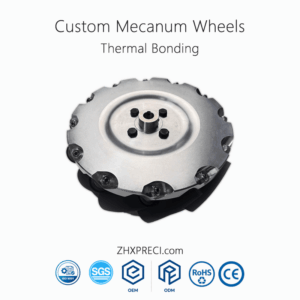
6 Inch Mecanum Wheel for AGV Robot Omni Directional Drive System High Precision Control Smooth Movement Stable Performance
Read more -
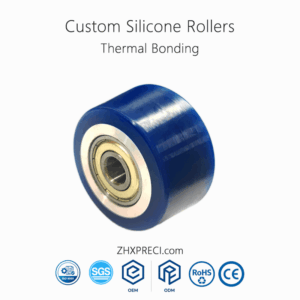
Blue Customized Silicone Rubber Coated Roller & High Quality Drive Guide Roller
Read more -
Custom ATEX Compliant Silicone Wheels Hazardous Area
Read more -
Custom Bracket Mount Silicone Wheels Easy Installation
Read more -
Custom Compact Size Silicone Wheels Space Saving
Read more -
Custom Hollow Bore PU Wheels For Direct Motor Mount
Read more -
Custom Hollow Bore PU Wheels For Direct Motor Mount
Read more -
Custom Low Temperature Silicone Wheels Freezer Trolley
Read more -
Custom NSF Certified Silicone Wheels Food Industry
Read more -
Custom Oil Resistant Silicone Wheels Industrial Cart
Read more -
Custom Ozone Resistant Silicone Wheels Outdoor Caster
Read more -
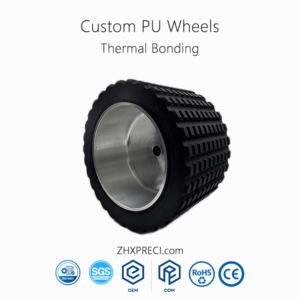
Custom Polyurethane Robot Walking Wheel – Heavy-Duty Wear-Resistant Load-Bearing Drive Roller for DIY Trolley
Read more -
Custom Quiet Rolling Silicone Wheels Hospital Bed
Read more -
Custom Reinforced Silicone Wheels High Capacity
Read more -
Custom Reversing Duty Silicone Wheels Conveyor System
Read more -
Custom Silent Operation Silicone Wheels Medical Trolley
Read more
Defining Custom High Temperature Silicone Rubber Wheels
In industrial and commercial environments, standard wheels often fail to meet the demands of extreme heat, chemical exposure, or unique dimensional requirements. Custom high temperature silicone rubber wheels represent a specialized category of elastomer-based mobility solutions engineered for sustained performance in thermal conditions that would compromise conventional polyurethane or rubber compounds. These wheels are fabricated from silicone polymers modified to retain their mechanical properties, elasticity, and structural integrity at elevated temperatures—typically ranging from 200°C to 300°C (392°F to 572°F), depending on the specific formulation.
The defining characteristic of these wheels lies in their ability to operate reliably in environments such as powder coating lines, ceramic kiln cars, industrial oven conveyors, food processing drying tunnels, and glass annealing lehrs. Unlike general-purpose casters, these products are not off-the-shelf commodities. Each unit can be tailored to specific load capacities, mounting configurations, bearing types, and dimensional tolerances. This is precisely where the value proposition of sourcing from a dedicated manufacturer becomes evident. Custom High Temperature Silicone Rubber Wheels from ZHXPRECI | China OEM/ODM Factory Manufacturer Supplier Custom Elastomer Wheels & Rollers are designed to meet these rigorous application-specific requirements through a collaborative engineering process.
What Are the Key Material Properties and Performance Parameters?
When evaluating high temperature silicone rubber wheels for a procurement project, understanding the material science is essential. The base polymer is a high-consistency rubber (HCR) or liquid silicone rubber (LSR) that undergoes a curing process with heat-stabilizing additives. The thermal stability is achieved through the siloxane backbone structure, which resists molecular breakdown under heat. Industry-standard formulations typically offer continuous service temperatures up to 250°C, with short-term excursions possible up to 300°C without significant loss of tensile strength or hardness.
Hardness is another critical parameter, commonly measured on the Shore A scale. For high temperature silicone wheels, typical hardness ranges from 50 to 80 Shore A. Softer compounds (50–60 Shore A) provide greater shock absorption and floor protection, suitable for delicate loads or uneven surfaces. Harder compounds (70–80 Shore A) offer enhanced load-bearing capacity and abrasion resistance, ideal for heavier carts or automated guided vehicles (AGVs) operating in hot zones. It is important to note that silicone rubber inherently exhibits lower tensile strength compared to polyurethane, typically in the range of 5–10 MPa. However, its exceptional flexibility and compression set resistance—often below 20% after 24 hours at 200°C—make it a preferred choice where heat is the primary challenge.
Load capacity is not a fixed universal number; it depends on wheel diameter, tread width, bearing design, and the specific silicone formulation. As a general guideline, a 125 mm diameter by 50 mm wide high temperature silicone wheel may support a static load of 150–250 kg per wheel, but this must be confirmed through application-specific calculations. For dynamic applications, the load rating is typically reduced by 30–40% to account for rolling resistance and heat generation during motion. These wheels also exhibit good resistance to ozone, UV, and many chemicals, though they are not recommended for exposure to petroleum-based solvents or steam under pressure.
Why Choose Silicone Over Other High-Temperature Elastomers?
Several elastomer options exist for high-temperature applications, including fluoroelastomers (FKM/Viton), ethylene propylene diene monomer (EPDM), and polyurethane with heat stabilizers. Each has its niche. FKM offers superior chemical resistance and higher continuous service temperatures (up to 300°C) but comes at a considerably higher cost and lower flexibility. EPDM is cost-effective and handles steam and water well but typically maxes out at 150°C. Heat-stabilized polyurethane can reach 120°C but becomes brittle at lower temperatures and lacks the rebound characteristics of silicone.
Silicone rubber strikes a unique balance. It maintains flexibility down to -60°C, making it suitable for applications with wide temperature swings. Its low compression set ensures that wheels retain their shape and performance after prolonged stationary periods under load at high temperatures—a common issue with other elastomers that can flatten or take a "set." Additionally, silicone is physiologically inert and complies with FDA requirements for food contact in many formulations, a critical advantage in food processing and packaging lines. This combination of thermal stability, low-temperature flexibility, and regulatory compliance makes silicone the material of choice for diverse industries. Custom High Temperature Silicone Rubber Wheels from ZHXPRECI | China OEM/ODM Factory Manufacturer Supplier Custom Elastomer Wheels & Rollers leverage these properties through precise compound engineering tailored to each customer's thermal and mechanical profile.
How Does the Customization Process Work?
The term "custom" in this context covers multiple dimensions. For B2B buyers and engineers, the customization journey typically begins with a detailed specification review. Key parameters to define include:
- Dimensional Specifications: Wheel diameter (from 50 mm to 400 mm or larger), tread width, bore size, and hub configuration.
- Mounting and Attachment: Press-fit bearings, flanged hubs, keyways, or custom bolt patterns for integration with specific axles or caster frames.
- Load and Speed Requirements: Static and dynamic loads, travel speed, and duty cycle.
- Environmental Factors: Peak and continuous operating temperatures, exposure to oils, cleaning agents, or intermittent contact with food products.
- Surface and Tread Profile: Flat tread for even surfaces, rounded or crowned tread for reduced rolling resistance, or special grooved patterns for traction on inclined tracks.
Once these requirements are documented, the manufacturer's engineering team typically proposes a preliminary design, including a recommended silicone compound, bearing type (stainless steel or high-temperature grease-packed), and structural core material (aluminum, steel, or high-temperature plastic). Prototyping is a standard step in this process, allowing for physical testing under simulated conditions. This iterative approach ensures that the final product aligns with operational expectations before mass production commences. For procurement professionals, this means that lead time is not a fixed number but is subject to order quantity, current production schedule, and final specification confirmation. A collaborative timeline is established during the order negotiation phase, balancing manufacturing capacity with delivery requirements.
What Industries Benefit Most from These Wheels?
High temperature silicone rubber wheels find application across a broad spectrum of industries where thermal management is integral to the production process. In the automotive sector, they are used on paint shop conveyors and e-coat curing ovens. In the electronics industry, they facilitate the handling of components through solder reflow ovens. The food and beverage industry relies on them for bakery oven racks, meat smoking trolleys, and confectionery cooling tunnels—often in FDA-compliant grades. Glass manufacturing uses these wheels on lehrs for annealing glass containers. Ceramics and brick production employ them on kiln cars and drying chamber carts. Even in renewable energy, they appear in solar panel curing lines and battery drying furnaces. The common thread is the need for a wheel that does not soften, deform, or transfer contaminants onto products under sustained heat.
How to Select the Correct Hardness and Tread Design?
Selecting the appropriate hardness is a matter of balancing floor protection, load support, and rolling resistance. A common rule of thumb is that softer wheels (50–60 Shore A) are ideal for delicate floor surfaces such as epoxy coatings or for applications involving high vibration damping. They also provide better traction on slightly oily or wet surfaces. However, they increase rolling resistance and may not be suitable for heavy loads or high-speed travel. Harder wheels (70–80 Shore A) offer lower rolling resistance, higher load capacity, and better abrasion resistance, but they transmit more vibration and may mark or damage sensitive flooring over time. For applications requiring a compromise, a dual-durometer construction—a hard inner core with a soft outer tread—is sometimes employed, though this is less common in silicone due to bonding challenges at high temperatures.
Tread design is equally critical. A flat tread maximizes contact area and load distribution, which is beneficial for heavy, stationary loads. A crowned tread, where the center of the tread is slightly higher than the edges, reduces the contact patch and rolling resistance, making it suitable for manual carts that require frequent movement. For applications where the wheel travels on a track or rail, a flanged tread or V-groove design ensures guidance and prevents derailment. The choice ultimately depends on the floor type, load characteristics, and mobility requirements of the equipment. Engineers often request sample runs of different tread profiles to assess performance in their specific operational context.
What Are the Common Failure Modes and Prevention Strategies?
Understanding potential failure mechanisms is essential for maintenance and reliability planning. The most common issue with high temperature silicone wheels is thermal degradation, which manifests as hardening, cracking, or loss of elastic recovery. This typically occurs when the wheel is consistently exposed to temperatures exceeding the compound's design maximum, or when there is a significant temperature gradient between the tread and the hub. Proper compound selection with adequate heat stabilizers is the first line of defense. Another failure mode is compression set—the permanent deformation of the tread after prolonged static loading. This can be mitigated by specifying a silicone grade with low compression set, typically tested per ASTM D395, and by ensuring the load does not exceed the manufacturer's recommendations for static conditions.
Mechanical wear, such as tread chunking or bearing failure, can result from excessive shock loading or misalignment of the caster. Regular inspection and maintenance—cleaning debris from the tread and checking bearing lubrication—prolongs service life. It is also important to note that silicone rubber has a higher coefficient of friction than many alternatives, which can lead to increased rolling resistance and energy consumption. If this becomes problematic, a tread optimization with a slightly crowned profile or a specialized surface texture can be applied to reduce drag. These wheels are also susceptible to tearing from sharp metal chips or debris on the floor; in such environments, a thicker tread section or a protective metal band on the side may be advisable.
How to Evaluate Total Cost of Ownership?
For procurement and engineering teams, the initial purchase price is only one component of the total cost equation. High temperature silicone wheels may carry a higher upfront cost compared to standard cast iron or Nylon wheels. However, their longer service life in high-temperature environments, reduced downtime for wheel replacement, and less frequent maintenance contribute to a lower total cost of ownership over a multi-year horizon. Additionally, their floor-friendly nature reduces wear on expensive concrete or tiled floor surfaces, generating savings in facility maintenance. The ability to customize the wheel to exact equipment specifications eliminates the need for costly adapters or modifications, further streamlining integration. When factoring in the reliability of Custom High Temperature Silicone Rubber Wheels from ZHXPRECI | China OEM/ODM Factory Manufacturer Supplier Custom Elastomer Wheels & Rollers, the operational stability they provide often outweighs the initial investment. A detailed TCO analysis should consider wheel life in operational cycles, the cost of unplanned downtime, and the value of preserving floor integrity.
Frequently Asked Questions for Buyers and Engineers
What is the maximum continuous operating temperature for these wheels?
Based on industry-standard silicone formulations, the maximum recommended continuous operating temperature typically ranges between 200°C and 250°C. Some specialized compounds may offer intermittent performance up to 300°C, but this depends on the specific additive package and the duration of exposure. It is always advisable to consult the manufacturer's technical data sheet for the exact compound used and to test under actual operating conditions, as factors such as airflow and load influence heat dissipation.
How do I specify the correct bore and bearing arrangement?
Bore size must match the axle diameter precisely, with typical tolerances of H7 or similar fit classes. Bearing types commonly used include precision ball bearings, roller bearings, or sleeve bearings, each with different load and speed capabilities. For high-temperature environments, bearings must be equipped with high-temperature grease (often synthetic-based) and seals that can withstand the same thermal range. Stainless steel bearings are recommended for humid or wash-down conditions. Your specification should include bore diameter, bearing type, and any requirements for flanges or retaining rings.
Can these wheels be used in food processing environments?
Yes, provided that the silicone compound complies with FDA regulations for food contact, typically under 21 CFR 177.2600. It is essential to request certification of compliance from the manufacturer. Additionally, the wheel should be designed with smooth, non-porous surfaces to prevent bacterial growth and should be resistant to the cleaning agents used in the facility. However, each food processing application has unique requirements, so a thorough review of the specific conditions is recommended.
How does the lead time vary with customization?
The delivery timeline for custom high temperature silicone wheels is inherently variable. It is influenced by factors such as the complexity of the mold design, the order quantity, and the current production load at the factory. For a straightforward design with existing tooling, the period may be shorter; for a completely new size or unique tread profile requiring new molds, the timeline will extend accordingly. The best approach is to communicate your required delivery date early and allow the manufacturer to propose a realistic schedule. This schedule will be based on a mutual understanding of the project scope and is subject to order quantity, current production schedule, and final specification confirmation.
Are there any special storage considerations?
Silicone rubber wheels should be stored in a cool, dry place away from direct sunlight, ozone sources (such as electric motors), and petroleum-based solvents. They should not be stacked in a manner that causes permanent deformation of the tread. Ideally, they should be stored upright and on a clean surface. Extreme variations in temperature and humidity should be avoided. Following these guidelines helps maintain the material properties and ensures the wheels perform as expected upon installation.
What testing is available to validate wheel performance?
Reputable manufacturers typically offer a range of quality control tests, including hardness testing (Shore A), tensile strength and elongation, compression set at elevated temperatures, and dynamic load testing on a test rig that simulates operational conditions. For critical applications, buyers may request additional tests such as accelerated aging, chemical resistance testing, or thermal cycling tests. It is common practice for a prototype to be produced and tested before full-scale production to ensure that the design meets all specified criteria.
In summary, Custom High Temperature Silicone Rubber Wheels represent a specialized engineering solution that addresses the demanding mobility needs of high-heat industrial processes. Their value lies not only in their thermal resilience but also in the ability to tailor every parameter—from compound hardness to dimensional fit—to the specific application. Whether for a new equipment design or a retrofit project, these wheels offer a robust combination of flexibility, durability, and regulatory compliance when selected with due diligence and in partnership with an experienced OEM manufacturer.
```