
Custom Corrosion Resistant Silicone Rubber Wheels
Custom Silicone Wheels
Corrosion-resistant & thermally stable for harsh industrial environments.
- 30-500kg load
- 30-80A hardness
- 50-500mm dia
- -55-+230°C temp
- ISO/REACH/FDA cert
Showing 1–16 of 22 results
-
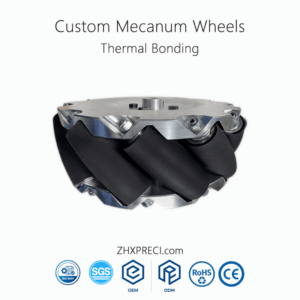
1200KG Payload Capacity 16inch 406mm Mecanum Caster Wheels Exclusive Polyurethane Formula Material Handling Equipment Parts
Read more -
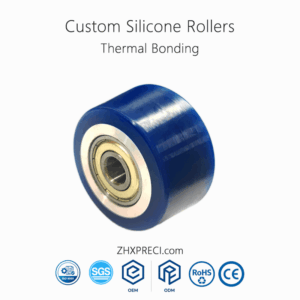
Blue Customized Silicone Rubber Coated Roller & High Quality Drive Guide Roller
Read more -
Custom ATEX Compliant Silicone Wheels Hazardous Area
Read more -
Custom Bracket Mount Silicone Wheels Easy Installation
Read more -
Custom Compact Size Silicone Wheels Space Saving
Read more -
Custom Hollow Bore PU Wheels For Direct Motor Mount
Read more -
Custom Hollow Bore PU Wheels For Direct Motor Mount
Read more -
Custom Low Temperature Silicone Wheels Freezer Trolley
Read more -
Custom NSF Certified Silicone Wheels Food Industry
Read more -
Custom Oil Resistant Silicone Wheels Industrial Cart
Read more -
Custom Ozone Resistant Silicone Wheels Outdoor Caster
Read more -
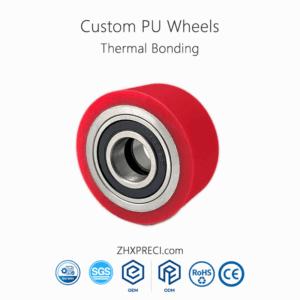
Custom Polyurethane Wheel for Factory Conveyor Systems & Industrial Conveyor Transport Polyurethane Coated Wheel
Read more -
Custom Quiet Rolling Silicone Wheels Hospital Bed
Read more -
Custom Reinforced Silicone Wheels High Capacity
Read more -
Custom Reversing Duty Silicone Wheels Conveyor System
Read more -
Custom Silent Operation Silicone Wheels Medical Trolley
Read more
Material Composition & Structural Integrity
Custom corrosion resistant silicone rubber wheels are engineered for environments where moisture, chemicals, and temperature fluctuations pose ongoing challenges. The base polymer is a high-consistency gum silicone, compounded with reinforcing silica fillers and proprietary additives that enhance resistance to ozone, UV radiation, and diluted acids or alkalis. Unlike conventional elastomers, silicone maintains its elastic modulus across a wide service temperature range, typically from -55 °C to +230 °C, depending on the specific curing system and post-cure process. This thermal stability, combined with a surface energy that repels water and many polar solvents, makes these wheels suitable for food processing, pharmaceutical packaging, textile manufacturing, and outdoor material handling equipment.
When selecting materials for corrosive service, engineers must consider both the wheel body and the bearing interface. Our custom wheels can be manufactured with stainless steel or coated hubs, and the silicone compound itself can be adjusted for hardness from 30 Shore A to 80 Shore A. Lower durometer grades offer better vibration damping and floor protection, while higher grades provide greater load-bearing capacity and abrasion resistance. The actual performance in a given chemical environment should be verified through immersion testing, as silicone may swell in certain hydrocarbon-based fluids. For aggressive solvents like ketones or chlorinated hydrocarbons, alternative elastomers such as fluorosilicone or EPDM might be recommended.
Load Capacity & Dynamic Performance
Load ratings for corrosion resistant silicone rubber wheels depend on wheel diameter, tread width, hardness, and hub design. Typical static load capacities range from 50 kg per wheel for smaller diameters up to 500 kg for larger heavy-duty configurations. However, these figures are based on standard operating conditions at ambient temperature and should be derated for elevated temperatures or continuous dynamic loading. The coefficient of friction on dry steel surfaces is approximately 0.4 to 0.6, providing adequate traction for powered conveyor systems while allowing smooth manual manoeuvring. Rolling resistance is inherently lower than that of polyurethane or rubber at low temperatures, which can reduce energy consumption in automated guided vehicle applications.
Dynamic performance also involves rebound resilience and compression set. Silicone elastomers exhibit excellent rebound, typically above 50 % under standard testing methods, which contributes to reduced heat build-up during high-speed rotation. Compression set values are favourable when properly vulcanised, often below 20 % after 22 hours at 175 °C, meaning the wheel retains its shape and cushioning properties over extended service intervals. For applications involving intermittent exposure to steam or sanitisers, a post-cure step significantly improves both compression set and chemical resistance. It is advisable to consult our technical datasheets for specific compound grades, as each formulation offers distinct trade-offs between hardness, temperature range, and chemical compatibility.
Customisation Options & Engineering Considerations
The designation "custom" covers a broad spectrum of modifications, from bore diameter and keyway dimensions to tread patterns, colour coding, and conductive or anti-static properties. For OEM projects, we can integrate metal inserts, flanges, or timing grooves directly into the moulding process. Tread patterns can be smooth, ribbed, or chevron-shaped to enhance traction on inclined or wet surfaces. Colour is not merely aesthetic; it can be used for line identification in production facilities. For cleanroom applications, we offer low-particle-shedding formulations that meet ISO Class 5 or higher criteria. All customisations are developed using 3D CAD models and rapid prototyping, allowing iterative testing before production tooling is committed.
One of the primary engineering challenges in corrosion-resistant wheel design is the bond between the silicone rubber and the hub. Mechanical interlocking or chemical bonding agents are employed, and the selection depends on the hub material (aluminium, steel, or thermoplastics) and the intended service temperature. For maximum reliability, we recommend a two-step moulding process where the hub is sandblasted, primed, and then overmoulded with the silicone compound. This approach has demonstrated peel strengths exceeding 5 kN/m in laboratory tests. Additionally, the wheel’s dynamic balance can be specified to G2.5 or G6.3 standards, which is critical for high-speed applications such as textile spindles or printing press rollers.
Commonly Asked Questions About Silicone Rubber Wheels
What are corrosion resistant silicone rubber wheels used for?
They are predominantly used in conveyor systems, automated guided vehicles, medical equipment, food processing lines, and marine or chemical plant trolleys. Their resistance to steam, cleaning agents, and outdoor weathering makes them a preferred choice for washdown environments. In semiconductor manufacturing, anti-static silicone wheels prevent electrostatic discharge damage to sensitive components. The versatility of the material also allows deployment in laboratory equipment and packaging machinery where contamination must be minimised.
How do I choose the right hardness for my application?
Hardness selection directly affects floor marking, load distribution, and rolling ease. Softer compounds (30–50 Shore A) absorb shock and protect floor surfaces but offer higher rolling resistance and lower load capacity. Harder compounds (60–80 Shore A) support heavier loads and resist cutting or tearing, yet they transmit more vibration. A balanced approach is to match hardness with the expected dynamic load and floor roughness. For most industrial carts, 65 Shore A provides a suitable compromise. Testing with a sample wheel under actual operating conditions is the most reliable method to confirm suitability.
Can silicone rubber wheels withstand constant exposure to salt water or acidic solutions?
Silicone rubber exhibits excellent resistance to salt water, weak acids (pH 3–11), and many oxidising agents. However, prolonged immersion in concentrated acids or strong bases may cause surface degradation. For marine environments, a fluorosilicone coating or a higher-density compound can extend service life. We always recommend conducting a 72-hour immersion test at the maximum expected concentration and temperature. The data sheets for each compound include a chemical resistance chart that provides guidance on expected weight change and hardness variation after exposure.
What is the typical lead time for custom orders?
Lead time is subject to order quantity, current production schedule, and final specification confirmation. For prototyping quantities, we can usually produce samples within a shorter timeframe, while large-scale production runs require careful capacity planning. We work closely with clients to establish a realistic delivery schedule that aligns with their project milestones. Factors such as compound availability, mould complexity, and post-curing cycles all influence the overall timeline. We encourage early engagement to reserve production slots and to allow for any necessary material sourcing.
How do I maintain and clean these wheels?
Routine cleaning with mild detergent and warm water is sufficient for most applications. Avoid abrasive brushes or aggressive solvents that may compromise the surface. For food-contact applications, we recommend a daily rinse with sanitiser solutions approved for silicone surfaces. Periodic inspection of the hub attachment and tread wear is advisable; if the rubber exhibits cracking or excessive hardness change, consider replacement. Storage in a cool, dry place away from direct sunlight helps preserve the elastomer’s properties when wheels are not in use.
Are these wheels suitable for high-temperature oven conveyors?
Yes, with the correct formulation, silicone wheels can operate continuously at up to 200 °C and intermittently at 230 °C. For oven applications, we recommend specifying a heat-stabilised grade and a metal hub that accommodates thermal expansion. The wheel diameter may increase slightly with temperature, so clearance allowances should be calculated. We have supplied similar wheels for bakery ovens and curing lines, where consistent performance at elevated temperatures is essential.
What certifications or standards do these wheels meet?
Our silicone compounds can be formulated to meet FDA 21 CFR 177.2600 for food contact, USP Class VI for biomedical applications, and REACH/RoHS compliance for environmental regulations. Depending on the project, we can provide test reports for outgassing, non-toxicity, and flame retardancy (UL 94 V-0 or V-1). We also support custom testing protocols requested by customers, including accelerated ageing and fatigue cycle testing. All documentation is provided in a comprehensive quality dossier upon shipment.
Can you supply wheels with conductive or anti-static properties?
Absolutely. By incorporating carbon black or metallic additives, we can achieve surface resistivity from 10^3 to 10^9 ohm·cm, tailored to your ESD protection requirements. Conductive wheels are essential in electronics assembly and explosive atmospheres. The anti-static version dissipates static charge gradually, preventing sudden discharges. We measure resistivity per ASTM D257 and provide individual test certificates for critical batches.
How does corrosion resistance compare to polyurethane or nitrile rubber?
Silicone offers superior resistance to ozone, UV, and thermal ageing compared to nitrile or standard polyurethane. However, polyurethane excels in abrasion resistance and load-bearing under heavy, low-speed conditions, while nitrile provides better oil and fuel resistance. For corrosive environments dominated by moisture, mild chemicals, or temperature cycling, silicone is often the preferred choice. The selection should be based on a comprehensive risk assessment considering all environmental factors, mechanical loads, and service life expectations.
What is the maximum diameter and width available?
We regularly manufacture wheels from 50 mm to 500 mm in diameter, with tread widths up to 150 mm. Larger sizes can be produced on request, subject to tooling feasibility and material flow considerations. The width-to-diameter ratio affects lateral stability and load distribution; we recommend a ratio of 0.3 to 0.6 for most applications. Our engineering team can advise on the optimal geometry for your specific chassis and track dimensions.
Why Choose ZHXPRECI for Custom Corrosion Resistant Silicone Rubber Wheels?
Custom Corrosion Resistant Silicone Rubber Wheels from ZHXPRECI | China OEM/ODM Factory Manufacturer Supplier Custom Elastomer Wheels & Rollers are developed with a focus on repeatable quality and process control. Our facility operates under ISO 9001 and IATF 16949 frameworks, ensuring traceability from raw material batch to final inspection. We employ statistical process control for compound mixing, moulding temperature, and cycle time, which reduces variability and improves part-to-part consistency. For each order, we create a detailed quality plan that includes dimensional checks, hardness testing, and dynamic balance verification.
As a China-based OEM/ODM partner, we offer competitive tooling costs and flexible production volumes, from pilot runs of 50 pieces to full-scale container shipments. Our engineering team provides on-site support during the sampling phase, and we can adapt to design changes with minimal lead time adjustment. We also maintain a library of standard moulds that can accelerate delivery for common sizes. For highly specialised requirements, we co-develop custom moulds with in-house or partner toolmakers, ensuring that the final wheel geometry precisely matches your equipment interface.
We understand that B2B procurement involves technical evaluation, budget alignment, and supply chain reliability. Therefore, we provide transparent material declarations, third-party test reports, and performance warranties that are grounded in real-world data. Our sales engineers are trained to ask about operating conditions, duty cycles, and environmental factors so that the recommended compound and design are neither over-engineered nor under-specified. This collaborative approach has resulted in long-term partnerships with material handling OEMs, automotive assembly lines, and food processing corporations across Europe, North America, and Southeast Asia.
Technical Summary & Decision Checklist
When evaluating custom corrosion resistant silicone rubber wheels, we recommend the following checklist: (1) Define the operating temperature range and cycle duration. (2) List all chemicals, concentrations, and contact frequency. (3) Determine load per wheel and expected service speed. (4) Specify hub mounting type (bore, keyway, thread, or taper). (5) Consider floor surface and required traction. (6) Confirm regulatory and cleanliness standards. (7) Request a sample set for on-site validation. (8) Discuss production lead time and minimum order quantities with our team.
Our experience shows that early collaboration on material selection and geometric tolerance significantly reduces the risk of field failures. We encourage customers to share their existing wheel failure modes so that we can tailor the silicone formulation to address specific weaknesses, such as excessive wear, hub loosening, or chemical swelling. This proactive engineering approach not only improves wheel longevity but also lowers total cost of ownership over the equipment lifecycle.
For projects where corrosion resistance is critical but silicone may not be the sole solution, we also offer complementary elastomers and hybrid designs. Our goal is to provide honest, data-backed recommendations rather than a one-size-fits-all answer. We invite you to contact our technical sales team with your application details; we will respond with a preliminary compound selection, estimated load curve, and a proposed timeline for sample development. Custom Corrosion Resistant Silicone Rubber Wheels from ZHXPRECI | China OEM/ODM Factory Manufacturer Supplier Custom Elastomer Wheels & Rollers represent a reliable option for demanding industrial environments, backed by engineering rigour and responsive customer service.
In summary, these wheels offer a balanced combination of thermal stability, chemical resistance, and design flexibility. Their performance is well-documented in industry literature, and our manufacturing processes adhere to recognised quality systems. While no single material can address all possible corrosive challenges, silicone rubber remains a versatile and proven choice for a wide range of applications. We look forward to assisting you in refining your specifications and achieving a durable, cost-effective wheel solution.