
Custom Heavy Duty Mecanum Wheels
Showing 17–30 of 30 results
-
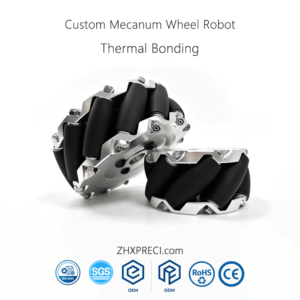
Custom High Torque Mecanum Wheel Robot
Read more -
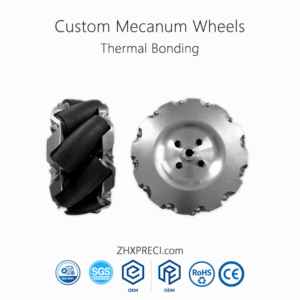
Custom Large Diameter Heavy Duty Mecanum Wheels
Read more -
Custom Large Diameter High Temperature Mecanum Wheels
Read more -
Custom Low Noise Mecanum Wheel Robot
Read more -
Custom Mecanum Wheel AGV
Read more -
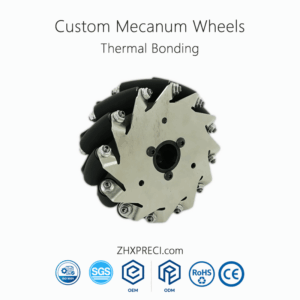
Custom Mecanum Wheel Set 152mm (6 Inch) NM152A: Heavy-Duty PU Rollers, 300kg Load Capacity, Omni-Directional for AGV & Robotics
Read more -
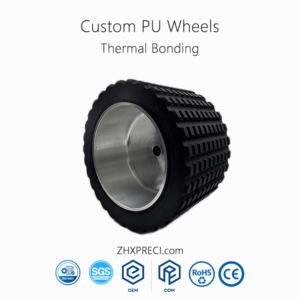
Custom Polyurethane Robot Walking Wheel – Heavy-Duty Wear-Resistant Load-Bearing Drive Roller for DIY Trolley
Read more -
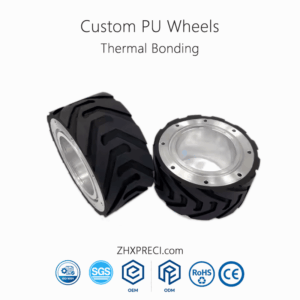
Custom PU Wheel Heavy Duty for Walking Robot & Trolley – Wear-Resistant, Non-Marking, Replacement for Rubber Rollers
Read more -
Custom Self-Locking With Brake Mecanum Wheels
Read more -
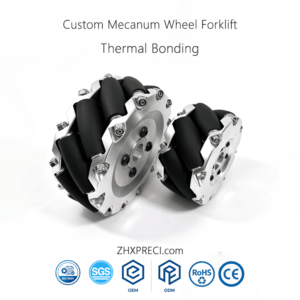
Custom Stainless Steel Mecanum Wheel Forklift
Read more -
Custom Stainless Steel Mecanum Wheel RC Car
Read more -
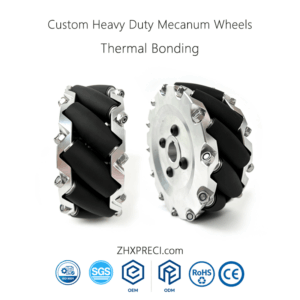
Custom With Brake Heavy Duty Mecanum Wheels
Read more -
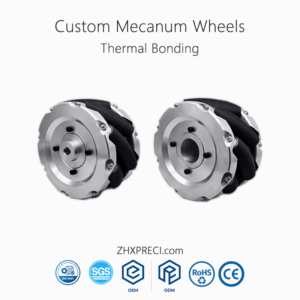
Mecanum Wheel 100MM 127MM 152MM 175MM 203MM 254MM 304MM 355MM 381MM 406MM Heavy Duty Industrial Polyurethane 8 Rollers
Read more -
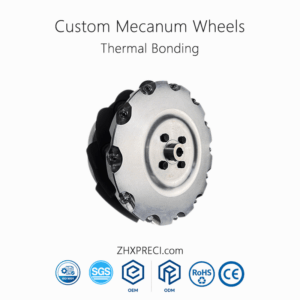
Mecanum Wheel Set 152 mm (6 Inch) NM152A – Heavy-Duty Wheels With PU-Coated Rollers, 300 kg Load Capacity, Industrial Grade, Ideal For Robotics
Read more
What Are Custom Heavy Duty Mecanum Wheels?
Custom heavy duty mecanum wheels are specialized omnidirectional drive wheels that incorporate a series of freely rotating barrel-shaped rollers mounted obliquely—typically at a 45‑degree angle—around the circumference of a main wheel hub. This unique roller arrangement enables a vehicle to achieve translational movement in any direction (forward, reverse, lateral, and diagonal) while simultaneously rotating on its own axis, without the need for conventional steering mechanisms. The "heavy duty" designation indicates reinforced structural components, higher load-bearing capacities, and materials selected for demanding industrial environments, including high‑torque applications and continuous operation cycles.
As an engineered motion solution, the heavy duty variant differs from standard mecanum wheels through upgraded hub materials (often high‑strength steel or forged aluminum), larger‑diameter roller bearings, and elastomer compounds formulated to resist abrasion, impact, and thermal degradation under sustained load. These wheels are frequently deployed in automated guided vehicles, heavy‑payload mobile robots, material handling systems, and aerospace ground support equipment where precise manoeuvrability and spatial efficiency are critical.
Custom Heavy Duty Mecanum Wheels from ZHXPRECI | China OEM/ODM Factory Manufacturer Supplier Custom Elastomer Wheels & Rollers represent a category where each unit can be tailored to specific application parameters, from roller durometer and tread pattern to hub mounting interfaces and overall diameter.
Key Technical Characteristics and Performance Parameters
Understanding the core technical attributes of heavy duty mecanum wheels assists engineers and procurement professionals in making informed comparisons. The following parameters are typically specified during the customisation process, and all values reflect industry‑standard ranges rather than absolute guarantees.
Load Capacity
Heavy duty mecanum wheels are generally rated for per‑wheel dynamic loads ranging from 500 kg to over 5,000 kg, depending on the hub construction, roller bearing configuration, and elastomer formulation. For a four‑wheel system, the total payload capacity is distributed across all wheels; however, dynamic load distribution must account for acceleration forces, uneven floor surfaces, and potential off‑centre loading. Custom engineering can adjust the number of rollers, axle diameter, and bearing type to align with specific weight requirements.
Roller Hardness and Elastomer Materials
The roller material significantly influences traction, floor protection, vibration damping, and wear resistance. Common elastomer options include polyurethane (PU) with hardness ratings between 80 Shore A and 95 Shore A, natural rubber compounds, and specialised high‑temperature or oil‑resistant grades. Harder rollers offer lower rolling resistance and higher load capacity, while softer rollers provide better shock absorption and floor‑friendly characteristics. For heavy duty applications, a balanced approach is often adopted—using a moderately hard polyurethane that combines durability with adequate cushioning.
Operating Temperature Range
Depending on the elastomer and bearing lubrication selected, heavy duty mecanum wheels are typically functional within a temperature window of -20 °C to +80 °C for standard polyurethane compounds. For environments that involve extreme cold (e.g., cold storage facilities) or elevated heat (e.g., foundries or kiln transfer cars), specialised high‑temperature or low‑temperature formulations can be specified. These variants use thermally stable polymers and high‑grade greases to preserve roller rotation and structural integrity across the intended thermal envelope.
Roller Configuration and Tread Patterns
The angle of the rollers relative to the wheel axle is generally fixed at 45 degrees for standard omnidirectional kinematics, but custom designs may incorporate variations to modify the thrust-to-traction ratio. Tread patterns—such as smooth, grooved, or studded—can be added to improve grip on slick surfaces or to facilitate debris shedding. In heavy duty scenarios, a closed‑cell or solid elastomer tread minimises the risk of foreign object penetration that could affect roller rotation.
How to Select the Right Custom Heavy Duty Mecanum Wheels for Your Application
Selecting an appropriate heavy duty mecanum wheel requires a systematic evaluation of operational conditions, vehicle dynamics, and environmental factors. The following steps outline a practical decision framework for engineering teams.
- Define the vehicle's gross weight and centre of gravity: Calculate the static and dynamic load per wheel, including safety factors for acceleration, braking, and potential uneven floor contact. This data directly influences the required hub strength and roller bearing capacity.
- Assess floor surface characteristics: Identify the floor material (concrete, steel plate, epoxy coating, etc.), flatness tolerance, and presence of debris or liquids. Rougher surfaces may necessitate larger‑diameter rollers with softer durometers to distribute load and reduce vibration, while smooth floors allow harder compounds for lower rolling friction.
- Determine mobility requirements: Define whether the vehicle must perform pure translation, rotation, or combination moves in confined spaces. This determines the number of mecanum wheels (typically four) and the control algorithm, but it also affects roller spacing and mounting alignment.
- Consider environmental exposure: Evaluate temperature extremes, humidity, chemical exposure (oils, solvents, acids), and UV radiation. These factors guide the choice of corrosion‑resistant hub coatings (zinc plating, powder coating, or stainless steel) and the selection of chemically inert elastomers.
- Specify mounting and interface details: The wheel hub must match the drive shaft configuration, whether via keyway, spline, tapered bore, or flange mount. Custom heavy duty wheels can be machined to accommodate a wide range of drive motors, gearboxes, and axle sizes.
- Review maintenance and serviceability: Heavy duty mechanisms benefit from designs that allow roller replacement without dismantling the entire hub, as well as accessible grease ports for bearing lubrication. These features reduce downtime and total cost of ownership over the equipment lifecycle.
Custom Heavy Duty Mecanum Wheels from ZHXPRECI | China OEM/ODM Factory Manufacturer Supplier Custom Elastomer Wheels & Rollers offer flexible engineering support throughout this selection process, providing technical data sheets, 3D model exchanges, and sample testing options to validate performance before full‑scale production.
Common Applications and Use Cases
Heavy duty mecanum wheels are found across a range of industrial and logistics segments where manoeuvrability and load capacity intersect. Typical applications include:
- Automated Guided Vehicles (AGVs) and Autonomous Mobile Robots (AMRs): These platforms operate in dynamic warehouse and factory environments, requiring precise positioning and multidirectional movement to navigate tight aisles and transfer stations.
- Heavy‑Payload Transfer Carts: Used in steel mills, aerospace assembly lines, and shipyards, these carts transport subassemblies or finished components weighing several tons. The omnidirectional capability simplifies docking and alignment processes.
- Medical and Pharmaceutical Equipment: Large imaging systems, radiation therapy platforms, and sterile‑environment transporters benefit from the smooth, low‑vibration motion provided by quality mecanum wheels.
- Military and Defence Logistics: Mobile radar units, missile transporters, and ground support equipment utilise heavy duty mecanum wheels to enable rapid positioning in confined or unprepared terrain.
- Entertainment and Stage Automation: Moving scenery, camera dollies, and dynamic stage elements in large‑scale productions use these wheels for quiet, reliable repositioning.
Customisation Options for Heavy Duty Mecanum Wheels
Customisation extends beyond simple dimensional changes, encompassing material selection, roller geometry, and integrated sensor provisions. Each modification is assessed for its impact on performance and durability, with careful consideration given to the specific operational context.
Hub Materials and Finishes
Hubs are commonly manufactured from high‑tensile aluminium alloys (e.g., 7075‑T6) for weight‑sensitive applications, or from steel grades (e.g., S45C, 4140) for maximum strength. Finishing options include anodising, phosphating, and epoxy powder coating to enhance corrosion resistance. For chemically aggressive environments, stainless steel hubs (304 or 316) are available.
Roller Bearing Configurations
Each individual roller may be supported by sealed ball bearings, needle bearings, or composite bushings. The choice affects rolling friction, shock load absorption, and maintenance frequency. Heavy duty designs often incorporate dual‑row bearings to increase radial and axial load capacity, ensuring extended service life under continuous high‑torque operations.
Elastomer Formulations and Colours
Beyond standard polyurethane, custom elastomer blends can include additives for flame retardancy, static conductivity, or enhanced traction on oily floors. Colour coding is also possible to facilitate visual identification of wheel characteristics—for example, blue for anti‑static, red for high‑temperature, or yellow for food‑grade compliance.
Integrated Sensing and Encoder Mounts
For precision control applications, wheel hubs can be machined to accommodate magnetic or optical encoders, temperature sensors, or load‑measuring strain gauges. These integrations enable real‑time monitoring of wheel speed, direction, and thermal status, contributing to predictive maintenance strategies.
Quality Control and Performance Verification
Heavy duty mecanum wheels undergo a series of inspections and tests to ensure conformance to specified mechanical and material criteria. Standard quality assurance practices include:
- Dimensional verification: Hub diameter, roller placement angles, and overall wheel concentricity are measured using coordinate measuring machines (CMM) and laser alignment tools to confirm tolerances within ±0.1 mm.
- Hardness testing: Elastomer durometer is sampled using Shore A or Rockwell‑type instruments, with results recorded for each production batch to ensure consistency.
- Load testing: Samples are subjected to static and dynamic load cycles on custom test rigs that simulate actual operating conditions, measuring deformation, rolling resistance, and temperature rise over time.
- Accelerated wear and environmental exposure: Abrasion tests (DIN or Taber), salt spray corrosion tests, and thermal cycling are performed to validate material choices for the intended environment.
Custom Heavy Duty Mecanum Wheels from ZHXPRECI | China OEM/ODM Factory Manufacturer Supplier Custom Elastomer Wheels & Rollers follow a documented quality management system, with each wheel assigned a traceable production number. This traceability enables precise root‑cause analysis and continuous improvement feedback.
Frequently Asked Questions
What is the difference between standard and heavy duty mecanum wheels?
Standard mecanum wheels are generally rated for lower loads (up to 300 kg per wheel) and may use lighter hub materials, smaller bearings, and softer rollers suitable for indoor logistics or service robots. Heavy duty versions feature reinforced hubs, larger‑diameter axles, high‑capacity bearings, and robust elastomers engineered for sustained loads above 500 kg, often in harsh or outdoor settings. The structural design, material grades, and safety margins are enhanced to meet the demands of industrial automation and heavy transport equipment.
How does the roller angle affect vehicle motion?
The standard 45‑degree roller angle produces balanced forward/lateral force components, enabling omnidirectional movement. Variations in angle—such as 30 or 60 degrees—alter the thrust‑to‑sideforce ratio, which can be beneficial for applications that require more traction in the primary travel direction. Custom heavy duty designs may adjust the roller angle in coordination with vehicle control algorithms to optimise mobility and power efficiency for specific duty cycles.
Can heavy duty mecanum wheels be used on uneven or sloped floors?
Yes, but the performance is contingent on wheel diameter, roller compliance, and the vehicle's suspension system. Larger wheels and moderately soft rollers can absorb small surface irregularities and maintain contact on slopes up to approximately 10 degrees. For steeper inclines or significant floor waviness, a combination of spring‑loaded mounting and active levelling systems is often recommended. It is advisable to conduct field trials or simulation modelling to confirm suitability under actual floor conditions.
What maintenance is required for heavy duty mecanum wheels?
Routine maintenance typically includes periodic cleaning of roller surfaces to remove dirt and debris, visual inspection for cracked or worn elastomer, and re‑lubrication of roller bearings at intervals specified by the manufacturer—often between 500 and 2,000 operating hours, depending on environmental severity. For wheels with sealed bearings, replacement may be scheduled based on monitored vibration or temperature trends. All maintenance intervals should be adjusted according to actual usage patterns and site‑specific observations.
How is the customisation process typically managed?
The customisation workflow usually begins with a technical consultation to define the required load capacity, dimensional constraints, environmental conditions, and interface specifications. This is followed by the creation of a preliminary 3D model, simulation analysis, and the production of a small sample batch for validation. After customer approval of the sample, full‑scale production proceeds with in‑process inspections and final testing. The entire process benefits from transparent communication and clear documentation of each design decision, so that engineering teams can track changes and verify compliance with their original requirements.
What is the typical lead time for custom heavy duty mecanum wheels?
Lead time for custom heavy duty mecanum wheels is subject to order quantity, current production schedule, and final specification confirmation. Once all technical parameters are agreed upon, the production timeline is established with clear milestones for material procurement, machining, assembly, and quality inspection. Customers are encouraged to engage early in the design phase to align delivery schedules with their project timelines, and expedited options may be available for certain standardised modifications, subject to factory capacity at the time of order placement.
Are there options for different roller materials beyond polyurethane?
Yes. In addition to polyurethane, rollers can be manufactured from synthetic rubber, silicone, or thermosetting elastomers that provide specific characteristics such as high‑temperature resistance, low outgassing, or chemical compatibility with hydraulic fluids. Each material choice involves trade‑offs in hardness, abrasion resistance, and cost, which are evaluated on a case‑by‑case basis during the customisation process.
How do heavy duty mecanum wheels handle high‑speed operation?
High‑speed operation—typically defined as surface speeds above 2 m/s—requires careful attention to roller dynamic balance, bearing lubricant grade, and centripetal load management. For such applications, the wheel assembly may be dynamically balanced, and roller bearings with specialised cages and high‑speed greases are used. It is also important to account for increased heat generation, which can affect elastomer properties; cooling features or thermosetting compounds are sometimes incorporated.
The technical information provided in this description is based on general industry data and is intended for reference purposes only. Actual performance depends on specific application conditions and the integration of the wheels within a complete system design. Engineering professionals are advised to perform their own validation testing or consult with application engineers for personalised recommendations. Custom Heavy Duty Mecanum Wheels from ZHXPRECI | China OEM/ODM Factory Manufacturer Supplier Custom Elastomer Wheels & Rollers serve as a reliable reference point for customised heavy duty omnidirectional drive solutions, combining material science expertise with flexible manufacturing capabilities.