
Custom Stainless Steel Mecanum Wheels
Custom Stainless Steel Mecanum Wheels
Custom stainless steel mecanum wheels for AGVs & robots.
- 400–2500kg load
- 70–98 Shore A hardness
- 4–8 inch dia
- -20–+80°C temp
- ISO/REACH certified
Showing all 9 results
-
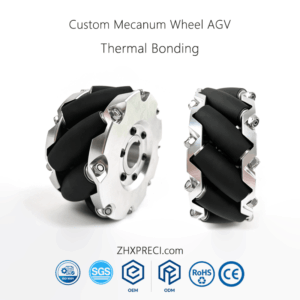
Custom CE Certified Mecanum Wheel AGV
Read more -
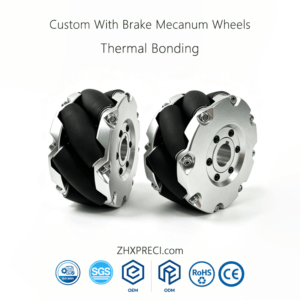
Custom High Speed Mecanum Wheel RC Car
Read more -
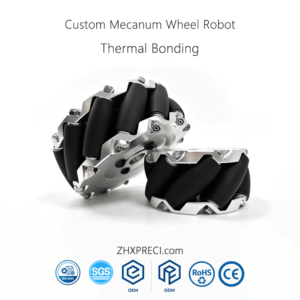
Custom High Torque Mecanum Wheel Robot
Read more -
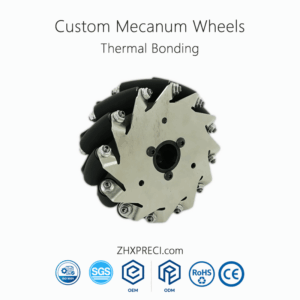
Custom Mecanum Wheel Set 152mm (6 Inch) NM152A: Heavy-Duty PU Rollers, 300kg Load Capacity, Omni-Directional for AGV & Robotics
Read more -
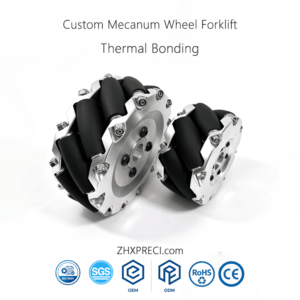
Custom Stainless Steel Mecanum Wheel Forklift
Read more -
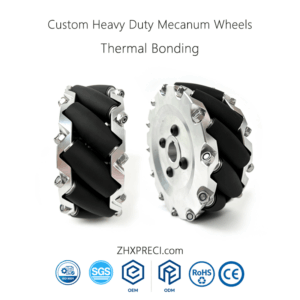
Custom With Brake Heavy Duty Mecanum Wheels
Read more -
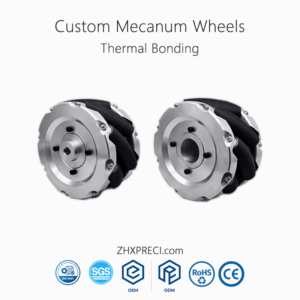
Mecanum Wheel 100MM 127MM 152MM 175MM 203MM 254MM 304MM 355MM 381MM 406MM Heavy Duty Industrial Polyurethane 8 Rollers
Read more -
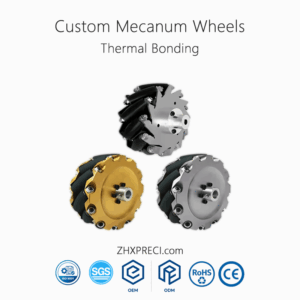
Mecanum Wheel Robot Drive Roller Intelligent Trolley Wheel Universal Roller Fulai Wheel AGV Trolley Accessories
Read more -
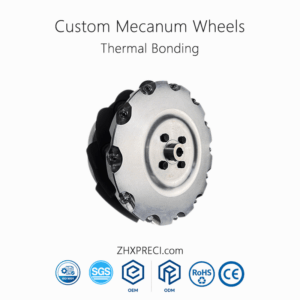
Mecanum Wheel Set 152 mm (6 Inch) NM152A – Heavy-Duty Wheels With PU-Coated Rollers, 300 kg Load Capacity, Industrial Grade, Ideal For Robotics
Read more
What Are Custom Stainless Steel Mecanum Wheels?
Custom stainless steel mecanum wheels are omnidirectional load wheels that integrate a series of free-turning rollers mounted obliquely—typically at a 45‑degree angle to the wheel's rolling plane. The wheel body and roller hubs are manufactured from corrosion-resistant stainless steel grades (commonly 304 or 316L), while the outer roller surfaces or tyre bands can be overmoulded with polyurethane, elastomer, or other specialised compounds to tailor traction, hardness, and wear resistance. This hybrid construction enables a vehicle to move in any direction—forward, reverse, lateral, and diagonal—without changing the orientation of the wheel assembly, making them essential for high‑precision material handling equipment, automated guided vehicles (AGVs), mobile robots, and heavy‑duty transfer systems.
When sourced as custom OEM/ODM solutions, these wheels are engineered to meet specific load capacities, floor surface conditions, environmental exposures (e.g., moisture, chemicals, extreme temperatures), and mounting interface requirements. As a result, custom stainless steel mecanum wheels represent a sophisticated engineering choice rather than a standard off‑shelf commodity. Their design and performance depend on a combination of metallurgical integrity, roller bearing precision, and elastomer formulation—all of which must be selected and validated according to the intended operational profile.
How to Select the Right Custom Stainless Steel Mecanum Wheel for Your Application
Selecting a suitable custom stainless steel mecanum wheel involves a systematic evaluation of several technical parameters. The process typically starts with defining the maximum static and dynamic loads per wheel, which influence the required roller diameter, axle core thickness, and bearing type. Next, the operating environment must be assessed: for food processing or pharmaceutical areas, full stainless steel construction with FDA‑approved elastomer coatings may be necessary; for outdoor or marine applications, the stainless steel grade should offer enhanced pitting resistance (e.g., 316L) and the rollers should feature sealed bearings to prevent ingress of particulates or moisture.
Other critical criteria include the desired coefficient of friction on the operating floor—smooth concrete, epoxy, or steel plates all demand different roller surface hardness and tread patterns. Additionally, the overall height of the wheel, the top plate or bolt‑through mounting pattern, and the total number of wheels per vehicle must be coordinated to achieve stable weight distribution and manoeuvrability. It is advisable to provide the manufacturer with detailed motion profiles, acceleration rates, and turning radii so that the roller geometry and elastomer compound can be tuned accordingly. Working with an experienced OEM/ODM partner, such as those offering Custom Stainless Steel Mecanum Wheels from ZHXPRECI | China OEM/ODM Factory Manufacturer Supplier Custom Elastomer Wheels & Rollers, can significantly reduce the risk of mismatched specifications and ensure that the final wheel set aligns with the vehicle's performance targets.
Key Technical Advantages of Stainless Steel Mecanum Wheels
- Corrosion resistance: Stainless steel construction provides inherent resistance to oxidation, rust, and chemical attack, which extends service life in wet or washdown environments and reduces maintenance frequency.
- Omnidirectional mobility: The unique roller arrangement allows for instantaneous vector changes in movement, enabling precise positioning and smooth lateral docking—capabilities that are difficult to achieve with conventional wheel types.
- High load capacity relative to size: The use of stainless steel for both the wheel body and the roller shafts ensures high structural rigidity, supporting heavy payloads without excessive deflection.
- Custom elastomer options: The rollers can be produced with polyurethane, nitrile, or other elastomer compounds to address specific floor protection needs, noise reduction targets, or temperature tolerance ranges (commonly -20°C to +80°C for standard polyurethane, with specialised compounds available for more extreme conditions).
- Dimensional stability: Stainless steel maintains its shape and roller alignment better than some polymer‑based alternatives, especially under fluctuating thermal or mechanical stress, contributing to consistent manoeuvring accuracy over time.
Common Applications and Industries
Custom stainless steel mecanum wheels are used across a broad spectrum of industries where precise, multidirectional movement and environmental durability are required. Typical application areas include:
- Automated guided vehicles (AGVs) and autonomous mobile robots (AMRs): These vehicles rely on mecanum wheels for docking, berthing, and navigating tight aisles in warehouses and distribution centres.
- Aerospace and defence: Heavy‑duty platforms for transporting aircraft components, munitions, and maintenance equipment benefit from the rust‑resistant construction and smooth load transfer.
- Medical and pharmaceutical manufacturing: Stainless steel wheels with smooth, non‑porous rollers are preferred in sterile or cleanroom environments, where easy cleaning and low particle generation are critical.
- Food and beverage processing: The corrosion‑resistant properties and compliance with food‑contact regulations make these wheels suitable for conveyor systems, trolleys, and processing machinery.
- Machine tool and heavy engineering: High‑load capacity stainless steel mecanum wheels are used in jig transporters, die‑handling carts, and assembly line turntables.
Why Choose Stainless Steel over Other Materials?
While carbon steel and aluminium mecanum wheels are available, stainless steel offers a compelling balance of mechanical strength and corrosion protection. Carbon steel, even with protective coatings, tends to degrade faster when exposed to moisture, caustic cleaning agents, or salted environments. Aluminium, although lightweight, may not provide the same level of impact resistance or fatigue strength under sustained heavy loads. Stainless steel, particularly when combined with high‑grade elastomer rollers, provides a robust and durable solution that supports reliable operation in challenging conditions without requiring frequent part replacement. Moreover, stainless steel's non‑magnetic variants (e.g., 316L) can be specified for sensitive electronic or magnetic field‑sensitive applications, adding another layer of design flexibility.
Custom Elastomer Rollers: Material Choices and Performance Considerations
The rollers on a stainless steel mecanum wheel are often the most critical component for traction, shock absorption, and floor protection. Common elastomer materials include polyurethane (PU), nitrile rubber (NBR), and silicone‑based compounds. Polyurethane is widely selected for its abrasion resistance, high load‑bearing capacity, and good rebound properties; it performs well on smooth floors and offers a relatively low rolling resistance. For applications requiring oil or fuel resistance, nitrile rubber may be preferable, whereas silicone compounds might be chosen for extreme temperature stability (from -50°C up to +200°C, depending on the formulation). The hardness of the elastomer, typically measured on the Shore A or Shore D scale, should be matched to the floor surface texture and the expected contact pressure. Softer rollers (around 70‑85 Shore A) provide higher grip and cushioning but may increase rolling resistance; harder formulations (over 90 Shore A) reduce rolling friction but transmit more vibration and impact to the vehicle structure. Therefore, custom elastomer development, often offered by suppliers like those providing Custom Stainless Steel Mecanum Wheels from ZHXPRECI | China OEM/ODM Factory Manufacturer Supplier Custom Elastomer Wheels & Rollers, allows for a tailored hardness‑traction compromise that optimises overall system efficiency and ride quality.
Typical Installation and Mounting Configurations
Stainless steel mecanum wheels can be mounted using several standard configurations, including top‑plate mounting, bolt‑through mounting, and flange‑type fixing. The selection depends on the structural design of the vehicle chassis and the available space for wheel installation. Top‑plate mounting is common for modular AGV systems, providing a flat, adjustable interface that facilitates alignment and replacement. Bolt‑through mounting, where a single central shaft passes through the wheel hub and is secured with nuts on both sides, is often used for heavier applications as it distributes the load symmetrically across the wheel's bearings. Flange‑type mounting is sometimes preferred in custom systems where the wheel integrates directly into a drive unit or motorised hub. It is important to verify the bolt circle diameter, thread specification, and the axle diameter compatibility during the design phase to ensure a secure, wobble‑free connection. Most manufacturers provide detailed 2D and 3D CAD drawings for their wheel families, which can be adapted to the specific mounting requirements of the customer's vehicle platform.
What Is the Typical Hardness Range for Custom Rollers?
For industrial stainless steel mecanum wheels, the roller elastomer hardness generally falls within a range of 70 to 98 Shore A, although some specialised compounds can extend to lower or higher values. A hardness of 75‑85 Shore A is often specified for general‑purpose applications where a balance of grip and low rolling resistance is required, such as on epoxy‑coated warehouse floors. Hardnesses of 90‑95 Shore A are more suited to heavy‑load or high‑speed scenarios, where a stiffer roller reduces energy losses and provides better directional stability. For applications where floor marking or noise is a concern, softer compounds (65‑75 Shore A) are sometimes recommended, though they may shorten roller life under sustained heavy loads. It is essential to consult with the elastomer supplier and conduct on‑site testing, if possible, to validate the chosen hardness against the actual operating conditions, as the relationship between hardness and performance is influenced by factors such as floor roughness, ambient temperature, and the presence of contaminants.
Load Capacities and Dynamic Performance
The load capacity of a custom stainless steel mecanum wheel is a function of roller diameter, roller core material, bearing type, and the mechanical properties of the stainless steel structure. Standard 4‑inch to 8‑inch diameter wheels typically support dynamic loads ranging from 400 kg to over 2,500 kg per wheel, depending on the specific design and bearing arrangement. However, these figures should be treated as indicative starting points rather than guaranteed limits, because actual capacity is also influenced by the vehicle's acceleration, braking forces, and floor surface characteristics. When defining load requirements, engineers should consider both static and dynamic load cases, including shock loads caused by uneven floors or sudden stops. A prudent approach is to apply an adequate safety factor—commonly 1.5 to 2.0—over the calculated maximum load to account for operational uncertainties. Moreover, the load distribution among wheels in a multi‑wheel system is rarely perfectly equal, so axle skew and frame torsion should be evaluated during the design stage.
What Are the Key Dimensions and Tolerances to Specify?
When ordering custom stainless steel mecanum wheels, the essential dimensions to define are the overall wheel diameter, the roller diameter and length, the axle hole diameter, and the overall width of the wheel assembly. Additionally, the roller pitch—the spacing between individual rollers along the wheel circumference—determines the smoothness of motion and the magnitude of vibration transmitted through the wheel. A smaller roller pitch generally provides smoother omnidirectional movement but may increase manufacturing complexity and cost. Tolerances for these dimensions are typically specified in accordance with ISO 2768‑m or similar machining standards, although tighter tolerances may be negotiated for applications requiring extremely precise positioning. It is recommended to provide the manufacturer with the target vehicle ground clearance, the required turning radius, and the maximum allowable lateral slippage, as these parameters influence the roller geometry and the angle of the roller axes.
How Does the Roller Bearing Type Affect Performance?
Roller bearings within a mecanum wheel are responsible for enabling the individual rollers to spin freely, which is what allows the wheel to perform omnidirectional movement without causing high shear forces. Common bearing types used include shielded ball bearings, sealed ball bearings, and sometimes tapered roller bearings for very high load applications. Shielded bearings are often chosen for clean indoor environments where periodic lubrication is feasible, as they offer low rolling friction and good radial load capacity. Sealed bearings, on the other hand, require less maintenance and are preferable in dusty or washdown environments, but they may have slightly higher initial friction. For heavy‑duty uses, double‑row or angular contact bearings can be incorporated to handle combined radial and axial loads, which occur during turning and lateral movement. The bearing material—stainless steel or hybrid ceramic—can also be selected to enhance corrosion resistance and extend operational life. Ultimately, the choice of bearing significantly affects the wheel's long‑term reliability and energy efficiency.
Environmental Resistance and Chemical Compatibility
Stainless steel offers excellent resistance to a wide range of chemicals, including acids, alkalis, and many organic solvents, provided the correct grade is chosen. However, the elastomer rollers may have limitations; for instance, standard polyurethane is generally resistant to oils, greases, and aliphatic hydrocarbons but can be attacked by strong acids, hot water, or polar solvents such as ketones. Therefore, when the wheels are intended for use in chemical or food processing environments, it is prudent to specify the specific chemicals and operating temperatures involved, so that the elastomer formulation can be tested for compatibility. The manufacturer can then recommend a suitable compound or suggest a protective coating for the stainless steel surfaces. This type of customisation is a key aspect of the service offered by OEM/ODM suppliers, ensuring that the final product not only meets mechanical requirements but also withstands the chemical exposures expected in daily operation.
What Maintenance Practices Are Recommended?
Regular maintenance of stainless steel mecanum wheels helps to preserve their performance and extend service life. The primary maintenance activities include periodic cleaning of the rollers and wheel surfaces to remove debris, dust, or residues that could increase rolling resistance or cause abrasive wear. For bearings, a routine lubrication schedule—based on operating hours or environmental conditions—should be established; if sealed bearings are used, they typically require less frequent attention, but their condition should still be checked for signs of noise or play. Additionally, the bolt torque on mounting plates should be verified periodically to ensure that the wheel remains securely attached and aligned with the vehicle's motion axis. It is also advisable to inspect the roller surfaces for uneven wear, cracking, or dimensional changes, which may indicate that a compound adjustment or a replacement is necessary. A proactive maintenance plan, combined with keeping spare rollers or complete wheel assemblies on hand, can minimise unplanned downtime and maintain consistent production flow.
Typical Lead Time and Ordering Considerations
For custom‑engineered stainless steel mecanum wheels, the production timeline is influenced by the order quantity, the current production schedule at the manufacturing facility, and the final confirmation of design specifications—including roller compound, bearing type, and mounting interface details. Since each custom order may involve material procurement, tooling setup, and multiple quality inspection stages, the lead time is subject to these variables. It is recommended to initiate the ordering process with a clear technical requirement specification and, if possible, to provide a sample drawing or reference part number. Early engagement with the manufacturer allows both parties to align on feasible delivery windows and to identify any potential supply chain constraints, especially for specialised elastomers or bearing types. By discussing the project timeline and production capacity transparently, customers can better integrate the wheel delivery schedule into their own vehicle production or system installation calendars.
Quality Assurance and Testing Protocols
Reputable suppliers of custom stainless steel mecanum wheels typically implement quality assurance procedures that conform to ISO 9001 or similar internationally recognised standards. These procedures often include incoming material inspection for chemical composition and mechanical properties, in‑process dimensional checks, and final functional testing such as run‑out measurement, rolling resistance verification, and visual inspection of the elastomer‑to‑metal bond integrity. Non‑destructive testing methods, like dye penetrant or ultrasonic inspection, may be applied to critical stainless steel components to detect subsurface flaws. Additionally, sample wheels from each production batch may be subjected to accelerated wear tests or load cycle tests to validate performance under simulated operating conditions. These quality measures help ensure that the wheels delivered are consistent with the approved engineering specifications and meet the required safety and reliability standards for the intended application.
Cost Factors and Value Considerations
The total cost of custom stainless steel mecanum wheels is determined by several factors, including the complexity of the roller geometry, the chosen stainless steel grade and its surface finish, the type and volume of elastomer required, the bearing specification, and the overall order quantity. While stainless steel solutions generally have a higher initial procurement cost compared to carbon steel or aluminium alternatives, they offer potential long‑term savings through reduced replacement frequency, lower maintenance costs, and less operational downtime due to corrosion failures. Moreover, when the wheels are part of a high‑value AGV or robotic system, the reliability and precision they provide can directly contribute to higher system throughput and lower total cost of ownership. Therefore, a life‑cycle cost analysis—considering purchase price, expected service life, maintenance expense, and productivity impact—is recommended to assess the true economic value of a custom stainless steel mecanum wheel solution.
Collaboration with an OEM/ODM Partner
Developing a custom stainless steel mecanum wheel is a collaborative process that benefits from early and detailed communication between the customer and the manufacturer. A competent OEM/ODM partner, such as those providing Custom Stainless Steel Mecanum Wheels from ZHXPRECI | China OEM/ODM Factory Manufacturer Supplier Custom Elastomer Wheels & Rollers, typically offers design‑for‑manufacturing (DFM) reviews, rapid prototyping capabilities, and iterative testing to refine the product before full‑scale production. This partnership approach reduces the risk of costly design changes later in the project and ensures that the final wheel specification is optimised for both performance and manufacturability. Engaging with the supplier early also enables the customer to benefit from the manufacturer's knowledge of material sourcing, advanced moulding techniques, and assembly methods, ultimately leading to a more reliable and cost‑effective wheel system.
Frequently Asked Questions
What is the difference between a stainless steel mecanum wheel and a standard polyurethane wheel?
A standard polyurethane wheel is typically a simple directional caster or rigid wheel that moves only forward or backward. In contrast, a stainless steel mecanum wheel incorporates a set of angled free‑turning rollers that enable omnidirectional movement—allowing the vehicle to slide sideways, rotate on the spot, and manoeuvre in tight spaces. The stainless steel body offers greater corrosion resistance and structural strength compared to aluminium or polymer hubs commonly used in lighter‑duty mecanum wheels.
How do I determine the correct number of wheels for my vehicle?
The number of wheels depends on the vehicle's weight, the load distribution, and the required stability. A typical four‑wheel arrangement is common for many AGVs and mobile platforms, but some systems use three, six, or even eight wheels to achieve specific manoeuvring characteristics or to spread the load over larger areas. A mechanical engineer should perform a load distribution calculation and a stability analysis to establish the optimal wheel count and placement.
Can stainless steel mecanum wheels be used on uneven floor surfaces?
They are designed primarily for relatively smooth and flat floors, as the roller system relies on continuous contact with the floor to achieve precise omnidirectional motion. On uneven or highly textured surfaces, the wheels may experience reduced grip and increased vibration. For such conditions, a larger roller diameter or a softer elastomer compound may be specified to improve floor‑following capability, but it is important to test the configuration on the actual floor to verify performance.
What elastomer options are available for the rollers?
Common options include polyurethane, nitrile rubber, silicone, and sometimes natural rubber blends. Each material has different properties regarding abrasion resistance, hardness, temperature stability, and chemical resistance. The selection should be based on the specific operating environment and the required traction characteristics.
Are these wheels suitable for outdoor use?
Yes, provided the stainless steel grade and elastomer compound are chosen to resist outdoor conditions such as UV radiation, rain, and temperature fluctuations. Grade 316L stainless steel is often preferred for outdoor applications, and the elastomer should have good UV and ozone resistance to prevent premature cracking or hardening.
How do I ensure proper alignment during installation?
Proper alignment involves ensuring that the wheel axles are perpendicular to the vehicle's frame and that the wheels are parallel to each other. Using a mounting jig or alignment tool, along with precise measurement of the wheel centres, can help achieve the required accuracy. Many OEM/ODM suppliers provide installation guides and dimensional drawings to assist in this process.
What is the typical service life of a stainless steel mecanum wheel?
The service life varies widely depending on the load, operating speed, floor condition, and maintenance. Under typical indoor industrial conditions with moderate loads and proper maintenance, these wheels can operate for several years. However, heavy loads, high speeds, or abrasive floors will reduce the life expectancy, particularly of the elastomer rollers, which may need to be replaced periodically.
Can I retrofit stainless steel mecanum wheels on an existing vehicle?
Retrofitting is feasible if the mounting dimensions, wheel diameter, and total height are compatible with the existing vehicle's clearance and drive system. It is essential to verify that the new wheels' load capacity and rolling characteristics align with the vehicle's design parameters. Consulting with the original vehicle manufacturer or a qualified engineer is advisable before proceeding.
Do you provide custom colour options for the elastomer rollers?
Many manufacturers offer custom colour pigmentation for the elastomer compounds, which can be useful for branding, visual identification, or cleanliness monitoring. However, the addition of colour may slightly affect the material properties, so it is recommended to discuss the specific requirements with the supplier to ensure that the final product maintains its mechanical and chemical performance.
In conclusion, custom stainless steel mecanum wheels represent a sophisticated, durable, and adaptable solution for applications that require omnidirectional movement in challenging environments. By carefully considering the factors outlined above—including load requirements, environmental conditions, elastomer selection, bearing type, and quality assurance—engineers and procurement specialists can specify wheels that deliver reliable performance and long‑term value. Collaborating with an established OEM/ODM partner, such as those providing Custom Stainless Steel Mecanum Wheels from ZHXPRECI | China OEM/ODM Factory Manufacturer Supplier Custom Elastomer Wheels & Rollers, ensures access to technical expertise, customisation capabilities, and rigorous quality standards that contribute to the success of the overall material handling or automation project.