
Custom Polyurethane Guide Rollers
Custom Polyurethane Guide Rollers – Specs
Precision custom polyurethane guide rollers for conveyors. Durometer, size, material tailored.
- 30‑500kg load
- 55‑98A Shore
- 60‑300mm dia
- -20‑+80°C temp
- ISO/REACH cert
Showing 1–16 of 22 results
-
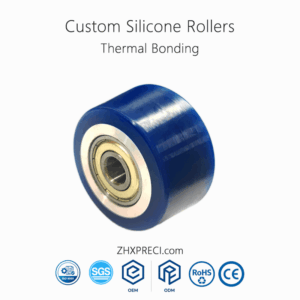
Blue Customized Silicone Rubber Coated Roller & High Quality Drive Guide Roller
Read more -
Custom ATEX Compliant Silicone Wheels Hazardous Area
Read more -
Custom Bracket Mount Silicone Wheels Easy Installation
Read more -
Custom Compact Size Silicone Wheels Space Saving
Read more -
Custom Hollow Bore PU Wheels For Direct Motor Mount
Read more -
Custom Low Temperature Silicone Wheels Freezer Trolley
Read more -
Custom NSF Certified Silicone Wheels Food Industry
Read more -
Custom Oil Resistant Silicone Wheels Industrial Cart
Read more -
Custom Ozone Resistant Silicone Wheels Outdoor Caster
Read more -
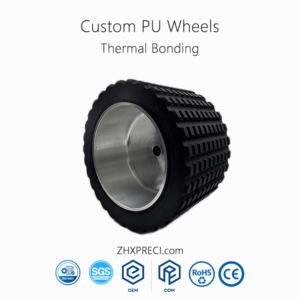
Custom Polyurethane Robot Walking Wheel – Heavy-Duty Wear-Resistant Load-Bearing Drive Roller for DIY Trolley
Read more -
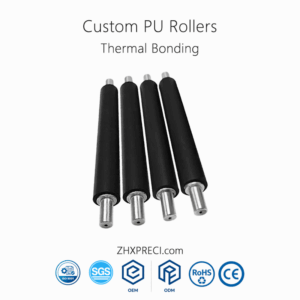
Custom PU Roller for Agricultural Machinery – High Wear & Oil Resistant for Cotton Machine
Read more -
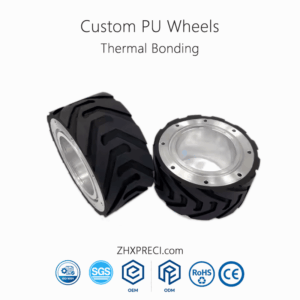
Custom PU Wheel Heavy Duty for Walking Robot & Trolley – Wear-Resistant, Non-Marking, Replacement for Rubber Rollers
Read more -
Custom Quiet Rolling Silicone Wheels Hospital Bed
Read more -
Custom Reinforced Silicone Wheels High Capacity
Read more -
Custom Reversing Duty Silicone Wheels Conveyor System
Read more -
Custom Silent Operation Silicone Wheels Medical Trolley
Read more
Technical Overview of Custom Polyurethane Guide Rollers
Custom polyurethane guide rollers are precision components used to maintain alignment, reduce friction, and guide belts, tracks, or moving assemblies in conveyor systems, material handling equipment, and automated production lines. Unlike load-bearing rollers that primarily carry vertical weight, guide rollers focus on lateral positioning and edge control to prevent misalignment and uneven wear.
Polyurethane (PUR) is a polymer formed by organic units linked through urethane bonds. As an elastomer, it combines resilience, elasticity, and abrasion resistance in a manner that is often regarded as favorable for dynamic guidance applications. The material is available across a broad hardness range—typically from 55 Shore A to 98 Shore A, with specialized grades reaching up to 70 Shore D—offering engineers flexibility in selecting the appropriate durometer for their specific operating conditions.
Custom Polyurethane Guide Rollers from ZHXPRECI | China OEM/ODM Factory Manufacturer Supplier Custom Elastomer Wheels & Rollers are manufactured through a controlled casting process. The production sequence starts with core preparation—commonly using steel, aluminum, or polyamide cores—which undergo precision machining, grinding, and honing. The polyurethane coating is then cast directly onto the prepared core, forming a chemical bond that resists delamination under normal operational stresses.
Material Properties and Performance Characteristics
Hardness and Load Capacity
The durometer hardness of a polyurethane guide roller influences its load-bearing capability, wear resistance, and suitability for particular tasks. Softer formulations (55–80 Shore A) offer greater compliance and shock absorption, which can be advantageous when surface protection or noise reduction is a priority. Medium-hardness grades (80–92 Shore A) provide a balanced set of properties for general industrial use. Harder formulations (above 92 Shore A) tend to deliver higher load capacity and improved abrasion resistance in heavy-duty settings.
Load capacity figures are typically referenced at moderate speeds—around 4 km/h on smooth, obstacle-free surfaces. At higher operating speeds, the effective dynamic load capacity generally decreases, and it is common practice to apply de-rating factors for continuous high-speed operations or environments with significant impact forces.
Temperature Range and Thermal Stability
For continuous service, polyurethane guide rollers typically operate within a temperature window of approximately -20 °C to +70 °C, with short-term excursions up to +90 °C considered acceptable under certain conditions. It is worth noting that load capacity is often reduced when the ambient temperature exceeds +40 °C. For applications that demand extended thermal ranges, specialized formulations can extend the lower limit to around -40 °C and the upper limit to about +100 °C, subject to the specific grade used.
Polyurethane is not a single uniform material; different base chemistries (polyester-based versus polyether-based, for example) exhibit distinct thermal and chemical resistance profiles. Verification against manufacturer-specific data sheets is always advisable before final specification.
Abrasion Resistance and Durability
One of the commonly cited advantages of polyurethane is its favorable abrasion resistance, which, under comparable conditions, often outperforms conventional rubber in many industrial applications. The polymer's molecular structure tends to maintain integrity under repeated sliding, scraping, and impact conditions. In abrasive environments—such as those found in mining, recycling, or bulk material handling—polyurethane guide rollers frequently run for extended periods before showing measurable wear, which can contribute to lower maintenance frequencies.
Resistance to tear propagation and cutting is also notable, particularly in applications where sharp-edged materials or debris are present. That said, actual service life depends heavily on operational parameters, and routine inspection remains the most reliable method for assessing remaining life.
Chemical Resistance
Polyurethane exhibits good to excellent resistance to a wide range of industrial chemicals. Resistance to oils, greases, and hydraulic fluids is generally considered strong. Moderate resistance is observed for many acid and alkaline solutions. Ozone resistance is rated from moderate to very good, depending on the specific formulation. However, hot water and steam environments are generally not recommended for standard polyurethane grades. Aromatic solvents such as toluene and benzene can attack the polymer and should be avoided unless specialized chemical-resistant formulations are specified.
For applications involving significant chemical exposure, it is prudent to request formulation-specific chemical compatibility data from the manufacturer, as variations in chemistry can lead to different resistance profiles.
Key Applications and Industry Use Cases
Custom polyurethane guide rollers are deployed across a variety of industries and machine types, including:
- Conveyor Systems and Material Handling: Belt tracking, package sorting, and product guidance in warehouses, distribution centers, and e-commerce fulfillment lines.
- Automotive Manufacturing: Assembly line guidance, component positioning, and automated material transfer.
- Packaging and Logistics: High-throughput conveyor systems requiring consistent traction and resistance to wear from cardboard and plastic materials.
- Printing and Paper Processing: Guiding paper, film, and flexible substrates while maintaining dimensional stability.
- Food and Beverage Processing: Bottling, canning, and food handling lines that demand resistance to water, cleaning agents, and occasional chemical contact.
- Elevator and Lift Systems: Guidance mechanisms where quiet operation and reliable tracking are required.
- Mining and Heavy Industry: Demanding environments involving abrasion, impact, and variable temperature conditions.
- Airport Baggage and Sorting Systems: High-speed sorting facilities that require precision guidance and low rolling resistance.
Custom Polyurethane Guide Rollers from ZHXPRECI | China OEM/ODM Factory Manufacturer Supplier Custom Elastomer Wheels & Rollers are designed to accommodate the specific demands of these applications, with material formulations and dimensional specifications tailored to the customer's operational parameters.
Frequently Asked Questions
What are custom polyurethane guide rollers?
Custom polyurethane guide rollers are industrial components engineered to maintain alignment, reduce rolling friction, and provide lateral guidance for conveyors and automated machinery. Unlike standard off-the-shelf rollers, custom versions are manufactured to exact dimensional tolerances, hardness specifications, and performance criteria that match a given application. They typically consist of a precision-machined core—made from steel, aluminum, or polyamide—with a cast polyurethane tread that is chemically bonded to the core.
What is the difference between polyurethane and rubber guide rollers?
Polyurethane and rubber guide rollers serve similar alignment functions, but they differ in several performance aspects. Polyurethane commonly offers better abrasion resistance, higher load capacity per unit size, and improved resistance to oils and many chemicals. Rubber tends to wear more quickly under abrasive conditions, may deform under sustained loads, and can swell or crack when exposed to hydrocarbons. Polyurethane also tends to maintain tighter dimensional tolerances over longer service intervals. However, rubber may still be a cost-effective choice for light-duty or low-stress applications where the advantages of polyurethane are not fully utilized.
How are custom polyurethane guide rollers manufactured?
The manufacturing process for custom polyurethane guide rollers typically follows these stages:
- Core Preparation: The core material is machined to precise dimensions using CNC turning, grinding, and honing.
- Surface Treatment: The core surface is cleaned, degreased, and prepared via abrasive blasting to promote adhesion.
- Adhesive Application: A specialized bonding agent is applied to facilitate chemical bonding between the core and the polyurethane layer.
- Polyurethane Casting: Liquid polyurethane is cast onto the core using centrifugal, compression, or open-casting techniques.
- Curing: The assembly is cured under controlled temperature conditions to achieve the targeted material properties.
- Post-Processing: The cured roller undergoes final machining, grinding, and finishing to meet required dimensional and surface specifications.
Vertically integrated manufacturers often maintain control over material compounding, casting, and finishing in a single facility, which can contribute to consistent quality and tighter tolerances.
How to select the right polyurethane guide roller for an application?
Selecting the appropriate guide roller involves evaluating a number of operational parameters. In practice, the following factors are typically considered:
- Load Requirements: Determine both static and dynamic loads. Load capacity is influenced by roller diameter, hardness, and operating speed.
- Operating Speed: Higher speeds may necessitate harder formulations to maintain dimensional stability and minimize rolling resistance.
- Environmental Conditions: Consider temperature extremes, chemical exposure, humidity, and UV radiation. Standard grades cover -20 °C to +70 °C, with specialized options for extended ranges.
- Hardness: Softer grades (55–80 Shore A) absorb shock better; harder grades (92–98 Shore A) offer higher load capacity and wear resistance.
- Dimensional Specifications: Define outer diameter, width, bore size, and any additional features such as flanges, grooves, or keyways.
- Surface Requirements: Non-marking and anti-static formulations are available for applications where surface protection or electrostatic discharge control is needed.
It is often helpful to consult with the manufacturer during the specification phase, as they can provide guidance based on previous experience with similar operating conditions.
How long do polyurethane guide rollers typically last in industrial use?
The service life of polyurethane guide rollers varies considerably with the application. In moderate load and clean operating environments, they commonly operate for long intervals—often substantially longer than rubber alternatives. In abrasive or high-impact settings, wear rates accelerate, and the usable life is determined by the rate of tread loss, compression set, or bond integrity. Common failure modes include abrasive wear, delamination, permanent deformation under sustained load, and chemical or thermal degradation. Regular visual inspection, dimensional checks, and bearing condition monitoring are effective practices for predicting replacement needs and avoiding unplanned downtime.
What hardness options are available for polyurethane guide rollers?
Polyurethane guide rollers are available across a wide hardness spectrum. Standard industrial grades generally range from 55 Shore A to 98 Shore A. For specialized applications, grades up to 70 Shore D are also offered. The choice of hardness involves trade-offs: softer rollers provide better cushioning and surface protection, while harder rollers deliver higher load capacity and greater resistance to abrasive wear. For many general-purpose applications, intermediate hardness grades in the 80–92 Shore A range offer a practical balance.
Can polyurethane guide rollers be customized for specific requirements?
Yes, extensive customization is available for polyurethane guide rollers. Typical customization options include:
- Dimensional specifications (outer diameter, width, bore, and clamping length)
- Hardness and specific polyurethane formulation
- Core material type and geometry
- Bearing types, seals, and lubrication
- Surface characteristics (non-marking, anti-static, textured, or smooth finishes)
- Additional mechanical features (flanges, grooves, keyways, or threaded inserts)
Custom Polyurethane Guide Rollers from ZHXPRECI | China OEM/ODM Factory Manufacturer Supplier Custom Elastomer Wheels & Rollers are offered with full customization based on customer drawings, samples, or detailed performance specifications.
What is the typical lead time for custom polyurethane guide rollers?
Lead times for custom polyurethane guide rollers depend on several variables. These include order quantity, current production schedule, the complexity of the design, core material availability, curing requirements, and post-processing operations. Since each custom order presents a unique combination of these factors, delivery timelines are best determined on a case-by-case basis. For a reliable estimate, it is recommended to contact the manufacturer directly with the specific project details and target delivery date.
Considerations for Specification and Procurement
When specifying custom polyurethane guide rollers, the following additional factors are worth considering:
Core Material Selection
The core must provide adequate structural rigidity to support operational loads while maintaining dimensional stability. Steel offers high strength and durability, aluminum provides a favorable strength-to-weight ratio, and polyamide offers lightweight construction with corrosion resistance. The selection should align with the mechanical demands and environmental exposure of the intended use.
Bearing Configuration
Most guide rollers incorporate ball bearings to reduce rolling resistance and ensure smooth rotation. Bearing selection should account for load magnitude, rotational speed, and environmental factors such as dust, moisture, or washdown conditions. Sealed bearings are commonly specified for applications where contamination is a concern.
Surface Characteristics
Non-marking and non-staining polyurethane grades are available for applications where product surface integrity is critical. Anti-static formulations can be specified for use near sensitive electronics or in potentially explosive atmospheres. Surface texture can also be adjusted to achieve targeted friction or traction characteristics.
Maintenance and Inspection Practices
Regular inspection contributes to extended service life and helps prevent unexpected downtime. Key inspection points include:
- Visual Check: Look for signs of wear, cracking, chunking, or surface degradation.
- Dimensional Measurement: Periodically measure outer diameter and width to detect wear or deformation.
- Bearing Condition: Check for smooth rotation, excessive play, or unusual noise.
- Bond Integrity: Inspect for any signs of separation between the polyurethane and the core.
- Cleaning: Remove accumulated debris, fibers, or contaminants from both the roller surface and bearing areas.
When wear reaches a point where dimensional accuracy or guidance performance is compromised, refurbishment or replacement should be scheduled as part of routine maintenance planning.
Key Advantages in Industrial Applications
Custom polyurethane guide rollers offer a number of practical benefits for industrial operations:
- Application-Specific Performance: Custom materials and designs allow the roller to match the precise demands of the application.
- Extended Service Intervals: The favorable wear resistance of polyurethane often translates into longer periods between replacements.
- Reduced Unplanned Downtime: Longer-lasting components contribute to more predictable maintenance schedules.
- Surface Protection: Non-marking grades protect conveyed products and equipment surfaces from damage.
- Quieter Operation: Polyurethane guide rollers tend to operate more quietly than metal or many plastic alternatives.
- Chemical and Environmental Resilience: Polyurethane withstands oils, greases, and numerous industrial chemicals better than conventional rubber in many cases.
These characteristics, combined with the ability to fully customize dimensions, hardness, and materials, make custom polyurethane guide rollers a practical choice for engineers and procurement professionals seeking reliable guidance components.
Technical Reference Data
The following parameters reflect typical industry-accepted ranges for polyurethane guide rollers. Actual values should be confirmed with the manufacturer for the specific grade and design in question.
- Hardness Range: 55 Shore A to 98 Shore A (standard); up to 70 Shore D (specialized)
- Continuous Operating Temperature: -20 °C to +70 °C
- Maximum Intermittent Temperature: Up to +90 °C (with reduced load capacity above +40 °C)
- Tensile Strength: Up to 38 MPa (per ASTM D412, grade-dependent)
- Elongation at Break: Up to 460% (per ASTM D412, grade-dependent)
- Chemical Resistance: Favorable for oils and greases; moderate for acids and alkalis; limited for hot water, steam, and aromatic solvents
- Abrasion Resistance: Generally regarded as superior to rubber under similar test conditions
For detailed technical data sheets, material certifications, or application-specific engineering support, consultation with the manufacturer is recommended.