
Custom High Temperature Mecanum Wheels
Showing 17–30 of 30 results
-
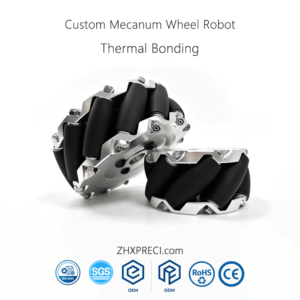
Custom High Torque Mecanum Wheel Robot
Read more -
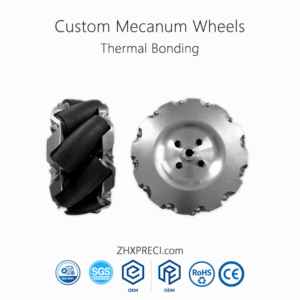
Custom Large Diameter Heavy Duty Mecanum Wheels
Read more -
Custom Large Diameter High Temperature Mecanum Wheels
Read more -
Custom Low Noise Mecanum Wheel Robot
Read more -
Custom Mecanum Wheel AGV
Read more -
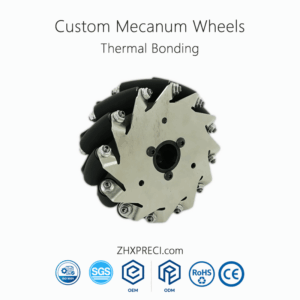
Custom Mecanum Wheel Set 152mm (6 Inch) NM152A: Heavy-Duty PU Rollers, 300kg Load Capacity, Omni-Directional for AGV & Robotics
Read more -
Custom Self-Locking With Brake Mecanum Wheels
Read more -
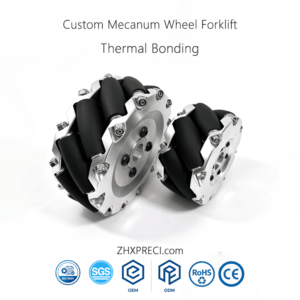
Custom Stainless Steel Mecanum Wheel Forklift
Read more -
Custom Stainless Steel Mecanum Wheel RC Car
Read more -
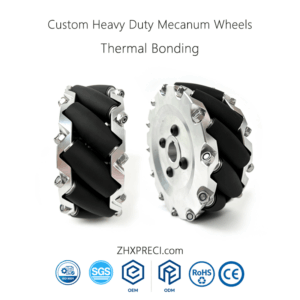
Custom With Brake Heavy Duty Mecanum Wheels
Read more -
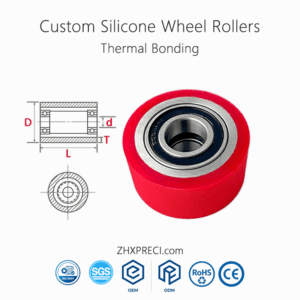
High-Temperature Resistant Durable Silicone Wheels & Quiet, Smooth, and Contamination-Free Movement Silicone Castor Wheel Roller
Read more -
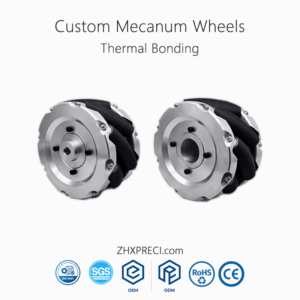
Mecanum Wheel 100MM 127MM 152MM 175MM 203MM 254MM 304MM 355MM 381MM 406MM Heavy Duty Industrial Polyurethane 8 Rollers
Read more -
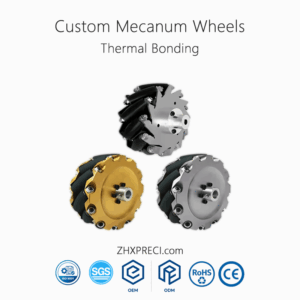
Mecanum Wheel Robot Drive Roller Intelligent Trolley Wheel Universal Roller Fulai Wheel AGV Trolley Accessories
Read more -
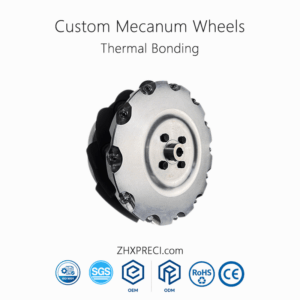
Mecanum Wheel Set 152 mm (6 Inch) NM152A – Heavy-Duty Wheels With PU-Coated Rollers, 300 kg Load Capacity, Industrial Grade, Ideal For Robotics
Read more
Overview of Custom High Temperature Mecanum Wheels
Engineered for demanding thermal environments, custom high temperature mecanum wheels provide omnidirectional mobility in applications where standard polyurethane or rubber wheels would degrade. These wheels are designed to operate reliably in continuous ambient temperatures from 120°C to 180°C, with short-duration peaks up to 200°C depending on the selected elastomer compound and metal core construction. The combination of free-rolling rollers angled at 45 degrees to the wheel axis enables holonomic motion—simultaneous translation and rotation—without changing the vehicle’s heading. This makes them particularly suitable for automated guided vehicles, kiln cars, heat treatment furnaces, foundry ladle transfer cars, and high-temperature assembly lines.
Custom High Temperature Mecanum Wheels from ZHXPRECI | China OEM/ODM Factory Manufacturer Supplier Custom Elastomer Wheels & Rollers are built with a focus on dimensional stability, load retention, and roller articulation under thermal cycling. The wheel hub is typically fabricated from heat-resistant ductile iron or forged steel, with precision-machined roller shafts and high-grade bearings that maintain clearance and rotational freedom across the operating temperature range. Roller materials include specially formulated silicone compounds, fluorosilicone, or high-temperature urethane, each selected based on the specific thermal profile, contact media, and floor surface conditions.
Key Technical Characteristics
Thermal Resistance and Material Selection
The maximum continuous service temperature for these wheels depends on the elastomer type. Silicone-based rollers can sustain 180°C continuously, while fluorosilicone offers improved oil and solvent resistance at similar temperatures. For applications requiring intermittent exposure above 200°C, ceramic-reinforced or metal-embedded rollers may be considered, though these reduce shock absorption. The metal hub and bearing assembly are treated with anti-seize coatings and high-temperature lubricants to prevent galling and maintain low rolling resistance. All materials are selected to comply with common industrial standards such as ASTM D2000 for rubber properties and ASTM A536 for ductile iron grades.
Load Capacity and Dynamic Performance
Load ratings are influenced by wheel diameter, roller count, hub construction, and operating temperature. For a standard 200 mm diameter wheel with eight rollers, typical dynamic load capacity ranges from 800 kg to 1,500 kg per wheel at ambient temperature, derating approximately 15% to 25% when operating at 150°C due to elastomer modulus reduction. Actual load limits should be verified through application-specific calculations, considering floor flatness, acceleration forces, and duty cycle. The roller bearings are typically sealed and pre-lubricated, offering a maintenance interval that varies with operational hours and contamination levels.
Precision and Tolerance
Roller concentricity, axial runout, and roller-to-roller height consistency directly affect vehicle positioning accuracy. Custom high temperature mecanum wheels can be manufactured to ISO 2768-m or tighter tolerances upon request. Typical radial runout is held within 0.2 mm, and roller surface hardness is specified in Shore A or D scales, with values between 85 Shore A and 55 Shore D depending on the required traction and wear resistance. These tolerances ensure predictable motion control for autonomous navigation systems that rely on odometry and encoder feedback.
Frequently Asked Questions
What is a custom high temperature mecanum wheel?
A custom high temperature mecanum wheel is an omnidirectional drive wheel equipped with freely rotating rollers set at 45° angles to the wheel plane, specifically designed to maintain structural integrity and rolling efficiency in elevated thermal environments. Unlike standard mecanum wheels, which use polyurethane that softens or melts above 80°C, high-temperature variants employ heat-stable elastomers, thermally treated metals, and special lubricants. These wheels allow a vehicle to move forward, sideways, diagonally, and rotate in place—enabling precise positioning in confined or hot industrial spaces.
How does a high temperature mecanum wheel work?
Each wheel has a series of barrel-shaped rollers mounted on individual axles around the circumference. The rollers are angled at 45 degrees relative to the wheel’s rotational axis. When the wheel rotates, the roller contact with the floor generates a force vector that is offset from the wheel’s direction of travel. By independently controlling the speed and direction of each of four wheels, the resultant force vectors combine to produce any desired movement direction. At high temperatures, the roller material retains sufficient modulus to transmit these forces without excessive deformation, while the bearings and shafts continue to rotate smoothly, ensuring consistent vector generation.
What temperature range can these wheels withstand?
Based on industry-standard material data, properly specified custom high temperature mecanum wheels can operate continuously between 120°C and 180°C. Short excursions up to 200°C are possible for limited durations, provided the load is reduced accordingly. For environments exceeding 200°C, alternative constructions such as all-metal rollers or ceramic-coated hubs may be explored, though these typically compromise traction and floor protection. The specific temperature rating depends on the chosen elastomer grade, hub design, and bearing thermal clearance—all of which are defined during the engineering phase for each application.
How to select the right high temperature mecanum wheel for my application?
Selection involves evaluating four primary factors: operating temperature range, floor conditions, load weight, and motion precision requirements. Start by measuring the actual air temperature and surface temperature near the wheel contact zone over a full cycle. Then determine the maximum static and dynamic loads per wheel, considering acceleration and braking forces. Next, assess floor materials—smooth concrete, steel plates, or abrasive surfaces—to select the appropriate roller hardness and tread pattern. Finally, define the required positioning accuracy to decide on machining tolerances and bearing quality. It is advisable to provide a detailed application profile to the manufacturer for a tailored recommendation.
How to maintain high temperature mecanum wheels?
Regular maintenance includes visual inspection for roller cracks, hub distortion, and bearing play. Clean the rollers and shafts periodically to remove debris, ash, or process residue that could impair rotation. Lubrication intervals should be adjusted based on temperature exposure; high-temperature greases typically last 1,000 to 2,000 operating hours before reapplication. Check bolt torques on mounting flanges at scheduled downtimes, and replace any rollers that show uneven wear or binding. Maintaining proper alignment and floor condition also extends service life significantly.
Are these wheels suitable for outdoor or wet environments?
While the primary design focus is on high thermal resistance, many elastomers used also offer moderate resistance to moisture, oils, and mild chemicals. However, outdoor use with rain, snow, or salt spray requires additional corrosion protection on the hub and fasteners—typically zinc-nickel plating or stainless steel components. For wet and hot conditions (e.g., steam cleaning), consult the material compatibility chart. The standard construction is not intended for submerged or high-pressure washdown applications unless specifically configured.
Can the rollers be replaced individually?
Yes, most designs allow replacement of individual rollers or roller assemblies without discarding the entire wheel. This modular approach reduces long-term maintenance costs. The roller axles are retained by clips, screws, or press-fit pins, enabling field replacement with basic tools. When ordering replacement rollers, specify the original material grade and hardness to maintain uniform performance across all wheels.
How does high temperature affect rolling resistance?
As temperature rises, elastomer modulus decreases, which increases the hysteresis loss during rolling. Consequently, rolling resistance may increase by 10% to 30% compared to room-temperature operation. This effect is more pronounced at lower loads because the deformation is proportionally larger. To compensate, motor power ratings should include a safety margin. The actual rolling resistance can be measured via a dynamometer test under simulated temperature conditions, and such data can be provided upon request for critical applications.
What industries commonly use these wheels?
Typical industries include automotive manufacturing (paint curing ovens, conveyor systems), aerospace (composite curing autoclaves), glass production (annealing lehrs), ceramic kilns, metal heat treatment, and semiconductor equipment. They are also found in bakery ovens, food processing dryers, and battery electrode drying lines. Any sector that requires precise material handling in a high-heat environment can benefit from these custom wheels.
How to integrate these wheels with my existing AGV or transfer cart?
Integration involves matching the wheel mounting pattern, diameter, and load rating to the vehicle’s design. Most custom high temperature mecanum wheels are available with standard flange or hub dimensions, or they can be manufactured to a specific blueprint. The control system must be calibrated to account for the wheel’s geometric parameters—roller angle, effective diameter, and torque-speed characteristics. Many suppliers, including ZHXPRECI, offer technical drawings and 3D models to facilitate virtual prototyping before physical integration.
Customization Options and Engineering Support
Each application presents unique challenges, which is why standard off-the-shelf wheels may not be optimal. Custom High Temperature Mecanum Wheels from ZHXPRECI | China OEM/ODM Factory Manufacturer Supplier Custom Elastomer Wheels & Rollers can be tailored in terms of diameter (from 100 mm to 500 mm), hub material (steel, stainless steel, or aluminum with thermal barriers), roller count (6, 8, 10, or 12), roller shape (crowned or straight), and elastomer hardness. Additional options include anti-static compounds, flame-retardant additives, and integrated encoders or temperature sensors. The engineering team can review your load cycle, floor profile, and environmental data to propose a verified specification.
For bespoke requirements, finite element analysis (FEA) of the hub and roller shafts can be performed to ensure structural integrity at peak thermal and mechanical loads. Thermal simulations predict expansion gaps and bearing clearances across the anticipated temperature range, preventing seizure or excessive play. Prototyping and sample testing are available to validate performance before full production runs.
Lead Time and Ordering Process
Production lead time is subject to order quantity, current production schedule, and final specification confirmation. For typical batch sizes between 20 and 100 wheels, a provisional timeline can be discussed during the quotation phase. Custom material sourcing, tooling modifications, and special testing may extend the schedule, but these factors are transparently communicated in the project plan. It is recommended to place inquiries well in advance of your required installation date, allowing for iterative design reviews and sample approvals. Volume orders benefit from established production lines, while small-batch or prototype orders receive dedicated attention to ensure precision.
Quality Assurance and Traceability
All manufacturing processes follow documented quality control procedures, including incoming material inspection, in-process dimensional checks, roller hardness testing, and final runout verification. Each wheel is assigned a unique serial number linking to the production records, material certificates, and test reports. Random samples from each lot undergo thermal cycling tests to confirm dimensional stability and rolling torque consistency. While no manufacturing process can eliminate all variability, the combination of statistical process control and final inspection provides a high level of confidence in the delivered product.
Why Choose a China-Based OEM/ODM Supplier
Partnering with a specialized factory like ZHXPRECI offers access to a comprehensive supply chain for raw materials, precision machining, and elastomer compounding. The production capacity supports both small prototype orders and large-scale industrial volumes, with flexible scheduling to accommodate urgent or phased deliveries. Direct collaboration with the engineering team allows for rapid iteration on design improvements, often with shorter turnaround times compared to multi-tiered distribution channels. The cost structure remains competitive without compromising on material grades or testing rigor, making it a viable option for global procurement.
Environmental and Safety Considerations
High temperature operations naturally involve risks of burns, fire, and fume emissions. These wheels are designed with materials that have known decomposition temperatures above the maximum operating range, minimizing the release of hazardous byproducts. However, it is the user’s responsibility to ensure adequate ventilation, emergency stops, and thermal barriers in the overall system. The wheels are not self-extinguishing unless explicitly specified with flame-retardant compounds. Always refer to the material safety data sheets (MSDS) for the specific elastomer grade used.
Performance Testing and Validation
Before deployment, validation testing is strongly advised. Typical tests include stationary load holding under elevated temperature, dynamic rolling resistance measurement, and accelerated wear testing on representative floor surfaces. Cornering and maneuvering accuracy can be verified using a laser tracking system. The results of these tests help fine-tune control parameters and predict maintenance intervals. While published performance figures are based on standard test conditions, actual in-situ performance may vary—hence the recommendation for application-specific trials.
Cost Factors and Value Analysis
The total cost of ownership for custom high temperature mecanum wheels extends beyond the initial purchase price. Factors such as longer service life, reduced downtime, lower maintenance frequency, and improved positional accuracy contribute to overall operational savings. When compared to replacing standard wheels every few months due to thermal degradation, the upfront investment in high-temperature materials often pays back within a year. Moreover, the ability to achieve precise maneuvers in tight spaces can increase throughput and reduce product damage, adding further value.
Installation and Alignment Guidelines
Proper installation begins with checking the mounting surface flatness—typically within 0.5 mm per meter to avoid uneven loading. Tighten mounting bolts to the recommended torque values using a calibrated wrench. Ensure that all wheels on a vehicle are set to the same height and that the roller orientations are consistent (all rollers angled correctly for either clockwise or counterclockwise rotation). Misalignment can cause steering drift and accelerated roller wear. After installation, perform a low-speed test in all intended movement directions and measure the actual travelled path against the command to verify calibration.
Conclusion
Custom high temperature mecanum wheels provide a reliable solution for omnidirectional material handling in thermally challenging industrial processes. By focusing on material science, precision engineering, and application-specific customization, these wheels enable automation where traditional wheels would fail. With careful selection, proper maintenance, and collaboration with an experienced manufacturer, your operation can achieve consistent, accurate, and efficient motion even at elevated temperatures. For further technical consultation or to request a detailed specification sheet, please contact the engineering support team at ZHXPRECI.