
Custom With Brake Mecanum Wheels
Showing 17–29 of 29 results
-
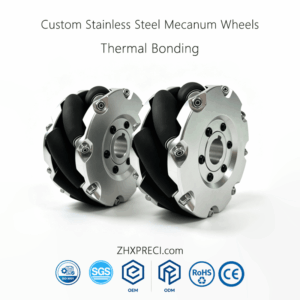
Custom High Temperature Stainless Steel Mecanum Wheels
Read more -
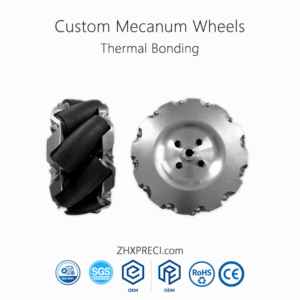
Custom High Torque Mecanum Wheel Forklift
Read more -
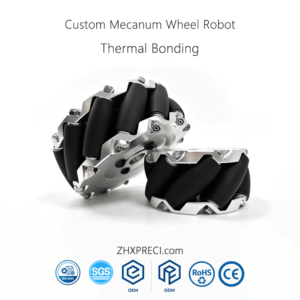
Custom High Torque Mecanum Wheel Robot
Read more -
Custom Large Diameter Heavy Duty Mecanum Wheels
Read more -
Custom Large Diameter High Temperature Mecanum Wheels
Read more -
Custom Low Noise Mecanum Wheel Robot
Read more -
Custom Mecanum Wheel AGV
Read more -
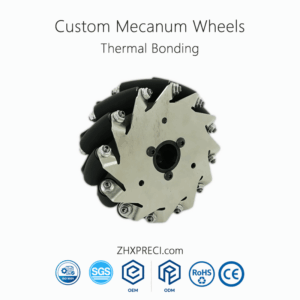
Custom Mecanum Wheel Set 152mm (6 Inch) NM152A: Heavy-Duty PU Rollers, 300kg Load Capacity, Omni-Directional for AGV & Robotics
Read more -
Custom Self-Locking With Brake Mecanum Wheels
Read more -
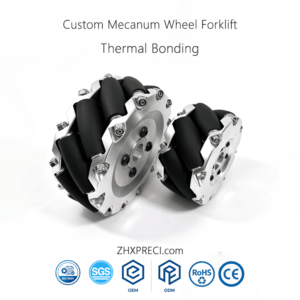
Custom Stainless Steel Mecanum Wheel Forklift
Read more -
Custom Stainless Steel Mecanum Wheel RC Car
Read more -
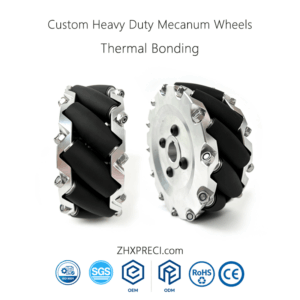
Custom With Brake Heavy Duty Mecanum Wheels
Read more -
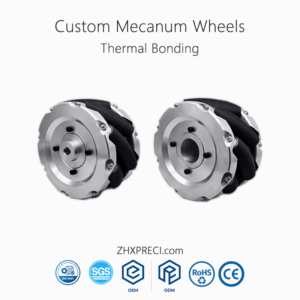
Mecanum Wheel 100MM 127MM 152MM 175MM 203MM 254MM 304MM 355MM 381MM 406MM Heavy Duty Industrial Polyurethane 8 Rollers
Read more
What Are Custom With Brake Mecanum Wheels?
Custom with brake mecanum wheels represent a specialised category of omnidirectional mobility components that integrate a friction-based braking mechanism directly into the wheel hub or roller assembly. Unlike standard mecanum wheels that allow free rotation in all directions via angled free-spinning rollers, the brake-equipped variant provides controlled stopping or holding torque without compromising the inherent vector‑movement capability. This combination is particularly valuable in material handling equipment, automated guided vehicles (AGVs), mobile robotics, and specialised industrial carts where positional accuracy and operator safety are simultaneous priorities.
For organisations seeking reliable engineering support and manufacturing flexibility, Custom With Brake Mecanum Wheels from ZHXPRECI | China OEM/ODM Factory Manufacturer Supplier Custom Elastomer Wheels & Rollers represents a sourcing pathway that aligns customisation with performance validation. The brake function is typically achieved through spring-applied, pneumatically released calipers or electromagnetic friction plates that act upon the wheel hub or a dedicated brake disc. This design ensures that the wheel retains its omnidirectional movement characteristics when the brake is disengaged, while offering positive locking when engaged. The integration requires careful engineering to balance braking torque, thermal dissipation, and roller clearance, all of which are influenced by the wheel diameter, roller material, and intended duty cycle.
How Do Mecanum Wheels with Braking Systems Operate?
The operational principle of brake-equipped mecanum wheels centres on the coexistence of two independent motion systems: the free‑rolling roller set for lateral and rotational vector movements, and the braking subsystem for speed reduction and static hold. The rollers, mounted at a typical 45‑degree angle to the wheel's axle, enable the wheel to generate translational forces in any direction when combined with other wheels in a four‑wheel configuration. The brake mechanism, however, acts directly on the wheel hub or on an auxiliary brake drum, independent of the rollers. This separation means that braking force is transmitted to the ground through the wheel's main tyre or elastomer tread, not through the rollers, which prevents excessive wear on the roller bearings.
In many industrial applications, the braking system is designed as a fail‑safe type—spring‑applied with pneumatic or electric release. This approach ensures that in the event of air pressure loss or power failure, the brake automatically engages, providing a safety hold. The response time of such systems is typically in the range of 50 to 150 milliseconds, depending on the actuator type and control valve configuration. For precise positioning tasks, such as docking stations or conveyor transfer points, the brake can be modulated to provide proportional braking force, though this requires a more sophisticated control architecture. The overall performance is subject to the specific design parameters and the integration with the vehicle's motion controller.
Technical Specifications and Material Selection
Custom with brake mecanum wheels are offered in a broad spectrum of material combinations, each selected based on floor conditions, load capacity, speed, and environmental factors. The roller surface is commonly manufactured from polyurethane (PU), rubber, or nylon, with PU being the predominant choice due to its superior abrasion resistance, load-bearing capability, and noise reduction properties. Polyurethane elastomers used in these wheels typically exhibit a Shore A hardness ranging from 70 to 95, with harder compounds (90–95 Shore A) preferred for heavy‑load applications and softer variants (70–80 Shore A) for delicate floor surfaces or shock‑absorbing requirements. The operating temperature range for standard PU rollers is generally between -20°C and +80°C, while specialised formulations can extend this range to -40°C to +120°C for cold‑storage or high‑heat environments.
The wheel frame or hub is typically fabricated from high‑strength ductile iron, steel, or aluminium alloy, with surface treatments such as zinc plating, powder coating, or anodising to resist corrosion. Load capacity per wheel varies widely: for a 200 mm diameter polyurethane roller wheel with a steel hub, typical dynamic load ratings fall between 500 kg and 1,500 kg, while larger diameters (300–400 mm) can support up to 3,000 kg or more under static conditions. These figures are based on industry‑standard test methods and assume uniform floor surfaces and moderate speeds (≤2 m/s). Actual load limits must be de‑rated for uneven floors, high acceleration, or continuous operation, and validation through application‑specific engineering analysis is recommended.
Customisation Options for Brake Mecanum Wheels
The customisation of brake mecanum wheels encompasses multiple dimensions, ranging from roller compound and hardness to hub geometry, brake actuator type, and mounting interface. For example, the roller diameter can be tailored from 100 mm to 500 mm, with corresponding adjustments to the roller length and number of rollers per wheel to suit different load distributions and ground contact pressures. The brake mechanism itself offers flexibility: spring‑set pneumatic brakes, hydraulic calipers, electromagnetic tooth clutches, and manual parking brakes are all feasible, with the choice influenced by the available onboard power source, control system, and safety requirements. Customisation capabilities such as those offered by Custom With Brake Mecanum Wheels from ZHXPRECI | China OEM/ODM Factory Manufacturer Supplier Custom Elastomer Wheels & Rollers include bearing selection (tapered roller, ball, or needle bearings), axle shaft dimensions, and colour coding for easy maintenance identification.
Another critical customisation parameter is the roller pattern and tread profile. While the standard 45‑degree roller angle provides a good balance of speed and manoeuvrability, angles between 40 and 50 degrees can be specified to favour either translational efficiency or rotational agility. Grooved or chevron‑type treads may be added to improve traction on oily or wet surfaces, though this can increase rolling resistance. For clean‑room or food‑processing environments, non‑marking polyurethane compounds and stainless‑steel hubs are available to meet hygiene standards. All customisation choices directly affect the overall wheel weight, inertia, and brake torque requirements, so a holistic system‑level evaluation is essential.
What Are the Typical Applications for Custom With Brake Mecanum Wheels?
These wheels are widely deployed in automated material transport systems where space constraints demand omnidirectional movement combined with accurate stopping. Automated guided vehicles in manufacturing plants, warehouse shuttle systems, hospital bed transporters, and mobile assembly platforms frequently utilise brake‑equipped mecanum wheels to achieve both high‑precision docking and safe operator interaction. In heavy‑duty contexts, such as steel coil handling or aerospace component positioning, the brake mechanism provides a reliable means of maintaining position during load transfer operations. The wheels are also found in specialised testing rigs, stage machinery, and even certain off‑road vehicles where terrain adaptability and controlled deceleration are critical.
Beyond these traditional sectors, emerging applications in autonomous mobile robots (AMRs) and collaborative robots (cobots) are driving demand for more compact, lightweight brake mecanum designs. Here, the emphasis is on low‑inertia rollers, fast brake response, and integration with CAN bus or EtherCAT control networks. The ability to customise both the elastomer composition and the brake control strategy makes these wheels adaptable to varying floor conditions—from polished concrete to interlocking tiles—while maintaining predictable stopping distances. Procurement teams often combine standardised wheel families with bespoke brake parameters to achieve a balance between cost, lead time, and field performance.
How to Select the Right Brake Mechanism for Mecanum Wheels?
Selecting an appropriate brake mechanism involves evaluating the required holding torque, release frequency, response speed, and available actuation media. For applications that demand fail‑safe operation, spring‑applied brakes with pneumatic release are a common choice, as they engage upon loss of air pressure—enhancing safety. The holding torque should be at least 1.5 to 2 times the maximum expected static torque from the load to account for incline effects or external forces. For high‑cycle applications (e.g., frequent stop‑and‑go in conveyor systems), electromagnetic brakes with friction discs offer quicker response and more consistent thermal performance, but they require a reliable DC power supply and may generate additional heat.
Hydraulic brakes are less common in mobile equipment but are preferred in extremely heavy loads (over 5,000 kg per wheel) where hydraulic power is already available on the vehicle. Manual or mechanical brakes—operated via cable or lever—are occasionally used for manually guided carts or maintenance‑only applications where automated control is not needed. In all cases, the selected brake must be compatible with the wheel's thermal envelope; repeated braking from high speed can elevate hub temperatures beyond the elastomer's safe limit, accelerating wear. Engineering consultation, including thermal modelling and brake duty‑cycle analysis, is recommended to avoid premature degradation.
What Are the Load and Temperature Ranges for Custom Elastomer Mecanum Wheels?
Load and temperature ranges are interconnected parameters that directly influence wheel durability and operational safety. For standard polyurethane elastomers, the continuous operating temperature is typically capped at 80°C, with intermittent peaks up to 100°C acceptable for short durations (less than 5 minutes). Above these thresholds, the material's tensile strength and abrasion resistance diminish, leading to chunking or delamination of the roller surface. Conversely, at temperatures below -20°C, polyurethane becomes increasingly brittle, reducing impact resistance and potentially causing cracking under shock loads. Specialised cold‑resistant compounds can function down to -40°C, while high‑temperature variants (e.g., based on thermoplastic polyurethane or castable urethane with modified isocyanates) can handle up to 120°C continuously.
Load capacity is not a static figure; it varies with speed, floor flatness, and duty cycle. A wheel rated for 1,000 kg dynamic load at 0.5 m/s may need to be de‑rated to 700 kg when operating at 1.5 m/s, due to increased centrifugal forces and heat generation. Similarly, operation on rough or uneven floors can reduce effective capacity by 20–30% because of point‑loading on individual rollers. For precise system design, manufacturers typically provide load‑speed‑temperature charts based on ISO 22883 or equivalent standards. These charts serve as a starting point, but on‑site testing under actual working conditions remains the most reliable method for confirming performance margins.
How to Maintain and Service Brake Mecanum Wheels?
Maintenance of brake mecanum wheels primarily focuses on three areas: roller integrity, brake friction surfaces, and bearing lubrication. Regular visual inspections—ideally on a weekly or monthly schedule—should check for cuts, flat spots, or embedded debris on the polyurethane rollers. Any damage that penetrates more than 2 mm into the roller surface may require replacement to prevent uneven wear and vibration. The brake mechanism, particularly the friction pads or discs, should be inspected for thickness remaining and surface glazing; most brake pads in industrial service have a usable life of 3,000 to 5,000 braking cycles, but this is highly dependent on load and stopping frequency. Bearing maintenance involves periodic regreasing (for open bearings) or replacement of sealed bearings when play exceeds manufacturer tolerances.
Cleaning procedures are equally important: water‑based or mild solvent cleaners can be used to remove oil and dust, but high‑pressure water jets should be avoided as they may force moisture into the brake assembly. For wheels with pneumatic brakes, the air lines and actuators require periodic leak checks and condensate drainage. A well‑documented maintenance log, including operating hours, brake actuation counts, and visual inspection findings, enables predictive rather than reactive servicing. Where high reliability is essential—for instance in 24/7 logistics operations—proactive component exchange at scheduled intervals (e.g., roller replacement every 2,000 operating hours) often proves more cost‑effective than unscheduled downtime.
How Does the Brake System Affect Omnidirectional Mobility?
The integration of a brake does not inherently impair the omnidirectional characteristics of mecanum wheels, provided that the brake acts solely on the main hub and not on the individual rollers. When the brake is disengaged, the wheel behaves identically to a standard mecanum wheel: each free‑spinning roller at a 45‑degree angle allows the wheel to translate sideways or diagonally while rotating about its own axis. The brake rotor or disc is typically mounted coaxially with the wheel hub, and its engagement creates a frictional torque that resists hub rotation, effectively holding the wheel in place while still allowing the rollers to spin freely. This means that even with the brake applied, the vehicle cannot move in any direction because the hub is locked, but the rollers themselves are not damaged.
However, the added mass of the brake components—rotor, caliper, and mounting brackets—increases the wheel's moment of inertia, which can marginally reduce acceleration and responsiveness. The effect is more pronounced in smaller wheel diameters (under 150 mm) where the brake mass may represent a significant proportion of the total wheel weight. In large‑diameter wheels (300 mm and above), the inertia increase is usually within acceptable limits for most industrial drives. The control algorithm may need to compensate for this extra inertia during high‑speed directional changes, but modern servo drives with advanced tuning parameters can accommodate such variations effectively.
What Is the Role of Elastomer Material in Custom Mecanum Wheels?
The elastomer material is the primary interface between the wheel and the floor, and it dictates traction, wear resistance, vibration damping, and noise generation. For mecanum wheels, the elastomer is usually cast or moulded onto the roller cores or around the wheel rim, forming individual tread bands. Polyurethane (PU) dominates this category due to its high tear strength (typically 30–60 kN/m) and excellent rebound resilience (45–65% for common formulations). These properties allow the roller to grip the floor without excessive deformation, maintaining the precise geometry required for accurate vector movement. The material also provides a degree of cushioning that protects the vehicle's sensitive electronics from shock loads, which is particularly valuable in AGV applications.
Other elastomer options include natural rubber, which offers lower rolling resistance and superior wet‑traction but suffers from poorer ozone resistance and limited load capacity; and thermoplastic elastomers (TPE), which are easier to process and recycle but have lower heat resistance. The choice between these materials must account for the operating environment: rubber works well in outdoor or damp conditions, while PU is preferred for indoor industrial floors where oil and grease are present. In all cases, the elastomer thickness and durometer are tuned to the expected floor roughness; softer compounds conform better to uneven surfaces but generate more rolling resistance, while harder compounds reduce energy consumption but transmit more vibration.
How to Integrate Brake Mecanum Wheels with Existing Control Systems?
Integration requires both mechanical and electrical considerations. Mechanically, the wheel mounting pattern (bolt circle diameter, hub bore, and keyway) must match the vehicle's axle or drive motor flange. Many suppliers offer adaptor plates or custom hubs to simplify retrofitting. Electrically, the brake actuator needs a dedicated control output from the PLC or motion controller, usually via a relay or transistor output capable of handling the brake coil's inrush and holding currents. For pneumatic brakes, an electrically controlled solenoid valve directs air pressure to release the brake; the valve's response time and the air supply pressure (typically 4–6 bar) must be coordinated with the vehicle's emergency stop logic.
Control software should include a brake engagement delay to allow the drive motors to decelerate before full brake application, reducing shock loads on the rollers and brake pads. In advanced systems, the brake can be integrated with the motor drive's regenerative braking to provide a combined deceleration profile, extending brake life. For multi‑wheel vehicles, it is common to engage all wheel brakes simultaneously to maintain stability, though differential braking may be used for turning assistance. Safety standards such as ISO 3691‑4 for industrial trucks require that the brake system be monitored for faults, with a redundant circuit to ensure fail‑safe operation. Thorough testing with representative loads and speeds is indispensable before commissioning.
What Are the Advantages Over Conventional Castors and Fixed Wheels?
Compared to conventional castors or fixed wheels, custom brake mecanum wheels offer a unique combination of manoeuvrability and controlled stopping that is unattainable with traditional designs. A standard swivel castor can rotate 360° but cannot move sideways without a complex steering manoeuvre, while fixed wheels only travel in a straight line. Mecanum wheels, by contrast, enable lateral, diagonal, and rotational movements without changing the vehicle's heading, which significantly reduces the floor space required for turning and allows for highly dense warehouse layouts. The addition of a brake transforms this flexibility into precise positioning capability—operators can hold a vehicle at an exact spot for loading or unloading, then release and move sideways into the next aisle.
From a maintenance perspective, brake mecanum wheels eliminate the need for additional parking brakes or separate locking castors, thereby simplifying the vehicle's bill of materials and reducing potential failure points. The integrated design also reduces overall weight compared to a separate wheel-and-brake assembly, improving energy efficiency. However, the initial cost is higher than that of standard wheels, and the engineering effort for proper integration is more demanding. For applications where throughput and space utilisation are critical, the operational benefits often justify the premium, especially when customised to match specific load and floor conditions.
Supply Chain and Collaboration Considerations
Procuring custom with brake mecanum wheels involves more than selecting a catalogue part; it requires a partnership with a manufacturer that can provide engineering support, material traceability, and quality assurance throughout the production cycle. Custom With Brake Mecanum Wheels from ZHXPRECI | China OEM/ODM Factory Manufacturer Supplier Custom Elastomer Wheels & Rollers offers a collaborative framework that begins with a detailed requirement review—covering load spectra, environmental exposures, expected service life, and regulatory compliance. This engagement ensures that the final wheel design is not merely a standard product but a tailored solution that addresses the specific constraints of the application.
For procurement and engineering teams, the decision to source custom brake mecanum wheels should be guided by factors such as the supplier's track record in elastomer processing, in‑house testing capabilities, and responsiveness to design changes. Lead time is subject to order quantity, current production schedule, and final specification confirmation; therefore, early engagement during the vehicle design phase is advisable to align delivery expectations with project milestones. Many OEMs also offer sample batches for field testing prior to full‑scale production, allowing validation of performance metrics such as braking distance, roller wear, and noise levels under real‑world conditions. Such iterative development reduces the risk of costly redesigns and ensures that the final product meets both functional and commercial objectives.