
Custom Industrial Polyurethane Rollers
Showing 113–128 of 376 results
-
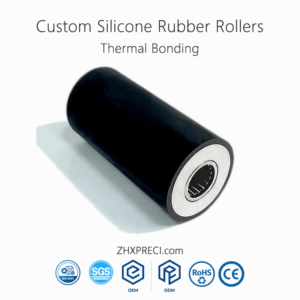
Custom Grooved Rubber Rollers for Uniform Coating Application
Read more -
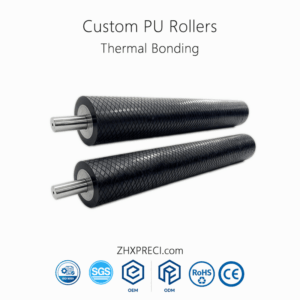
Custom Grooved Surface PU Rollers For Positive Belt Tracking
Read more -
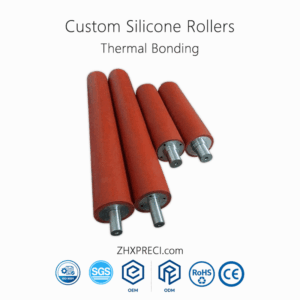
Custom Ground Surface Silicone Coated Rollers Precision Finish
Read more -
Custom Hardened Steel Core PU Rollers For Food Processing
Read more -
Custom Heat Dissipating PU Rollers For Continuous Drying Ovens
Read more -
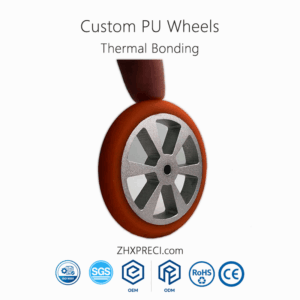
Custom Heat Resistant Polyurethane Wheels For Kiln Carts
Read more -
Custom Heat Resistant PU Rollers For Laminating
Read more -
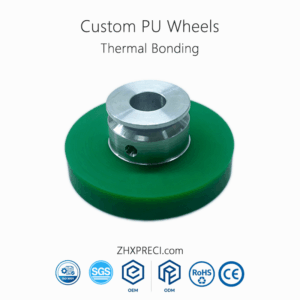
Custom Heat Resistant Rubber Wheels with Coating for Oven Conveyors
Read more -
Custom Heavy Duty Polyurethane Wheels For AGV Systems
Read more -
Custom Heavy Duty Polyurethane Wheels For Distribution Carts
Read more -
Custom Heavy Duty Polyurethane Wheels For Farm Carts
Read more -
Custom Heavy Duty PU Rollers For Packaging Conveyor Lines
Read more -
Custom Heavy Duty PU Wheels For Warehouse Carts
Read more -
Custom Heavy Duty Rubber Wheels with Rubber Coating for Pallet Jacks
Read more -
Custom Heavy Duty Silicone Coated Rollers Industrial Grade
Read more -
Custom Heavy Duty Silicone Coated Wheels
Read more
Custom Industrial Polyurethane Rollers – Technical Overview for Engineering & Procurement
Custom industrial polyurethane rollers are cylindrical components consisting of a metal core—typically steel, aluminum, or stainless steel—encased in a cast or molded polyurethane elastomer layer. These rollers mount on fixed shafts within machinery frames and rotate to drive, support, guide, or convey belts, webs, sheets, or products through industrial processing lines. Unlike polyurethane wheels, which travel with mobile equipment, polyurethane rollers remain stationary in position while their cylindrical surface rotates to move materials past them.
Industries ranging from printing and packaging to woodworking, metal forming, textile processing, and material handling rely on these rollers for their combination of wear resistance, load-bearing capacity, and surface traction. Custom Industrial Polyurethane Rollers from ZHXPRECI | China OEM/ODM Factory Manufacturer Supplier Custom Elastomer Wheels & Rollers serve these diverse applications with formulations tailored to specific operating conditions.
What Are the Key Technical Properties of Polyurethane Rollers?
Polyurethane elastomers exhibit a range of mechanical properties that make them suitable for industrial roller applications. Hardness, measured on the Shore A scale per ASTM D2240, typically ranges from 60 Shore A to 95 Shore A for most industrial roller applications. Softer compounds in the 60–75 Shore A range offer higher elasticity, shock absorption, and grip—making them suitable for applications requiring positive traction or gentle material handling. Medium-hardness compounds around 80–85 Shore A provide a balance of wear resistance and flexibility for general-purpose conveyor and feed rollers. Harder compounds in the 90–95 Shore A range deliver minimal deformation under load, higher load-bearing capacity, and extended wear life in high-pressure or high-speed applications.
Tensile strength values for industrial-grade polyurethane rollers commonly fall in the range of 4,500 psi or higher, with 100% modulus values around 1,100 psi and 300% modulus values around 2,100 psi. Tear strength, measured per ASTM D470, typically reaches approximately 85 pli, with elongation at break around 420%. Compression set—a measure of permanent deformation after sustained loading—is typically around 30% after 22 hours at 70°C per ASTM D395.
Operating temperature ranges vary by formulation. Standard polyurethane rollers function effectively between -20°C and +80°C, with some specialized formulations extending the range from -40°C to +120°C. Load capacity depends on roller diameter, core material, wall thickness, and hardness specification, with typical industrial feed rollers supporting loads from 50 kg to 3,000 kg depending on configuration.
How to Specify Custom Polyurethane Rollers for Your Application
Proper specification of custom industrial polyurethane rollers requires systematic evaluation of several interrelated factors. The following steps outline a structured approach to roller selection.
Step 1: Define Operating Conditions
Begin by documenting the roller's intended service environment. Key parameters include ambient and operational temperature ranges, exposure to chemicals, oils, solvents, or moisture, and whether the application involves indoor or outdoor operation. Polyether-based polyurethane formulations offer superior hydrolysis resistance for humid or wet environments, while polyester-based formulations provide enhanced oil and solvent resistance.
Step 2: Determine Load Requirements
Calculate the radial load the roller will support during operation. Standard conveyor idler rollers typically support continuous line loads from 1.5 to 4 kN/m. Heavier-duty applications may require reinforced cores, larger diameters, or harder polyurethane compounds to prevent excessive deflection. Roller deflection under load should generally remain below 1–2% to maintain proper belt tracking and minimize wear.
Step 3: Select Appropriate Hardness
Hardness selection directly influences roller performance. For applications requiring minimal deformation and precise dimensional stability—such as high-speed conveyors operating above 500 RPM—specify 90–95 Shore A compounds. For applications demanding maximum grip and positive material feed—such as printing presses or packaging lines—70–80 Shore A compounds deliver higher coefficients of friction, typically exceeding 0.7. Guide rollers and small-diameter rollers often perform well at 85–92 Shore A.
Step 4: Evaluate Surface Finish and Traction Requirements
Roller surface finish affects material handling characteristics. Smooth finishes suit applications requiring minimal marking or where materials glide over the roller surface. Textured or anti-slip surfaces provide enhanced traction for positive feeding applications. The choice depends on the substrate being processed and the required coefficient of friction.
Step 5: Consider Chemical and Environmental Exposure
Chemical compatibility varies significantly across polyurethane formulations. Standard polyurethane absorbs small solvent molecules such as toluene, MEK, and acetone readily—a 90 Shore A roller can swell more than 30% within 24 hours in toluene, resulting in substantial loss of strength and dimensional stability. Applications involving chemical exposure require specialized formulations with appropriate resistance additives. Anti-static and UV-stable additives are available for electronics manufacturing and outdoor applications respectively.
What Testing Standards Apply to Polyurethane Rollers?
Industry-standard testing methods ensure consistent quality and performance verification. Hardness testing follows ASTM D2240, the standard test method for rubber hardness. Abrasion resistance is measured per ISO 4649, which evaluates vulcanized rubber wear performance. Compression set testing follows ASTM D395. Compressive strength testing adheres to GB/T 1041 for plastic compression performance. Resilience testing follows GB/T 1681 for vulcanized rubber rebound properties. Weather resistance testing may follow ISO 20340 for protective coating systems.
Typical耐磨性能 specifications require abrasion loss below 0.08 cm³ per 1.61 km of rotation under the rotary friction test method. Static compressive strength typically exceeds 50 kN, with dynamic fatigue testing extending to 10⁶ cycles or more. Vertical impact rebound rates generally reach 35% or higher under a 1-meter drop height.
What Are the Common Applications for Industrial Polyurethane Rollers?
Custom industrial polyurethane rollers serve critical functions across multiple industry sectors. In conveyor systems, they function as drive rollers, idler rollers, and guide rollers for manufacturing, distribution, and mining operations. In printing and packaging, they feed paper, film, and labels through offset and digital printing presses as well as automatic packaging machinery. In woodworking, they feed panels and planks through four-side moulders and cutting saws. In textile processing, they convey fabric and yarn through weaving and dyeing equipment. In metal forming, they feed metal sheets and strips through stamping and bending machines. In paper processing, they transport paper rolls and boards through slitting and laminating lines.
Custom Industrial Polyurethane Rollers from ZHXPRECI | China OEM/ODM Factory Manufacturer Supplier Custom Elastomer Wheels & Rollers are engineered to meet the specific demands of each of these applications through tailored hardness, surface finish, and dimensional specifications.
How Does Polyurethane Compare to Alternative Roller Materials?
Compared to natural rubber rollers, polyurethane rollers generally offer superior abrasion resistance, extending service life in demanding applications. Compared to metal rollers, polyurethane rollers transmit less vibration and noise, generate lower dust levels, and provide better traction without damaging conveyed materials. Polyurethane also offers higher load-bearing capacity and better chemical stability than many conventional rubber compounds. However, polyurethane is not universally superior—applications involving continuous exposure to aggressive solvents, extreme temperatures beyond the material's formulation limits, or specific regulatory requirements such as FDA food contact compliance may necessitate alternative materials or specialized grades.
What Information Is Needed for Custom Roller Quotation?
To facilitate accurate quotation and engineering review, procurement teams should provide the following information: detailed drawings or 3D files showing dimensions, tolerances, and core specifications; required quantity; hardness requirement in Shore A; operating environment including temperature range, chemical exposure, and moisture conditions; load requirements; and whether metal bonding to bearings, hubs, or inserts is required. Providing comprehensive application data enables more precise material selection and dimensional optimization.
Frequently Asked Questions
What is a polyurethane roller?
A polyurethane roller is a cylindrical industrial component consisting of a metal core covered by a layer of polyurethane elastomer. It mounts on a fixed axis within machinery and rotates to drive, support, or guide materials through production processes.
How to choose the right polyurethane roller hardness?
Hardness selection depends on application requirements. Softer compounds (60–75 Shore A) provide grip and shock absorption. Medium compounds (80–85 Shore A) balance wear resistance and flexibility. Hard compounds (90–95 Shore A) minimize deflection and maximize load capacity.
What is the difference between polyurethane rollers and polyurethane wheels?
Rollers mount in fixed positions and move materials past them. Wheels attach to moving equipment and enable the equipment to travel. This distinction affects bearing selection, load calculations, and maintenance planning.
What temperature range can polyurethane rollers withstand?
Standard polyurethane rollers operate between -20°C and +80°C. Specialized formulations extend the range from -40°C to +120°C. Continuous operation above 80°C should be avoided for standard grades.
What load capacity do polyurethane rollers support?
Load capacity varies by roller diameter, core material, wall thickness, and hardness. Industrial feed rollers typically support 50 kg to 3,000 kg. Conveyor idler rollers commonly support 1.5 to 4 kN/m of continuous line load.
Are polyurethane rollers resistant to chemicals and oils?
Polyurethane offers good resistance to oils, greases, and many chemicals. However, resistance varies by formulation. Polyester-based urethanes provide better oil resistance, while polyether-based urethanes offer superior hydrolysis resistance. Solvent resistance is limited—standard polyurethane swells significantly in toluene, MEK, and acetone.
How to specify custom polyurethane rollers?
Specification requires defining operating conditions, load requirements, hardness, surface finish, dimensional tolerances, core material, and any environmental or chemical exposure considerations. Providing comprehensive application data enables optimal material selection.
What industries use polyurethane rollers?
Polyurethane rollers are used in conveyor systems, printing, packaging, woodworking, textile processing, metal forming, paper processing, food packaging, and mining equipment.
How long do polyurethane rollers last?
Service life depends on application conditions, load, speed, and maintenance. High-performance polyurethane formulations can achieve service lives exceeding 8,000 hours in demanding conveyor applications. Actual longevity varies with operating conditions and proper specification.
Can polyurethane be bonded to metal cores?
Yes. Polyurethane bonds effectively to steel, aluminum, bearings, hubs, and other metal inserts through specialized casting and molding processes. Strong adhesion prevents delamination under heavy loads.
Lead Time and Ordering Considerations
Production timelines for custom industrial polyurethane rollers depend on multiple variables including order quantity, current production schedule, and final specification confirmation. Custom Industrial Polyurethane Rollers from ZHXPRECI | China OEM/ODM Factory Manufacturer Supplier Custom Elastomer Wheels & Rollers are manufactured to customer specifications, and delivery schedules are determined on a case-by-case basis following engineering review and order placement. For standard configurations or repeat orders, production scheduling may proceed more efficiently. For complex custom formulations or large-volume orders, additional lead time may be required for material procurement, tooling preparation, and quality verification. Procurement teams are encouraged to discuss their specific requirements and timeline expectations during the quotation phase to establish mutually agreeable delivery schedules.
For detailed technical consultation, specification review, or to submit drawings for quotation, please contact the engineering team with your application requirements, dimensional drawings, and performance expectations.