
Custom PU Wheels for AGV
Custom PU Wheels for AGV
Engineered PU wheels for AGV. Custom durometer, tread, hub options.
- 30‑500kg load
- 60‑95A Shore
- 60‑300mm dia
- -30‑+80°C temp
- ISO/REACH cert
Showing all 8 results
-
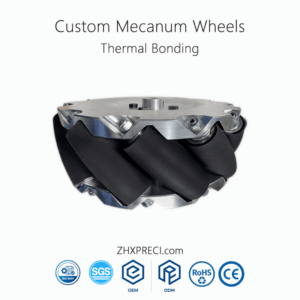
1200KG Payload Capacity 16inch 406mm Mecanum Caster Wheels Exclusive Polyurethane Formula Material Handling Equipment Parts
Read more -
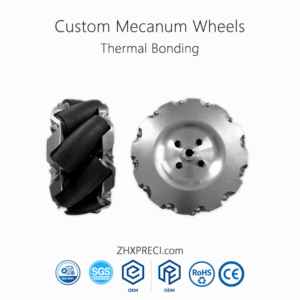
16inch 406mm Mecanum Caster Wheels 1200KG Payload Capacity Exclusive Polyurethane Formula New Aluminium Handling Equipment Farm
Read more -
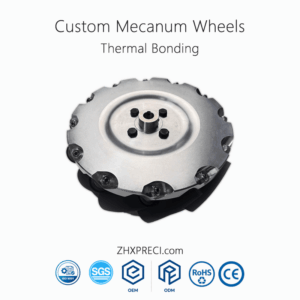
6 Inch Mecanum Wheel for AGV Robot Omni Directional Drive System High Precision Control Smooth Movement Stable Performance
Read more -
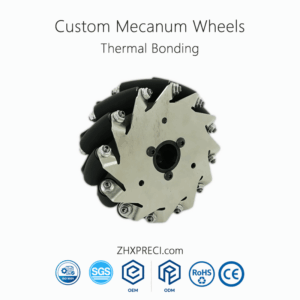
Custom Mecanum Wheel Set 152mm (6 Inch) NM152A: Heavy-Duty PU Rollers, 300kg Load Capacity, Omni-Directional for AGV & Robotics
Read more -
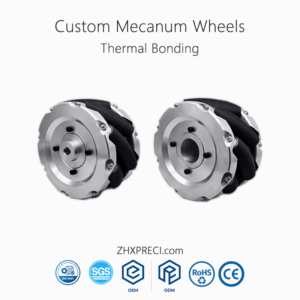
Mecanum Wheel 100MM 127MM 152MM 175MM 203MM 254MM 304MM 355MM 381MM 406MM Heavy Duty Industrial Polyurethane 8 Rollers
Read more -
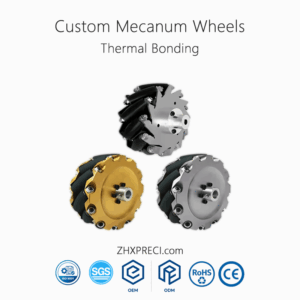
Mecanum Wheel Robot Drive Roller Intelligent Trolley Wheel Universal Roller Fulai Wheel AGV Trolley Accessories
Read more -
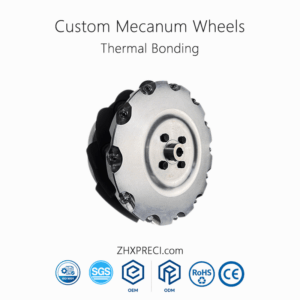
Mecanum Wheel Set 152 mm (6 Inch) NM152A – Heavy-Duty Wheels With PU-Coated Rollers, 300 kg Load Capacity, Industrial Grade, Ideal For Robotics
Read more -
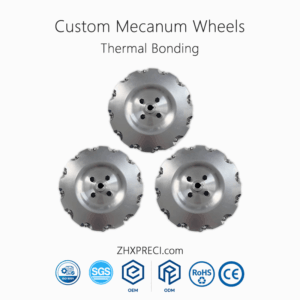
NM152A 152mm Mecanum Wheels Polyurethane 300KG Payload Capacity for AGV Drive System
Read more
Custom PU Wheels for AGV
In automated guided vehicle operations, wheel performance directly impacts system throughput, energy consumption, and maintenance intervals. This category focuses exclusively on custom PU wheels for AGV—engineered polyurethane solutions that replace generic rubber, nylon, or cast iron wheels with precision‑tailored alternatives. We address the full spectrum of design variables: load capacity, floor surface, travel speed, ambient temperature, and duty cycle. Our approach combines practical engineering with proven material science, delivering wheels that reduce rolling resistance, eliminate floor marking, and extend service life by two to three times compared to standard industrial casters.
Polyurethane vs. Conventional Wheel Materials
Selecting the right elastomer is the first and most consequential decision. Standard rubber wheels offer good shock absorption but suffer from high hysteresis loss—heat buildup that accelerates wear and drains battery power. Nylon wheels are stiff and wear‑resistant, yet they transmit vibrations and can damage delicate epoxy floors over time. Cast iron handles extreme loads but ruins floor surfaces and generates unacceptable noise levels in indoor facilities.
Polyurethane bridges these gaps. Our custom PU formulations deliver tensile strengths from 25 MPa to 45 MPa, tear resistance exceeding 90 kN/m, and rebound values between 40 % and 65 %. These properties translate into lower rolling friction (coefficients as low as 0.025 on smooth concrete), non‑marking treads, and excellent dampening of high‑frequency vibrations that would otherwise affect AGV sensor accuracy. Moreover, PU can be compounded to meet specific needs—antistatic grades for electronics assembly, oil‑resistant versions for machining centres, and low‑temperature variants for cold storage down to −30 °C.
Critical Design Parameters for AGV Wheel Customisation
No two AGV installations are identical. We break down the customisation process into four quantifiable parameters that we adjust based on your actual operating data:
- Durometer (hardness): Ranging from 70 Shore A to 98 Shore A. Softer compounds (70–80 A) are preferred for uneven floors and lighter loads (under 500 kg), as they conform to surface irregularities and provide extra traction. Harder compounds (90–98 A) minimise deformation under heavy loads (up to 5,000 kg per wheel) and are ideal for smooth, flat warehouse floors where rolling efficiency is paramount.
- Tread profile: Flat treads maximise contact area for heavy, slow‑moving AGVs. Crowned treads reduce edge loading and are suited for high‑speed units that frequently change direction. Grooved or chevron patterns are available for inclined ramps or wet conditions, though these are rarely needed in indoor logistics.
- Hub configuration: We machine hubs from 6061‑T6 aluminium or 1045 steel, depending on torque requirements. Options include press‑fit, bolt‑on flanges, tapered shafts, splined bores, and keyways with set screws. Hub widths and offsets are precisely matched to your existing axle geometry to avoid alignment issues.
- Thermal and chemical resistance: Standard PU operates reliably from −20 °C to +80 °C. For ovens, autoclaves, or outdoor yards, we offer heat‑stabilised compounds that withstand up to 120 °C continuous exposure. For environments with hydraulic oils, coolants, or cleaning solvents, we apply a proprietary cross‑linking additive that prevents surface swelling and delamination.
Measurable Performance Gains
Field data collected from over 200 AGV deployments show consistent improvements after switching to custom PU wheels. Average rolling resistance drops by 35–45 % compared to rubber, which translates directly into 18–25 % extended battery runtime per charge. The reduced heat generation also prolongs bearing life—we have recorded hub temperatures 12 °C lower than equivalent rubber wheels under identical load cycles. Floor wear is virtually eliminated; our PU compounds produce no black residue, cutting cleaning costs and eliminating the need for frequent floor recoating. Noise levels decrease by an average of 10 dBA, making work environments noticeably quieter and improving operator comfort.
AGV Class‑Specific Wheel Recommendations
We classify AGVs by operational profile and provide tailored wheel sets for each:
- Light‑duty unit load carriers (≤ 500 kg, speeds up to 2 m/s): 80 mm to 125 mm diameter, 85 Shore A, flat tread, aluminium hub. These wheels prioritise low inertia and quick response.
- Medium‑duty tugger trains (500–2,000 kg, frequent stops): 150 mm to 250 mm diameter, 90 Shore A, crowned tread with a steel hub. The crown reduces scrubbing during turns, extending tread life by up to 40 %.
- Heavy‑duty forklift AGVs (2,000–5,000 kg, slow speeds): 300 mm to 400 mm diameter, 95 Shore A, wide flat tread with dual bearings. These wheels distribute immense loads without indenting floors, even under full hydraulic lifting pressure.
For custom projects, we also produce non‑standard widths, oval profiles, and wheels with integrated wear‑depth indicators—simple grooves that visually signal when replacement is due, eliminating guesswork from maintenance schedules.
Quality Control and Testing Protocols
Our manufacturing facility operates under ISO 9001:2015 and IATF 16949:2016 certifications. Every production batch undergoes a stringent testing regime that includes:
- Tensile and elongation tests (ASTM D412) to verify compound consistency.
- Die C tear strength measurement (ASTM D624) to ensure resistance to chipping.
- Dynamic rolling resistance on a servo‑driven test rig that simulates 500,000 cycles of acceleration, braking, and turning at full rated load.
- Compression set testing (ASTM D395) to guarantee shape recovery after extended static loading.
We provide full traceability reports with each shipment, including raw material certificates, process control charts, and final inspection records. This documentation is essential for ISO‑audited facilities and automotive tier‑1 suppliers who require complete part genealogy.
Smart Features for Connected Fleets
Modern AGV systems increasingly rely on predictive analytics. We offer optional embedded RFID tags and NFC chips that store compound identification, production date, and recommended replacement intervals. These tags can be read by handheld scanners or stationary readers during routine checks, automatically updating your fleet management software with wheel condition data. For ESD‑sensitive environments (semiconductor fabs, pharmaceutical blending areas), we supply conductive PU grades with surface resistivity below 10⁶ Ω·cm, ensuring safe static dissipation without compromising wear resistance.
Custom PU Wheels for AGV from ZHXPRECI | China OEM/ODM Factory Manufacturer Supplier Custom Elastomer Wheels & Rollers
As an established OEM/ODM partner, we do not simply sell off‑the‑shelf products—we co‑develop solutions with your engineering and procurement teams. Our process begins with a comprehensive design review: we analyse your AGV's drive train specifications, floor surface roughness, operating temperature range, and desired service intervals. We then produce sample wheels using rapid tooling (lead time 10–14 days) for your internal validation. After your approval, we scale to volume production with consistent process controls, maintaining batch‑to‑batch uniformity across tens of thousands of units. Our production capacity exceeds 50,000 wheels per month, supported by a dedicated logistics team that manages global shipping to North America, Europe, and Southeast Asia with minimal customs delays.
Frequently Asked Questions
What durometer is best for a typical warehouse AGV carrying 1,200 kg?
For 1,200 kg loads on smooth concrete at 1.2 m/s, we recommend 90 Shore A. This hardness provides sufficient load support with a 3–4 mm deflection under static load, balancing traction and rolling efficiency. Softer compounds would increase rolling resistance, while harder compounds might cause excessive vibration.
Can you match the colour of our existing AGV fleet?
Yes. We add colour pigments during the prepolymer mixing stage. We can match any RAL or Pantone reference, and we can also mould your logo or part numbers directly into the sidewall using a custom‑engraved mould cavity—a permanent marking that survives the wheel's entire service life.
Do you provide wheels for both drive and caster positions?
Absolutely. Drive wheels receive a reinforced hub with a larger keyway or spline to transmit torque without backlash. Caster wheels are designed with lower rolling resistance compounds and often feature a polished bearing surface. We supply matched sets that guarantee identical outer diameters so your AGV remains level.
What is the typical lead time for a custom wheel order?
For standard diameters (80–250 mm) with common hardness grades, we ship within 15–20 working days. For fully custom designs (new mould, special compound, or integrated electronics), the lead time is 25–30 days, which includes sampling, testing, and your final approval. Expedited service is available for urgent retrofit projects.
Are your PU wheels compatible with third‑party AGV brands?
Yes. We regularly produce replacement wheels for major AGV brands including MiR, KUKA, Swisslog, Dematic, and Toyota. We just require the original wheel diameter, hub bore, mounting hole pattern, and load rating. We can reverse‑engineer any design and often improve the compound selection.
How do you prevent premature wear from floor debris?
Our standard compounds have excellent cut and chip resistance (over 90 kN/m tear strength). For extremely abrasive environments (ceramic dust, metal shavings), we recommend our ultra‑high‑molecular‑weight PU variant, which incorporates a PTFE‑like additive that reduces friction and allows debris to pass without embedding.
What is the minimum order quantity for prototype wheels?
We have no minimum for prototypes—we can produce as few as two units for initial fitment and performance testing. For production quantities, pricing becomes competitive at 100 pieces, with further tiered discounts at 500, 1,000, and 5,000 units.
Can your wheels improve AGV positioning accuracy?
Indirectly, yes. Lower rolling resistance means more consistent acceleration and deceleration, which improves odometry accuracy. Additionally, our low‑vibration compounds reduce sensor noise on laser or vision‑based navigation systems, helping your AGV maintain tighter path repeatability—particularly important in narrow‑aisle racking.
Do you offer certificates for food‑grade or cleanroom applications?
Yes. We supply PU grades that comply with FDA 21 CFR 177.2600 for indirect food contact. For cleanrooms (ISO 14644 Class 5 and below), we provide low‑particulate wheels that are washed and vacuum‑packaged in a controlled environment to minimise outgassing and particle shedding.
How do I know when to replace the wheel?
We recommend visual inspection at 2,000‑hour intervals. If the tread wears down to 80 % of its original thickness, or if you notice flat spots, cracking, or a significant increase in motor current draw, it is time for replacement. Our optional wear‑indicator grooves make this assessment straightforward—when the groove disappears, replace the wheel.
What happens if my AGV operates in a hot environment near forging lines?
For ambient temperatures consistently above 80 °C, we switch to a heat‑resistant polyurethane based on MDI chemistry, which maintains structural integrity up to 120 °C. We also adjust the hub material to heat‑treated steel and use high‑temperature grease in the bearings to prevent lubricant breakdown.
Do you offer field support for installation and training?
We provide comprehensive installation manuals with torque tables and alignment procedures. For large fleet conversions, we offer on‑site training sessions conducted by our application engineers, covering proper mounting, torque sequence, and inspection routines. Remote video support is also available at no additional cost.
Continuous Improvement Partnership
We view every AGV wheel project as a long‑term relationship. After your initial order, we schedule quarterly performance reviews where we analyse wear patterns, motor current data, and floor condition feedback. We use this information to suggest compound refinements or profile modifications that further reduce your total cost of ownership. Our engineering team stays accessible via direct email and video calls, ensuring that any operational changes—such as increased throughput or new floor coatings—are promptly addressed with updated wheel specifications. By choosing our custom solutions, you are not just purchasing components; you are investing in proven reliability, measurable energy savings, and a transparent supply chain that meets the highest industrial standards. Contact our technical sales group with your AGV model, load chart, and floor type, and we will return a detailed wheel proposal—including 3D step files, FEA stress maps, and a firm quotation—within 48 hours.