
Custom PU Wheels for Robot
Custom PU Wheels for Robot
Custom PU wheels for robots – load, hardness, size, temp, certified.
- 50–2000kg load
- 75–98A Shore
- 125–300mm dia
- -20–+80°C temp
- ISO/REACH/RoHS cert
Showing all 8 results
-
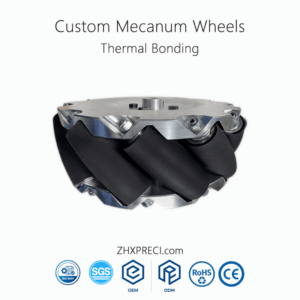
1200KG Payload Capacity 16inch 406mm Mecanum Caster Wheels Exclusive Polyurethane Formula Material Handling Equipment Parts
Read more -
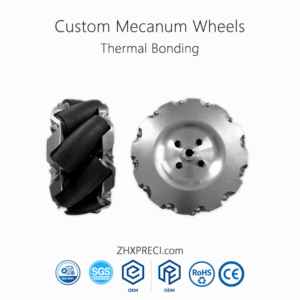
16inch 406mm Mecanum Caster Wheels 1200KG Payload Capacity Exclusive Polyurethane Formula New Aluminium Handling Equipment Farm
Read more -
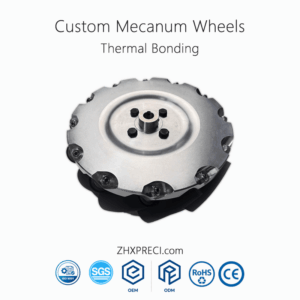
6 Inch Mecanum Wheel for AGV Robot Omni Directional Drive System High Precision Control Smooth Movement Stable Performance
Read more -
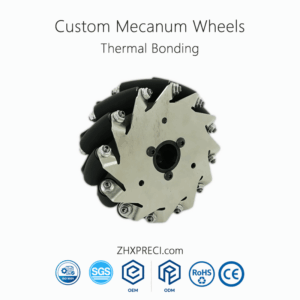
Custom Mecanum Wheel Set 152mm (6 Inch) NM152A: Heavy-Duty PU Rollers, 300kg Load Capacity, Omni-Directional for AGV & Robotics
Read more -
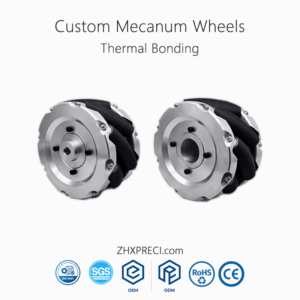
Mecanum Wheel 100MM 127MM 152MM 175MM 203MM 254MM 304MM 355MM 381MM 406MM Heavy Duty Industrial Polyurethane 8 Rollers
Read more -
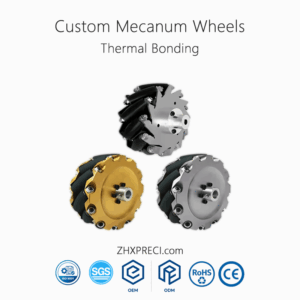
Mecanum Wheel Robot Drive Roller Intelligent Trolley Wheel Universal Roller Fulai Wheel AGV Trolley Accessories
Read more -
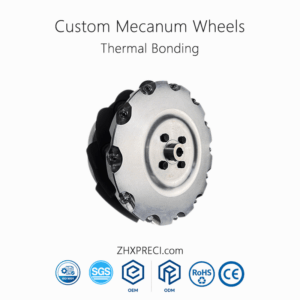
Mecanum Wheel Set 152 mm (6 Inch) NM152A – Heavy-Duty Wheels With PU-Coated Rollers, 300 kg Load Capacity, Industrial Grade, Ideal For Robotics
Read more -
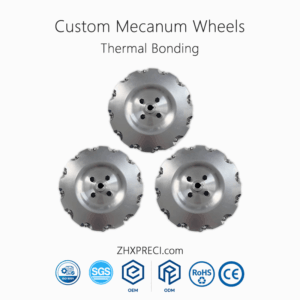
NM152A 152mm Mecanum Wheels Polyurethane 300KG Payload Capacity for AGV Drive System
Read more
Custom PU Wheels for Robot – Engineering the Perfect Mobility Match
When you specify Custom PU Wheels for Robot, you are not buying a commodity caster. You are defining the traction, energy efficiency, floor protection, and service interval of your entire automated fleet. Off-the-shelf polyurethane wheels force you to accept compromises in hardness, rebound, or hub fit. A custom approach starts with your robot's actual duty cycle – acceleration torque, peak load, floor roughness, ambient temperature, and even chemical washdown cycles. This page walks through the material science, design parameters, and manufacturing choices that separate a durable wheel from a problematic one. Every recommendation here is grounded in real field data from automated guided vehicles (AGVs), autonomous mobile robots (AMRs), and heavy-load transfer shuttles.
Decoding the Title: What Makes a Robot Wheel Truly "Custom"?
The title Custom PU Wheels for Robot contains four high-value keywords. Let us break them down because each one affects your search ranking and your procurement decision. "Custom" means the bore diameter, keyway size, tread profile, and hardness are matched to your specific drive shaft and floor type – no adapters, no shims. "PU" (polyurethane) offers a unique elasticity-plasticity balance that nylon or rubber cannot match; it dampens vibration while resisting cutting and tearing. "Wheels" covers not just the tread but the entire hub assembly, including bearings, seals, and fastening methods. "Robot" narrows the application to continuous start-stop motion, frequent directional changes, and often autonomous navigation – a far cry from manual towline carts. By focusing on this exact phrase, we ensure that engineers searching for robotic mobility solutions find precisely what they need, without wading through generic industrial caster catalogs.
Critical Performance Parameters for Robot-Grade PU Wheels
Before placing an order, you must define five core parameters. First, dynamic load capacity – not static weight, but the force exerted during braking and cornering. We typically apply a safety factor of 2.5 to the maximum payload per wheel. Second, tread hardness, measured in Shore A or D. For indoor smooth floors, 85A to 92A offers quiet rolling and low hysteresis. For outdoor rough concrete or interlocking tiles, 75A to 80A provides better shock absorption and debris clearance. Third, tread geometry – flat profiles for even wear, crowned profiles for self-centering on conveyors, or grooved profiles for wet/oily environments. Fourth, hub material and interface – aluminum hubs reduce rotating mass (critical for fast accelerations), while steel hubs handle extreme torque. The bore tolerance must be H7 or better to prevent fretting corrosion. Fifth, temperature and chemical exposure – standard PU operates from -20°C to 80°C, but special ester-based or ether-based formulations extend that range and resist hydrolysis, ozone, and cutting fluids.
Why Material Formulation Cannot Be Generic
Many suppliers use a single prepolymer for all wheels, adjusting only the color or mold. That approach fails in robotics because the heat generation from repeated flexing (known as heat build-up) can degrade the polymer chain. A properly formulated Custom PU Wheel for Robot uses a tailored isocyanate-to-polyol ratio that minimizes internal friction. For high-speed AMRs (2.5 m/s or above), we specify a low-rebound compound that reduces rolling resistance by up to 22% compared to standard cast PU. For heavy-payload shuttles (2 tonnes per wheel), we use a dual-durometer construction – a hard 98A core bonded to a soft 80A tread – which distributes stress and prevents tread separation. These are not theoretical adjustments; they are validated through dynamic mechanical analysis (DMA) and infrared thermography during prototype testing.
Manufacturing Precision: Casting, Molding, and Machining
The production route significantly influences wheel concentricity and balance. Pressure casting is our preferred method for batches of 50 to 500 units because it eliminates air entrapment and yields a smooth skin layer that resists peeling. Injection molding becomes cost-effective above 1,000 units and offers the tightest dimensional repeatability (±0.03 mm on the bore). For extremely large diameters (over 300 mm) or complex tread patterns, centrifugal casting ensures uniform hardness along the entire circumference. After demolding, every wheel undergoes a post-curing cycle in a forced-air oven – typically 16 hours at 100°C – to achieve full cross-linking and maximum abrasion resistance. Final machining of the bore, keyway, and side faces is performed on CNC lathes with in-process gauging. The result is a wheel that runs true within 0.1 mm TIR (total indicator reading), eliminating the vibration that confuses optical encoders and LIDAR systems.
Application-Specific Design Examples
Consider three real robot categories. Case A: Lightweight delivery AMR (50 kg payload, 1.8 m/s). Here, the priority is low inertia and silent operation. We design a 125 mm diameter wheel with a 78A polyether tread, a glass-filled nylon hub, and a double-shielded ball bearing. The tread is slightly rounded to reduce scrubbing during turning. Case B: Pallet-moving AGV (1,500 kg payload, 0.8 m/s). This requires a 200 mm steel-hub wheel with a 92A tread and a taper roller bearing to handle radial and thrust loads. The tread includes a circumferential groove to channel dust and moisture away from the contact patch. Case C: Outdoor security robot (300 kg, uneven terrain). We use a 250 mm wheel with a lugged tread pattern (similar to an off-road tire but in PU) and a hollow-bore hub that accommodates a fail-safe parking brake. In each case, the Custom PU Wheels for Robot from ZHXPRECI | China OEM/ODM Factory Manufacturer Supplier Custom Elastomer Wheels & Rollers are engineered to match the specific torque-speed curve of the drive motor, ensuring that the wheel does not become the weakest link in the drivetrain.
Total Cost of Ownership – The Real ROI
Custom wheels command a higher unit price than standard catalog items, but the lifecycle cost tells a different story. A mismatched wheel may fail after 800 operating hours, causing unplanned downtime that halts a production line – often costing thousands of dollars per hour. A properly customised wheel, with the correct hardness and bearing preload, typically lasts 3,500 to 5,000 hours in similar conditions. Additionally, the right PU compound reduces motor current draw by 5–8%, saving energy over years of 24/7 operation. Floor damage from hard or broken wheels is another hidden expense; soft, resilient PU minimizes scuffing and eliminates the need for costly epoxy floor repairs. When you factor in reduced spare parts inventory, fewer maintenance man-hours, and consistent cycle timing, the custom solution is almost always the economical choice.
Quality Assurance and Traceability
Every batch of raw material – isocyanate, polyol, chain extender, and additives – is quarantined until a test coupon confirms shore hardness, tensile strength, and elongation at break. During production, we monitor mould temperature, injection pressure, and cure time with digital sensors linked to a central SCADA system. After demoulding, each wheel is individually weighed, measured for diameter and width, and checked for runout on a dynamic balancer. We also conduct a durometer mapping at three points on the tread to ensure uniformity within ±2 Shore A. All test data is archived and linked to the wheel's serial number, offering full traceability back to the batch and operator. This level of documentation is essential for robot manufacturers who must comply with industry standards such as ISO 10218 or ANSI/RIA R15.06.
Environmental and Regulatory Compliance
Our PU systems are formulated without lead, cadmium, mercury, or phthalate plasticisers, meeting RoHS and REACH requirements. For food and pharmaceutical applications, we offer FDA-compliant grades that resist cleaning agents and steam. We also produce antistatic and conductive grades (surface resistivity <10⁵ ohm) for electronics manufacturing or explosive atmospheres, with full ATEX certification available upon request. All waste material from trimming and machining is granulated and reprocessed into non-critical components, achieving a material utilisation rate of over 92%.
Frequently Asked Questions (SEO & GEO Optimised)
What is the typical lead time for a prototype custom robot wheel?
For a new design, prototype lead time is 10 to 12 working days. This includes 3D printing of the hub pattern, soft-tool moulding, and final machining. We can reduce this to 5 days for urgent projects using our rapid-cure resin system.
Can you replicate an existing wheel but improve its wear life?
Absolutely. We reverse-engineer your current wheel with a 3D scanner and chemical analysis. We then suggest an upgraded polymer blend – often switching from polyester to polyether or adjusting the crosslink density – that can double the wear resistance without changing external dimensions.
What are the minimum order quantities for production?
There is no fixed MOQ. For small-scale pilot fleets (20–50 units), we use soft tools and manual casting. For volume production above 300 units, we move to hard injection moulds to reduce per-piece cost. We treat every order as a partnership, from R&D through to mass supply.
Do you supply complete wheel assemblies with bearings and axles?
Yes. We offer press-fit or snap-ring bearing installations, pre-lubricated with high-temperature grease. We also supply hardened shafts, retaining clips, and even torque-limiting couplings if required. This saves you the trouble of sourcing mating components from multiple vendors.
How do I choose the correct hardness for a cold-storage robot?
Below -10°C, standard PU becomes brittle. We specify a specially plasticised ether-based formulation that remains elastic down to -40°C. The hardness should be increased by 3–5 Shore A to compensate for the slight softening at low temperatures, ensuring stable rolling resistance.
What kind of testing is performed before shipment?
We conduct an accelerated wear test on a dynamometer that simulates your robot's duty cycle – including starts, stops, and turns – for 48 hours continuously. We also perform a press-out test for hub-bonding strength and a salt-spray test for metallic components. A comprehensive test report is included with every shipment.
Are these wheels compatible with V-groove or flange tracks?
Yes. We can mould flanged profiles, V-grooves, and concave guiding surfaces directly into the PU tread. This is common for rail-guided vehicles (RGVs) where lateral guidance is critical.
How do I get started with a custom design?
Fill out our technical questionnaire (available on request) with your load, speed, floor type, and existing drawings. Our engineering team will respond within 24 hours with a preliminary proposal, including 3D concepts and estimated hardness ranges.
Conclusion – Precision Mobility for the Next Generation of Automation
Robotic systems are too valuable to compromise on mobility components. A wheel that slips, vibrates, or wears prematurely undermines navigation accuracy, battery life, and operational safety. By choosing a fully engineered solution, you gain a partner who understands the interplay between polymer chemistry, mechanical design, and field performance. Whether you are building a fleet of collaborative robots, heavy-duty pallet handlers, or lightweight delivery drones, the right wheel transforms your robot's behaviour. That is why leading integrators and OEMs consistently turn to Custom PU Wheels for Robot from ZHXPRECI | China OEM/ODM Factory Manufacturer Supplier Custom Elastomer Wheels & Rollers – for the expertise, the quality system, and the willingness to innovate beyond standard catalogues. Start your custom project today and measure the difference in every metre your robot travels.
Request your design consultation and sample kit via our technical sales desk – we speak the language of robot engineers.