
Custom Anti-Static Rubber Coated Rollers
Custom Anti-Static Rubber Coated Rollers
Custom anti-static rubber coated rollers reduce ESD risks with tailored resistivity.
- 30‑500kg load
- 30‑95A Shore
- 60‑400mm dia
- -30‑+100°C temp
- ISO/REACH cert
Showing 1–16 of 99 results
-
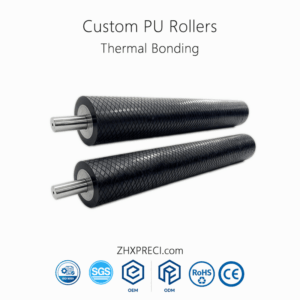
Custom Abrasion Resistant PU Rollers For Packaging Conveyors
Read more -
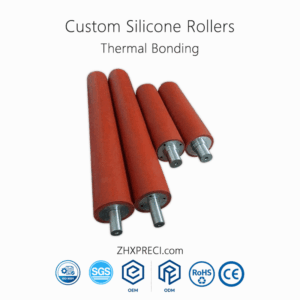
Custom Abrasion Resistant Silicone Coated Rollers Heavy Wear
Read more -
Custom Aluminum Core PU Rollers With Food Grade Compliance
Read more -
Custom Anti-Microbial Silicone Rollers Hygiene Grade
Read more -
Custom Anti-Static PU Rollers For Explosive Dust Environments
Read more -
Custom Anti-Static Silicone Coated Rollers Electronic Use
Read more -
Custom Antistatic PU Rollers For Electronics Conveying
Read more -
Custom ATEX Compliant PU Rollers For Mining Conveyor
Read more -
Custom Bearing Mounted Silicone Coated Rollers Quick Change
Read more -
Custom Cantilever Mounted Silicone Rollers Easy Access
Read more -
Custom Cast Iron Core PU Rollers With Keyway Mounting
Read more -
Custom CE Certified PU Rollers For Packaging Machinery
Read more -
Custom CE Certified Silicone Rollers European Market
Read more -
Custom Chemical Resistant PU Rollers For Corrosive Environments
Read more -
Custom Chemical Resistant Silicone Coated Rollers Process Use
Read more -
Custom Cleanroom Compatible Silicone Rollers Particle Free
Read more
Understanding Custom Anti-Static Rubber Coated Rollers
In industrial environments where static electricity poses risks to equipment, product quality, and operational safety, custom anti-static rubber coated rollers serve as a practical solution. These rollers are engineered to dissipate electrostatic charges generated during web handling, conveying, or printing processes. By combining a conductive or dissipative rubber compound with a precision-engineered core, they offer controlled surface resistivity while maintaining the mechanical performance expected from industrial rollers.
Custom Anti-Static Rubber Coated Rollers from ZHXPRECI | China OEM/ODM Factory Manufacturer Supplier Custom Elastomer Wheels & Rollers are designed to meet diverse application requirements across converting, packaging, textiles, and electronics manufacturing. The anti-static property is achieved through careful formulation of the rubber matrix, often incorporating conductive fillers such as carbon black or specialized antistatic agents, ensuring surface resistivity typically falls within the range of 10⁵ to 10⁹ ohms per square, depending on the specific grade and testing standards.
What Are Custom Anti-Static Rubber Coated Rollers?
Custom anti-static rubber coated rollers are cylindrical components consisting of a metal or composite core, surrounded by a layer of rubber that has been formulated to exhibit anti-static or static-dissipative characteristics. Unlike standard rubber rollers, which may allow static charge accumulation, these rollers provide a controlled path to ground, minimizing the risk of electrostatic discharge (ESD) events. The “custom” aspect refers to the ability to tailor dimensions, rubber hardness (durometer), surface finish, groove patterns, and conductive properties to specific machinery and process conditions.
These rollers are commonly utilized in applications such as film and foil processing, paper manufacturing, label converting, and battery production, where static control is critical to preventing dust attraction, material misalignment, or electronic component damage. The combination of elastomeric resilience and electrical functionality makes them a specialized category within the broader field of industrial rollers.
How Do Custom Anti-Static Rubber Coated Rollers Work?
The working principle of these rollers relies on the controlled electrical conductivity of the rubber coating. When static charges accumulate on the roller surface or on the substrate passing over it, the conductive pathways within the rubber allow the charge to migrate through the roller body to the grounded shaft or bearing. This dissipation occurs continuously during operation, maintaining surface potential at a safe level. The efficiency of static dissipation is influenced by factors such as rubber compound formulation, ambient humidity, contact pressure, and rotational speed.
From a mechanical standpoint, the rubber coating provides traction, shock absorption, and protection for the substrate, while the core provides structural rigidity and torque transmission. The interplay between electrical and mechanical properties requires careful engineering to ensure that modifying the rubber for conductivity does not compromise wear resistance, chemical stability, or operational lifespan.
Key Features and Technical Attributes
Customization Parameters
Customization begins with a thorough assessment of the application environment. Parameters that can be adjusted include outer diameter, wall thickness, shaft configuration, rubber hardness (typically ranging from 30 Shore A to 95 Shore A), and surface texture (smooth, knurled, grooved, or perforated). Additionally, the electrical resistivity can be tuned to meet specific ESD requirements, with standard options covering dissipative (10⁶–10⁹ Ω/sq) and conductive (10³–10⁶ Ω/sq) ranges. The choice of rubber compound—NBR, EPDM, silicone, or polyurethane—further influences resistance to oils, solvents, temperature extremes, and ozone exposure.
Custom Anti-Static Rubber Coated Rollers from ZHXPRECI | China OEM/ODM Factory Manufacturer Supplier Custom Elastomer Wheels & Rollers are produced with attention to concentricity, dynamic balancing, and surface finish tolerances, enabling integration into high-speed production lines without vibration or uneven wear.
Static Dissipation Performance
Static dissipation performance is typically verified through surface resistivity measurements in accordance with industry standards such as ASTM D257 or IEC 61340. While specific resistivity targets are determined by customer requirements, common industrial practice aims for resistivity below 10⁹ Ω/sq to ensure effective charge decay under normal operating conditions. The dissipation capability remains stable across a wide temperature range, generally from -30°C to +100°C, with some specialty compounds extending this range further.
It is important to note that anti-static properties may be influenced by contamination, surface oxidation, or mechanical abrasion over time. Regular inspection and cleaning are recommended to maintain consistent electrical performance.
Mechanical Durability and Material Selection
The mechanical durability of the roller depends on the interaction between the rubber coating, the adhesive bonding layer, and the core material. Common core materials include steel, aluminum, and stainless steel, selected based on load requirements, corrosion resistance, and weight considerations. The rubber-to-core bond strength is a critical parameter, as delamination can lead to premature failure. Manufacturing processes such as compression molding, injection molding, or extrusion are employed depending on the geometry and production volume.
Wear resistance is influenced by the choice of elastomer and the addition of reinforcing fillers. For applications involving high friction or abrasive substrates, polyurethane coatings may be preferred due to their superior tear strength and abrasion resistance. For chemical resistance, EPDM or fluorocarbon rubber may be selected. Each material choice involves trade-offs, and the optimal selection is based on a careful analysis of operating conditions.
Frequently Asked Questions (FAQ)
What industries commonly use custom anti-static rubber coated rollers?
These rollers are widely applied in industries where static electricity is a concern. Typical sectors include flexible packaging, label converting, paper and cardboard processing, textile finishing, film extrusion, and lithium battery manufacturing. They are also found in printing presses, laminators, and slitting machines. The common thread across these applications is the need to manage static charge to prevent defects, improve product quality, and ensure worker safety.
How do I determine the correct anti-static resistivity for my process?
The appropriate resistivity level depends on the sensitivity of the substrate, the speed of the process, and the environmental conditions. For instance, in electronics assembly, very low resistivity may be required to prevent ESD damage, whereas in paper processing, a moderately dissipative roller may suffice. It is advisable to consult with engineering staff to conduct static measurements at the machine and define a target range. Testing samples under real operating conditions is the most reliable approach.
Can custom anti-static rubber coated rollers be repaired or recoated?
Yes, many rollers are designed for recoating. Once the existing rubber coating has worn or become damaged, the roller core can be stripped and re-coated with fresh material. Recoating is often more cost-effective than purchasing a new roller, provided that the core remains within dimensional tolerances. However, the feasibility of recoating depends on the core condition and the required specification. Inspection and dimensional checks are recommended before proceeding with recoating.
What is the typical lead time for custom anti-static rubber coated rollers?
Lead times for custom rollers are subject to order quantity, current production schedule, and final specification confirmation. For standard configurations, the manufacturing cycle may be shorter, while complex custom designs involving special materials, large diameters, or tight tolerances may require additional engineering and production time. It is recommended to discuss project timelines with the supplier at the inquiry stage to establish a realistic schedule.
How do temperature and humidity affect roller performance?
Temperature and humidity can influence both the mechanical and electrical characteristics of rubber coated rollers. Higher temperatures may soften the rubber compound, affecting hardness and resistance to deformation, while lower temperatures may increase hardness and reduce flexibility. Humidity affects surface resistivity, with higher humidity generally lowering resistivity due to moisture absorption. Operating conditions should be characterized and communicated to ensure the selected compound remains stable within the expected range.
What maintenance practices extend the service life of these rollers?
Regular maintenance includes visual inspection for surface damage, wear patterns, or cracks. Periodic cleaning with appropriate solvents or detergents helps remove contaminants that may accumulate and affect static dissipation or traction. Storage conditions also matter: rollers should be stored in a cool, dry area away from direct sunlight and ozone sources. For rollers that are not in continuous use, periodic rotation can help prevent flat spots from forming.
Material Options and Comparative Considerations
Selecting the right rubber compound for custom anti-static rollers involves evaluating several material properties. Nitrile rubber (NBR) is commonly chosen for its good oil resistance, abrasion resistance, and moderate temperature range. Ethylene propylene diene monomer (EPDM) offers excellent weather, ozone, and heat resistance, making it suitable for outdoor or high-temperature applications. Silicone rubber provides a wide temperature service range and inertness, often used in food-contact or cleanroom settings. Polyurethane (PU) is valued for its high load-bearing capacity and tear strength, ideal for heavy-duty applications.
Each compound type can be formulated with conductive additives to achieve the desired anti-static performance. However, the addition of conductive fillers may alter other properties such as elasticity or compression set, so testing is recommended to confirm that the final formulation meets all functional requirements. Custom Anti-Static Rubber Coated Rollers from ZHXPRECI | China OEM/ODM Factory Manufacturer Supplier Custom Elastomer Wheels & Rollers offer flexibility in material selection, ensuring that the chosen compound aligns with the specific operational demands.
Installation and Operational Considerations
Proper installation is essential to achieving optimal performance from custom anti-static rollers. The roller should be aligned with the machine frame to avoid angular or parallel misalignment, which can cause uneven wear, vibration, and reduced static dissipation efficiency. Mounting hardware such as bearings, end caps, and drive mechanisms must be compatible with the roller design. Torque specifications for fastening should be observed to prevent distortion of the core or damage to the rubber coating.
During operation, it is advisable to monitor the roller surface temperature and any unusual noises, as these may indicate issues with load distribution or bearing condition. If static discharge appears inadequate, check the grounding path and ensure that the roller’s electrical continuity is intact. Periodic surface resistivity measurements can help confirm that the anti-static performance remains within the acceptable range.
Quality Assurance and Testing Protocols
Manufacturers commonly employ a range of quality checks to ensure that custom anti-static rubber coated rollers meet specified tolerances and performance criteria. Dimensional inspection includes outer diameter, wall thickness, runout, and concentricity measurements. Hardness testing is performed using a durometer to confirm that the rubber meets the specified Shore value. Electrical testing measures surface resistivity at multiple points along the roller length to verify uniformity. Additionally, dynamic balancing tests may be conducted for high-speed applications to minimize vibration.
These test results are documented and provided with the shipment, allowing end users to verify compliance with their requirements. In cases where special testing is needed, such as chemical resistance or accelerated aging studies, these can be arranged as part of the quality agreement between the buyer and supplier.
Sustainability and Environmental Aspects
Efforts to reduce environmental impact have led to the development of rubber compounds that contain reduced levels of hazardous substances and are formulated for extended service life, thereby reducing waste. Additionally, many rubber materials can be reclaimed or recycled at the end of their useful life. Manufacturers are increasingly adopting practices such as closed-loop cooling, solvent recovery, and waste minimization during the roller production process. While the primary function of anti-static rollers is operational performance, sustainability considerations are becoming an important factor in material selection and manufacturing processes.
Conclusion
Custom anti-static rubber coated rollers are a specialized component that plays a significant role in modern industrial processes requiring static control. Their performance is determined by a combination of material formulation, dimensional accuracy, and compatibility with the application environment. By understanding the technical attributes—such as resistivity, hardness, temperature range, and customization options—engineers and procurement professionals can make informed decisions that balance performance, durability, and cost. The emphasis on practical, data-driven evaluation ensures that these components contribute effectively to production stability and product quality.
For projects requiring custom dimensions, specific compounds, or unique static dissipation targets, engaging with a supplier early in the design phase is recommended. Custom Anti-Static Rubber Coated Rollers from ZHXPRECI | China OEM/ODM Factory Manufacturer Supplier Custom Elastomer Wheels & Rollers offer a range of options to accommodate diverse industry needs, with engineering support available to assist in specification development. While lead times and pricing are dependent on individual order parameters, the collaborative approach to customization helps achieve a solution that is both technically sound and economically viable.