
Custom Grooved Rubber Coated Rollers
Custom Grooved Rubber Coated Rollers
Engineered rollers for material handling, printing, and packaging.
- 30‑500kg load
- 60‑95A Shore
- 60‑300mm dia
- -30‑+80°C temp
- ISO/REACH cert
Showing 1–16 of 119 results
-
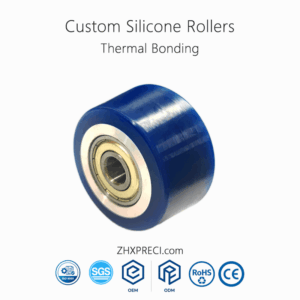
Blue Customized Silicone Rubber Coated Roller & High Quality Drive Guide Roller
Read more -
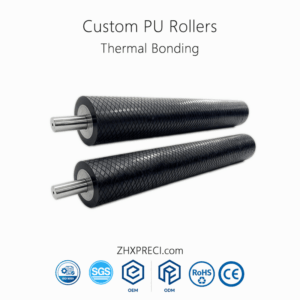
Custom Abrasion Resistant PU Rollers For Packaging Conveyors
Read more -
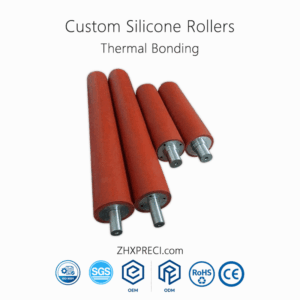
Custom Abrasion Resistant Silicone Coated Rollers Heavy Wear
Read more -
Custom Aluminum Core PU Rollers With Food Grade Compliance
Read more -
Custom Anti-Microbial Silicone Rollers Hygiene Grade
Read more -
Custom Anti-Static PU Rollers For Explosive Dust Environments
Read more -
Custom Anti-Static Silicone Coated Rollers Electronic Use
Read more -
Custom Antistatic PU Rollers For Electronics Conveying
Read more -
Custom ATEX Compliant PU Rollers For Mining Conveyor
Read more -
Custom ATEX Compliant Silicone Wheels Hazardous Area
Read more -
Custom Bearing Mounted Silicone Coated Rollers Quick Change
Read more -
Custom Bracket Mount Silicone Wheels Easy Installation
Read more -
Custom Cantilever Mounted Silicone Rollers Easy Access
Read more -
Custom Cast Iron Core PU Rollers With Keyway Mounting
Read more -
Custom CE Certified PU Rollers For Packaging Machinery
Read more -
Custom CE Certified Silicone Rollers European Market
Read more
Understanding Custom Grooved Rubber Coated Rollers for Industrial Applications
In the field of material handling, printing, converting, and packaging, the specification of rollers often determines operational efficiency and product quality. Custom grooved rubber coated rollers represent a specialized category where the rubber covering is precision-machined with a defined groove pattern over a metal core. This configuration serves multiple purposes, including improved traction, product alignment, debris clearance, and fluid management. These rollers are not off-the-shelf components; they are engineered solutions tailored to specific machinery and process requirements. This description provides a technical overview, addressing common engineering considerations, material properties, and procurement factors for professionals evaluating these components. Custom Grooved Rubber Coated Rollers from ZHXPRECI | China OEM/ODM Factory Manufacturer Supplier Custom Elastomer Wheels & Rollers are designed with attention to these very parameters, offering a range of customizable features.
What Are Custom Grooved Rubber Coated Rollers?
A custom grooved rubber coated roller consists of a rigid inner core, typically fabricated from steel, aluminum, or stainless steel, which is then bonded with a layer of elastomeric material—natural rubber, neoprene, EPDM, silicone, or polyurethane, among others. The "grooved" aspect refers to the helical, circumferential, or custom-machined channels on the roller's surface. These grooves are not decorative; they serve functional purposes such as channeling air or liquids, reducing contact area for pressure-sensitive materials, or providing a gripping surface for web-fed processes. The customization extends to the core dimensions, rubber hardness (durometer), groove geometry (width, depth, pitch), and the type of rubber compound. This adaptability makes them integral to equipment in industries ranging from paper converting to textile finishing and metal processing. For many OEM applications, the specific combination of groove design and rubber compound is as critical as the roller's mechanical strength.
Key Technical Characteristics
When specifying grooved rubber rollers, engineers focus on several quantifiable attributes. The rubber hardness, measured in Shore A durometer, typically ranges from 30 to 95, with softer compounds (30-50) used for high-friction, delicate applications and harder compounds (70-95) for wear resistance and load-bearing. The groove configuration is defined by its lead angle, depth, and width; for instance, a 45-degree herringbone pattern is common for self-centering web applications. The rubber-to-metal bond strength is a critical parameter, often tested against ASTM D429 standards, to ensure the elastomer does not separate from the core under torsional load. Furthermore, the roller's dynamic balancing grade (e.g., G6.3 or G2.5 per ISO 1940) is specified for high-speed operations, typically exceeding 500 RPM. Thickness of the rubber covering can range from 6 mm to 50 mm, depending on the required resilience and the ability to re-grind the surface over the roller's service life.
How to Specify Custom Grooved Rubber Coated Rollers for Your Application
The specification process for a grooved rubber roller is a systematic engineering task. It begins with defining the operating environment—temperature range, exposure to oils, chemicals, or UV light, and the presence of abrasive materials. For example, rollers used in high-temperature lamination processes (up to 150°C) might require a silicone rubber compound with specific thermal stability. The next step is defining the mechanical loads, including the nip pressure and the tension of the web or sheet material. This determines the required core diameter and wall thickness to prevent deflection. The groove pattern itself is selected based on the product's surface characteristics; a deep, open groove is effective for removing contaminants from a conveyor belt, while a fine micro-groove is used in printing to hold ink or dampening solution.
Critical parameters to communicate to the manufacturer include:
- Core Material and Dimensions: Specify the material (e.g., 1045 carbon steel, 6061 aluminum), inside diameter, outside diameter, and total face length. Include details for keyways, sprockets, or pulley attachments.
- Rubber Compound: Define the base polymer and durometer. Provide details on required resistance to specific chemicals, oils, or ozone. For example, NBR (nitrile) is preferred for oil-resistance, whereas EPDM is optimal for outdoor applications and steam environments.
- Groove Geometry: Provide a detailed drawing indicating groove pattern (e.g., spiral, straight knurl), depth, width, and pitch. The tolerance on these dimensions is often ±0.1 mm for precise applications.
- Surface Finish: Specify the finish of the groove's lands and bottom, often measured in RMS (root mean square) microinches, to control the coefficient of friction.
- Runout and Hardness Tolerances: Standard TIR (Total Indicator Reading) for high-performance rollers is typically within 0.05 mm. Durometer tolerance is usually ±5 Shore A points.
Frequently Asked Questions (FAQs) for Engineers and Procurement Specialists
What is the difference between grooved and smooth rubber rollers?
Grooved rollers incorporate a machined pattern into the rubber surface, whereas smooth rollers have a uniform, uninterrupted face. The grooved design offers enhanced grip on slick materials, facilitates the removal of water or debris through the channels, and reduces the total contact surface, which minimizes marking on sensitive substrates. Smooth rollers are generally used for general conveyance, pressure application, or where a uniform mark is required. The choice between them often depends on the material's tendency to slip or the need to manage byproducts like dust or moisture.
How does the groove pattern affect roller performance?
The groove pattern directly influences traction, self-cleaning ability, and the direction of material flow. A helical groove creates an axial force that can help center a moving web. A straight or annular groove provides a uniform grip across the roller width. The depth and width of the groove determine the volume of material that can be displaced or contained. For instance, in packaging applications where hot melt adhesives are applied, a cross-hatched groove pattern can help distribute the adhesive evenly. Selecting the wrong pattern can lead to tracking issues or localized stress concentrations on the rubber covering.
What rubber materials are commonly used and why?
Common elastomers include Natural Rubber (NR) for high tensile strength and resilience, Neoprene (CR) for moderate oil and weather resistance, Nitrile (NBR) for superior oil and fuel resistance, EPDM for outstanding heat, ozone, and weather resistance, and Silicone for extreme temperature flexibility (-60°C to 250°C) and release properties. Polyurethane (PU) is also frequently selected for its high load-bearing capacity and abrasion resistance, often used in drive rollers. The material choice is dictated by the chemical and thermal environment, as well as the mechanical demands of the application. Custom Grooved Rubber Coated Rollers from ZHXPRECI | China OEM/ODM Factory Manufacturer Supplier Custom Elastomer Wheels & Rollers are available in these material options, allowing engineers to select the optimal compound for their specific processing conditions.
What is the typical lead time for custom grooved rollers?
The production timeline for custom grooved rubber coated rollers is subject to order quantity, current production schedule, and final specification confirmation. The process involves core machining, rubber compounding, molding or extrusion, bonding and vulcanization, and final grinding of the grooves. For complex groove geometries or unique rubber compounds, the engineering and tooling setup phase may extend the timeline. It is advisable to consult with the manufacturer to provide a realistic schedule based on the exact technical requirements and volume needed.
How do you maintain and extend the life of grooved rubber rollers?
Routine maintenance is crucial. This includes regular cleaning with appropriate solvents (compatible with the rubber compound) to remove chemical residue and debris that can degrade the elastomer. Inspecting the grooves for wear, cracking, or chunking is essential; a standard practice is to measure the groove depth periodically to assess wear. Rollers should be stored in a cool, dry place away from ozone-generating equipment (like electric motors) and direct sunlight to prevent premature aging. Balancing should be checked if vibration occurs. Scheduled re-grinding of the rubber surface can restore the groove profile and extend the service life significantly.
What are the key factors affecting the price of a custom roller?
The final cost is influenced by several variables: the size and material of the metal core, the type and volume of rubber compound, the complexity of the groove machining (e.g., multi-start threads or variable pitch), and the required precision tolerances. Additionally, the need for dynamic balancing, special certifications (e.g., FDA-compliant rubber for food contact), and the total quantity ordered plays a significant role. Generally, larger diameter rollers, high-performance polymers like polyurethane, and tighter tolerances command a higher price point. Procurement decisions should weigh the initial investment against the expected operational lifespan and performance benefits.
How to ensure proper rubber-to-metal bonding?
A strong bond is fundamental to roller integrity. This is achieved through a combination of surface preparation of the core (e.g., grit blasting and application of an adhesive primer) and the vulcanization process. The manufacturer must follow a proven bonding system compatible with both the core material and the rubber compound. For critical applications, it is standard to request bond test coupons alongside the roller production to verify adhesion strength in accordance with ASTM D429 or similar industry standards. Inadequate bonding can lead to the rubber separating from the core, resulting in catastrophic failure.
Can grooved rollers be used in food processing environments?
Yes, provided the rubber compound is FDA-approved for incidental food contact. Compounds like White Nitrile or FDA-grade Silicone are commonly used. The groove design must also be cleanable; open, shallow grooves are easier to sanitize than deep, narrow ones. It's imperative to specify FDA compliance at the quoting stage to ensure the correct material sourcing and production handling.
Material Selection and Performance Trade-offs
Choosing the correct elastomer is a balancing act between mechanical properties and environmental resistance. For instance, Natural Rubber offers excellent resilience and tensile strength, making it ideal for heavy-impact applications, but it performs poorly against oils and ozone. On the other hand, Chloroprene (Neoprene) provides a balanced performance with good resistance to weathering and mild chemicals, but its low-temperature flexibility is limited. EPDM is often the choice for outdoor or high-heat (up to 150°C) environments, although it lacks oil resistance. For high-speed operations, the hysteresis (heat build-up) of the rubber is a factor; silicones and certain synthetics generate less heat under flexing.
It is also important to consider the coefficient of friction (COF) required. The COF is influenced by the rubber hardness and the groove pattern. A hard rubber (90 Shore A) with a fine serrated groove will have a higher grip under high nip loads than a soft rubber (40 Shore A) with a shallow groove. Often, engineers will request a sample of the rubber compound to test on their own substrates before committing to a full production order.
Engineering Considerations for Groove Geometry
The groove geometry is a critical design element. The depth of the groove provides space for material displacement, while the pitch (distance between grooves) determines the frequency of contact. For a roller designed to extract air from a laminate, a closely spaced shallow groove is preferred. Conversely, for a roller used as a wringer in a textile washer, deeper channels with a wider pitch are needed to expel water. The groove's sidewall angle also affects release; a perpendicular wall offers a positive grip, while a sloped wall allows for easier release of tacky materials. Manufacturers often use CNC grinding machines to achieve these profiles with high repeatability and precision, ensuring that the roller meets its intended performance metrics without causing web marking or vibration.
Conclusion: A Partnered Approach to Roller Specification
Specifying and procuring custom grooved rubber coated rollers is a process that benefits from close collaboration between the equipment operator, the engineering team, and the manufacturer. Clearly defining the operational parameters, mechanical load, and environmental factors ensures the final product meets the application's demands. A reliable roller supplier offers not only manufacturing capability but also engineering support to refine groove geometry or rubber compounds for optimal performance. Custom Grooved Rubber Coated Rollers from ZHXPRECI | China OEM/ODM Factory Manufacturer Supplier Custom Elastomer Wheels & Rollers provide a comprehensive solution, from material selection to precision machining. Their engineering team works with clients to interpret specifications and offer insights on achievable tolerances and material options. Given the dynamic nature of order volume and specific requirements, the lead time is always subject to order quantity, current production schedule, and final specification confirmation. This collaborative approach minimizes the risk of performance issues and maximizes the operational longevity of the rollers, making them a reliable component in any production line.