
Custom PU Rubber Coated Rollers
- 30‑500 kg load
- 60‑95A hard
- 60‑300 mm dia
- ‑30‑+80°C temp
- ISO/REACH cert
Showing 1–16 of 175 results
-
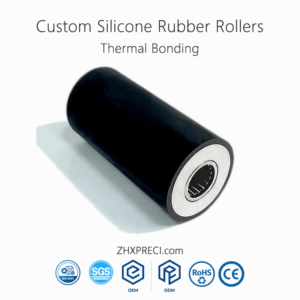
Black PU Rubber Coated Wheel Roller Industrial Grade for Automation Machinery Conveyor Transport and Factory Use
Read more -
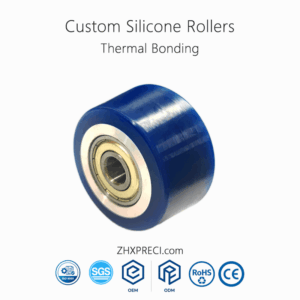
Blue Customized Silicone Rubber Coated Roller & High Quality Drive Guide Roller
Read more -
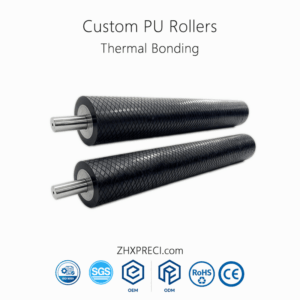
Custom Abrasion Resistant PU Rollers For Packaging Conveyors
Read more -
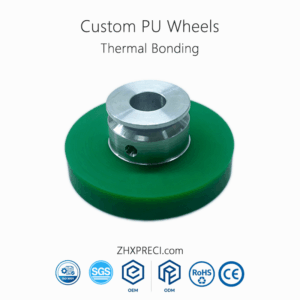
Custom Abrasion Resistant Rubber Wheels with Coating for Mining Equipment
Read more -
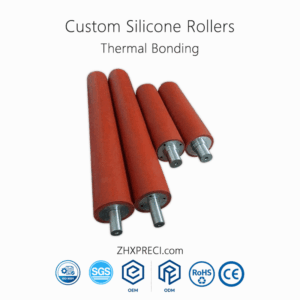
Custom Abrasion Resistant Silicone Coated Rollers Heavy Wear
Read more -
Custom Air Cooled Rubber Rollers with Internal Channels
Read more -
Custom Alkali Proof Rubber Wheels with Coating for Industrial Washers
Read more -
Custom Aluminum Core PU Rollers With Food Grade Compliance
Read more -
Custom Anti Vibration Rubber Wheels with Coating for Precision Instruments
Read more -
Custom Anti-Microbial Silicone Rollers Hygiene Grade
Read more -
Custom Anti-Static PU Rollers For Explosive Dust Environments
Read more -
Custom Anti-Static Silicone Coated Rollers Electronic Use
Read more -
Custom Antistatic PU Rollers For Electronics Conveying
Read more -
Custom Antistatic Rubber Wheels with Coating for Cleanroom Carts
Read more -
Custom API Grade Rubber Rollers for Drill Pipe Wiper
Read more -
Custom ATEX Compliant PU Rollers For Mining Conveyor
Read more
What Are Custom PU Rubber Coated Rollers?
Custom PU rubber coated rollers are industrial components consisting of a metal core (typically steel or aluminium) encapsulated with a layer of polyurethane (PU) elastomer. This combination delivers a roller with the structural strength of metal and the surface resilience, wear resistance, and chemical stability of polyurethane. Unlike off-the-shelf rollers, custom versions are engineered to meet specific dimensional, hardness, and performance criteria for particular machinery or production environments.
Custom PU Rubber Coated Rollers from ZHXPRECI | China OEM/ODM Factory Manufacturer Supplier Custom Elastomer Wheels & Rollers represent a class of products where the coating formulation, thickness, hardness profile, and even the metal core design are adapted to the application. This approach ensures that the roller performs optimally under the exact loads, speeds, temperatures, and contact conditions it will encounter in service. The customisation process typically involves material selection, core preparation, adhesive application, PU casting or injection, curing, and precision grinding to final dimensions.
Why Choose Polyurethane for Roller Coating?
Polyurethane offers a unique combination of properties that make it suitable for roller coatings across diverse industries. It exhibits excellent abrasion resistance, often outperforming rubber in high-wear applications. Its load-bearing capacity is high, and it can be formulated to a wide range of hardness levels, from soft and resilient (around Shore A 30) to hard and rigid (up to Shore D 80). PU also provides good resistance to oils, greases, solvents, and many chemicals, although the specific resistance depends on the formulation.
When comparing PU to other coating materials like nitrile rubber, neoprene, or silicone, PU generally offers superior cut and tear resistance, higher load capacity, and better rebound resilience. It maintains its properties across a service temperature range of approximately -20°C to +80°C for standard formulations, with specialised grades available for more extreme conditions. This versatility makes PU a preferred choice for rollers in printing, converting, packaging, textile, and material handling equipment.
Key Characteristics of Custom PU Rubber Coated Rollers
Hardness and Durometer Range
The hardness of a PU roller coating is a critical parameter that influences its grip, wear rate, and ability to absorb shock. Typical hardness ranges from Shore A 60 to Shore A 98 for most industrial applications. Softer coatings (Shore A 60–75) are used where gentle contact, high friction, or conformability to uneven surfaces is required, such as in printing or laminating. Harder coatings (Shore A 85–98) are specified for high-load, high-speed, or high-wear applications like steel coil handling or heavy-duty drive rollers. The hardness is measured using a durometer, and the selected value must be matched to the operational pressure and contact mechanics to avoid premature failure.
Tensile Strength and Tear Resistance
Polyurethane elastomers possess high tensile strength, typically in the range of 20 to 50 MPa, depending on the formulation. Tear resistance is equally important, as rollers often experience shearing and cutting forces during operation. High tear strength reduces the risk of chipping or gouging, particularly at the roller edges or where foreign objects may become trapped. These mechanical properties are directly influenced by the choice of polyurethane type – polyester-based PU generally offers higher tensile strength and tear resistance than polyether-based PU, though the latter provides better hydrolysis resistance in humid environments.
Dimensional Accuracy and Tolerances
After coating and curing, the roller's outer diameter, concentricity, and surface finish are machined to precise tolerances. Typical diametral tolerances of ±0.05 mm can be achieved for critical applications. The surface roughness (Ra) can be controlled from 0.4 to 3.2 micrometres, depending on whether a smooth, matte, or textured finish is required. These dimensional accuracies are essential for maintaining consistent web tension, register accuracy in printing, and uniform pressure distribution in laminating or calendering processes.
Customisation Parameters and Engineering Considerations
Metal Core Design and Preparation
The metal core serves as the structural backbone of the roller. Its design must account for shaft deflection under load, bearing selection, and the method of power transmission (e.g., keyway, spline, or friction drive). Common core materials include carbon steel, stainless steel, and aluminium. For high-speed applications, the core must be dynamically balanced to minimise vibration. Before PU application, the core surface is typically grit-blasted and coated with a proprietary primer to create a strong chemical and mechanical bond between the metal and the elastomer.
PU Formulation Selection
Customisation extends to the PU chemistry itself. Polyester-based polyurethanes are known for their excellent oil resistance and high mechanical strength, making them suitable for applications involving mineral oils and greases. Polyether-based grades offer better hydrolysis resistance and low-temperature flexibility, which is beneficial in damp or cold environments. For applications requiring antistatic properties, conductive or dissipative formulations are available. The choice of curative agent (e.g., MOCA, MDA, or aliphatic diisocyanates) also influences the processing characteristics and final properties of the coating.
Coating Thickness and Profile
The coating thickness can range from 2 mm to over 50 mm, depending on the required diameter, resilience, and ability to absorb shocks. Thicker coatings provide greater shock absorption and can compensate for minor misalignments, but they also increase the overall thermal resistance, potentially leading to heat buildup. In some applications, a profiled surface (e.g., grooved, knurled, or dimpled) is required to enhance grip, facilitate fluid removal, or improve air release. These profiles can be machined into the cured PU surface.
What Is the Typical Lead Time for Custom Orders?
Lead times for custom PU rubber coated rollers are subject to order quantity, current production schedule, and final specification confirmation. For standard sizes and common formulations, the production cycle is typically shorter, while complex designs, specialised materials, or large-volume orders may require extended timeframes. It is advisable to consult with the factory early in the procurement process to align expectations and plan for production slots. Custom PU Rubber Coated Rollers from ZHXPRECI | China OEM/ODM Factory Manufacturer Supplier Custom Elastomer Wheels & Rollers are manufactured with flexibility to accommodate varying project timelines, and the scheduling is always discussed based on the specific requirements of each order.
How to Specify the Right Custom PU Roller for Your Application?
Define the Operational Parameters
Begin by identifying the roller's function: is it a drive roller, an idler roller, a pinch roller, or a process roller (e.g., for coating or printing)? Then, gather data on the line speed, operating temperature, ambient conditions, contact pressure, and the nature of the materials being handled. For instance, a roller handling abrasive paper webs requires different properties than one used in a food-grade packaging line.
Select the Appropriate Hardness and Material Grade
Based on the operational load and contact conditions, select a hardness that balances wear resistance with the required friction or conformity. If the roller is exposed to oils or chemicals, specify a PU grade with proven resistance to those substances. For environments with high humidity or frequent washing, a polyether-based PU with hydrolysis resistance is recommended.
Determine the Dimensional and Surface Finish Requirements
Provide the exact dimensions: core diameter, overall diameter, face length, and any special features like journals, keyways, or threaded ends. Specify the required surface finish and any profile requirements. Indicate whether the roller needs to be balanced to a specific grade (e.g., G6.3 or G2.5 per ISO 1940) for high-speed operation.
Quality Assurance and Testing Protocols
Quality assurance for custom PU rollers typically involves multiple inspection stages. Raw materials, including the PU pre-polymer and curative, are tested for consistency and reactivity. During production, the core dimensions and surface preparation are verified. After coating and curing, the roller undergoes dimensional inspection, hardness testing (using a calibrated durometer), and a visual inspection for surface defects such as pinholes, blisters, or foreign inclusions. For critical applications, non-destructive testing (e.g., ultrasonic thickness measurement or bond integrity testing) may be performed. Finally, dynamic balancing and run-out checks confirm that the roller meets the specified concentricity and vibration limits.
Frequently Asked Questions About Custom PU Rubber Coated Rollers
What industries commonly use custom PU coated rollers?
These rollers are found across numerous sectors, including printing and packaging (for anilox, metering, and transport rollers), converting (for slitting, rewinding, and laminating), textiles (for driven rollers in weaving and finishing machines), steel and aluminium processing (for coil handling and levelling), and material handling (for conveyor and drive rollers). The adaptability of PU makes it a versatile choice for any application requiring a durable, resilient, and customisable roller covering.
How do I maintain PU rubber coated rollers?
Maintenance primarily involves regular cleaning to prevent the buildup of residues that could affect surface finish or tracking. Mild detergents and water are generally suitable, but aggressive solvents should be avoided unless specifically recommended for the particular PU formulation. Inspect the roller periodically for signs of wear, cuts, or bond failure. Rotating rollers with ongoing production can help distribute wear evenly, extending service intervals.
Can PU rollers be repaired or recoated?
Yes, in most cases, worn PU rollers can be stripped of the old coating and recoated with fresh PU. This process involves removing the remaining elastomer, re-preparing the core surface, and applying a new layer. Recoating is often more cost-effective than manufacturing a completely new roller, especially for large or complex cores, and it allows for adjustments to the coating formula or hardness based on operational learnings.
What is the maximum operating temperature for standard PU rollers?
For standard polyurethane formulations, the continuous service temperature range is generally -20°C to +80°C. Short-term peaks up to 100°C may be tolerated, but prolonged exposure to higher temperatures can lead to softening, reduced mechanical strength, or accelerated ageing. For applications involving higher temperatures, special high-temperature PU formulations or alternative elastomers like silicone may be considered.
How to ensure the roller meets FDA or food-contact requirements?
If the roller is intended for food contact or pharmaceutical applications, it is essential to specify a PU formulation that complies with relevant regulations, such as FDA 21 CFR 177.2600 for rubber articles intended for repeated use. These compliant materials are formulated without certain plasticisers, additives, or heavy metals that could migrate into food products. Certification and documentation should be provided by the manufacturer to confirm compliance.
What causes premature wear or failure in PU rollers?
Premature failure can result from several factors: selecting an inappropriate hardness for the load, operating at temperatures beyond the material's limit, exposure to incompatible chemicals or solvents, inadequate core preparation leading to bond failure, and mechanical issues such as misalignment or excessive bearing play. Analysing the failure mode often provides insights for improving the next specification.
Technical Data and Performance Expectations
The following parameters provide a general reference based on industry-standard polyurethane elastomers. Actual values may vary depending on the specific formulation and manufacturing process.
- Hardness Range: Shore A 60 to Shore D 80, with typical tolerances of ±5 points.
- Tensile Strength: Typically between 25 and 45 MPa for polyester-based grades.
- Elongation at Break: Ranges from 300% to 650%, depending on hardness.
- Tear Strength (Die C): Usually 80 to 200 kN/m.
- Abrasion Resistance (DIN 53516): Volume loss typically less than 30 mm³, offering superior wear life compared to many rubbers.
- Maximum Service Temperature: Continuous use up to 80°C; intermittent use up to 100°C for standard formulations.
- Chemical Resistance: Good to excellent resistance to mineral oils, greases, and many aliphatic hydrocarbons; limited resistance to strong acids, ketones, and chlorinated solvents.
Selecting a Reliable OEM/ODM Partner for Custom PU Rollers
When sourcing custom PU rubber coated rollers, the capabilities of the manufacturer significantly impact the quality and consistency of the final product. A competent partner should demonstrate control over the entire production chain, from core fabrication and surface preparation to PU chemistry, moulding, curing, and precision finishing. They should be equipped to handle a variety of core materials and sizes, offer multiple PU formulations, and have the testing equipment to verify dimensional and mechanical properties.
Custom PU Rubber Coated Rollers from ZHXPRECI | China OEM/ODM Factory Manufacturer Supplier Custom Elastomer Wheels & Rollers are produced with attention to engineering precision and material science. The focus is on understanding the specific operational environment of each roller and tailoring the coating parameters accordingly. This approach, combined with quality control procedures aligned with international standards, provides a foundation for reliable and consistent performance.
Conclusion
Custom PU rubber coated rollers are essential components in countless industrial processes, offering a balance of strength, resilience, and wear resistance that can be fine-tuned to exact application requirements. By understanding the key parameters – hardness, material grade, dimensional accuracy, and surface finish – engineers and procurement specialists can specify rollers that deliver optimal performance and long service life. The customisation possibilities, from chemistry selection to profile design, allow these rollers to solve specific operational challenges, whether it is improving product quality, reducing downtime, or handling demanding materials.
Effective sourcing involves clear communication of application details, realistic expectations regarding lead times, and collaboration with a manufacturer that possesses the technical expertise and production flexibility to translate specifications into reliable components. As industries continue to demand higher productivity and quality, the role of precisely engineered elastomer rollers becomes increasingly important in maintaining efficient and reliable production lines.