
Custom High Temperature Rubber Coated Rollers
Custom High Temp Rubber Rollers – Engineered for Heat
Custom high-temp rubber rollers with precise hardness, load, and certified quality for OEM use.
- 30‑500 kg load
- 40‑95 Shore A hardness
- 100‑500 mm diameter
- ‑30‑+260 °C temp
- ISO/REACH cert
Showing 1–16 of 22 results
-
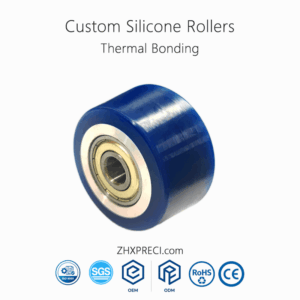
Blue Customized Silicone Rubber Coated Roller & High Quality Drive Guide Roller
Read more -
Custom ATEX Compliant Silicone Wheels Hazardous Area
Read more -
Custom Bracket Mount Silicone Wheels Easy Installation
Read more -
Custom Compact Size Silicone Wheels Space Saving
Read more -
Custom Hollow Bore PU Wheels For Direct Motor Mount
Read more -
Custom Hollow Bore PU Wheels For Direct Motor Mount
Read more -
Custom Low Temperature Silicone Wheels Freezer Trolley
Read more -
Custom NSF Certified Silicone Wheels Food Industry
Read more -
Custom Oil Resistant Silicone Wheels Industrial Cart
Read more -
Custom Ozone Resistant Silicone Wheels Outdoor Caster
Read more -
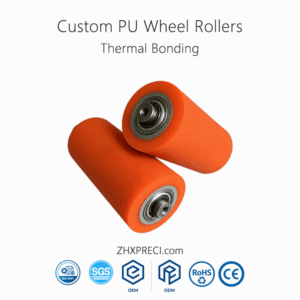
Custom Polyurethane Coated Wheel for Packaging Automation Systems – Wear Resistant, Oil Resistant, High Load Capacity, Low Noise
Read more -
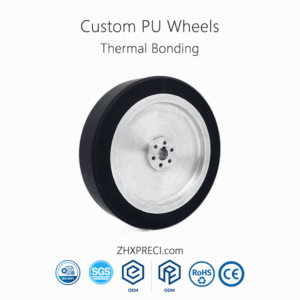
Custom Polyurethane Wheels – Quiet & Wear-Resistant for Factory Conveyor Systems and Industrial Transport
Read more -
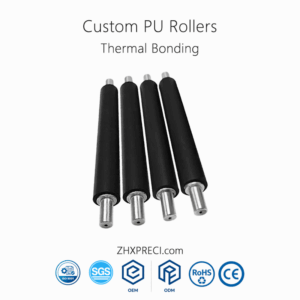
Custom PU Roller for Agricultural Machinery – High Wear & Oil Resistant for Cotton Machine
Read more -
Custom Quiet Rolling Silicone Wheels Hospital Bed
Read more -
Custom Reinforced Silicone Wheels High Capacity
Read more -
Custom Reversing Duty Silicone Wheels Conveyor System
Read more
Overview of Custom High Temperature Rubber Coated Rollers
In industrial environments where heat, friction, and continuous operation define the production floor, roller assemblies often become the critical bottleneck. Custom high temperature rubber coated rollers address this challenge by combining heat-resistant elastomer compounds with precision-engineered cores. These rollers are not generic off‑the‑shelf components; they are tailored to match specific thermal profiles, load requirements, and dimensional constraints. For procurement specialists and design engineers, understanding the material science, performance boundaries, and customization parameters is essential before committing to a supplier. This page provides a structured, fact‑based reference on high‑temperature rubber roller technology, common application scenarios, selection criteria, and typical industry practices. Custom High Temperature Rubber Coated Rollers from ZHXPRECI | China OEM/ODM Factory Manufacturer Supplier Custom Elastomer Wheels & Rollers represent one pathway within a broader ecosystem of specialized roller solutions, and the information here applies broadly across the sector.
What Defines a High Temperature Rubber Coated Roller?
A high temperature rubber coated roller consists of a metallic or composite core, over which a formulated elastomer layer is bonded. The key differentiator is the elastomer’s ability to retain mechanical properties—such as tensile strength, hardness, and abrasion resistance—under sustained elevated temperatures. Depending on the polymer type, these rollers typically operate continuously between 120°C and 260°C, with short‑term peaks potentially reaching 300°C in certain silicone‑based formulations. The coating thickness, shore hardness (ranging from 40 Shore A to 95 Shore A), and surface finish are all variable parameters that influence performance. Common base polymers include silicone, fluorosilicone, EPDM, and specially compounded nitrile or polyurethane blends. Each polymer family exhibits distinct trade‑offs regarding heat aging, oil resistance, ozone resistance, and mechanical durability. For instance, silicone rubber excels in dry heat up to 230°C but may show lower tear strength compared to polyurethane. Fluorosilicone offers superior fuel and solvent resistance but at a higher cost. Engineering teams must weigh these factors against their specific process conditions.
How to Select the Right High Temperature Roller for Your Application?
The selection process typically follows a structured evaluation of operating parameters. First, determine the maximum continuous and peak surface temperatures that the roller will encounter. This dictates the polymer family and the curing system. Second, assess the mechanical load—both radial and axial—to define the core diameter, wall thickness, and bearing arrangement. Third, consider the contact environment: is there exposure to oils, acids, steam, or abrasive particulates? Such factors influence the choice of surface texture (smooth, grooved, or patterned) and the bonding adhesive layer between core and rubber. Fourth, verify the dimensional accuracy required: run‑out tolerances, concentricity, and dynamic balancing classes are often critical for high‑speed applications. Finally, evaluate the maintenance strategy—some compounds are more resistant to wear and ozone cracking, reducing replacement frequency. While Custom High Temperature Rubber Coated Rollers from ZHXPRECI | China OEM/ODM Factory Manufacturer Supplier Custom Elastomer Wheels & Rollers offer a wide selection of material grades, the final choice should always be validated through sample testing under actual production conditions, as laboratory data may not fully replicate field dynamics.
Key Material Properties and Their Significance
Understanding material datasheets is fundamental for engineers. Four primary properties dominate specification:
- Heat Aging Resistance: Measured by the change in tensile strength and elongation after exposure to a defined temperature for a set period (e.g., 70 hours at 200°C). A well‑formulated compound shows less than 20% degradation in these metrics.
- Compression Set: This indicates the permanent deformation after a sustained compressive load. Lower compression set values (typically below 30%) are desirable for rollers that maintain constant nip pressure.
- Abrasion Resistance: Often quantified by DIN abrasion loss (mm³). Values below 150 mm³ are considered good for high‑traffic applications. This directly affects service life.
- Hardness Tolerance: Standard shore hardness tolerances are ±5 points. Tighter tolerances (±3 points) may be requested but can affect lead time and cost.
Additionally, thermal conductivity and specific heat capacity influence how quickly the roller dissipates heat—an often overlooked but critical factor for continuous processes. Many OEMs provide finite element analysis (FEA) data for thermal stress distribution upon request.
Common Industrial Applications
High temperature rubber coated rollers are integral to several manufacturing sectors. In the packaging industry, they serve as sealing rollers for heat‑seal films. In textile finishing, they are used in heat‑setting calenders. The paper and board industry employs them in drying sections and coating stations. In the metal processing sector, they appear in galvanizing lines and annealing furnace exit rollers. The automotive sector uses them for tire building and curing presses. In each case, the roller must withstand not only heat but also the mechanical demands of web tension, frictional drag, and occasional misalignment. The versatility of custom designs allows one to adapt the roller geometry—length, diameter, shaft configuration—to fit existing machinery without major retrofits.
Frequently Asked Questions (FAQ)
What is the maximum operating temperature for a custom high temperature rubber coated roller?
Temperature limits depend strictly on the elastomer formulation. Standard silicone compounds sustain continuous service up to 230°C; special high‑grade silicones may reach 260°C. Fluoroelastomers (FKM) perform well up to 200°C but offer better chemical resistance. For applications above 260°C, ceramic‑filled materials or alternative roller types (e.g., metal or composite) are often recommended. Any claimed maximum should be verified with the supplier’s technical datasheet and tested in the specific environment, as air circulation, load, and cycle frequency alter effective thermal stress.
How to determine the correct hardness (Shore A) for my process?
Hardness selection balances nip pressure, grip, and wear. Softer rollers (40‑60 Shore A) provide greater conformability and are suitable for delicate surfaces or uneven substrates. Medium hardness (60‑80 Shore A) offers a common balance for general conveying and pressing. Harder rollers (80‑95 Shore A) are preferred when high precision or low rolling resistance is needed. Engineers often run pilot trials with a few durometer samples to observe the actual contact footprint and release characteristics before finalizing specifications.
Can these rollers be used in food contact applications?
Yes, but only if the compound is certified to FDA or EU food‑contact regulations. Not all high‑temperature rubbers meet these standards. Silicone grades specifically formulated for food machinery are available. It is essential to request compliance certificates and migrate test reports for direct or indirect food contact surfaces. The design must also accommodate easy cleaning and sanitization protocols.
What is the typical service life of a high temperature rubber roller?
Service life varies widely—from several months to multiple years—based on operating severity, maintenance, and material selection. Common factors that shorten life include overtemperature spikes, chemical attack, mechanical overload, and poor storage (e.g., ozone exposure). Regular inspection of surface cracks, swelling, or hardness changes can help predict replacement intervals. Many factories establish preventive maintenance schedules that include periodic resurfacing or re‑covering to extend core life.
How does the bonding process affect roller reliability?
The adhesive layer between the core and the rubber is as critical as the rubber itself. Bonding failures manifest as blistering or separation at high temperatures. Reliable suppliers use proprietary primer and adhesive systems, followed by controlled curing cycles (both time and temperature) to achieve cross‑linkage. Non‑destructive testing, such as ultrasonic or thermal imaging, can be employed to detect voids. For critical applications, customers may request bond strength test coupons.
Are there standard sizes available, or is every roller fully custom?
Many manufacturers maintain a portfolio of semi‑standard dimensions—for example, common diameters (100‑500 mm) and lengths (500‑3000 mm)—that can be adapted with modest modifications. However, true customisation covers core material (steel, stainless steel, or aluminum), shaft configurations, keyways, threads, and special surface profiles. The degree of customisation influences both cost and production scheduling.
What are the common failure modes and how can they be mitigated?
Typical failures include: (a) thermal degradation—hardening and cracking; mitigated by selecting higher‑grade polymers and ensuring adequate cooling. (b) delamination—caused by poor bonding or moisture ingress; mitigated by strict surface preparation and storage controls. (c) excessive wear—addressed by choosing abrasion‑resistant compounds and maintaining proper nip pressure. (d) dynamic imbalance—remedied by balancing procedures and regular inspection of bearings and shafts.
How to clean and maintain high temperature rubber rollers?
Routine cleaning should use mild detergents and soft brushes; avoid solvents that may attack the elastomer. After shutdown in hot environments, gradual cooling is preferable to prevent thermal shock. Storage away from direct sunlight, ozone sources (electric motors, welding equipment), and extreme humidity is advised. Periodically rotate idle rollers to prevent flat spots. The manufacturer’s maintenance manual should always be the primary guide.
What quality control measures are typical during production?
Reputable factories implement inline and final inspection steps: raw material batch testing, compound viscosity checks, hardness testing on each roller, dimensional measurements (diameter, run‑out, concentricity), dynamic balancing, and visual inspection for porosity or blisters. Some suppliers also perform accelerated heat‑aging tests on sample coupons from the same batch. Certificate of conformity with actual measured values is often provided upon shipment.
Can the rollers be repaired or re‑coated after wear?
Yes, most metal cores are designed for multiple re‑covering cycles. The worn rubber is stripped, the core is cleaned and inspected for damage, and a new rubber layer is applied. Re‑covering is economically attractive compared to manufacturing a completely new core. However, the core’s condition—straightness, roundness, and bearing journals—must meet refurbishment criteria. Many suppliers, including Custom High Temperature Rubber Coated Rollers from ZHXPRECI | China OEM/ODM Factory Manufacturer Supplier Custom Elastomer Wheels & Rollers, offer re‑covering services alongside new production.
Dimensional and Tolerancing Considerations
Precision is paramount in roller design. Typical diameter tolerances range from ±0.05 mm for high‑speed applications to ±0.15 mm for general use. Run‑out (total indicated reading) is often specified at ≤0.05 mm per 100 mm of length for printing and coating lines. Surface roughness, measured in Ra (arithmetic average roughness), varies from 0.4 µm for smooth release to 6.3 µm for enhanced grip. These parameters are not arbitrary; they derive from the interaction between the roller and the web or substrate. Engineers should clearly state all required tolerances on their technical drawings, including shaft end dimensions, thread types, and keyway sizes, to avoid mismatches upon delivery.
Thermal Management and Cooling Options
Even the best heat‑resistant rubber has finite limits. For processes generating significant frictional heat, active cooling may be necessary. Common methods include internal water‑circulation through a hollow core, or external air‑knife systems directed at the roller surface. Water‑cooled rollers can reduce skin temperature by 20‑40°C, depending on flow rate and inlet temperature. When specifying a cooled roller, the core material becomes critical—stainless steel is preferred for corrosion resistance but has lower thermal conductivity than carbon steel. The design must also consider sealing systems to prevent leakage. Thermal simulation (e.g., CFD) can optimise the cooling channel geometry.
Cost Drivers and Value Engineering
While price is a key factor, a holistic cost‑of‑ownership perspective often reveals that a marginally more expensive compound with longer service life yields lower annual expenditure. Major cost drivers include: polymer type (fluoroelastomer is more costly than EPDM), core material and machining complexity, surface finishing (grinding vs. polishing), balancing grade, and quality assurance rigor. Production batch size also affects unit economics—larger orders typically amortise setup costs. For prototype or low‑volume requirements, many suppliers offer expedited sampling with flexible terms. It is advisable to request a detailed quotation that clearly separates material, machining, coating, and certification costs.
Ordering and Technical Consultation
When preparing a request for quotation, provide as much detail as possible: working temperature range, ambient conditions, load (force per unit length), speed (rpm or surface velocity), medium contact (wet/dry, chemical), required hardness and tolerance, dimensional drawing (or sketch), and any industry‑specific standards (e.g., ISO, DIN, ASTM). Most reputable manufacturers have engineering teams that can perform preliminary feasibility checks and suggest improvements. Collaborative dialogue early in the design phase often prevents costly re‑work later.
Lead Time and Planning Considerations
Delivery schedules for custom rubber rollers vary according to order complexity, material availability, and current production workload. For standard compounds and common dimensions, the planning horizon is generally shorter; for special polymers, intricate cores, or multi‑layer coatings, additional time is needed for compounding, curing, and quality checks. We recommend discussing your required delivery window with the supplier at the quotation stage. Actual lead times are subject to order quantity, current production schedule, and final specification confirmation—so early engagement and clear communication help align expectations. Where urgent needs arise, some manufacturers can expedite a limited number of units, but this may involve premium charges and should be verified case‑by‑case.
Environmental and Safety Compliance
Increasingly, industrial rollers must meet environmental regulations such as REACH, RoHS, and conflict‑mineral declarations. Many high‑temperature rubber compounds are formulated without heavy metals or restricted phthalates. Additionally, the manufacturing process generates volatile organic compounds (VOCs) during curing; responsible factories employ capture and treatment systems. For the end‑user, proper disposal or recycling of worn rollers—especially those containing certain fillers—should follow local waste management guidelines. It is prudent to request material safety data sheets (MSDS) and environmental declarations from the supplier.
Testing and Validation Protocol
Before committing to full‑scale production, a validation campaign is recommended. This typically includes:
- Bench testing: hardness, tensile, elongation, tear strength, and compression set at room and elevated temperatures.
- Thermal cycling: repeated heating and cooling to check bond integrity and dimensional stability.
- Dynamic test: mounting the roller on a test rig to simulate operating speeds and loads, measuring vibration and temperature rise.
- Field trial: installing the prototype in the actual production line for a defined period, with regular performance logging.
Such a staged approach reduces risks and builds confidence in the final product. Many OEMs provide test reports as part of their quality documentation.
Conclusion
Selecting the right custom high temperature rubber coated roller is a multi‑faceted decision that balances thermal performance, mechanical demands, chemical compatibility, and economic factors. By understanding material properties, dimensional tolerances, and application‑specific nuances, engineers can specify rollers that deliver reliable service under harsh conditions. For those seeking a partner with broad material capabilities and manufacturing flexibility, Custom High Temperature Rubber Coated Rollers from ZHXPRECI | China OEM/ODM Factory Manufacturer Supplier Custom Elastomer Wheels & Rollers represent a viable option within the global supply chain—yet the final choice should always be informed by rigorous technical evaluation and, where feasible, empirical testing. This page has aimed to provide a factual, neutral, and thorough overview to support that decision‑making process. For further technical details, we encourage direct consultation with qualified roller engineers who can address specific process queries and offer tailored recommendations.