
Custom Heavy Duty Rubber Coated Rollers
Custom Heavy Duty Rubber Coated Rollers
Industrial rollers for heavy loads.
- 30-500kg load
- 60-95A Shore
- 60-300mm dia
- -30-+80°C temp
- ISO/REACH cert
Showing 1–16 of 76 results
-
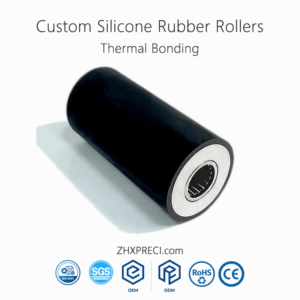
Black PU Rubber Coated Wheel Roller Industrial Grade for Automation Machinery Conveyor Transport and Factory Use
Read more -
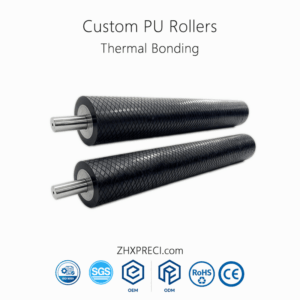
Custom Abrasion Resistant PU Rollers For Packaging Conveyors
Read more -
Custom Air Cooled Rubber Rollers with Internal Channels
Read more -
Custom Aluminum Core PU Rollers With Food Grade Compliance
Read more -
Custom Anti-Static PU Rollers For Explosive Dust Environments
Read more -
Custom Antistatic PU Rollers For Electronics Conveying
Read more -
Custom API Grade Rubber Rollers for Drill Pipe Wiper
Read more -
Custom ATEX Compliant PU Rollers For Mining Conveyor
Read more -
Custom ATEX Compliant Rubber Rollers for Grain Handling
Read more -
Custom Cantilever Mount Rubber Rollers for Narrow Spaces
Read more -
Custom Cast Iron Core PU Rollers With Keyway Mounting
Read more -
Custom CE Certified PU Rollers For Packaging Machinery
Read more -
Custom Chemical Resistant PU Rollers For Corrosive Environments
Read more -
Custom Constant Tension Rubber Rollers for Slitting Lines
Read more -
Custom Double Ended Rubber Rollers for Multi-Position Shafts
Read more -
Custom Electroplated Surface PU Rollers For Corrosive Washdown
Read more
Defining Custom Heavy Duty Rubber Coated Rollers for Industrial Applications
In the field of industrial machinery and material handling, custom heavy duty rubber coated rollers are essential components that directly affect process stability, product surface quality, and equipment service life. These rollers are designed to transmit torque, guide webs, apply pressure, and absorb shock in demanding environments such as steel mills, paper machines, printing presses, conveyor systems, and packaging lines. Unlike generic stock rollers, custom solutions are engineered to match precise dimensional, durometric, and environmental requirements, allowing each roller to perform optimally under its specific load, speed, and temperature profile.
Custom Heavy Duty Rubber Coated Rollers from ZHXPRECI | China OEM/ODM Factory Manufacturer Supplier Custom Elastomer Wheels & Rollers are produced using controlled molding and vulcanization processes that ensure a strong, durable bond between the rubber layer and the metal substrate. This construction minimises the risk of separation even when the roller is subjected to high nip pressures, repeated thermal cycles, or abrasive contact. The choice of elastomer—whether natural rubber, SBR, NBR, EPDM, silicone, or specialty compounds—is determined by the specific chemical, thermal, and mechanical demands of the application, ensuring that the final product delivers consistent performance over its expected lifetime.
Material Properties and Performance Parameters
When specifying custom heavy duty rubber coated rollers, several material characteristics require careful evaluation. Hardness, typically measured on the Shore A scale, ranges from 40 to 95, with softer grades (40–60) offering greater conformability and impact absorption, while harder grades (75–95) provide increased resistance to penetration and abrasion. Tensile strength, tear resistance, and compression set are equally important, as they determine the roller's ability to maintain its shape and function under sustained pressure and cyclic deformation.
Temperature stability varies by compound. Nitrile rubber performs reliably between -30°C and +100°C, EPDM extends the upper limit to +150°C, and silicone formulations can withstand continuous exposure up to +200°C. For applications involving intermittent higher temperatures, specialised heat-resistant compounds are available. The metal core, commonly manufactured from carbon steel, stainless steel, or aluminium, is precision-machined to achieve runout tolerances within ±0.05 mm, ensuring smooth operation at high rotational speeds. Surface finish options include smooth, matte, textured, or grooved, each selected to optimise grip, release, or fluid transfer characteristics. Coating thickness typically varies from 3 mm to 50 mm, depending on the required compressibility and energy dissipation.
Common Questions and Practical Considerations
What are the primary uses of heavy duty rubber coated rollers?
These rollers are widely used in conveying, feeding, printing, laminating, calendering, and metal processing equipment. In steel plants, they serve as pinch rolls and tension-leveler rolls, providing traction while protecting sheet surfaces from scratches. In paper mills, they assist in pressing, drying, and coating operations. In logistics, they are integral to powered conveyor systems that handle varying load weights. Their versatility stems from the ability to tailor the rubber compound, hardness, and surface profile to the specific material being processed and the mechanical stresses involved.
How does one select the appropriate rubber compound?
The selection process begins with identifying the operating environment: exposure to oils, solvents, acids, ozone, or ultraviolet light dictates the base polymer. For oil-laden atmospheres, NBR is often preferred; for outdoor or ozone-rich settings, EPDM offers superior resistance; for high-temperature zones, silicone or FKM may be necessary. In addition, the required hardness and dynamic properties must be matched to the application’s nip pressure and speed. It is common practice to consult with material specialists who can perform lab-scale testing on candidate compounds before full-scale production, ensuring the chosen material meets all performance targets without overspecification.
How is the optimal hardness determined for a given application?
Hardness selection depends on the trade-off between grip and wear. Softer rollers (40–60 Shore A) provide excellent friction and conformation to irregular surfaces, making them suitable for printing plates or delicate substrates. Medium hardness (60–75 Shore A) offers a balanced combination of traction and durability, appropriate for general conveying. Harder rollers (75–95 Shore A) resist abrasion and deformation under heavy loads, commonly employed in high-pressure laminating or metal processing. The decision should be validated by considering the maximum nip pressure, acceptable deflection, and the surface finish requirements of the product being handled. Testing with durometer samples on actual machinery often yields the most reliable guidance.
What maintenance practices help extend roller life?
Regular inspections for surface cracking, blistering, or uneven wear patterns can detect early signs of misalignment or excessive loading. Cleaning with mild detergents or specified rubber cleaners removes adhered debris that could cause imbalance or slippage. It is advisable to store spare rollers in a cool, dry, dark environment, away from ozone-generating equipment such as electric motors. Periodic regrinding or resurfacing can restore surface accuracy when minor damage occurs, postponing the need for complete recoating. Monitoring bearing condition and shaft concentricity also reduces unnecessary stress on the rubber layer, thereby extending service intervals.
What influences the lead time for custom manufactured rollers?
The production timeframe is subject to order quantity, current production schedule, and final specification confirmation. Additional factors include the complexity of core machining, the availability of specific raw materials, and the curing duration required for the chosen compound thickness. Each project is evaluated on its own requirements, and a realistic delivery plan is established through collaboration between the engineering team and the customer, ensuring that both quality standards and operational deadlines are balanced.
How is the rubber-to-metal bond quality ensured?
Reliable bonding begins with thorough surface preparation of the metal core—typically through shot blasting or chemical etching to achieve a clean, roughened profile. A compatible primer and adhesive system are then applied, chosen according to the rubber compound and vulcanisation temperature. During moulding, precise control of temperature, pressure, and cure time promotes the formation of a chemical bond that exceeds the internal strength of the rubber. Routine quality verification includes peel and shear tests on representative samples, as well as non-destructive ultrasonic inspection of finished rollers to confirm bond integrity before shipment.
In what ways do custom rollers offer better value than standard alternatives?
Although custom rollers involve higher initial engineering and tooling costs, they typically provide a lower total cost of ownership by reducing unplanned downtime, minimising rejects, and extending replacement cycles. Standard rollers may not match the exact dimensional, hardness, or surface requirements of a specific machine, leading to suboptimal performance and accelerated wear. Custom designs address unique constraints such as non-standard shaft sizes, specialised crown profiles, or resistance to aggressive chemicals, thereby improving overall production efficiency. Over the lifetime of the equipment, the savings in maintenance and lost production often far outweigh the incremental upfront expense.
Industrial Sector Applications in Detail
Steel and Metal Processing
In steel mills, rollers are exposed to heavy loads, high temperatures, and abrasive scale. Custom heavy duty rubber coated rollers are employed in pinch roll assemblies, tension levellers, and coil handling systems. They provide necessary traction while protecting steel surfaces from scratching or marring. The rubber compounds used in this sector must exhibit high thermal stability and resistance to cutting or gouging from sharp edges. Special profiles, such as concave or convex crowns, are often incorporated to compensate for material deflection during rolling.
Paper and Pulp Industry
Paper production depends on rubber rollers throughout the forming, pressing, drying, and calendering stages. In press sections, rollers must withstand high pressures and moisture while maintaining uniform dewatering across the sheet. Hardness and surface finish are carefully controlled to prevent marking or crushing the paper web. Rollers with ribbed or grooved surfaces are often used to improve water removal in the forming section, contributing to overall machine speed and paper quality. Resistance to chemicals used in bleaching and coating is also a critical consideration.
Logistics and Material Handling
Conveyor systems in warehouses and manufacturing plants utilise rubber coated rollers to transport items ranging from small parcels to heavy pallets. These rollers must provide consistent grip over a wide speed range while accommodating variations in load weight. Static dissipative or conductive compounds are available for handling electronic components or in environments where electrostatic discharge poses a risk. Custom roller dimensions and mounting configurations are designed to fit existing conveyor frames, minimising retrofitting costs and system downtime during upgrades.
Printing and Converting
In printing presses, rollers are responsible for ink transfer, dampening, and substrate transport. Accuracy in hardness and surface profile ensures faithful reproduction of fine details. For flexographic and gravure printing, rollers may require anilox patterns or ceramic coatings, while offset printing relies on precisely ground rubber rollers for consistent ink film thickness. Custom solutions are often developed for non-standard press widths, variable impression pressures, or specialised ink formulations, ensuring optimal print quality across different substrates including paper, film, and foil.
Engineering Design and Quality Assurance
Effective design of custom heavy duty rubber coated rollers begins with a comprehensive analysis of operational parameters: load magnitude and distribution, speed and acceleration, thermal conditions, chemical exposure, and available space within the existing machine. Finite element analysis is frequently used to predict stress distribution, deflection, and heat generation, enabling optimisation of core geometry and rubber thickness before any physical prototype is produced. This approach reduces the number of iterative trials and shortens the development cycle while ensuring that the final product meets all performance criteria.
During production, quality assurance encompasses both raw material verification and finished product testing. Incoming rubber compounds are checked for rheological properties to ensure batch consistency. Throughout the moulding process, temperature, pressure, and time are continuously monitored. After curing, dimensional inspections using coordinate measuring machines or laser micrometers verify concentricity, roundness, and surface profile. Hardness is measured at multiple points to confirm uniformity. Bond integrity is validated through ultrasonic testing or destructive sample analysis. A final visual inspection under proper lighting detects any surface anomalies such as pinholes, blisters, or inclusions, ensuring that only rollers meeting the defined specifications are dispatched.
Innovations and Sustainability Considerations
Recent developments in polymer science are opening new possibilities for rubber coated rollers. The incorporation of nano-fillers such as carbon nanotubes or graphene can enhance mechanical strength and thermal conductivity without adding significant weight. Self-lubricating formulations reduce friction at the bearing interface, lowering both heat generation and energy consumption. Meanwhile, embedded sensor technologies allow real-time monitoring of temperature, pressure, and wear, facilitating predictive maintenance and reducing unexpected stoppages. These smart rollers are gradually becoming more common in Industry 4.0 environments, offering valuable operational data.
Sustainability is also gaining attention. Many manufacturers are exploring the use of bio-based or recycled rubber content where technically feasible, as well as optimising curing cycles to reduce energy consumption. Retreading—replacing the worn rubber coating on a reusable metal core—extends the roller's service life and reduces waste, often at a lower cost than manufacturing a completely new unit. This practice aligns with circular economy principles and contributes to a lower environmental footprint per operating hour. Proper selection of wear-resistant compounds further extends replacement intervals, conserving resources and reducing industrial waste over the long term.