
Custom EPDM Industrial Rubber Rollers
Custom EPDM rollers: tailored load, hardness, thermal performance.
- 30–500 kg load
- 40–90 Shore A hardness
- 60–300 mm dia
- -40–120°C temp
- ISO/REACH cert
Showing 1–16 of 132 results
-
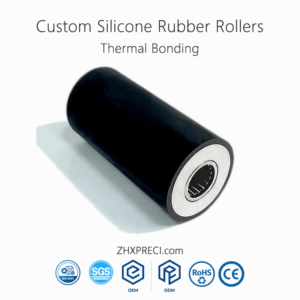
Black PU Rubber Coated Wheel Roller Industrial Grade for Automation Machinery Conveyor Transport and Factory Use
Read more -
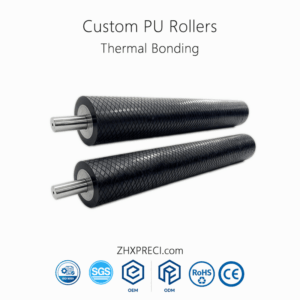
Custom Abrasion Resistant PU Rollers For Packaging Conveyors
Read more -
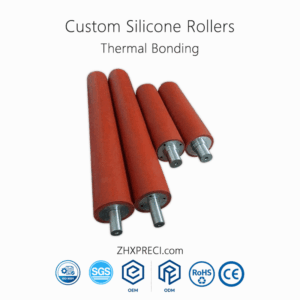
Custom Abrasion Resistant Silicone Coated Rollers Heavy Wear
Read more -
Custom Air Cooled Rubber Rollers with Internal Channels
Read more -
Custom Aluminum Core PU Rollers With Food Grade Compliance
Read more -
Custom Anti-Microbial Silicone Rollers Hygiene Grade
Read more -
Custom Anti-Static PU Rollers For Explosive Dust Environments
Read more -
Custom Anti-Static Silicone Coated Rollers Electronic Use
Read more -
Custom Antistatic PU Rollers For Electronics Conveying
Read more -
Custom API Grade Rubber Rollers for Drill Pipe Wiper
Read more -
Custom ATEX Compliant PU Rollers For Mining Conveyor
Read more -
Custom ATEX Compliant Rubber Rollers for Grain Handling
Read more -
Custom Bearing Mounted Silicone Coated Rollers Quick Change
Read more -
Custom Cantilever Mount Rubber Rollers for Narrow Spaces
Read more -
Custom Cantilever Mounted Silicone Rollers Easy Access
Read more -
Custom Cast Iron Core PU Rollers With Keyway Mounting
Read more
What Are Custom EPDM Industrial Rubber Rollers?
Custom EPDM industrial rubber rollers are precision-engineered cylindrical components manufactured from ethylene propylene diene monomer rubber. This material is widely selected for applications requiring resistance to weathering, ozone, steam, and moderate chemicals. In industrial settings, these rollers are used across converting, printing, packaging, textile, and material handling equipment. The "custom" aspect indicates that dimensions, durometer, surface finish, and core configurations are adapted to specific machinery or process requirements.
For a B2B buyer or maintenance engineer, the key consideration is not simply a standard part but a component tailored to operating conditions such as line speed, nip pressure, temperature exposure, and media contact. Custom EPDM industrial rubber rollers from ZHXPRECI | China OEM/ODM Factory Manufacturer Supplier Custom Elastomer Wheels & Rollers are developed with these variables in mind. The formulation can be adjusted to meet specific compression set, tensile strength, or abrasion resistance targets, ensuring that the roller performs reliably under defined process limits.
Why Choose EPDM for Industrial Roller Applications?
EPDM is selected over other elastomers like natural rubber, neoprene, or nitrile due to its unique property balance. Its saturated polymer backbone provides inherent resistance to oxygen, ozone, and UV degradation, which translates into longer service intervals for outdoor or high-temperature environments. The material can typically operate within a temperature range of -40°C to +120°C, with short excursions up to 150°C possible depending on the specific compound formulation.
In addition, EPDM exhibits low compression set and good rebound resilience, which are critical for rollers that maintain constant nip pressure. It also demonstrates adequate resistance to polar solvents, hot water, and steam, making it suitable for applications such as steam-heated drying cans, wash-down conveyors, and chemical transfer systems. However, it is important to note that EPDM is not compatible with petroleum-based oils, fuels, or non-polar solvents; this limitation must be considered during the material selection process.
Key Technical Parameters and Material Characteristics
When evaluating custom EPDM industrial rollers, several technical parameters should be reviewed. Hardness, measured in Shore A durometer, typically ranges from 40 to 90, with medium-hardness compounds (60-80 Shore A) being the most common for general industrial use. Lower hardness rollers provide higher conformability and friction, while harder compounds offer better cut resistance and load-bearing capacity. Tensile strength for quality EPDM compounds generally falls between 10 and 20 MPa, and elongation at break can vary from 250% to over 600% depending on the filler and curing system.
Abrasion resistance is measured using DIN or NBS standards, and for demanding applications, the compound can be reinforced with carbon black or silica to improve wear performance. The maximum operating temperature and continuous service temperature are also determined by the curing system - peroxide-cured EPDM often provides better heat resistance compared to sulfur-cured systems. The glass transition temperature (Tg) of EPDM is approximately -50°C, ensuring flexibility in cold environments. These values represent typical industry ranges and should be confirmed through testing for specific application conditions.
How to Specify Custom EPDM Rollers for Your Application?
Specifying a custom roller requires a systematic approach. The first step is to define the mechanical interface: shaft diameter, overall length, face length, and any special features such as keyways, threaded ends, or taper locks. The core material, usually steel or aluminum, must be selected based on speed, load, and dynamic balancing requirements. For high-speed applications, dynamic balancing is recommended to reduce vibration and bearing wear.
Next, the rubber cover thickness, typically ranging from 6 mm to 50 mm, should be determined based on the required resilience and damping characteristics. The surface finish is another critical factor: ground, polished, textured, or grooved surfaces each serve different functions, such as increased grip, release properties, or fluid removal. Tolerance on outer diameter is often held to +/- 0.05 mm for precision applications. Finally, the attachment method to the machine should be clarified, whether it involves bearing housings, flange mounts, or taper-lock bushings.
Common Applications and Industries Served
Custom EPDM industrial rubber rollers are used in a wide cross-section of industries. In the paper and converting industry, they are employed as pull rollers, spreader rollers, and applicator rollers for coatings. In textile finishing, they serve as padder rollers and guiding rollers, where resistance to process chemicals and moisture is essential. The printing industry uses EPDM rollers in ink trains and dampening systems, provided the ink solvents are compatible.
In food processing and packaging, EPDM rollers are often found in conveyor systems, especially where wash-down with hot water and mild detergents is routine. The material’s FDA-compliant grades are available for indirect food contact applications. Additionally, in metal processing and material handling, EPDM rollers are utilized as pinch rollers and drive rollers due to their excellent friction properties and wear resistance. Each application may require specific modifications to the base compound, highlighting the importance of a customized approach.
Custom Manufacturing Process Overview
The production of custom EPDM rollers involves several distinct stages. Initially, the raw EPDM polymer is mixed with fillers, processing aids, curatives, and other additives according to the target property profile. This mixing process, typically done using an internal mixer, must be carefully controlled to ensure uniform dispersion of carbon black and other reinforcing agents. The mixed compound is then calendered or extruded onto a prepared metal core that has been cleaned and coated with a bonding adhesive.
After application, the roller is wrapped with a curing tape and subjected to heat and pressure in an autoclave or press. The vulcanization process cross-links the polymer chains, establishing the final physical properties. Following curing, the roller is cooled and the cover is ground to the specified diameter and surface finish using a cylindrical grinder. Final quality checks include hardness verification, dimensional inspection, and dynamic balance testing. This entire cycle is performed with rigorous process controls to maintain consistency.
Quality Control and Testing Procedures
To ensure the reliability of custom EPDM rollers, a series of quality control measures are implemented throughout production. Incoming raw materials are tested for viscosity, specific gravity, and ash content to confirm batch consistency. During mixing, a rheometer is used to monitor cure characteristics and ensure the compound meets the designated cure curve. Each bonded roller undergoes a peel adhesion test to verify the strength of the rubber-to-metal bond, which is critical to prevent separation under load.
Dimensional inspections are performed using precision instruments, including outside diameter gauges, taper gauges, and concentricity testers. Hardness measurements are taken at multiple points along the roller face to ensure uniformity. For applications requiring dynamic performance, rollers are balanced on two-plane balancing machines per ISO 1940 standards. Samples from each production batch may be subjected to accelerated aging and compression set tests to predict long-term behavior. These procedures are based on standard test methods such as ASTM D1414, ASTM D395, and ASTM D573.
Lead Time and Ordering Considerations
The total time from order placement to delivery is subject to order quantity, current production schedule, and final specification confirmation. For customized rollers, factors such as compound development, core fabrication, and curing cycle influence the timeline. Prospective buyers are encouraged to initiate discussions with a technical representative to establish a realistic schedule based on their specific requirements and project urgency. Early engagement allows for better capacity planning and ensures that any special testing or certification needs are addressed upfront.
Common Questions and Answers (FAQ)
What is the maximum temperature resistance of EPDM rollers?
EPDM rollers can generally sustain continuous operation at temperatures up to 120°C, with intermittent exposure up to 150°C possible. The exact limit depends on the specific compound formulation and the duration of exposure.
How to clean EPDM industrial rollers?
Cleaning should be performed using mild soap and water or a suitable rubber cleaning solvent that does not contain petroleum oils. Abrasive tools should be avoided to prevent surface damage. Always check compatibility of cleaning agents with EPDM before use.
Are EPDM rollers suitable for outdoor use?
Yes, EPDM is highly resistant to UV radiation, ozone, and weathering, making it an excellent choice for outdoor or uncovered industrial environments.
Can EPDM rollers be used in contact with oils?
EPDM is not resistant to petroleum-based oils and greases. For oil-contact applications, nitrile (NBR) or other oil-resistant elastomers are recommended.
What is the typical hardness range for EPDM rollers?
Hardness ranges from 40 to 90 Shore A, with 70 Shore A being a common baseline for general-purpose rollers.
How to determine the appropriate wall thickness for my roller?
Wall thickness depends on required load capacity, diameter, and deflection constraints. A thicker cover provides greater compliance and energy absorption, while a thinner cover offers better heat transfer and precision.
What surface finishes are available for EPDM rollers?
Common finishes include plain ground, polished, spiraled, knurled, and grooved. The choice depends on the desired coefficient of friction, release properties, or liquid handling characteristics.
Is EPDM FDA compliant?
Yes, certain EPDM grades are formulated to meet FDA requirements for indirect food contact, provided the specific compound has been tested and certified.
What causes EPDM roller failure?
Common failure modes include swelling due to incompatible fluids, thermal degradation from excessive heat, mechanical damage from misalignment, and bonding failure due to improper adhesive selection or application.
How to store spare EPDM rollers?
Rollers should be stored in a cool, dry location away from direct sunlight, ozone-generating equipment, and petroleum products. They should be rotated periodically to prevent flat-spotting.
Technical Support and Consultative Approach
Selecting the correct EPDM compound and roller design requires a collaborative approach between the manufacturer and the end-user. Custom EPDM industrial rubber rollers from ZHXPRECI | China OEM/ODM Factory Manufacturer Supplier Custom Elastomer Wheels & Rollers are developed through a consultative process where application details such as process speed, nip load, operating temperature, media contact, and expected service life are thoroughly discussed. This ensures that the final product aligns with operational expectations and industry standards.
Engineering assistance is available to review existing roller failures, suggest alternative compounds, or optimize designs for improved performance and longevity. The goal is to provide a component that contributes to overall production efficiency and reduces unplanned downtime. By addressing both technical and commercial factors, buyers can make informed decisions that balance performance and cost-effectiveness.
Maintenance and Service Life Optimization
Proactive maintenance is essential to extend the service life of EPDM rollers. Regular inspection for surface cracks, swelling, or hardness changes can indicate early degradation. Keeping rollers clean and ensuring proper lubrication of bearings reduces mechanical stress. It is also advisable to monitor operating temperatures and nip pressures to ensure they remain within design limits.
When a roller shows signs of wear, such as surface glazing or loss of diameter, regrinding may restore its functionality, provided the remaining cover thickness is adequate. Replacement schedules should be based on actual condition rather than fixed calendar intervals, as service life varies significantly based on usage intensity and environmental factors. Documentation of service history, including grind cycles and any process changes, assists in forecasting future requirements.
Environmental and Sustainability Considerations
EPDM is a synthetic rubber that can be formulated with sustainable fillers and process oils to reduce environmental impact. While the vulcanization process is energy-intensive, modern manufacturing facilities often employ energy recovery systems and optimize curing cycles to minimize consumption. EPDM rollers are durable and their long service life contributes to resource efficiency by reducing waste and replacement frequency.
At the end of their useful life, EPDM rollers can be repurposed as fuel in cement kilns or processed into ground rubber for various applications, depending on local recycling capabilities. Buyers interested in sustainability are encouraged to inquire about the manufacturer's environmental policies and material sourcing practices.
Conclusion and Next Steps
Custom EPDM industrial rubber rollers are indispensable components in many production lines, and their correct specification directly impacts equipment performance and product quality. By understanding the material properties, manufacturing process, and application requirements, procurement professionals and engineers can effectively select the optimal roller for their needs.
Custom EPDM industrial rubber rollers from ZHXPRECI | China OEM/ODM Factory Manufacturer Supplier Custom Elastomer Wheels & Rollers represent a reliable solution for demanding industrial environments. With a focus on technical precision and collaborative engineering, the company provides rollers tailored to specific process conditions. For further technical consultation or to discuss a potential project, reaching out to their engineering team is the recommended next step.