
Custom Printing Industrial Rubber Rollers
Custom Printing Industrial Rubber Rollers
Custom rollers for flexo, gravure & offset – precise transfer, durable.
- 30‑500 kg load
- 20‑95 Shore A hardness
- 60‑300 mm diameter
- ‑30 to 120 °C temp
- ISO/REACH certified
Showing 1–16 of 155 results
-
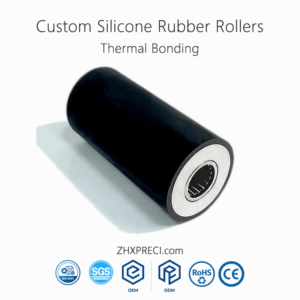
Black PU Rubber Coated Wheel Roller Industrial Grade for Automation Machinery Conveyor Transport and Factory Use
Read more -
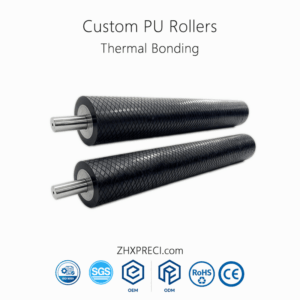
Custom Abrasion Resistant PU Rollers For Packaging Conveyors
Read more -
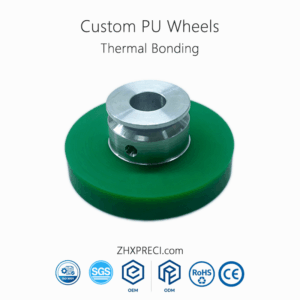
Custom Abrasion Resistant Rubber Wheels with Coating for Mining Equipment
Read more -
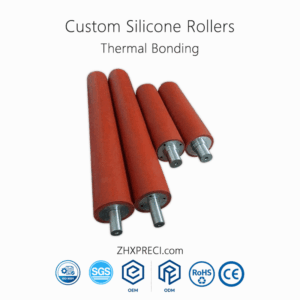
Custom Abrasion Resistant Silicone Coated Rollers Heavy Wear
Read more -
Custom Air Cooled Rubber Rollers with Internal Channels
Read more -
Custom Alkali Proof Rubber Wheels with Coating for Industrial Washers
Read more -
Custom Aluminum Core PU Rollers With Food Grade Compliance
Read more -
Custom Anti Vibration Rubber Wheels with Coating for Precision Instruments
Read more -
Custom Anti-Microbial Silicone Rollers Hygiene Grade
Read more -
Custom Anti-Static PU Rollers For Explosive Dust Environments
Read more -
Custom Anti-Static Silicone Coated Rollers Electronic Use
Read more -
Custom Antistatic PU Rollers For Electronics Conveying
Read more -
Custom Antistatic Rubber Wheels with Coating for Cleanroom Carts
Read more -
Custom API Grade Rubber Rollers for Drill Pipe Wiper
Read more -
Custom ATEX Compliant PU Rollers For Mining Conveyor
Read more -
Custom ATEX Compliant Rubber Rollers for Grain Handling
Read more
Understanding Custom Printing Industrial Rubber Rollers
Custom printing industrial rubber rollers are precision-engineered cylindrical components consisting of a metal core covered with a layer of elastomeric material. These rollers are fundamental to a wide range of printing processes, including flexographic, gravure, offset lithography, and letterpress printing. The elastomer covering serves multiple critical functions: transferring ink from the fountain to the printing plate, applying uniform pressure across the printing substrate, and facilitating the precise registration required for high-quality print output. In the context of industrial printing operations, the roller functions as both a fluid transfer mechanism and a precision pressure application device. The core is typically manufactured from steel, aluminium, or other structural metals, while the covering material is selected based on the specific printing application, ink chemistry, and operating environment. This construction enables the roller to maintain dimensional stability under operational loads while providing the necessary surface characteristics for consistent ink laydown. Custom Printing Industrial Rubber Rollers from ZHXPRECI | China OEM/ODM Factory Manufacturer Supplier Custom Elastomer Wheels & Rollers are manufactured to meet the specific requirements of diverse printing applications, with capabilities spanning multiple elastomer compounds and dimensional specifications.
The selection of an appropriate rubber roller for a printing application involves careful consideration of several interrelated factors. The elastomer compound must be compatible with the inks, solvents, and wash solutions used in the process. The hardness of the covering, measured on the Shore A scale, determines the roller's compression characteristics and its ability to conform to the printing plate or substrate surface. The dimensional accuracy of the roller affects registration accuracy and print quality consistency. Additionally, the roller's resistance to wear, ozone, and thermal degradation influences its service life and maintenance requirements. These considerations are particularly important for printing operations that run at high speeds or use aggressive ink chemistries. Buyers and engineers evaluating Custom Printing Industrial Rubber Rollers from ZHXPRECI | China OEM/ODM Factory Manufacturer Supplier Custom Elastomer Wheels & Rollers typically assess these parameters in relation to their specific production requirements and operating conditions.
What Are Custom Printing Industrial Rubber Rollers?
Custom printing industrial rubber rollers are bespoke manufactured components designed for specific printing machinery and applications. Unlike standard off-the-shelf rollers, custom rollers are engineered to precise dimensional and performance specifications that match the requirements of a particular printing press, substrate, or ink system. The customisation process typically involves selecting the appropriate core material and dimensions, specifying the elastomer compound and hardness, and determining the surface finish and profile characteristics. This level of customisation ensures that the roller performs optimally within the specific operating parameters of the printing equipment. The customisation extends to the roller's diameter, length, shaft configuration, covering thickness, and any special features such as grooves, channels, or specific surface textures. Custom Printing Industrial Rubber Rollers from ZHXPRECI | China OEM/ODM Factory Manufacturer Supplier Custom Elastomer Wheels & Rollers are produced through a process that combines material science expertise with precision manufacturing capabilities, enabling the delivery of rollers that meet exacting application requirements.
The customisation of printing rubber rollers is driven by the diversity of printing applications and the specific demands of different printing processes. Flexographic printing, for instance, requires rollers that can handle solvent-based, water-based, or UV-curable inks, each of which presents different chemical compatibility challenges. Gravure printing demands rollers with precise dimensional tolerances to ensure consistent ink transfer from the engraved cylinder. Offset lithography requires rollers that maintain stable ink-water balance and resist the effects of fountain solutions. Each of these applications benefits from rollers that are specifically engineered for the task. The ability to specify the elastomer compound, hardness, and dimensional characteristics enables printing operations to achieve optimal print quality, reduce waste, and extend roller service life. ZHXPRECI's Custom Printing Industrial Rubber Rollers are designed with these application-specific requirements in mind, offering a range of material options and manufacturing capabilities.
Key Technical Specifications and Material Properties
Elastomer Compounds and Their Applications
The selection of the elastomer compound is one of the most critical decisions in the specification of a printing rubber roller. Different elastomers offer distinct combinations of chemical resistance, temperature stability, abrasion resistance, and compression set characteristics. The following compounds are commonly used in printing roller applications:
- Nitrile Butadiene Rubber (NBR): This compound offers good resistance to oils, solvents, and aliphatic hydrocarbons commonly found in conventional printing inks and washes. NBR compounds can be manufactured across a wide range of Shore A hardness values and exhibit good dynamic properties. NBR is widely used in lithographic, letterpress, gravure, and flexographic printing applications.
- Ethylene Propylene Diene Monomer (EPDM): EPDM provides excellent resistance to ozone, weathering, and heat ageing. It is suitable for applications involving water-based inks and certain solvent systems. EPDM rollers can be formulated to achieve hardness values ranging from approximately 40 to 90 Shore A.
- Silicone Rubber: Silicone offers exceptional temperature resistance, with the ability to operate continuously at temperatures up to 120°C in dry conditions and peak temperatures of 130°C. Silicone rollers are often specified for applications involving high temperatures or where release properties are required. Hardness values typically range from 35 to 80 Shore A.
- Natural Rubber: Natural rubber compounds provide good resilience and abrasion resistance. They are used in various printing and converting applications, including those involving contact with oil and fatty hydrocarbon solvents. Hardness typically ranges from 30 to 80 Shore A.
- Polyurethane (PU): Polyurethane offers excellent abrasion resistance and load-bearing capacity. It can be formulated to achieve hardness values from very soft (below 20 Shore A) to very hard, providing versatility for different printing requirements.
The hardness of the elastomer covering, measured using the Shore A durometer scale, directly influences the roller's performance characteristics. Softer rollers, typically in the 20 to 50 Shore A range, provide greater conformability and grip, making them suitable for applications requiring intimate contact with the substrate or printing plate. Harder rollers, in the 60 to 95 Shore A range, offer better shape retention and resistance to deformation under load. The appropriate hardness depends on the specific printing application, the type of ink being used, and the pressure requirements of the printing process. Custom Printing Industrial Rubber Rollers from ZHXPRECI | China OEM/ODM Factory Manufacturer Supplier Custom Elastomer Wheels & Rollers can be manufactured to hardness specifications across this range, enabling precise matching to application requirements.
Dimensional Tolerances and Manufacturing Standards
The dimensional accuracy of printing rubber rollers is essential for consistent print quality and reliable machine operation. International standards, such as ISO 6123, specify classes of dimensional tolerances and test methods for rubber- or plastics-covered rollers. These standards define covered rollers as cylindrical cores, typically of metal, with a covering of rubber or plastics for specific applications. The standards address dimensional tolerances, surface characteristics, and hardness requirements. Compliance with these standards provides a framework for quality assurance and enables consistent manufacturing outcomes. Custom Printing Industrial Rubber Rollers from ZHXPRECI are manufactured with reference to these industry standards, ensuring that dimensional and performance specifications are met.
The manufacturing process for custom printing rubber rollers involves multiple stages, each requiring precise control to achieve the desired outcome. The process typically begins with the preparation of the metal core, which involves cutting, turning, and boring to the required dimensions. The core surface is then prepared to ensure proper adhesion of the elastomer covering. The elastomer compound is mixed according to the specified formulation, with careful control of component ratios, temperature, and mixing time. The covering is applied to the core through processes such as extrusion or compression moulding, followed by vulcanisation to cure the elastomer and achieve the desired physical properties. After vulcanisation, the roller is ground to the final dimensions and surface finish. Quality control testing is performed throughout the manufacturing process to verify compliance with specifications.
How to Select the Right Printing Rubber Roller for Your Application
The selection of a printing rubber roller requires a systematic evaluation of the application requirements and operating conditions. The following factors should be considered when specifying a custom roller:
- Ink Chemistry: The type of ink being used—whether solvent-based, water-based, UV-curable, or oil-based—determines the chemical resistance requirements of the elastomer compound. The roller covering must resist swelling, degradation, or extraction when exposed to the ink and associated solvents.
- Operating Temperature: The temperature of the printing environment, including any heat generated during the printing process, affects the performance and longevity of the elastomer covering. High-temperature applications may require silicone or other heat-resistant compounds.
- Pressure Requirements: The pressure applied between the roller and the printing plate or substrate influences the hardness specification. Higher pressures generally require harder compounds to maintain dimensional stability.
- Substrate Characteristics: The type and surface characteristics of the substrate being printed—whether paper, cardboard, plastic film, or metal—affect the roller's required conformability and surface finish.
- Print Speed: High-speed printing operations place greater demands on the roller's dynamic properties, including its ability to transfer ink consistently and resist heat build-up.
- Maintenance and Cleaning: The ease of cleaning and the frequency of maintenance required influence the choice of elastomer compound and surface finish.
Engaging with a manufacturer that offers comprehensive technical support during the specification process can help ensure that the selected roller meets the application requirements. Custom Printing Industrial Rubber Rollers from ZHXPRECI are produced with attention to these selection criteria, enabling buyers to specify rollers that are appropriate for their specific printing operations. The company's manufacturing capabilities encompass a wide range of elastomer compounds, hardness values, and dimensional specifications, providing flexibility in meeting diverse application requirements.
How Are Custom Printing Rubber Rollers Manufactured?
The manufacturing of custom printing rubber rollers involves a sequence of precision operations that transform raw materials into finished components ready for installation in printing equipment. The process can be divided into several key stages:
Core Preparation: The metal core, typically steel or aluminium, is machined to the required dimensions using CNC lathes and other precision equipment. The core is cut to length, turned to the specified diameter, and bored at both ends to accommodate the shaft or bearing arrangement. The surface of the core is then prepared to ensure proper adhesion of the elastomer covering, which may involve blasting, cleaning, and the application of a bonding agent.
Compound Mixing: The elastomer compound is prepared by mixing the base polymer with various additives, including curing agents, fillers, plasticisers, and stabilisers. The mixing process is carefully controlled to achieve the desired hardness, chemical resistance, and physical properties. The compound is then processed into a form suitable for application to the core.
Covering Application: The elastomer compound is applied to the prepared core using techniques such as extrusion, compression moulding, or injection moulding. The covering is applied to the required thickness, which may range from a few millimetres to several centimetres depending on the application. The covered core is then subjected to vulcanisation, a curing process that cross-links the polymer chains and develops the final physical properties of the elastomer.
Finishing Operations: After vulcanisation, the roller is ground to the final dimensions using precision grinding equipment. This operation achieves the required diameter, concentricity, and surface finish. The roller may also undergo additional finishing operations, such as polishing or the application of a surface coating, depending on the application requirements.
Quality Control: The finished roller undergoes inspection and testing to verify compliance with specifications. This may include dimensional measurement, hardness testing, surface finish assessment, and dynamic balancing. The manufacturing capabilities for Custom Printing Industrial Rubber Rollers from ZHXPRECI include the ability to produce rollers up to substantial lengths and diameters, with both hot vulcanised and cold vulcanised processes available.
What Are the Common Applications of Printing Rubber Rollers?
Printing rubber rollers are used across a broad spectrum of printing processes and industries. The following are among the most common applications:
- Flexographic Printing: Flexographic printing uses flexible relief plates and fast-drying inks to print on a variety of substrates, including paper, cardboard, plastic films, and metallic foils. Rollers in flexographic presses include anilox rollers for metering ink, plate cylinders for carrying the printing plate, and impression rollers for applying pressure.
- Gravure Printing: Gravure printing uses engraved cylinders to transfer ink to the substrate. The process is commonly used for high-volume printing of packaging, magazines, and decorative materials. Rollers in gravure presses include impression rollers that apply pressure to ensure ink transfer from the engraved cylinder.
- Offset Lithography: Offset printing uses a planographic printing plate and the principle of oil-water repulsion to transfer ink to the substrate via a blanket cylinder. Rollers in offset presses include ink rollers, dampening rollers, and blanket cylinders.
- Letterpress Printing: Letterpress is a relief printing process that uses raised printing surfaces to transfer ink to the substrate. Rollers in letterpress presses include ink distribution rollers and impression rollers.
- Corrugated Board Printing: Printing on corrugated board requires rollers that can accommodate the uneven surface of the board while providing consistent ink coverage. Rollers for this application are designed with appropriate hardness and surface characteristics.
- Lamination and Coating: Rubber rollers are used in lamination and coating applications to apply adhesives, coatings, or laminating films to substrates.
The diversity of these applications highlights the importance of customisation in roller specification. Each application presents unique demands in terms of chemical resistance, hardness, dimensional accuracy, and surface finish. Custom Printing Industrial Rubber Rollers from ZHXPRECI are manufactured to address the specific requirements of these diverse applications, with material and design options that can be tailored to the individual printing process.
How to Maintain Printing Rubber Rollers for Extended Service Life
Proper maintenance of printing rubber rollers is essential for achieving consistent print quality and maximising roller service life. The following practices are recommended for the care of printing rubber rollers:
Regular Cleaning: Ink and debris should be removed from the roller surface after each printing run. Cleaning should be performed using cleaning agents that are compatible with the elastomer compound. Harsh solvents or abrasive cleaning methods can damage the roller surface and accelerate wear. The use of specialised roller cleaning agents is recommended to effectively remove ink without compromising the elastomer.
Inspection: Rollers should be inspected regularly for signs of wear, damage, or degradation. Common issues include surface glazing, cracking, swelling, and loss of hardness. Early detection of these issues enables timely intervention and prevents more serious problems from developing. Before printing, the roller surface should be checked for any foreign objects or damage.
Storage: When not in use, rollers should be stored in a clean, dry environment away from direct sunlight, ozone sources, and extreme temperatures. Rollers should be supported on their ends or suspended to prevent deformation of the elastomer covering. Rollers should not be stacked or subjected to pressure that could cause permanent distortion.
Pressure Management: Printing pressure should be adjusted according to the manufacturer's recommendations. Excessive pressure can accelerate wear and cause deformation of the elastomer covering. When the press is stopped, rollers should be separated to prevent static pressure deformation. Proper pressure management helps maintain the roller's dimensional accuracy and prolongs its service life.
Lubrication: Roller bearings and journals should be lubricated according to the manufacturer's recommendations. Proper lubrication reduces friction and wear, contributing to consistent roller performance and extended service life.
Frequently Asked Questions About Custom Printing Rubber Rollers
What is the typical hardness range for printing rubber rollers?
The hardness of printing rubber rollers typically ranges from 20 to 95 Shore A, depending on the application. Softer rollers, in the 20 to 50 Shore A range, provide greater conformability and are suitable for applications requiring intimate contact with the substrate. Harder rollers, in the 60 to 95 Shore A range, offer better shape retention and are suitable for applications involving higher pressures. The appropriate hardness is determined by the specific printing application, ink type, and pressure requirements.
What is the maximum temperature resistance of printing rubber rollers?
The temperature resistance of printing rubber rollers depends on the elastomer compound. Silicone rollers can operate continuously at temperatures up to 120°C in dry conditions and up to 80°C in wet conditions. EPDM and NBR compounds typically offer good performance up to approximately 100°C to 120°C. For applications requiring higher temperature resistance, specialised compounds such as FKM (Viton) may be specified. The temperature resistance of the roller should be matched to the operating conditions of the printing process.
How are printing rubber rollers customised for specific applications?
Customisation of printing rubber rollers involves selecting the appropriate core material and dimensions, specifying the elastomer compound and hardness, and determining the surface finish and profile characteristics. Customisation can also include special features such as grooves, channels, or specific surface textures. The customisation process is guided by the application requirements, including ink chemistry, operating temperature, pressure requirements, and substrate characteristics. Custom Printing Industrial Rubber Rollers from ZHXPRECI | China OEM/ODM Factory Manufacturer Supplier Custom Elastomer Wheels & Rollers are manufactured to meet these specific requirements, with capabilities spanning multiple elastomer compounds, hardness values, and dimensional specifications.
What is the lead time for custom printing rubber rollers?
The production timeline for custom printing rubber rollers is subject to order quantity, current production schedule, and final specification confirmation. Factors that influence the timeline include the complexity of the roller design, the availability of materials, and the manufacturing processes required. Buyers are encouraged to discuss their specific requirements and timing needs with the manufacturer to establish realistic expectations. Custom Printing Industrial Rubber Rollers from ZHXPRECI are produced with attention to these factors, and the company works with buyers to establish production schedules that align with their project timelines.
What materials are used for the cores of printing rubber rollers?
The cores of printing rubber rollers are typically manufactured from steel, aluminium, or other structural metals. The choice of core material depends on the application requirements, including the load-bearing capacity, weight considerations, and corrosion resistance. Steel cores offer high strength and durability, making them suitable for heavy-duty applications. Aluminium cores are lighter and may be preferred for applications where weight is a consideration. The core material and dimensions are specified based on the roller's intended use and the requirements of the printing equipment.
How do I know which elastomer compound is right for my application?
The selection of the appropriate elastomer compound depends on several factors, including the type of ink being used, the operating temperature, the pressure requirements, and the substrate characteristics. NBR is commonly used for applications involving oil-based inks and solvents. EPDM is suitable for water-based inks and applications requiring ozone resistance. Silicone is specified for high-temperature applications. Engaging with a manufacturer that offers technical support during the specification process can help ensure that the appropriate compound is selected. Custom Printing Industrial Rubber Rollers from ZHXPRECI are available in a range of elastomer compounds, enabling selection based on application requirements.
What quality standards apply to printing rubber rollers?
Printing rubber rollers are subject to international standards that specify dimensional tolerances, surface characteristics, and hardness requirements. ISO 6123 is a key standard that covers rubber- or plastics-covered rollers. Compliance with these standards provides assurance of quality and consistency. Additional standards, such as ASTM D2000, may apply to specific material properties. Manufacturers typically reference these standards in their quality assurance programs. Custom Printing Industrial Rubber Rollers from ZHXPRECI are manufactured with reference to applicable industry standards, ensuring that dimensional and performance specifications are met.
Can printing rubber rollers be repaired or re-covered?
Yes, printing rubber rollers can often be repaired or re-covered when the elastomer covering becomes worn or damaged. The re-covering process involves removing the existing elastomer covering, preparing the core surface, and applying a new covering. Re-covering can be a cost-effective alternative to purchasing new rollers, particularly for rollers with specialised core configurations. The feasibility of re-covering depends on the condition of the core and the availability of the required elastomer compound. Custom Printing Industrial Rubber Rollers from ZHXPRECI can be re-covered to restore performance and extend service life.
What causes printing rubber rollers to fail prematurely?
Premature failure of printing rubber rollers can result from several factors, including improper compound selection, excessive operating temperatures, chemical incompatibility with inks or cleaning agents, excessive pressure, and inadequate maintenance. Surface glazing, cracking, swelling, and loss of hardness are common indicators of degradation. Proper selection, operation, and maintenance practices can help mitigate these risks and extend roller service life. Regular inspection and timely intervention are important for preventing premature failure.
How does roller hardness affect print quality?
Roller hardness directly affects print quality by influencing ink transfer characteristics and pressure distribution. Softer rollers conform more readily to the printing plate and substrate, providing more uniform contact and ink transfer. However, softer rollers may be more susceptible to deformation under pressure and may not maintain dimensional accuracy as well as harder rollers. Harder rollers offer better shape retention and can withstand higher pressures, but may not provide the same level of conformability. The appropriate hardness for a given application depends on the specific printing process, substrate characteristics, and quality requirements. Custom Printing Industrial Rubber Rollers from ZHXPRECI | China OEM/ODM Factory Manufacturer Supplier Custom Elastomer Wheels & Rollers can be manufactured to the hardness specification that achieves the desired balance of conformability and dimensional stability.