
Custom Grooved Industrial Rubber Rollers
Custom Grooved Rubber Rollers
Custom grooved rollers for traction & alignment.
- 30‑500kg cap
- 60‑95A hard
- 60‑300mm dia
- ‑30‑120°C temp
- ISO/REACH cert
Showing 1–16 of 131 results
-
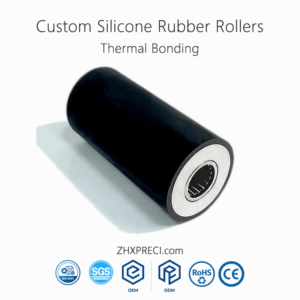
Black PU Rubber Coated Wheel Roller Industrial Grade for Automation Machinery Conveyor Transport and Factory Use
Read more -
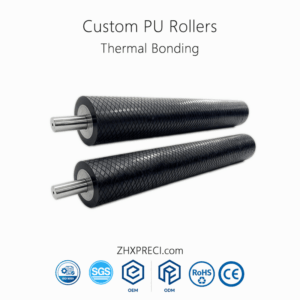
Custom Abrasion Resistant PU Rollers For Packaging Conveyors
Read more -
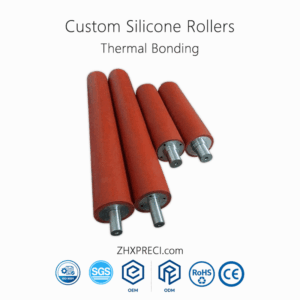
Custom Abrasion Resistant Silicone Coated Rollers Heavy Wear
Read more -
Custom Air Cooled Rubber Rollers with Internal Channels
Read more -
Custom Aluminum Core PU Rollers With Food Grade Compliance
Read more -
Custom Anti-Microbial Silicone Rollers Hygiene Grade
Read more -
Custom Anti-Static PU Rollers For Explosive Dust Environments
Read more -
Custom Anti-Static Silicone Coated Rollers Electronic Use
Read more -
Custom Antistatic PU Rollers For Electronics Conveying
Read more -
Custom API Grade Rubber Rollers for Drill Pipe Wiper
Read more -
Custom ATEX Compliant PU Rollers For Mining Conveyor
Read more -
Custom ATEX Compliant Rubber Rollers for Grain Handling
Read more -
Custom Bearing Mounted Silicone Coated Rollers Quick Change
Read more -
Custom Cantilever Mount Rubber Rollers for Narrow Spaces
Read more -
Custom Cantilever Mounted Silicone Rollers Easy Access
Read more -
Custom Cast Iron Core PU Rollers With Keyway Mounting
Read more
In industrial processing and material handling, grooved rubber rollers serve as precision components that facilitate traction, alignment, and product conveyance. The surface grooves are engineered to guide materials, expel fluids, or accommodate mating profiles in converting, printing, packaging, and textile machinery. Custom Grooved Industrial Rubber Rollers from ZHXPRECI | China OEM/ODM Factory Manufacturer Supplier Custom Elastomer Wheels & Rollers are designed with attention to dimensional accuracy, compound selection, and groove geometry, offering manufacturing flexibility for equipment that demands reliable roller performance over extended production cycles.
What Are Custom Grooved Industrial Rubber Rollers?
Grooved industrial rubber rollers are cylindrical components with a precisely formed groove pattern on their outer elastomer covering. The grooves run parallel, spiral, or herringbone around the roller face, each configuration serving a distinct functional purpose. Common groove forms include V-shaped, U-shaped, square-cut, and trapezoidal profiles. Customisation extends to groove depth, pitch, land width, and edge treatment, allowing the roller to match specific web handling, embossing, metering, or self-cleaning requirements. Unlike standard plain rollers, grooved designs reduce slippage, improve product registration, and assist in removing excess coatings or liquids. The base roller core is typically manufactured from steel, aluminium, or engineered polymers, with the rubber layer bonded through vulcanisation or adhesive systems. Custom Grooved Industrial Rubber Rollers from ZHXPRECI | China OEM/ODM Factory Manufacturer Supplier Custom Elastomer Wheels & Rollers are produced with controlled tolerances to ensure concentricity and dynamic balance at operational speeds.
Material Options for Grooved Roller Coverings
Elastomer selection directly influences roller performance in terms of wear resistance, chemical compatibility, temperature stability, and compression set. The following compounds are commonly specified for grooved industrial rollers:
- Nitrile (NBR): Offers good resistance to petroleum-based oils, greases, and aliphatic hydrocarbons. Suitable for applications where contact with mineral oils or cutting fluids occurs.
- EPDM: Exhibits excellent resistance to weathering, ozone, steam, and many polar solvents. Often chosen for outdoor installations or high-humidity environments.
- Neoprene (CR): Provides balanced resistance to oils, flame, and moderate chemicals. Its dynamic properties make it suitable for conveyor and drive rollers.
- Silicone (VMQ): Retains flexibility across a wide thermal range and offers low compression set. Used in high-temperature drying sections or food-contact applications with appropriate FDA-grade certification.
- Polyurethane (PU): Delivers high abrasion resistance, load-bearing capacity, and tear strength. Preferred for heavy-duty tracking or high-friction grooved surfaces.
- Natural Rubber (NR): Provides excellent resilience and tensile strength, often selected for shock-absorbing or high-impact rollers.
Each compound can be formulated with varying filler systems, plasticisers, and curing agents to adjust hardness (typically between 40 Shore A and 95 Shore A) and dynamic response. For applications involving intermittent chemical exposure or elevated temperatures, material compatibility charts and test coupons are recommended prior to full production.
Groove Patterns and Functional Design
The groove geometry is not merely aesthetic; it serves mechanical and fluid-dynamic purposes. Common groove designs and their typical functions include:
- Straight parallel grooves: Used for guiding sheet materials, reducing contact area, and allowing air or liquid escape between the roller and the web.
- Helical or spiral grooves: Assist in distributing coatings uniformly, minimising ribbing marks, and promoting self-cleaning action as rotation directs debris toward the roller ends.
- Diamond or knurled grooves: Provide enhanced grip for elastic materials or textured surfaces in laminating and embossing lines.
- Segmented grooves: Customised to match specific product spacing or to create intermittent contact for drying or ventilation purposes.
- Variable-depth grooves: Engineered to accommodate varying material thickness or to create graduated pressure zones across the roller face.
Groove dimensions—including depth, width, pitch, and edge radius—are determined based on line speed, nip pressure, substrate characteristics, and required fluid carry-over. Finite element modelling and empirical testing assist in optimising these parameters to reduce vibration and extend roller service life.
Manufacturing Process for Custom Grooved Rollers
The production sequence for grooved industrial rubber rollers involves several precision steps to ensure geometric accuracy and bond integrity. A typical process includes:
- Core preparation: The metal or composite core is machined to specified diameter, roundness, and surface roughness. Keyways, threads, or mounting features are incorporated as per drawing requirements.
- Bonding agent application: A proprietary adhesive primer and bonding cement are applied to the prepared core surface to promote chemical adhesion between the metal and elastomer.
- Rubber compounding and calendering: The selected elastomer is mixed with reinforcing agents, curatives, and processing aids, then calendered into sheet form at controlled thickness.
- Wrapping or moulding: The rubber sheet is wrapped around the core under tension, or the core is placed into a compression or injection mould for specific groove patterns. For wrapped constructions, grooves are machined after vulcanisation using CNC lathes with profiled cutting tools.
- Vulcanisation: The assembled roller is cured in a steam autoclave or heated press at controlled temperatures and pressure to cross-link the polymer chains, achieving target hardness and resilience.
- Post-cure machining: The roller is ground and turned to final dimensions. Grooves are cut or recut to exact profiles, and the surface is finished to specified roughness (Ra).
- Dynamic balancing: High-speed rollers undergo spin balancing to correct any mass eccentricity, minimising vibration during operation.
Custom Grooved Industrial Rubber Rollers from ZHXPRECI | China OEM/ODM Factory Manufacturer Supplier Custom Elastomer Wheels & Rollers follow these stages with in-process inspections at each step, ensuring dimensional consistency and material integrity.
Key Application Industries
Grooved rubber rollers are employed across diverse industrial sectors where precise material movement or surface treatment is essential. Representative applications include:
- Printing and converting: Anilox rollers, ink metering rollers, and nip rollers for flexographic and gravure presses.
- Packaging: Film stretching, sealing, and perforating rollers with grooves to manage heat distribution and grip.
- Textile finishing: Rollers for desizing, mercerising, and dyeing lines, where grooves help guide fabric without distortion.
- Paper and board: Grooved press rollers in paper machines to remove water and improve sheet consolidation.
- Agricultural machinery: Conditioner rollers, feed rollers, and picking rollers for crop processing equipment.
- Material handling: Drive rollers, bend pulleys, and tracking rollers for conveyor belts and automated warehouses.
- Steel and metal processing: Rollers for strip guiding, coating application, and deburring lines.
Each industry demands specific groove dimensions, surface finishes, and elastomer properties, reinforcing the importance of custom engineering rather than off-the-shelf sourcing.
Selection Considerations for Grooved Rubber Rollers
Engineers and procurement specialists should evaluate several technical criteria when specifying custom grooved rollers for their lines. These include:
- Operating temperature range: Continuous and peak temperatures, along with thermal cycling frequency. Most standard compounds operate between -30°C and +120°C, with silicone and fluorocarbon grades extending to higher ranges.
- Chemical exposure: Type, concentration, and duration of contact with process fluids, solvents, cleaning agents, or atmospheric contaminants.
- Line speed and nip load: Surface velocity and compression force determine groove geometry and rubber hardness required to prevent deformation or premature wear.
- Substrate characteristics: Material stiffness, thickness, surface roughness, and coefficient of friction influence groove pitch and depth selection.
- Environmental conditions: Indoor or outdoor operation, humidity, ozone exposure, and ultraviolet radiation all affect compound choice.
- Maintenance interval: Expected service life, regrooving feasibility, and ease of disassembly for bearing or cover replacement.
- Dimensional constraints: Overall roller length, journal diameter, and available space for groove pattern within the machinery framework.
A structured checklist combining operational parameters, budget constraints, and reliability targets helps streamline the selection process and reduces the risk of field failures.
Comparison with Plain Rubber Rollers
Grooved rollers differ from plain rollers in both functional output and manufacturing complexity. Plain rubber rollers provide uniform contact across the full face width, suitable for driving, conveying, or supporting applications where surface pattern is unnecessary. Grooved rollers, however, introduce a controlled discontinuous surface that offers advantages in specific scenarios:
- Fluid management: Grooves act as drainage channels, preventing liquid build-up and reducing hydroplaning effects.
- Improved traction: The groove edges increase bite into fibrous or smooth substrates, reducing slip during acceleration and deceleration.
- Reduced contact overheating: For processes generating frictional heat, grooves reduce overall contact area, allowing better convective cooling.
- Self-cleaning action: Debris, dust, or sticky residues are expelled through the grooves, maintaining consistent surface condition over time.
- Web spreading: Specially angled grooves can spread webs outward to eliminate wrinkles or edge curling.
However, grooved rollers generally involve higher manufacturing costs due to additional machining and setup time. The decision to specify a grooved profile should be based on clear process benefit rather than general preference.
OEM and ODM Capabilities
For machinery builders and equipment refurbishers, partnering with a factory capable of original equipment manufacturing (OEM) and original design manufacturing (ODM) offers flexibility in roller specifications. Custom Grooved Industrial Rubber Rollers from ZHXPRECI | China OEM/ODM Factory Manufacturer Supplier Custom Elastomer Wheels & Rollers provide support from concept development through to volume production, including reverse engineering of obsolete rollers, design optimisation for improved performance, and coordination of mounting accessories such as bearings, gears, and shaft extensions. ODM services encompass finite element analysis of groove stresses, material selection based on required physical properties, and prototyping for line trials. This integrated approach reduces supply chain fragmentation and ensures the final roller aligns precisely with the host machine’s mechanical and operational demands.
Quality Control and Testing Protocols
Each custom grooved roller undergoes a series of inspections and tests to verify compliance with specification documents. Typical quality assurance measures include:
- Hardness measurement: Shore A or IRHD readings taken at multiple points around the roller face and length.
- Tensile and elongation testing: Performed on witness samples from the same compound batch to confirm mechanical properties.
- Abrasion resistance: DIN or NBS abrasion tests to estimate wear life under similar service conditions.
- Bond integrity: Peel or shear tests on bonded samples to confirm adhesion strength exceeds minimum thresholds.
- Dimensional inspection: Diameter, run-out, concentricity, groove dimensions, and total indicated runout measured with laser or coordinate measuring systems.
- Balance verification: Dynamic balancing at specified speeds, with residual unbalance recorded and corrected as needed.
- Visual and ultrasonic inspection: Detection of voids, inclusions, or surface defects that could compromise performance.
Comprehensive inspection records are maintained, allowing full traceability from raw material batches to finished roller serial numbers.
Lead Time and Project Coordination
Delivery schedules are established in close consultation with the client, taking into account the specific groove complexity, quantity ordered, current production capacity, and any required supplementary treatments such as surface coating or balancing. Custom Grooved Industrial Rubber Rollers from ZHXPRECI | China OEM/ODM Factory Manufacturer Supplier Custom Elastomer Wheels & Rollers are manufactured with coordinated planning to align with installation timelines, and production lead times are confirmed after final specification approval, subject to order quantity, current production schedule, and final specification confirmation. For urgent maintenance needs, expedited planning may be explored, but all timelines are mutually agreed to ensure realistic and achievable delivery.
Frequently Asked Questions
What is the typical hardness range for grooved rubber rollers?
Hardness usually spans from 40 Shore A for soft, conformable rollers to 95 Shore A for rigid, wear-resistant surfaces. The choice depends on nip pressure, substrate sensitivity, and required groove retention under load.
How do I select the right groove pattern for my application?
Groove pattern selection begins with defining the primary function: whether fluid removal, traction enhancement, web spreading, or debris clearing is paramount. Consulting with application engineers and reviewing existing machinery layouts often yields practical guidance. Pilot trials with sample rollers can validate pattern performance before full production orders.
Can grooved rollers be re-covered after the rubber layer wears out?
Yes, most grooved rollers are designed for re-covering. The old rubber is stripped, the core is inspected and prepared, and a new elastomer layer is applied with fresh grooves. This approach is often more economical than manufacturing new cores, especially for heavy or custom-machined base rollers.
What industries benefit most from custom grooved rollers?
Printing, packaging, textile, paper, metal processing, and agricultural sectors commonly specify grooved rollers. Any process involving coated webs, fluid transfer, or high-speed tracking can realise efficiency gains through properly engineered grooves.
Are there limitations on groove depth or width?
Groove dimensions are constrained by rubber compound tensile strength, core diameter, and required roller integrity. Deep grooves relative to the rubber thickness may reduce structural support, leading to groove deformation under nip pressure. Engineering guidelines suggest limiting groove depth to approximately 15% of the total rubber covering thickness for standard applications.
How are grooved rollers balanced for high-speed operation?
Dynamic balancing is performed on dedicated balancing machines that spin the roller at operational speeds. Material is removed from the core ends or counterweights are added to achieve balance grades comparable to ISO 1940 standards. For extremely high-speed lines, tighter balance tolerances are specified.
What documentation is provided with custom rollers?
Each roller shipment includes a certificate of conformance, dimensional inspection report, hardness test results, and material test data. Additional certificates, such as FDA compliance or ATEX suitability, can be supplied if requested.
Can grooved rollers be manufactured to metric or imperial dimensions?
Both measurement systems are accommodated. Roller dimensions are typically produced to the drawing units specified, with conversions handled during engineering review to avoid rounding errors.
Is it possible to have multiple groove patterns on one roller?
Yes, mixed pattern rollers are feasible, with different zones along the roller face featuring distinct groove designs. This approach is useful for processing products with variable width or for multifunctional stations.
How does groove pitch affect roller performance?
Pitch influences the number of contact points per unit area, affecting traction, fluid drainage rate, and surface marking risk. Smaller pitches increase contact frequency but may reduce land width, affecting groove depth capacity. Optimal pitch is determined through process analysis and empirical feedback.
Summary
Custom grooved industrial rubber rollers are precision-engineered components with tailored elastomer coverings and groove geometries designed to meet specific material handling, fluid management, or surface finishing requirements. Material selection, groove profile, and manufacturing quality collectively determine roller reliability and process consistency. By understanding the functional principles and application variables, engineers can specify rollers that contribute to stable, efficient production operations. Custom Grooved Industrial Rubber Rollers from ZHXPRECI | China OEM/ODM Factory Manufacturer Supplier Custom Elastomer Wheels & Rollers represent a collaborative engineering approach, combining material science, machining precision, and process knowledge to support industrial equipment performance in demanding environments.