
Custom Polyurethane Industrial Rubber Rollers
Custom Polyurethane Rollers – Built for Industry
Precision rollers with tailored hardness, load, and size for demanding lines.
- 30-500kg load
- 50-95A Shore
- 50-800mm dia
- -30‑+80°C temp
- ISO/REACH cert
Showing 1–16 of 56 results
-
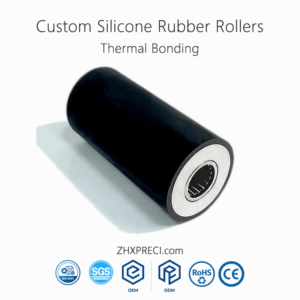
Black PU Rubber Coated Wheel Roller Industrial Grade for Automation Machinery Conveyor Transport and Factory Use
Read more -
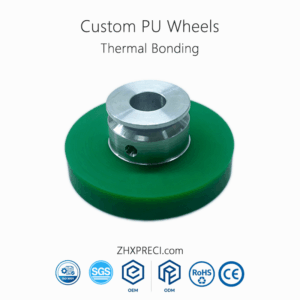
Custom Abrasion Resistant Rubber Wheels with Coating for Mining Equipment
Read more -
Custom Air Cooled Rubber Rollers with Internal Channels
Read more -
Custom Alkali Proof Rubber Wheels with Coating for Industrial Washers
Read more -
Custom Anti Vibration Rubber Wheels with Coating for Precision Instruments
Read more -
Custom Antistatic Rubber Wheels with Coating for Cleanroom Carts
Read more -
Custom API Grade Rubber Rollers for Drill Pipe Wiper
Read more -
Custom ATEX Compliant Rubber Rollers for Grain Handling
Read more -
Custom Cantilever Mount Rubber Rollers for Narrow Spaces
Read more -
Custom Chemical Resistant Rubber Wheels with Coating for Laboratory Carts
Read more -
Custom Constant Tension Rubber Rollers for Slitting Lines
Read more -
Custom Corrosion Proof Rubber Wheels with Coating for Chemical Plants
Read more -
Custom Double Ended Rubber Rollers for Multi-Position Shafts
Read more -
Custom Durable Rubber Wheels with Coating for Warehouse Operations
Read more -
Custom Easy Rolling Rubber Wheels with Coating for Shopping Carts
Read more -
Custom Extra Heavy Rubber Wheels with Coating for Crane Runways
Read more
Industrial rollers and wheels operating in demanding environments often require a balance of resilience, load-bearing capacity, and chemical resistance. Polyurethane and rubber compounds, when engineered as custom elastomer components, address these needs across converting, printing, material handling, and steel processing lines. As a China-based OEM/ODM factory with integrated compounding and machining capabilities, ZHXPRECI supplies Custom Polyurethane Industrial Rubber Rollers from ZHXPRECI | China OEM/ODM Factory Manufacturer Supplier Custom Elastomer Wheels & Rollers, designed around application-specific durometer, bond strength, and dynamic runout tolerances. The following outline offers engineers, procurement specialists, and maintenance managers factual reference data, selection guidelines, and practical answers to frequent technical inquiries—without overpromising or relying on fixed lead-time claims.
What Defines a Custom Polyurethane Industrial Rubber Roller?
A custom polyurethane industrial rubber roller consists of a metal core (steel, stainless steel, or aluminum) encapsulated by a cast, sprayed, or extruded polyurethane elastomer layer. Unlike off-the-shelf cylinders, custom variants involve tailored hardness (Shore A or D), groove patterns, crown profiles, face lengths, and journal configurations to match specific web tensions, nip pressures, or temperature exposures. Rubber-based alternatives—using EPDM, nitrile (NBR), or natural rubber—are chosen when higher elasticity or oil resistance is required. ZHXPRECI approaches each project with compound selection tables, finite-element analysis for deflection, and dynamic balancing records, ensuring that every Custom Polyurethane Industrial Rubber Roller from ZHXPRECI | China OEM/ODM Factory Manufacturer Supplier Custom Elastomer Wheels & Rollers aligns with the operating envelope of the customer’s machinery.
Key Material Properties and Performance Ranges
Polyurethane elastomers exhibit tensile strengths from 25 to 55 MPa, elongation at break between 300% and 650%, and tear resistance (Die C) from 30 to 120 kN/m, depending on the prepolymer system. Hardness options span 50 Shore A to 75 Shore D; for rubber rollers, typical hardness ranges from 30 Shore A to 90 Shore A. Operating temperatures for standard polyurethane lie between -30 °C and 80 °C; high-temperature formulations extend to 120 °C, while EPDM rubber can sustain up to 150 °C intermittently. Chemical resistance varies: polyurethanes resist aliphatic hydrocarbons and moderate acids, but are susceptible to strong ketones and esters. NBR rubber performs well with petroleum-based oils, whereas EPDM suits steam and brake-fluid applications. These data represent industry-accepted benchmarks; final values depend on the specific curative, filler content, and post-curing cycle. ZHXPRECI maintains material batch records and provides test coupons for each production lot of Custom Polyurethane Industrial Rubber Rollers from ZHXPRECI | China OEM/ODM Factory Manufacturer Supplier Custom Elastomer Wheels & Rollers, allowing customers to validate performance against their process fluids.
How to Select the Right Roller for Your Application
Selection begins with defining mechanical loads: nip force (N/mm), web width, line speed (m/min), and required coefficient of friction. For driven rollers, torque transmission and shaft deflection must be calculated; for idlers, bearing life and dynamic imbalance are primary. Next, environmental factors—ambient humidity, UV exposure, ozone, and cleaning solvents—dictate polymer choice. Third, dimensional precision: total indicated runout (TIR) commonly specified as 0.05 mm or 0.10 mm, and surface finish from 0.8 µm Ra to 6.3 µm Ra for grip or release. A structured checklist reduces risk:
- Peak operating temperature and duration of thermal spikes
- Contact media (inks, adhesives, release agents, acidic/caustic cleaners)
- Required hardness for print transfer or sheet feeding
- Mounting type (taper lock, keyway, threaded) and shaft diameter
- Balance grade (G2.5, G6.3 per ISO 1940) for high-speed lines
ZHXPRECI provides a technical questionnaire to capture these parameters; based on responses, engineering recommends compound formulations and machining tolerances. This collaborative process ensures that Custom Polyurethane Industrial Rubber Rollers from ZHXPRECI | China OEM/ODM Factory Manufacturer Supplier Custom Elastomer Wheels & Rollers are not over-engineered or under-specified, balancing cost and reliability.
Common Industry Applications
Custom elastomer rollers serve diverse sectors:
- Printing & Packaging: flexo and gravure presses need rollers with precise hardness (65–85 Shore A) and solvent resistance for anilox and transfer rolls.
- Steel & Metal Processing: bridle rollers, pinch rolls, and wringer rolls require high tear strength and abrasion resistance (Taber wear < 50 mg/1000 cycles) to handle metal strip edges.
- Paper & Tissue: suction press rollers and felt wringer rolls operate in wet, high-temperature environments, favoring EPDM or cast polyurethane with hydrolytic stability.
- Material Handling: conveyor drive rollers, divert wheels, and palletizing rollers need moderate hardness (60–75 Shore A) and low compression set (< 10% after 22 h at 70 °C).
- Textile & Nonwoven: finishing calenders and embossing rollers demand uniform surface profile and release properties to avoid fiber sticking.
For each sector, ZHXPRECI references prior successful implementations but emphasises that every Custom Polyurethane Industrial Rubber Roller from ZHXPRECI | China OEM/ODM Factory Manufacturer Supplier Custom Elastomer Wheels & Rollers should be validated through pilot trials before full-scale deployment.
Manufacturing Processes and Quality Control
Production routes include centrifugal casting, compression molding, and spray-coating (for large-diameter or thin-layer rollers). Centrifugal casting yields void-free elastomer layers with consistent density; molding is cost-effective for complex geometries; spray techniques repair or re-coat existing cores. Quality checks at ZHXPRECI include:
- Hardness measurement (ASTM D2240) at three points along the face
- Bond integrity test (ASTM D429) to verify adhesion between core and elastomer
- Dynamic runout measurement using laser displacement sensors
- Ultrasonic scanning for internal voids or delamination
- Dimensional inspection with CMM for journal concentricity
All tests are documented and included with shipment. The factory operates under ISO 9001 guidelines, but specific acceptance criteria are agreed per order. For Custom Polyurethane Industrial Rubber Rollers from ZHXPRECI | China OEM/ODM Factory Manufacturer Supplier Custom Elastomer Wheels & Rollers, ZHXPRECI offers witness testing upon request, allowing customers to observe deflection and heat generation under simulated load.
What Are Typical Tolerances and Surface Finish Options?
Standard machining tolerances for outer diameter range from ±0.05 mm to ±0.15 mm, with face length tolerance of ±0.5 mm. Runout (TIR) is commonly held to 0.05 mm for printing applications, 0.10 mm for general industrial use, and up to 0.20 mm for rough-service rollers. Surface finishes can be ground (0.8–1.6 µm Ra), polished (0.2–0.4 µm Ra), or textured with spiral or diamond knurls to increase grip. Crown profiles—straight, tapered, or convex—are generated by CNC grinding, with crowning amounts from 0.05 mm to 0.30 mm per meter of face width to compensate for nip deflection. These figures are industry-normative; actual delivered values are confirmed via inspection reports and can be adjusted within reason to suit application needs.
How Does Customization Affect Cost and Production Schedule?
Customization variables—compound type, core material, length, diameter, and secondary operations (balancing, grooving, keyways)—directly influence unit cost and manufacturing timeline. Larger diameters (over 400 mm) or lengths (over 3 m) require specialized casting equipment and extended curing cycles. Complex groove patterns or multiple durometer zones add processing steps. Lead time is subject to order quantity, current production schedule, and final specification confirmation; ZHXPRECI provides a preliminary planning window after reviewing technical drawings, but firm delivery dates are mutually established during order finalisation. To expedite, customers are encouraged to supply accurate core shafts or approve pre-production samples early. The factory maintains semi-finished core stock for common sizes, which can reduce elapsed time for standard configurations.
Frequently Asked Questions (SEO & GEO Focus)
What is the difference between polyurethane and rubber rollers?
Polyurethane offers higher load capacity, better abrasion resistance, and a broader hardness range than natural rubber or SBR. Rubber (especially EPDM/NBR) provides superior resilience at low hardness and better resistance to polar solvents and high-temperature steam. The choice depends on whether the roller is used for driving, metering, or sealing. Many converting lines use polyurethane for nip rollers and rubber for glue application rollers. ZHXPRECI can supply both materials and advise based on comparative wear test data. For custom designs, ZHXPRECI offers Custom Polyurethane Industrial Rubber Rollers from ZHXPRECI | China OEM/ODM Factory Manufacturer Supplier Custom Elastomer Wheels & Rollers with material selection guided by application-specific chemistry.
How to measure roller hardness correctly?
Hardness is measured with a durometer (Shore scale) per ASTM D2240, taking readings at multiple points across the roller face. For curved surfaces, a convex anvil is used. Readings should be taken at least 15 mm from the roller edge and after a standard dwell time (3 seconds for Shore A). Average and range are reported. Hardness varies with temperature; measurements are normally conducted at 23 ± 2 °C.
What causes roller wobble or vibration during operation?
Common sources include: imbalance (mass eccentricity), bent shaft, non-concentric journals, or uneven elastomer thickness. Dynamic balancing (per ISO 1940) and TIR checks identify these issues. For high-speed lines (above 500 m/min), balancing grade G2.5 or better is advisable. Also check bearing housings and foundation rigidity.
Can polyurethane rollers be re-covered or re-ground?
Yes, most metal cores can be stripped and re-coated with new elastomer, provided the core is straight and within dimensional tolerance. Re-grinding the existing surface (if sufficient thickness remains) can restore profile and finish. ZHXPRECI offers re-covering services, including core preparation, new bonding agent, and final machining. Re-covering costs are typically 40–60% of a new roller and lead time is subject to order quantity and current production schedule.
How to store spare rollers to prolong life?
Store horizontally on supports with uniform support spacing (no more than 1.5 m apart) to prevent sag. Avoid direct sunlight, ozone sources (electric motors, welders), and extreme temperature fluctuations. Wrap in breathable plastic or fabric to prevent dust contamination. Rotation of stored rollers every 30 days helps prevent flat-spotting in soft compounds.
What is the typical service life of an industrial polyurethane roller?
Service life varies widely: from 6 months in high-abrasion steel descaling lines to over 5 years in light-duty packaging conveyors. Factors include nip pressure, web tension, cleaning frequency, and chemical exposure. Routine inspection of surface condition, hardness, and runout can predict replacement intervals. No universal guarantee exists; each application should be monitored.
Are polyurethane rollers FDA-compliant for food contact?
Certain polyurethane formulations (using FDA-listed raw materials) can meet 21 CFR 177.1680 or 177.2600 for repeated food contact. ZHXPRECI offers FDA-compliant compounds upon request, with corresponding documentation. However, compliance is ultimately verified by the customer’s end-use application and regulatory jurisdiction.
How to specify a roller for high-temperature environments?
Specify maximum continuous temperature and peak excursions. For polyurethane, select MDI-based systems with high-temperature curative; for rubber, specify EPDM or silicone. Also consider thermal expansion coefficients—steel cores expand at ~12×10⁻⁶ /°C, elastomers at ~120–200×10⁻⁶ /°C—which affect nip pressure at elevated temperatures. Thermal conductivity and cooling arrangements may be required.
What documentation accompanies a custom roller order?
Typical documents include: material certificate, hardness report, dimensional inspection sheet, dynamic balance record (if requested), bond strength test data, and surface profile chart. For export shipments, packing lists and commercial invoices are provided. Additional certificates (e.g., EN 10204 3.1) are available at extra cost.
Can ZHXPRECI produce rollers with integrated temperature control?
Yes, the factory can incorporate spiral or axial cooling/heating channels inside the core, with rotary unions at the journals. This design is common for calender and laminating rollers where surface temperature must be maintained within ±2 °C. Thermal fluid compatibility and pressure ratings are assessed per project.
Practical Recommendations for Procurement and Engineering Teams
When requesting a quotation, provide: (a) a dimensioned drawing (or sketch) with core type, (b) operating conditions (load, speed, temperature, media), (c) preferred hardness and surface finish, and (d) any balance or runout requirements. Sharing failure history of existing rollers helps the manufacturer propose improved compounds. Requesting a small batch of sample rollers (2–4 pieces) for field testing is a prudent approach before large-scale orders. ZHXPRECI’s engineering team can assist in reverse-engineering worn rollers to identify failure modes—such as chemical degradation, fatigue cracking, or bond delamination—and recommend corrective measures. Every Custom Polyurethane Industrial Rubber Roller from ZHXPRECI | China OEM/ODM Factory Manufacturer Supplier Custom Elastomer Wheels & Rollers is produced with traceable raw materials and in-process controls, yet the final performance in your specific line depends on proper installation, alignment, and maintenance. Regular cleaning with suitable solvents (compatible with polyurethane) and periodical re-inspection of hardness and runout will extend useful life.
For decision-makers, the economic evaluation should factor not only the initial price but also downtime cost, replacement frequency, and potential improvements in product quality (e.g., reduced web breaks, uniform coating weight). Comparative trials between different polymer systems or suppliers are advised. ZHXPRECI, as an OEM/ODM factory with extensive experience in elastomer compounding and precision machining, provides transparent data sheets and sample test results to support such comparisons. The factory’s process capability covers diameters from 50 mm to 800 mm, face lengths up to 6 m, and weights up to 5 tonnes. Custom Polyurethane Industrial Rubber Rollers from ZHXPRECI | China OEM/ODM Factory Manufacturer Supplier Custom Elastomer Wheels & Rollers are engineered to meet ISO, DIN, or customer-specific standards, with all critical dimensions verified by calibrated instruments traceable to national metrology institutes.
Final Technical Summary
Selecting and specifying industrial elastomer rollers demands a systematic approach: define mechanical loading, thermal environment, chemical exposure, and dimensional accuracy needs. Polyurethane offers excellent abrasion and tear resistance; rubber compounds provide flexibility and chemical compatibility in specific media. Customization extends to hardness, profile, surface texture, and core design. Manufacturing lead time is subject to order quantity, current production schedule, and final specification confirmation, so early engagement with the supplier’s technical team reduces uncertainties. Routine maintenance—cleaning, hardness checking, and runout monitoring—detects early wear and prevents catastrophic failure. ZHXPRECI supports buyers with compound recommendations, inspection documentation, and re-covering services, ensuring that every Custom Polyurethane Industrial Rubber Roller from ZHXPRECI | China OEM/ODM Factory Manufacturer Supplier Custom Elastomer Wheels & Rollers delivers reliable service within its designated operating window. For complex applications, consider finite-element simulation of nip pressure distribution and thermal expansion to optimise design before production.