
Custom High Temperature Industrial Rubber Rollers
Custom High Temperature Industrial Rubber Rollers
Custom high-temp rubber rollers for demanding applications.
- 30-500kg load
- 40-95A Shore hardness
- 60-300mm dia diameter
- 120-200°C temp range
- ISO/REACH cert certified
Showing 1–16 of 62 results
-
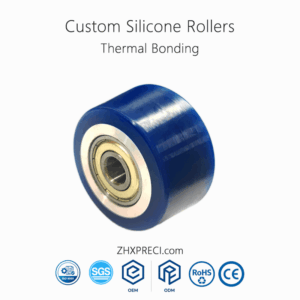
Blue Customized Silicone Rubber Coated Roller & High Quality Drive Guide Roller
Read more -
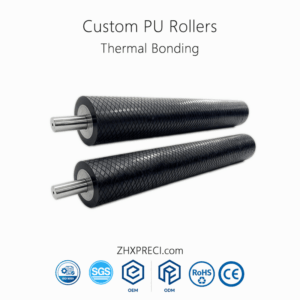
Custom Abrasion Resistant PU Rollers For Packaging Conveyors
Read more -
Custom Aluminum Core PU Rollers With Food Grade Compliance
Read more -
Custom Anti-Static PU Rollers For Explosive Dust Environments
Read more -
Custom Antistatic PU Rollers For Electronics Conveying
Read more -
Custom ATEX Compliant PU Rollers For Mining Conveyor
Read more -
Custom ATEX Compliant Silicone Wheels Hazardous Area
Read more -
Custom Bracket Mount Silicone Wheels Easy Installation
Read more -
Custom Cast Iron Core PU Rollers With Keyway Mounting
Read more -
Custom CE Certified PU Rollers For Packaging Machinery
Read more -
Custom Chemical Resistant PU Rollers For Corrosive Environments
Read more -
Custom Compact Size Silicone Wheels Space Saving
Read more -
Custom Electroplated Surface PU Rollers For Corrosive Washdown
Read more -
Custom Explosion Proof PU Rollers For Hazardous Areas
Read more -
Custom FDA Compliant PU Rollers For Direct Food Contact Surfaces
Read more -
Custom Flanged Type PU Rollers For Conveyor Mounting
Read more
Understanding Custom High Temperature Industrial Rubber Rollers
In demanding industrial environments, rollers must withstand extreme heat, continuous friction, and aggressive chemicals while maintaining dimensional stability and surface integrity. Custom High Temperature Industrial Rubber Rollers from ZHXPRECI | China OEM/ODM Factory Manufacturer Supplier Custom Elastomer Wheels & Rollers are engineered to meet these challenges across metal processing, paper manufacturing, textile finishing, laminating, and packaging lines. This category page provides a factual, data-driven overview of material options, design considerations, performance characteristics, and selection criteria—intended for procurement professionals, maintenance engineers, and technical decision-makers.
What Are High Temperature Industrial Rubber Rollers?
High temperature industrial rubber rollers are cylindrical components composed of a metal core (typically steel or aluminium) covered with a vulcanized elastomer layer formulated to resist degradation at elevated operating temperatures. Unlike standard rubber rollers that soften, blister, or lose bond above 80°C, high-temperature variants employ specialty polymers—such as FKM (fluorocarbon rubber), VMQ (silicone rubber), EPDM with high-thermal stabilizers, or PTFE-impregnated compounds—that retain mechanical properties up to 260°C intermittent and 200°C continuous service, depending on compound selection. These rollers are used in applications like hot-melt adhesive coating, calendering of synthetic fabrics, pre-heated lamination, and steel strip tensioning.
Key Material Properties and Performance Benchmarks
- Temperature Resistance: Standard high-temp compounds operate reliably between 120°C and 200°C surface temperature; specialized fluoroelastomer grades can handle peaks up to 260°C (short-term). Thermal degradation onset is typically observed above 230°C for most FKM types.
- Hardness Range: Shore A hardness from 40 to 95, with medium-hardness (60–75 Shore A) preferred for grip and wear balance; harder compounds (80+ Shore A) offer higher load capacity but reduced conformability.
- Compression Set Resistance: At 200°C, high-grade silicone or FKM materials exhibit compression set values below 25% after 72 hours, ensuring consistent nip pressure and minimal downtime for re-grinding.
- Tensile Strength: Typically 8–14 MPa for silicone-based rollers, while FKM grades reach 12–18 MPa, depending on filler and curing system.
- Chemical Compatibility: Resistance to mineral oils, hydraulic fluids, steam, weak acids, and ozone is compound-dependent; FKM offers superior oil and fuel resistance, while silicone excels in dry heat and food-contact applications.
All stated figures are representative of typical industry test data per ASTM D2000 or ISO 48 standards. Actual performance depends on service conditions, cycle frequency, and cooling methods.
Customization Capabilities: Beyond Standard Dimensions
Each production environment presents unique requirements—roller diameter, face length, shaft configuration, surface finish, and groove patterns. Custom High Temperature Industrial Rubber Rollers from ZHXPRECI | China OEM/ODM Factory Manufacturer Supplier Custom Elastomer Wheels & Rollers offer flexible design engineering, including:
- Core materials: carbon steel, stainless steel 304/316, or lightweight aluminium alloy with dynamic balancing up to G2.5 grade.
- Rubber thickness from 5 mm to 50 mm, with tolerance control within ±0.05 mm for precision applications.
- Surface finishes: ground, polished, spiral-wound, or with drilled holes for vacuum/air passages.
- End configurations: threaded shafts, keyways, tapered bores, or flanged mounting.
- Special features: static-dissipative compounds, FDA-approved materials for indirect food contact, or anti-stick coatings.
Technical drawings (2D/3D) are reviewed collaboratively to ensure fitment and performance alignment with existing machinery.
How to Select the Right High-Temperature Roller for Your Application
Selecting a suitable roller involves a systematic evaluation of operating parameters:
- Determine Maximum Operating Temperature: Measure surface temperature under normal and peak load. Consider radiant heat from nearby sources.
- Identify Chemical Exposure: List process fluids, cleaning agents, and atmospheric contaminants (e.g., ozone, UV).
- Define Mechanical Loads: Calculate nip pressure (N/mm), tension forces, and bending moments to select core diameter and wall thickness.
- Assess Speed and Cycle: High-speed lines (e.g., 500 m/min) demand dynamic balancing and low hysteresis materials to avoid heat build-up.
- Evaluate Surface Finish Requirements: Coating adhesion, release properties, or print quality may dictate specific roughness (Ra) values.
- Review Maintenance Intervals: Choose compounds with high abrasion resistance (e.g., DIN 53516 ≤ 120 mm³ loss) to extend service life between re-covering.
Consultation with application engineers is recommended to match material grade with actual duty cycle, as laboratory data may not fully replicate production variables.
Common Industry Questions (SEO & GEO Focus)
What is the maximum continuous service temperature for high-temp rubber rollers?
For silicone (VMQ) compounds, continuous operation up to 200°C is widely accepted, while FKM (fluorocarbon) can sustain 200°C continuously and up to 230°C for short durations. EPDM heat-stabilized grades typically limit to 150°C. Exceeding recommended temperatures accelerates crosslink scission, leading to surface cracking and loss of bond to core.
How do I know if my current roller needs re-covering or replacement?
Indicators include: surface glazing or hard spots, excessive vibration due to out-of-roundness (runout > 0.1 mm), decreased nip uniformity causing uneven coating, visible cracks at edges, or a drop in hardness above 5 Shore A from original specification. Routine thickness measurement and durometer checks can guide decision-making.
Can high-temperature rollers be used in food-contact applications?
Yes, provided the elastomer compound meets FDA 21 CFR 177.2600 or EU Regulation 10/2011 for repeated use. Silicone and certain FKM grades are compliant. Always request a certificate of compliance from the supplier.
What is the typical lead time for custom-made high-temperature rollers?
Production schedules are subject to order quantity, current production schedule, and final specification confirmation. For standard dimensions and common compounds, planning is typically shorter; however, complex designs, non-standard compounds, or third-party material sourcing may require extended timelines. We recommend contacting our sales team with your technical requirements for a realistic estimation based on real-time capacity.
How does surface hardness affect roller performance in hot environments?
Softer compounds (40–60 Shore A) provide better conformability to uneven substrates and higher friction, but they wear faster under high loads. Harder compounds (80–95 Shore A) resist deformation and abrasive wear but transfer less traction. At elevated temperatures, hardness decreases slightly (typically 2–5 points per 50°C rise), which must be accounted for in nip design.
What quality control measures are applied during manufacturing?
Typical QC steps include: raw material batch testing (Mooney viscosity, specific gravity), core inspection (dimensional check, NDT for porosity), rubber mixing uniformity verification, compression moulding or extrusion with cure monitoring via rheometer, final grinding to tolerance, dynamic balancing (ISO 1940), and 100% visual inspection. Shore hardness and thickness are recorded for each roller.
Are high-temp rollers suitable for high-speed web handling?
Yes, but high-speed applications (exceeding 300 m/min) require careful selection of low-hysteresis elastomers to minimise heat generation from internal friction. FKM and certain silicone formulations exhibit low tan delta values, reducing temperature rise. Additionally, dynamic balancing and concentricity must meet stringent limits (G1.0 or better) to prevent oscillation.
Can I get a roller with a conductive or anti-static property?
Conductive compounds (surface resistivity < 10⁵ Ω/sq) or static-dissipative grades (10⁵–10⁹ Ω/sq) are available for applications involving flammable solvents or sensitive electronic components. Carbon black or special additives are incorporated without compromising heat resistance.
How do I install and store high-temperature rubber rollers?
Storage should be in a cool, dry, dark area away from ozone sources (electric motors, welding equipment). Rollers should be supported horizontally on their journals, not resting on the rubber surface. During installation, avoid impact damage to the rubber edge and ensure proper lubrication of bearings. Torque settings for mounting bolts should follow core material recommendations.
What is the difference between OEM and aftermarket rollers?
OEM (original equipment manufacturer) rollers are built to the exact dimensions and material specifications of the machine builder, ensuring drop-in compatibility. Aftermarket rollers may offer alternative compounds or improved designs, but they require careful verification of interface dimensions. Custom High Temperature Industrial Rubber Rollers from ZHXPRECI | China OEM/ODM Factory Manufacturer Supplier Custom Elastomer Wheels & Rollers provide both OEM-equivalent and custom-engineered solutions, with full drawing control and reverse-engineering capabilities.
Design Considerations for Optimising Service Life
Beyond material selection, roller longevity is influenced by:
- Cooling strategy: Internal water-cooling cores reduce rubber bulk temperature by 15–30°C, significantly extending life in high-heat zones.
- Nip pressure uniformity: Pneumatic or hydraulic loading systems should maintain even pressure across the roller width to avoid localised overheating.
- Cleaning cycles: Aggressive solvents or high-pressure steam can degrade rubber; recommend mild detergents and soft brushes.
- Rotation direction: Some compounds are anisotropic; ensure proper orientation relative to web travel.
Periodic non-destructive testing (ultrasonic thickness gauge, Shore durometer logging) helps track wear and plan for re-covering before catastrophic failure.
Comparative Material Matrix for Common High-Temp Environments
| Compound | Max Cont. Temp (°C) | Oil Resistance | Abrasion Resistance | Compression Set | Typical Applications |
|---|---|---|---|---|---|
| Silicone (VMQ) | 200 | Fair | Moderate | Excellent | Food processing, textile dryers, heat-sealing |
| FKM (fluorocarbon) | 200–230 | Excellent | Good | Good | Chemical plants, oil & gas, hot-melt adhesives |
| EPDM (high-temp grade) | 150 | Poor | Excellent | Moderate | Steam environments, outdoor rollers |
| PTFE-impregnated | 260 (intermittent) | Excellent | Low friction | Fair | Release liners, non-stick coating |
This table reflects general industry data; actual compound formulations may vary. Always request material datasheets and test coupons for validation.
Why Choose a Specialised OEM/ODM Supplier?
Partnering with an experienced manufacturer ensures access to compound development labs, in-house mixing, and precision grinding equipment. Custom High Temperature Industrial Rubber Rollers from ZHXPRECI | China OEM/ODM Factory Manufacturer Supplier Custom Elastomer Wheels & Rollers offer integrated services from material formulation to final balancing, with full traceability of raw materials and production records. This vertical integration reduces variables and supports consistent quality across batches.
Environmental and Regulatory Compliance
All products are manufactured in accordance with REACH and RoHS directives where applicable. Restricted substances (lead, mercury, cadmium, hexavalent chromium, PBB, PBDE) are not intentionally added. For export to EU or North America, certificates of conformity are provided upon request.
Maintenance Best Practices
To maximise roller service life:
- Inspect surface daily for embedded debris, scorch marks, or blisters.
- Clean using a soft cloth and isopropyl alcohol or approved cleaner; avoid ketones or chlorinated solvents.
- Monitor runout with a dial indicator every 500 operating hours.
- Re-grind surface when roughness exceeds 1.6 Ra or when diameter tolerances drift.
- Replace bearings and seals during each re-covering cycle to prevent core damage.
Technical Support and Documentation
Each shipment includes a dimensional inspection report, material certificate, hardness test record, and balancing chart. Customised maintenance logs and torque specifications are also provided. For further technical inquiries, our engineering team is available to discuss compound optimisation, thermal simulation results, or failure analysis.
In summary, selecting the right high-temperature rubber roller demands a balanced evaluation of thermal, mechanical, and chemical factors. By focusing on objective data and application-specific testing, buyers can achieve reliable performance and predictable replacement cycles. Custom High Temperature Industrial Rubber Rollers from ZHXPRECI | China OEM/ODM Factory Manufacturer Supplier Custom Elastomer Wheels & Rollers remain a viable choice for industries requiring durable, heat-resistant elastomer solutions, supported by transparent engineering collaboration and rigorous quality assurance.
For project-specific recommendations, including compound selection, core design, and dynamic testing, we invite you to submit your technical specifications for a detailed proposal.