
Custom Silicone Industrial Rubber Rollers
Custom Silicone Industrial Rubber Rollers
Custom silicone rollers with tailored properties for demanding industrial applications.
- 30-80A Shore
- -50~200°C temp
- 50-300mm dia
- 30-500kg load
- ISO/FDA cert
Showing 1–16 of 105 results
-
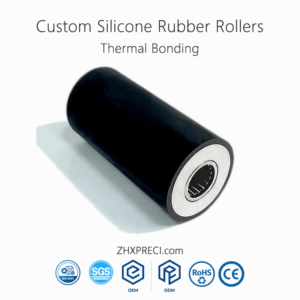
Black PU Rubber Coated Wheel Roller Industrial Grade for Automation Machinery Conveyor Transport and Factory Use
Read more -
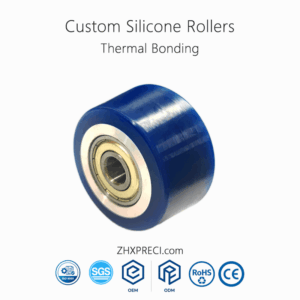
Blue Customized Silicone Rubber Coated Roller & High Quality Drive Guide Roller
Read more -
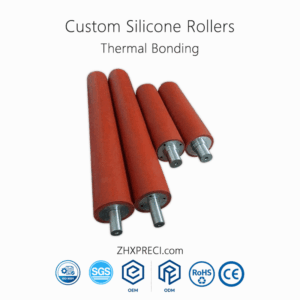
Custom Abrasion Resistant Silicone Coated Rollers Heavy Wear
Read more -
Custom Air Cooled Rubber Rollers with Internal Channels
Read more -
Custom Anti-Microbial Silicone Rollers Hygiene Grade
Read more -
Custom Anti-Static Silicone Coated Rollers Electronic Use
Read more -
Custom API Grade Rubber Rollers for Drill Pipe Wiper
Read more -
Custom ATEX Compliant Rubber Rollers for Grain Handling
Read more -
Custom ATEX Compliant Silicone Wheels Hazardous Area
Read more -
Custom Bearing Mounted Silicone Coated Rollers Quick Change
Read more -
Custom Bracket Mount Silicone Wheels Easy Installation
Read more -
Custom Cantilever Mount Rubber Rollers for Narrow Spaces
Read more -
Custom Cantilever Mounted Silicone Rollers Easy Access
Read more -
Custom CE Certified Silicone Rollers European Market
Read more -
Custom Chemical Resistant Silicone Coated Rollers Process Use
Read more -
Custom Cleanroom Compatible Silicone Rollers Particle Free
Read more
Custom Silicone Industrial Rubber Rollers: Technical Overview
Engineered for demanding industrial environments, Custom Silicone Industrial Rubber Rollers from ZHXPRECI | China OEM/ODM Factory Manufacturer Supplier Custom Elastomer Wheels & Rollers represent a precise balance of material science and mechanical design. These rollers are manufactured to meet specific operational requirements across converting, printing, packaging, and material handling sectors. Unlike off-the-shelf alternatives, custom silicone rollers are formulated and dimensioned to match unique equipment interfaces, process speeds, and environmental exposures. The following technical brief provides engineering-focused insights into material properties, selection criteria, application considerations, and frequently asked questions—structured to support informed procurement decisions and specification development.
What Are Custom Silicone Industrial Rubber Rollers?
Custom Silicone Industrial Rubber Rollers are rotationally symmetric elastomeric components wherein the outer contact layer is composed of vulcanised silicone rubber compound, bonded to a metallic or composite core. The term "custom" denotes that geometry, durometer, surface finish, and chemical resistance profile are adapted to a particular machine or process rather than drawn from a standardised catalogue. Silicone elastomers are selected for their thermal stability, release properties, and resistance to oxidative degradation. Typical construction includes a steel or aluminium shaft, an adhesive tie layer, and a cured silicone sleeve or moulded covering. Wall thickness, end configuration, and dynamic balancing are often adjusted to suit line speeds and nip pressures. These rollers function as driven or idler components in conveying, coating, laminating, and embossing operations where consistent traction, minimal product adhesion, and clean release are essential.
Key Material Properties of Silicone Rubber Rollers
Silicone rubber belongs to the family of synthetic elastomers based on siloxane backbone. Its performance characteristics differ markedly from general-purpose rubbers such as SBR, EPDM, or nitrile. The following material parameters are among the most relevant to industrial roller applications. Hardness, measured on the Shore A scale, typically ranges between 30 and 80 Shore A for standard compounds, with specialised formulations extending into the 20–90 Shore A band. Tensile strength for unfilled silicone is generally moderate—often between 5 and 10 MPa—but can be enhanced with reinforcing fillers. Tear strength and abrasion resistance are lower than those of polyurethane; hence, design engineers often specify harder grades or protective coatings for high-wear scenarios. Operating temperature range is a standout feature: properly formulated silicone rollers maintain elastic behaviour from approximately -60 °C to +230 °C for short exposures, while continuous service is viable between -50 °C and +200 °C. This thermal window far exceeds that of conventional rubbers, making silicone suitable for heat-sealing, hot-melt adhesive application, and oven conveyor systems. Compression set resistance is favourable, with typical values under 30 % after 22 hours at 175 °C, contributing to sustained nip uniformity. Dielectric strength, ozone resistance, and UV stability are additional advantages, particularly for outdoor or corona-treatment equipment. However, silicone rubber exhibits relatively high friction coefficient on dry surfaces and moderate oil/fuel resistance; where contact with hydrocarbons is frequent, fluorosilicone or other blends may be considered.
Common Industrial Applications
Custom Silicone Industrial Rubber Rollers find usage across a broad spectrum of manufacturing processes. In the flexible packaging industry, they serve as nip rollers for lamination and as anilox roller back-up in flexographic printing. Their non-stick surface reduces adhesive build-up and eases web cleaning. In textile finishing, silicone rollers are employed for heat-setting and calendering, where high temperature and uniform pressure are required. The paper and board industry uses them in size presses, coating heads, and rewind stations. Food-grade silicone rollers—compliant with FDA or EU regulations—are applied in confectionery moulding, dough sheeting, and baked product cooling conveyors. Medical device manufacturing often utilises precision-ground silicone rollers for film casting and catheter production due to biocompatibility. Beyond these, silicone rollers are chosen for solar panel laminators, battery electrode coating lines, and label converting machinery. Each application places distinct demands on surface roughness, hardness, and thermal conductivity, underscoring the necessity of custom engineering rather than generic selection.
Customisation Options: What Can Be Tailored?
The classification "Custom Silicone Industrial Rubber Rollers" encompasses numerous variable parameters. Outer diameter, face length, and core dimensions are determined by machine frame geometry and web width. The silicone compound itself can be formulated with fillers, plasticisers, and curing systems to adjust hardness, colour, and release characteristics. Surface finish ranges from a smooth ground finish below 0.4 micrometre Ra to patterned or engraved surfaces for specific fluid metering tasks. Grooves, channels, or spiral flutes may be incorporated for ventilation or liquid drainage. Mechanical design options include crowned faces to compensate for deflection under load, tapered ends for easy mounting, and keyways or splines for torque transmission. Bonding systems are selected based on core material—steel, aluminium, or carbon fibre—and operating environment. For high-speed applications, dynamic balancing to ISO 1940 grade G 2.5 or better is often performed. Thermal management solutions—such as internal cooling bores or spiral ducts—can be integrated for processes generating frictional heat. All these dimensions, material grades, and finishing steps are documented in a custom engineering drawing, which serves as the basis for production and quality inspection. Custom Silicone Industrial Rubber Rollers from ZHXPRECI | China OEM/ODM Factory Manufacturer Supplier Custom Elastomer Wheels & Rollers are produced following such tailored specifications, with each roller tracked through mixing, moulding, curing, machining, and balancing stages.
Technical Considerations for Roller Selection
Selecting an appropriate silicone roller requires systematic evaluation of process parameters. Temperature at the roller surface and core, duration of thermal exposure, and frequency of thermal cycles influence compound choice. Mechanical load, including nip pressure and web tension, determines required hardness, wall thickness, and core stiffness. In high-load nip applications, a harder compound (70–80 Shore A) reduces deformation, whereas lower hardness (30–50 Shore A) increases conformability to uneven substrates. Chemical environment must be assessed: if solvents, oils, or aggressive cleaning agents are present, a fluorosilicone or silicone-epoxy hybrid may be indicated. Abrasive media, such as filled slurries or abrasive coatings, necessitate wear-resistant top layers or ceramic filler additives. Speed and acceleration dictate the dynamic balance grade and dimensional tolerances to avoid vibration-induced marking. Finally, regulatory compliance—FDA 21 CFR 177.2600 for food contact, EU 1935/2004, or REACH—must be verified for the specific compound. Documenting these factors in a procurement specification facilitates efficient dialogue with the manufacturer and reduces the likelihood of re-engineering.
How to Select the Right Silicone Roller for Your Process?
Selection can be approached as a multi-step decision matrix. First, define the roller function: is it a nip roller, an applicator, a guiding roller, or a driven transport roller? This defines mechanical load and accuracy needs. Second, measure the operating temperature at the roller location, accounting for radiative and convective contributions. Third, list all media that will contact the roller—inks, adhesives, release agents, cleaning solvents, or food substances. Fourth, determine required surface finish: a glossy finish may be preferred for film casting, while a matt finish can aid grip in textile handling. Fifth, estimate nip loads or pressing forces; this allows calculation of required shaft diameter and core strength. Sixth, consider speed and inertia for dynamic balancing specification. Seventh, review maintenance frequency and cleaning protocols; easier-to-clean smooth surfaces are preferred where downtime is costly. After compiling these inputs, consult with technical engineers to propose compound hardness, compound type, and dimensional tolerances. Sample rollers or test coupons can be produced for on-site trials before committing to full production. This systematic method reduces performance risks and ensures the final product aligns with operational expectations.
Installation and Maintenance Best Practices
Proper installation begins with inspection of the roller for transport damage, concentricity, and balance marks. Mounting should follow the prescribed torque values for end caps or locking elements to avoid distorting the core. Alignment of the roller with adjacent rolls is critical: misalignment creates uneven loading, accelerates surface wear, and can induce web wandering. For crowned rollers, orientation must match the intended deflection direction. During initial commissioning, run the roller at low speed without load to verify dynamic stability, then gradually increase to operational speed. Maintenance intervals depend on service severity, but routine checks include surface inspection for cuts, blisters, or embedded contaminants; hardness verification using a durometer; and measurement of runout at the roller face. Cleaning should employ approved solvents—mild detergents or isopropyl alcohol—avoiding petroleum-based solvents that degrade silicone. Some formulations tolerate steam cleaning, but consult the compound data sheet. When storing spare rollers, maintain them in a cool, dry environment away from ozone sources and direct sunlight; ideally, wrap in protective film. Regular maintenance logs assist in predicting re-covering schedules and minimising unscheduled downtime.
Frequently Asked Questions
Q: What is the typical service life of a custom silicone industrial rubber roller?
Service life is highly process-dependent. Under moderate temperatures (below 100 °C) and non-abrasive conditions, a well-bonded silicone roller can deliver several years of continuous service. Factors that reduce life include elevated temperatures, mechanical impact, chemical attack, and poor maintenance. Manufacturers generally recommend periodic inspection rather than a fixed replacement interval.
Q: Can silicone rollers be repaired after surface damage?
Superficial nicks or shallow cuts can sometimes be repaired by filling and re-grinding, provided the bond layer remains intact. Extensive damage to the silicone covering typically necessitates a re-covering process, where the old elastomer is stripped and a new layer moulded onto the core. Re-covering is often more cost-effective than purchasing a new roller when the core is in good condition.
Q: How do silicone rollers compare with polyurethane rollers?
Silicone offers superior thermal resistance, excellent release properties, and better ozone/UV stability. Polyurethane provides higher tear strength, greater abrasion resistance, and better oil resistance. The choice depends on whether temperature and non-stick characteristics dominate (silicone) or if wear and load-bearing capacity are paramount (polyurethane).
Q: What hardness range is most common for industrial silicone rollers?
Medium hardness grades between 50 and 70 Shore A represent the majority of industrial applications, offering a compromise between conformability and resistance to deformation. Softer grades (30–40 Shore A) are specified for delicate substrates or pressure-sensitive laminations, while harder grades (75–90 Shore A) serve high-load nip stations.
Q: Are custom silicone rollers compliant with food-contact regulations?
Many silicone compounds can be formulated to meet FDA 21 CFR 177.2600 and EU Framework Regulation (EC) 1935/2004. However, compliance must be confirmed for the specific final formulation and curing conditions. Certification documentation, including migration test reports, should be requested from the manufacturer.
Q: How does surface finish affect roller performance?
Surface roughness influences release properties, fluid film transfer, and grip. Finer finishes (Ra 0.2–0.4 µm) reduce adhesion and facilitate cleaning, suitable for adhesive coating. Rougher finishes (Ra 1.0–2.5 µm) improve traction and are used in pulling or conveying applications. The finish should match the process requirement and substrate type.
Q: What is the lead time for custom silicone rollers?
Lead time for custom silicone rollers is subject to order quantity, current production schedule, and final specification confirmation. A typical timeline ranges from a few days for prototype quantities to several weeks for large production batches. It is advisable to consult with the factory on capacity and raw material availability before placing a firm order, as these factors can influence the delivery window.
Q: Can silicone rollers be used in vacuum or low-pressure environments?
Yes, silicone's low outgassing characteristics make it suitable for vacuum applications, such as in roll-to-roll coating under reduced pressure. However, the compound must be specially formulated with minimal volatile components, and the bonding system must withstand decompression cycling. Verify with the manufacturer if vacuum service is specified.
Q: What dimensional tolerances can be achieved?
For ground silicone rollers, dimensional tolerances of ±0.05 mm on diameter and ±0.1 mm on face length are routinely achievable. Concentricity and runout can be held within 0.03–0.05 mm TIR depending on roller length and diameter. Tighter tolerances are possible but may require additional machining steps and inspection time.
Q: How do I specify a custom silicone roller for a new machine design?
Start with a detailed machine drawing showing roller position, mating components, clearances, and load points. Provide process data: temperature range, contact media, speed, and nip pressures. Indicate preferred hardness, surface finish, and any regulatory requirements. The manufacturer's engineering team will then propose a preliminary compound and design, often with a technical data sheet for review. Iterative feedback refines the specification before production.
Custom Silicone Industrial Rubber Rollers from ZHXPRECI | China OEM/ODM Factory Manufacturer Supplier Custom Elastomer Wheels & Rollers are developed with a focus on precision, durability, and process compatibility. Each project begins with a technical consultation to match material properties to application demands. Manufacturing processes include compounding, extrusion or injection moulding, autoclave or oven curing, and precision grinding. In-process inspections cover dimensional checks, hardness testing, and balance verification. Final inspection includes dimensional report and visual surface assessment. The factory maintains quality management systems consistent with ISO 9001 standards, and custom testing protocols can be arranged for critical parameters. For engineering drawings, sample requests, or detailed compound data, direct inquiry with the sales engineering team is recommended to obtain current production schedules and material availability.
In summary, silicone industrial rubber rollers offer unique thermal and release properties that make them indispensable in many converting and processing lines. Their customisable nature allows optimisation for specific machinery, substrates, and operating conditions. By understanding material science, application requirements, and selection procedures, engineers and procurement professionals can specify rollers that enhance process stability and product quality. The collaboration with a knowledgeable manufacturer—one that combines elastomer expertise with machining capabilities—facilitates the translation of functional requirements into reliable, long-serving roller components.