
Custom Heat Resistant Industrial Rubber Wheels
Custom Heat Resistant Rubber Wheels
Engineered for extreme heat, reliable in foundries & automotive.
- 200‑1000kg load
- 65‑95A Shore
- 100‑600mm dia
- ‑30‑+230°C temp
- ISO/REACH cert
Showing 1–16 of 85 results
-
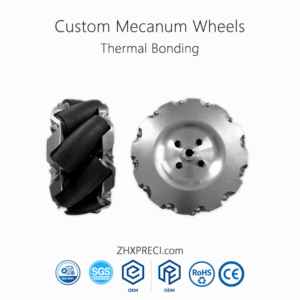
16inch 406mm Mecanum Caster Wheels 1200KG Payload Capacity Exclusive Polyurethane Formula New Aluminium Handling Equipment Farm
Read more -
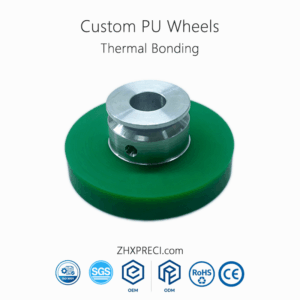
Custom Abrasion Resistant Rubber Wheels with Coating for Mining Equipment
Read more -
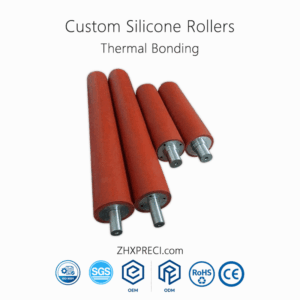
Custom Abrasion Resistant Silicone Coated Rollers Heavy Wear
Read more -
Custom Alkali Proof Rubber Wheels with Coating for Industrial Washers
Read more -
Custom Anti Vibration Rubber Wheels with Coating for Precision Instruments
Read more -
Custom Anti-Microbial Silicone Rollers Hygiene Grade
Read more -
Custom Anti-Static Silicone Coated Rollers Electronic Use
Read more -
Custom Antistatic Rubber Wheels with Coating for Cleanroom Carts
Read more -
Custom Bearing Mounted Silicone Coated Rollers Quick Change
Read more -
Custom Cantilever Mounted Silicone Rollers Easy Access
Read more -
Custom CE Certified Silicone Rollers European Market
Read more -
Custom Chemical Resistant Rubber Wheels with Coating for Laboratory Carts
Read more -
Custom Chemical Resistant Silicone Coated Rollers Process Use
Read more -
Custom Cleanroom Compatible Silicone Rollers Particle Free
Read more -
Custom Cold Resistant Silicone Rollers Low Temperature
Read more -
Custom Compression Resistant Silicone Rollers Durable Shape
Read more
Overview of Custom Heat Resistant Industrial Rubber Wheels
In demanding industrial environments, material handling components must withstand elevated temperatures without compromising structural integrity or rolling efficiency. The category of Custom Heat Resistant Industrial Rubber Wheels addresses this requirement through specialized elastomer compounds and engineering designs that maintain performance under sustained thermal exposure. These wheels serve as critical mobility solutions in foundries, glass manufacturing plants, automotive assembly lines, food processing facilities with high-temperature washing cycles, and logistics operations involving hot materials or equipment.
When selecting heat resistant rubber wheels for industrial applications, procurement professionals and design engineers evaluate multiple interdependent parameters. The thermal stability of the rubber compound determines the maximum continuous operating temperature, while the wheel construction—including hub materials, bearing types, and tread patterns—influences load capacity, rolling resistance, and service life. This product category encompasses various configurations, from press-on solid rubber tires for heavy-duty carts to polyurethane-coated wheels offering enhanced wear resistance in moderate heat conditions, as well as high-temperature silicone rubber rollers for continuous oven conveyors.
Custom Heat Resistant Industrial Rubber Wheels from ZHXPRECI | China OEM/ODM Factory Manufacturer Supplier Custom Elastomer Wheels & Rollers represent a comprehensive approach to tailored mobility solutions. The engineering focus remains on achieving optimal performance characteristics—appropriate thermal thresholds, suitable hardness grades, and reliable load-bearing capabilities—through careful material selection and manufacturing precision. This ensures the final product aligns with specific operational demands while maintaining cost efficiency for volume procurement.
Key Material Properties and Thermal Performance Characteristics
The thermal resistance of industrial rubber wheels primarily derives from the base polymer and compounding additives. Common material systems include:
- EPDM (Ethylene Propylene Diene Monomer): Exhibits useful continuous service temperatures up to approximately 150°C (302°F), with short-term exposure tolerance reaching 180°C (356°F). EPDM offers excellent resistance to steam, hot water, and many polar chemicals, making it suitable for washdown applications and outdoor equipment exposed to solar radiation.
- Silicone Rubber: Maintains flexibility across a broad range from -60°C to 230°C (-76°F to 446°F). Silicone compounds provide consistent hardness and low compression set at elevated temperatures, though tensile strength and tear resistance are comparatively moderate. These wheels find use in food-grade conveyor systems and packaging machinery requiring FDA-compliant materials.
- Nitrile Rubber (NBR): Performs well up to 120°C (248°F) continuous, with intermittent service possible up to 150°C. NBR exhibits superior resistance to petroleum-based oils and fuels, which is relevant in automotive manufacturing and machining environments where lubricants and coolants are present.
- Polyurethane (PU): While not a conventional rubber, polyurethane elastomers offer high load capacity and abrasion resistance, with heat resistance typically limited to 80-100°C (176-212°F) for standard grades. Special high-temperature polyurethane formulations can extend this range to 130°C (266°F).
Beyond the base polymer, heat resistance is significantly influenced by the curing system, filler types, and antioxidant packages incorporated during compounding. Industry data indicates that properly formulated EPDM compounds retain approximately 80% of their original tensile strength after 1,000 hours at 150°C, while standard SBR compounds may lose more than 50% of their mechanical properties under identical conditions. These performance metrics should be verified through relevant testing standards such as ASTM D573 (heat aging of rubber) or ISO 188, which provide standardized methodologies for evaluating thermal degradation.
The thermal conductivity of rubber materials also affects heat dissipation from the wheel tread. Dense compounds with higher filler content tend to conduct heat more effectively than highly elastic formulations, which can influence surface temperatures during continuous operation. For applications involving rolling friction at speeds exceeding 1.5 m/s, thermal buildup becomes a design consideration that may require material adjustments or ventilated wheel designs.
Custom Engineering and Design Considerations
Customization in heat resistant rubber wheels extends beyond material selection to encompass dimensional specifications, mounting configurations, and performance optimization. Custom Heat Resistant Industrial Rubber Wheels from ZHXPRECI | China OEM/ODM Factory Manufacturer Supplier Custom Elastomer Wheels & Rollers are engineered to meet specific application parameters through collaborative technical consultation.
Dimensional and Mounting Flexibility
Wheel diameters typically range from 100 mm to 600 mm (4 inches to 24 inches), with tread widths varying from 30 mm to 150 mm depending on load requirements and floor conditions. Hub designs accommodate multiple mounting options:
- Plain bore holes for direct shaft mounting
- Roller bearings for reduced rolling resistance in frequent-start applications
- Ball bearings for higher speed operations and improved alignment
- Tapered roller bearings for heavy loads combined with lateral forces
Custom bore sizes, keyways, and set screw configurations can be incorporated to match existing equipment shafts without requiring modifications. Flange-mounted wheels and swivel caster configurations are also available for specific mobility systems.
Tread Profile and Surface Texture
Tread design significantly affects traction, noise levels, and floor wear. Smooth treads offer minimal rolling resistance and are suitable for clean, dry surfaces. Grooved or chevron-patterned treads improve grip on wet or oily floors, while diamond-knurled surfaces provide enhanced traction on inclined planes or during acceleration/deceleration cycles. The tread profile should be selected based on the operating environment and the coefficient of friction required for safe operation.
Hardness Selection and Load Capacity
Rubber hardness, measured in Shore A durometer, typically ranges from 65 to 95 Shore A for industrial wheels. Softer compounds (65-75 Shore A) provide greater shock absorption and quieter operation but exhibit higher rolling resistance and lower load capacity. Harder compounds (85-95 Shore A) support heavier loads with reduced deformation under compression, though they transmit more vibration to the equipment frame.
Load capacity for a single wheel is determined by the compound hardness, wheel diameter, tread width, and operating temperature. At elevated temperatures, the load-bearing capability decreases due to reduced material modulus. A general guideline suggests derating the room-temperature load capacity by approximately 0.5% per degree Celsius above 40°C, though this derating factor varies with the specific compound formulation. For precise load calculations, manufacturers typically provide load-deflection curves and temperature derating charts based on empirical testing.
What Are Custom Heat Resistant Industrial Rubber Wheels?
What are Custom Heat Resistant Industrial Rubber Wheels? These are engineered mobility components designed to operate reliably in environments where ambient or process-generated heat exceeds the practical limits of standard rubber wheels. Unlike general-purpose casters or wheels made from conventional rubber compounds that soften, deform, or degrade at temperatures above 80-100°C, heat resistant variants utilize specialized polymer systems and additive packages to preserve dimensional stability, load capacity, and rolling characteristics at significantly higher thermal levels.
The "custom" aspect acknowledges that no single material or design suits all high-temperature applications. Process temperature profiles, duration of exposure, load magnitudes, rolling speeds, floor surface conditions, and chemical exposures vary widely across industries. Custom heat resistant rubber wheels are therefore specified through a systematic selection process where the manufacturer adjusts compound recipes, reinforcing fillers, curing parameters, and mechanical configurations to align with the specific operational constraints. This tailored approach ensures the wheel performs adequately throughout its intended service life while avoiding over-engineering that would unnecessarily increase procurement costs.
These wheels find application in diverse sectors including steel service centers handling hot-rolled coils, ceramic kiln cars transporting ware through firing cycles, glass tempering lines moving heated panes, automotive paint shops with drying ovens, and electronics manufacturing where circuit boards undergo reflow soldering processes. In each case, the wheels must maintain functional integrity despite radiant heat, conductive heat transfer from wheel-floor contact, or convective heat from surrounding air currents.
How to Select the Appropriate Heat Resistant Rubber Wheel for Your Application
How to select the appropriate heat resistant rubber wheel? The selection process involves a structured evaluation of operational parameters to match wheel attributes with application requirements. The following framework provides guidance for procurement engineers and facility managers:
- Define the thermal exposure profile: Determine the maximum continuous temperature at the wheel location, the frequency and duration of peak temperature events, and the cooling periods between thermal cycles. If the wheel operates near an oven door or furnace opening, measure radiant heat intensity using a thermal sensor. For conveyor systems with integrated heating zones, record temperature gradients along the entire path.
- Quantify load requirements: Calculate the static load per wheel by dividing the total equipment weight (including payload) by the number of supporting wheels. Add a safety factor of 1.25 to 1.5 for dynamic loads during starting, stopping, or traversing uneven floors. Confirm that the selected wheel compound can support this load at the maximum operating temperature using temperature derating data.
- Assess environmental factors: Identify chemical exposures (oils, solvents, acids, alkalis), moisture levels, floor surface conditions, and the presence of abrasive particulates. These factors influence the choice of base polymer and the need for protective surface treatments or specialized wear layers.
- Determine rolling and handling characteristics: Consider the required starting torque, push-pull forces, and maneuverability in confined spaces. Softer compounds reduce rolling resistance on smooth floors but increase wheel deformation under load. Harder compounds roll more easily on firm surfaces but transmit more vibration.
- Specify dimensional constraints: Define the wheel diameter, tread width, overall height (for caster assemblies), and mounting interface details. Ensure sufficient clearance between the wheel and any surrounding structures during full rotation.
- Review regulatory compliance: If the application involves food contact, pharmaceutical manufacturing, or cleanroom environments, verify that the selected rubber materials meet relevant standards such as FDA 21 CFR 177.2600, EU Regulation 10/2011, or USP Class VI biocompatibility requirements.
Through this evaluation, the required specification becomes clearly defined, enabling the manufacturer to formulate an appropriate rubber compound, select the optimal manufacturing process, and produce a wheel that meets performance expectations. Custom Heat Resistant Industrial Rubber Wheels from ZHXPRECI | China OEM/ODM Factory Manufacturer Supplier Custom Elastomer Wheels & Rollers are developed following this comprehensive approach, ensuring that each delivery corresponds to the specific technical requirements communicated by the customer.
Common Questions and Technical Clarifications
What is the maximum operating temperature for custom heat resistant rubber wheels? The practical upper temperature limit depends on the rubber compound selected. EPDM compounds generally perform well up to 150°C (302°F), silicone grades can extend to 230°C (446°F), while specialized high-temperature elastomers such as fluorosilicone or certain perfluoroelastomers may reach 300°C (572°F) for brief intermittent exposures. These values represent industry-acknowledged benchmarks but should be confirmed through manufacturer-supplied test data for the specific formulation being considered.
How does heat affect the load capacity of rubber wheels? As temperature rises, rubber modulus decreases, reducing the wheel's ability to support loads without excessive deflection. The load capacity derating factor is typically nonlinear; at 100°C, a room-temperature rating of 1,000 kg may reduce to 700-800 kg, depending on compound characteristics. Manufacturers can provide temperature-load relationship curves derived from compression-deflection testing at elevated temperatures, enabling accurate capacity prediction for specific use conditions.
What is the typical service life of heat resistant rubber wheels? Service life varies considerably based on load magnitude, operating temperature profile, floor surface abrasiveness, maintenance practices, and the frequency of thermal cycling. In moderate conditions with periodic use, wheels may function for several years. In severe environments with continuous high-temperature exposure and heavy loads, replacement intervals could be measured in months. Regular inspection of tread condition, hub integrity, and bearing performance remains essential for identifying wear indicators and scheduling proactive replacement.
Are heat resistant rubber wheels suitable for outdoor applications? Yes, provided the rubber compound offers adequate resistance to UV radiation, ozone, and moisture. EPDM and silicone materials exhibit good weathering resistance, while nitrile and polyurethane may require stabilization additives for prolonged outdoor exposure. Low-temperature flexibility should also be considered for winter operations in colder climates.
How does hardness affect heat resistance? Hardness itself does not directly determine thermal resistance, but harder compounds often contain higher filler loadings that may influence heat conduction and aging behavior. Some hard compounds may become brittle after thermal aging, while softer compounds might show greater compression set. The relationship between hardness and thermal performance is specific to each material system and should be evaluated based on application requirements.
What is the difference between heat resistant rubber wheels and high-temperature wheels? The terminology often overlaps, but "heat resistant" generally refers to materials capable of continuous operation at temperatures up to 150°C, while "high-temperature" usually denotes capabilities exceeding 200°C. Additionally, heat resistant wheels may be constructed from multiple rubber types with varying thermal capabilities, whereas high-temperature wheels typically employ a single specialized compound throughout the wheel body.
How does thermal cycling affect rubber wheel integrity? Repeated heating and cooling cycles can accelerate aging through cumulative microstructural changes. The thermal expansion coefficient mismatch between the rubber tread and the metallic hub can induce stress at the bond interface, potentially leading to separation over many cycles. Selecting a bonding system with suitable thermal compatibility and designing the interface geometry to accommodate differential expansion helps minimize this risk.
Industry-Specific Applications and Use Cases
The versatility of heat resistant rubber wheels enables deployment across multiple industrial sectors, each with distinct operational demands:
- Metal processing and foundries: Wheels on ladle transfer cars, furnace charging carts, and hot metal handlers must withstand radiant heat from molten materials while supporting heavy loads. Silicone or EPDM compounds with high thermal stability and low compression set are typically specified, often combined with steel-centered hubs for structural reinforcement.
- Glass and ceramics manufacturing: Kiln cars, lehr conveyors, and annealing furnace lines require wheels that maintain dimensional stability during repeated thermal cycles extending from ambient to 200°C. Ceramic fiber-insulated wheels or wheels with thermal barrier coatings help reduce heat transfer to internal bearings.
- Automotive assembly and paint shops: Conveyor systems carrying body panels through primer, basecoat, and clearcoat curing ovens use heat resistant wheels that resist paint overspray accumulation and remain dimensionally stable at 120-160°C. Nitrile and EPDM compounds offer appropriate oil resistance for these environments.
- Food processing and baking: Oven trolleys, proofing racks, and cooling conveyors employ FDA-compliant silicone or EPDM wheels that withstand steam cleaning and high-temperature washdown cycles. The materials must resist degradation from food acids, detergents, and sanitizing agents.
- Electronics and semiconductor manufacturing: Reflow ovens and curing ovens for printed circuit boards utilize heat resistant wheels that minimize outgassing and particulate generation, maintaining cleanroom compatibility. Fluoropolymer coatings or specialized low-volatility rubber compounds are often specified.
Quality Assurance and Manufacturing Standards
Manufacturing heat resistant rubber wheels involves precision compounding, molding, and curing processes to achieve consistent material properties and dimensional accuracy. Custom Heat Resistant Industrial Rubber Wheels from ZHXPRECI | China OEM/ODM Factory Manufacturer Supplier Custom Elastomer Wheels & Rollers are produced in facilities that implement quality management systems aligned with ISO 9001, with testing procedures that verify:
- Hardness tolerance within ±3 Shore A points of specified values
- Tensile strength and elongation at break meeting minimum standards (ASTM D412)
- Tear resistance adequate for anticipated service stresses (ASTM D624)
- Compression set less than 25% after 22 hours at 70°C (ASTM D395)
- Heat aging resistance with defined retention percentages for key properties
- Bond integrity between rubber and hub through peel or shear testing
For custom specifications, additional testing may be performed to validate performance under specific operating conditions. Test reports are available upon request, providing technical documentation for quality assurance records.
Procurement Considerations and Technical Collaboration
When procuring custom heat resistant rubber wheels, effective communication of application requirements facilitates the development of appropriate solutions. Providing complete information regarding thermal profiles, load conditions, mounting interfaces, and environmental exposures enables the manufacturer to recommend suitable compounds and configurations. The lead time for custom wheels is subject to order quantity, current production schedule, and final specification confirmation. Early engagement with the manufacturer's engineering team allows for material sampling, prototype testing, and design validation prior to full production.
For international procurement, understanding the applicable import regulations, certification requirements, and shipping logistics ensures smooth delivery. Custom Heat Resistant Industrial Rubber Wheels from ZHXPRECI | China OEM/ODM Factory Manufacturer Supplier Custom Elastomer Wheels & Rollers are offered with comprehensive technical support, including specification review, material certification documentation, and performance data to assist in validation and compliance activities.
Documentation packages typically include material safety data sheets (MSDS), certificates of conformance (CoC), inspection test reports (ITR), and dimensional inspection records. These documents support quality audits, regulatory submissions, and supplier qualification processes.
Maintenance Practices for Extended Service Life
Routine maintenance contributes to maximizing the operational life of heat resistant rubber wheels. Recommended practices include:
- Regular visual inspection for cracks, cuts, or surface deterioration
- Verification of hub bolt torque at scheduled intervals
- Lubrication of bearings per manufacturer specifications, using high-temperature lubricants where applicable
- Removal of accumulated debris or contaminants that may accelerate tread wear
- Monitoring for unusual rolling resistance or vibration, which may indicate bearing degradation or wheel misalignment
Establishing a maintenance log that records service dates, observed conditions, and corrective actions supports predictive maintenance planning and provides data for evaluating wheel performance trends across different production batches.
Environmental and Sustainability Considerations
Industrial rubber wheels represent a significant material investment, and their environmental footprint encompasses raw material extraction, manufacturing energy, transport, and end-of-life disposal. Manufacturers increasingly adopt sustainable practices including the incorporation of recycled rubber content where performance permits, reduction of volatile organic compound (VOC) emissions during processing, and the design of wheels with separable components to facilitate material recovery at end-of-life. Custom compound development can balance performance requirements with environmental objectives, exploring bio-based fillers or alternative curatives that reduce reliance on petroleum-derived ingredients. Procurement specifications may incorporate environmental criteria such as REACH compliance, RoHS conformance, and the use of non-hazardous processing aids.
The selection of heat resistant rubber wheels involves balancing technical performance, procurement cost, and sustainability considerations. A well-specified wheel that provides reliable service over an extended period contributes to resource efficiency by minimizing replacement frequency and associated material consumption.