
Custom Heavy Duty Industrial Rubber Wheels
Custom Heavy Duty Rubber Wheels
Custom wheels for heavy loads: hardness, size, temp, certifications.
- 500–5000kg load
- 65–95A Shore
- 60–300mm dia
- -20–+80°C temp
- ISO/REACH cert
Showing 1–16 of 30 results
-
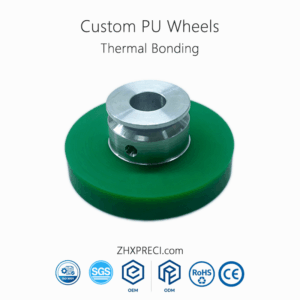
Custom Abrasion Resistant Rubber Wheels with Coating for Mining Equipment
Read more -
Custom Alkali Proof Rubber Wheels with Coating for Industrial Washers
Read more -
Custom Anti Vibration Rubber Wheels with Coating for Precision Instruments
Read more -
Custom Antistatic Rubber Wheels with Coating for Cleanroom Carts
Read more -
Custom Chemical Resistant Rubber Wheels with Coating for Laboratory Carts
Read more -
Custom Durable Rubber Wheels with Coating for Warehouse Operations
Read more -
Custom Easy Rolling Rubber Wheels with Coating for Shopping Carts
Read more -
Custom Extra Heavy Rubber Wheels with Coating for Crane Runways
Read more -
Custom Heat Resistant Rubber Wheels with Coating for Oven Conveyors
Read more -
Custom High Elasticity Rubber Wheels with Coating for Suspension Systems
Read more -
Custom High Traction Rubber Wheels with Coating for Tow Tractors
Read more -
Custom Light Duty Rubber Wheels with Coating for Hand Trucks
Read more -
Custom Low Friction Rubber Wheels with Coating for Conveyor Rollers
Read more -
Custom Low Profile Rubber Wheels with Coating for Low Clearance Carts
Read more -
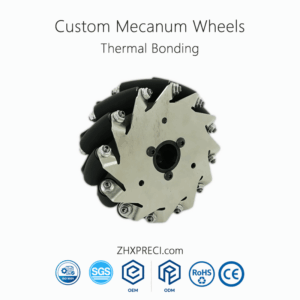
Custom Mecanum Wheel Set 152mm (6 Inch) NM152A: Heavy-Duty PU Rollers, 300kg Load Capacity, Omni-Directional for AGV & Robotics
Read more -
Custom Medium Duty Rubber Wheels with Coating for Platform Carts
Read more
Industrial Rubber Wheels for Heavy-Duty Applications
When engineers and procurement specialists evaluate material handling components, the wheel assembly often determines system reliability. This category focuses on custom heavy duty industrial rubber wheels designed for demanding environments where load capacity, floor protection, and rolling resistance directly impact operational efficiency.
Understanding Custom Heavy Duty Industrial Rubber Wheels
What defines a heavy duty industrial rubber wheel? These components typically feature a solid rubber or elastomeric tread bonded to a rigid core, engineered to support dynamic loads exceeding 1,000 kilograms per wheel. The term "custom" refers to adjustable parameters such as durometer hardness, tread pattern, hub configuration, and bearing type. Industrial applications require consistent performance across temperature fluctuations, chemical exposure, and continuous use cycles. Manufacturers often formulate proprietary rubber compounds to balance abrasion resistance with shock absorption, offering solutions for automated guided vehicles, towline carts, and heavy-duty platform trucks.
Custom Heavy Duty Industrial Rubber Wheels from ZHXPRECI | China OEM/ODM Factory Manufacturer Supplier Custom Elastomer Wheels & Rollers exemplify this engineering approach, providing tailored solutions without compromising structural integrity. The customization process begins with load analysis, followed by material selection based on operating conditions such as floor type, ambient temperature, and exposure to oils or solvents.
How to Select the Right Rubber Compound for Industrial Wheels
Selecting a rubber compound requires assessing several variables. Natural rubber offers excellent resilience and tensile strength but degrades under UV exposure and petroleum-based fluids. Styrene-butadiene rubber provides superior wear resistance at a moderate cost, suitable for indoor warehouse environments. For applications involving grease or intermittent chemical contact, nitrile rubber demonstrates favourable resistance properties. Polyurethane elastomers, while technically not rubber, often compete in high-load scenarios due to exceptional cut resistance and load-bearing capacity.
Engineering teams typically evaluate durometer (Shore A hardness) between 65 and 95, knowing that softer compounds improve floor protection and reduce noise, while harder compounds minimise rolling resistance and extend service life. The final specification depends on floor surface roughness, average travel distance per shift, and environmental temperature range, which commonly spans -20°C to 80°C for standard industrial compounds, with specialised formulations available for extreme conditions.
Load Capacity and Performance Characteristics
Heavy duty rubber wheels accommodate static loads from 500 kg to over 5,000 kg per unit, with dynamic capacities typically 20% lower than static ratings. Tread thickness directly influences impact absorption; thicker treads (12-25 mm) cushion sudden loads from uneven floors or dock levellers. Bearing selection—tapered roller, ball, or plain bore—affects starting torque and maintenance intervals. For powered applications, rolling resistance becomes a critical metric, with coefficients ranging from 0.03 to 0.08 depending on floor condition and compound hardness.
Industry standards such as ISO 22883 provide guidelines for load rating tests, while EN 12527 addresses performance requirements for castors and wheels. These standards help buyers establish consistent evaluation criteria. When comparing options, pay attention to deflection characteristics; excessive deflection increases rolling resistance, while insufficient deflection transmits shock to the equipment structure.
What Are the Common Industrial Applications?
Custom heavy duty industrial rubber wheels appear across multiple sectors. Automotive assembly lines utilise them on part transfer carts and tooling dollies. Food processing facilities benefit from non-marking compounds that resist contamination. Aerospace ground support equipment relies on smooth rolling characteristics to protect sensitive hangar flooring. Warehouse distribution centres employ these wheels on pallet jacks and order-picking trolleys that travel thousands of kilometres over their service life.
Specialised variants include conductive rubber wheels for explosive environments, high-temperature compounds for foundry applications, and low-profile designs for restricted clearance conditions. The adaptability of rubber as a material means that most performance constraints can be addressed through formulation adjustments, provided the operating parameters are clearly defined during the specification phase.
How Does Customisation Work in Practice?
The customisation workflow starts with a technical consultation to define dimensions (diameter, width, bore size), load requirements, and environmental conditions. CAD models are often exchanged to verify mounting compatibility. Prototype samples, usually produced within a development lead time subject to order quantity, current production schedule, and final specification confirmation, undergo performance testing before mass production begins. This iterative approach minimises risks associated with material mismatch or dimensional errors.
Custom Heavy Duty Industrial Rubber Wheels from ZHXPRECI | China OEM/ODM Factory Manufacturer Supplier Custom Elastomer Wheels & Rollers follow this structured methodology, ensuring each batch meets the intended operational profile. The factory employs compression moulding and injection moulding techniques, with quality checks at each stage including hardness verification, tensile strength tests, and dimensional inspections.
Longevity and Maintenance Considerations
Service life depends on usage intensity, floor conditions, and maintenance practices. Regular inspection for tread wear, surface cracking, and bearing play helps predict replacement intervals. Rotating wheels periodically evens out wear patterns, especially in applications with directional travel. Cleaning rubber wheels with mild soap and water removes abrasive debris that accelerates tread degradation. Avoid solvents that may degrade the rubber compound unless the material formulation explicitly resists such exposure.
Under normal operating conditions, industrial rubber wheels often last between two and five years, with heavy-duty variants enduring more than 10,000 operational hours. Premature failures typically result from overloading, chemical attack, or operating outside the specified temperature range. Maintaining accurate load records and environmental logs aids in diagnosing root causes and adjusting specifications for subsequent orders.
What About Floor Protection and Noise Reduction?
Rubber's inherent elasticity provides two distinct advantages: floor protection and noise dampening. Unlike steel or polyurethane wheels, rubber treads conform slightly to floor irregularities, reducing point loading that damages epoxy coatings or concrete surfaces. This characteristic also lowers rolling noise by 3-5 decibels compared to harder materials, contributing to improved workplace acoustics. For facilities with sensitive flooring—such as painted surfaces or polished concrete—softer durometer compounds offer enhanced protection at the expense of slightly higher rolling resistance.
Regulatory and Compliance Framework
Industrial wheels may need to comply with various regulations depending on the industry. The RoHS directive restricts certain hazardous substances for products sold in Europe, while REACH addresses chemical registration. For food-grade applications, FDA-compliant materials are mandatory. Manufacturers should provide documentation confirming material composition and test reports upon request. Responsible suppliers maintain transparent records of raw material sourcing and production traceability.
Frequently Asked Questions
What is the typical hardness range for heavy duty rubber wheels?
Industrial wheels commonly range from 65 Shore A to 95 Shore A. Softer compounds (65-75A) suit applications prioritising floor protection and shock absorption, while harder compounds (85-95A) favour low rolling resistance and high load capacity.
How to determine the correct wheel diameter?
Diameter affects load capacity and starting torque. Larger diameters reduce rolling resistance and bridge floor gaps more effectively. As a general guideline, select the largest diameter that fits the mounting height constraints, balancing manoeuvrability with performance requirements.
Can rubber wheels be used outdoors?
Yes, provided the compound includes UV stabilisers and antioxidants. Standard natural rubber compounds degrade rapidly in sunlight; however, EPDM or specially formulated blends offer adequate weathering resistance for outdoor applications.
What is the effect of temperature on performance?
Most industrial rubber compounds operate between -20°C and 80°C. Below this range, rubber becomes brittle and loses elasticity; above it, softening increases rolling resistance and accelerates wear. Special high-temperature formulations extend the upper limit to 120°C.
How to specify bearings for heavy loads?
For dynamic loads exceeding 1,500 kg, tapered roller bearings provide superior radial and thrust load handling. Ball bearings suit moderate loads with higher speed requirements. Plain bore wheels offer cost-effective solutions for low-speed, manual applications.
Are there non-marking options available?
Yes, manufacturers can formulate compounds that do not leave black marks on light-coloured floors. These typically use light-coloured fillers and specific curing systems to prevent surface transfer.
What is the difference between pneumatic and solid rubber wheels?
Pneumatic wheels offer superior shock absorption but require pressure maintenance and are susceptible to punctures. Solid rubber wheels eliminate these concerns, providing consistent performance over their service life without maintenance related to air pressure.
How to handle chemical exposure?
Chemical compatibility depends on the specific agents. Nitrile rubber resists oils and greases, while EPDM performs well against acids and alkalis. Always consult the supplier's chemical resistance chart when selecting compounds for chemically aggressive environments.
What documentation should accompany a shipment?
Typical documentation includes material certificates, dimensional inspection reports, and, where applicable, RoHS/REACH declarations. Many buyers also request test reports for load capacity and hardness verification.
Can wheels be retrofitted to existing equipment?
In most cases, yes, provided the mounting dimensions match. Custom adapters can be manufactured for non-standard mounting configurations. It is advisable to measure the existing mounting hole pattern and hub length accurately before placing an order.
Quality Control and Production Transparency
Reputable manufacturers implement quality management systems aligned with ISO 9001 standards. In-process inspections cover raw material verification, compound mixing consistency, moulding parameters, and final dimensional checks. Random sampling during production runs validates that each batch conforms to the agreed specification. Some facilities also conduct dynamic load testing to simulate real-world conditions, providing an additional layer of assurance before shipment.
Environmental Considerations
The rubber industry continues to develop more sustainable practices, including the use of recycled rubber content and bio-based processing oils. While heavy duty wheels demand high-performance compounds, some manufacturers offer formulations incorporating post-industrial recycled materials without compromising mechanical properties. Buyers interested in environmental impact reduction should discuss these options during the specification phase, as availability varies by compound type and performance requirements.
Custom Heavy Duty Industrial Rubber Wheels from ZHXPRECI | China OEM/ODM Factory Manufacturer Supplier Custom Elastomer Wheels & Rollers integrate these considerations into their production planning, offering transparent material declarations and supporting eco-friendly initiatives where feasible.
Cost Factors and Value Assessment
Total cost of ownership extends beyond the initial purchase price. Factors such as replacement frequency, downtime during changeovers, and floor maintenance costs contribute to the overall economic evaluation. Higher-quality rubber compounds may have a higher upfront cost but often yield lower cost per operational hour due to extended service intervals. Evaluating samples from multiple suppliers under identical test conditions provides empirical data for informed decision-making.
Final Technical Recommendations
For optimal performance, document the following parameters before contacting a supplier: operating load per wheel, travel speed, floor type and condition, environmental temperature range, exposure to chemicals or moisture, and any specific regulatory requirements. This information enables the manufacturer to propose a tailored compound and design configuration. Requesting samples for field testing, where feasible, mitigates risks associated with unforeseen application variables.
Remember that successful customisation relies on clear communication of performance expectations and realistic tolerances. Engaging with technical representatives early in the design phase prevents costly modifications later. With a well-defined specification, custom heavy duty industrial rubber wheels become a predictable, reliable component in material handling systems.