
Custom With Brake Industrial Rubber Wheels
Custom rubber wheels with integrated brakes for precise industrial positioning.
- 50–500 kg load
- 70–95 Shore A hardness
- 50–300 mm diameter
- -30–+80°C temp
- ISO/REACH/RoHS cert
Showing 1–16 of 46 results
-
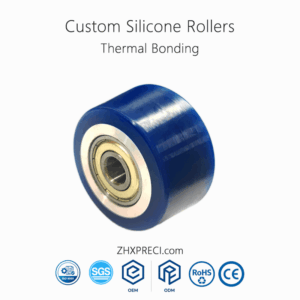
Blue Customized Silicone Rubber Coated Roller & High Quality Drive Guide Roller
Read more -
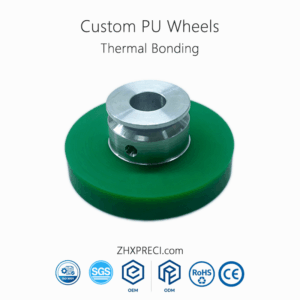
Custom Abrasion Resistant Rubber Wheels with Coating for Mining Equipment
Read more -
Custom Alkali Proof Rubber Wheels with Coating for Industrial Washers
Read more -
Custom Anti Vibration Rubber Wheels with Coating for Precision Instruments
Read more -
Custom Antistatic Rubber Wheels with Coating for Cleanroom Carts
Read more -
Custom ATEX Compliant Silicone Wheels Hazardous Area
Read more -
Custom Bracket Mount Silicone Wheels Easy Installation
Read more -
Custom Chemical Resistant Rubber Wheels with Coating for Laboratory Carts
Read more -
Custom Compact Size Silicone Wheels Space Saving
Read more -
Custom Corrosion Proof Rubber Wheels with Coating for Chemical Plants
Read more -
Custom Durable Rubber Wheels with Coating for Warehouse Operations
Read more -
Custom Easy Rolling Rubber Wheels with Coating for Shopping Carts
Read more -
Custom Extra Heavy Rubber Wheels with Coating for Crane Runways
Read more -
Custom Heat Resistant Rubber Wheels with Coating for Oven Conveyors
Read more -
Custom High Elasticity Rubber Wheels with Coating for Suspension Systems
Read more -
Custom High Traction Rubber Wheels with Coating for Tow Tractors
Read more
What Are Custom With Brake Industrial Rubber Wheels?
Custom with brake industrial rubber wheels are engineered mobility solutions designed for applications that demand controlled movement, precise positioning, and reliable load support. These components combine a resilient rubber tread, which offers floor protection and noise dampening, with an integrated braking system that enables secure stationary positioning when required. The “custom” aspect permits specification adjustments—including diameter, tread width, hub material, bearing type, and brake configuration—to meet distinct operational needs.
These wheels are commonly deployed in manufacturing environments, warehouse logistics, automotive assembly lines, hospital equipment, and material handling systems. The rubber compound can be formulated to resist oils, chemicals, heat, or abrasion, depending on the intended application environment. The brake mechanism, typically activated by a foot pedal or hand lever, locks wheel rotation and, in some configurations, swivel action, providing stability during loading, unloading, or stationary operations. Custom with brake industrial rubber wheels from ZHXPRECI | China OEM/ODM Factory Manufacturer Supplier Custom Elastomer Wheels & Rollers represent a category that bridges standard catalog components and fully tailored engineering solutions.
When evaluating these wheels, procurement professionals and engineers typically consider parameters such as load capacity per wheel, rolling resistance, floor surface compatibility, environmental exposure, and expected service life. The integration of a braking system adds an operational safety layer, making these wheels suitable for equipment that must remain stationary for extended periods or during specific process steps.
Key Characteristics of Custom With Brake Industrial Rubber Wheels
Custom with brake industrial rubber wheels exhibit several defining features that distinguish them from general-purpose casters. The rubber tread provides cushioning and shock absorption, reducing vibration transmitted to the equipment and protecting floor surfaces from wear. The brake mechanism is available in multiple configurations—including total lock (locking both wheel rotation and swivel), wheel lock (locking rotation only), and side brake (engaging from the side)—offering flexibility in how the wheel is secured.
The customization dimension encompasses material selection, dimensional specifications, and functional features. Rubber compounds can be engineered to specific hardness values, generally ranging from 70 to 95 Shore A. Harder compounds offer greater load capacity and abrasion resistance, while softer compounds provide enhanced floor protection and noise reduction. Wheel diameters commonly span from 50 mm to 300 mm or more, with load capacities ranging from approximately 50 kg to over 500 kg per wheel, depending on design and material choices.
The industrial classification indicates these wheels are built for durability in demanding environments. Components such as bearings—precision ball bearings, roller bearings, or plain bearings—and hubs—available in nylon, cast iron, aluminum, or steel—are selected based on operational requirements. The braking system is designed to withstand repeated engagement cycles, with performance typically validated through thousands of test cycles under load.
How Do Brake Mechanisms Work on Industrial Rubber Wheels?
The brake mechanism on industrial rubber wheels operates through a mechanical engagement system that prevents wheel rotation and/or swivel movement. In a total lock configuration, the brake pedal or lever activates a cam mechanism that forces a brake shoe or pin against the wheel tread or hub, while simultaneously locking the swivel bearing. This dual-action locking provides maximum stability for equipment that must remain completely stationary.
Wheel lock configurations focus solely on preventing rotation, allowing the wheel to swivel for directional changes even when braked. This can be advantageous in applications where equipment needs to be repositioned without fully releasing the brake. Side brake designs engage a metal plate against the side of the wheel tread, offering a simpler mechanism that can be actuated with less force.
Brake components are typically manufactured from steel or cast iron for durability. The brake system should provide consistent performance across the specified temperature range and in the presence of dust, debris, or moisture that may be present in industrial environments. Maintenance of the brake mechanism involves periodic inspection of wear surfaces and lubrication of pivot points, with frequency depending on usage intensity and environmental conditions.
Materials Used in Custom With Brake Industrial Rubber Wheels
Material selection significantly influences performance, durability, and suitability for specific applications. The rubber tread can be formulated from natural rubber, synthetic rubber (such as SBR, EPDM, nitrile, or neoprene), or blends thereof. Natural rubber offers excellent resilience and low rolling resistance but may degrade in the presence of oils or ozone. Synthetic compounds provide enhanced resistance to specific environmental factors—nitrile for oil resistance, EPDM for weather and ozone resistance, neoprene for a balance of oil and heat resistance.
The wheel core or hub can be manufactured from various materials including nylon (lightweight, corrosion-resistant, and cost-effective), cast iron (high load capacity and durability), aluminum (lightweight with good strength-to-weight ratio), or steel (maximum strength and load capacity). The choice of hub material affects the wheel's overall weight, impact resistance, and compatibility with different mounting configurations.
Bearings are critical for smooth operation and longevity. Precision ball bearings are common for applications requiring low rolling resistance and higher speeds, while roller bearings may be specified for heavier loads. Plain bearings (bushings) offer a simpler, more cost-effective solution for lower-speed, intermittent-use applications. The bearing type is selected based on the anticipated duty cycle, load magnitude, and environmental conditions.
What Is the Typical Temperature Range for Industrial Rubber Wheels?
The operational temperature range for industrial rubber wheels depends on the specific rubber compound formulation. Standard rubber compounds typically function effectively between -20°C and +70°C (-4°F to +158°F). Specialized compounds can extend this range: heat-resistant formulations may operate up to +120°C (+248°F), while cold-resistant compounds can function down to -40°C (-40°F). These temperature thresholds are based on the glass transition temperature of the polymer and the stability of the vulcanization network.
When operating outside the recommended temperature range, rubber properties can change significantly. At low temperatures, rubber becomes stiffer and less resilient, increasing rolling resistance and reducing shock absorption. At high temperatures, rubber may soften, leading to accelerated wear, reduced load capacity, and potential deformation under load. For applications involving extreme temperatures, consulting with the manufacturer to select an appropriate compound is advisable, or considering alternative tread materials such as polyurethane or thermoplastics.
Brake mechanism components must also function within the specified temperature range, with thermal expansion and contraction effects considered in the design. Materials selected for brake parts maintain their mechanical properties across the operational temperature envelope to ensure consistent braking performance.
How to Choose the Right Custom With Brake Industrial Rubber Wheels
Selecting the appropriate custom with brake industrial rubber wheels requires a systematic evaluation of application requirements. The process begins with defining operational parameters: total load to be supported (including dynamic loads during movement), floor surface type and condition, required rolling resistance, environmental exposure (temperature, chemicals, moisture), and desired service life.
Load capacity is a primary consideration. The total equipment weight is divided by the number of wheels, with a safety factor applied—typically 1.5 to 2.0 times the calculated load per wheel—to account for uneven load distribution and dynamic loading during movement. The wheel diameter should be sufficient to provide adequate clearance over floor irregularities, with larger diameters generally offering lower rolling resistance and better obstacle clearance.
Environmental factors significantly influence material selection. For environments with oil or grease exposure, nitrile or neoprene compounds are preferred over natural rubber. For outdoor applications subject to UV and ozone, EPDM offers superior weather resistance. Chemical exposure requires evaluation of the specific chemicals and concentrations to select a compatible rubber formulation.
The brake configuration should match operational requirements. Total lock brakes are suitable for equipment that must remain completely stationary during loading or unloading. Wheel lock brakes may be adequate for equipment that needs directional stability while still allowing steering. The actuation method—foot pedal, hand lever, or remote actuation—should be convenient for the operator and accessible in the equipment's configuration.
Applications of Custom With Brake Industrial Rubber Wheels
Custom with brake industrial rubber wheels find application across a broad spectrum of industries and equipment types. In manufacturing, they are used on assembly line carts, workstation trolleys, and mobile storage racks where controlled positioning is essential. The braking capability allows workers to secure equipment at specific workstations, improving safety and efficiency.
In healthcare settings, medical carts, hospital beds, and diagnostic equipment rely on these wheels for mobility and secure positioning. The rubber tread provides quiet operation and floor protection, while the brake ensures stability during patient care procedures. Customization options allow for antimicrobial additives in the rubber compound or specialty brake configurations for specific medical equipment.
Warehouse and logistics applications include platform trucks, order picking carts, and mobile shelving systems. The industrial-grade construction withstands the rigors of daily use in distribution centers. Brake mechanisms enable safe loading and unloading operations, preventing unwanted movement during material handling activities.
Other applications include aviation ground support equipment, automotive service carts, food processing equipment (using food-grade rubber compounds), and stage equipment for entertainment venues. The versatility of these wheels stems from the ability to customize each parameter to match the specific demands of the application.
How to Maintain Custom With Brake Industrial Rubber Wheels
Maintenance focuses on regular inspection and timely intervention to ensure continued safe operation. Inspection should include checking the rubber tread for wear, cuts, or embedded debris that could compromise performance. Tread depth should be monitored, with replacement recommended when wear reaches a predetermined limit to maintain load capacity and floor protection.
The brake mechanism requires periodic inspection of wear surfaces, pivot points, and engagement components. The brake shoe or pin should show even wear patterns; uneven wear may indicate misalignment or improper adjustment. Moving parts should be lubricated according to the manufacturer's recommendations, using lubricants compatible with the rubber compound and operating environment.
Bearings should be checked for smooth rotation and any signs of contamination or wear. Sealed bearings may require less frequent attention, while open bearings benefit from periodic cleaning and relubrication. The mounting hardware should be inspected for tightness, as loose bolts can lead to accelerated wear and potential failure.
The frequency of maintenance activities depends on the intensity of use and the operating environment. Equipment used in high-duty-cycle applications or harsh environments requires more frequent inspection intervals. Documentation of maintenance activities assists in identifying trends and predicting replacement timing, supporting proactive maintenance strategies.
Customization Options Available
Customization of industrial rubber wheels encompasses multiple dimensions, allowing precise matching to application requirements. Dimensionally, wheels can be manufactured in a wide range of diameters, tread widths, and hub sizes. The overall height, mounting hole patterns, and stem dimensions can be tailored to fit specific equipment configurations.
Rubber compound selection offers the most significant customization potential. Hardness can be specified from 70 to 95 Shore A, with corresponding adjustments to load capacity and rolling resistance. Color options may be available for aesthetic or coding purposes, though most industrial applications prioritize functional properties. Additives can be incorporated to enhance specific characteristics—UV stabilizers for outdoor use, antistatic agents for electronics manufacturing, or antimicrobial additives for healthcare applications.
Brake configurations can be customized in terms of actuation method, locking type, and engagement force. Spring-assisted brakes reduce operator effort, while positive-locking mechanisms provide secure engagement. The brake pedal or lever design can be adapted for ergonomic considerations or to accommodate space constraints in the equipment design.
Custom with brake industrial rubber wheels from ZHXPRECI | China OEM/ODM Factory Manufacturer Supplier Custom Elastomer Wheels & Rollers offer the flexibility to specify these parameters according to project requirements. The ability to tailor each aspect of the wheel design ensures that the final product meets the operational, safety, and longevity expectations of the application.
What About Lead Time for Custom With Brake Industrial Rubber Wheels?
The lead time for custom with brake industrial rubber wheels varies considerably based on order quantity, current production schedule, and final specification confirmation. When initiating a custom order, the specification review process establishes the technical parameters and confirms material availability. This phase may involve material testing or sample production to validate performance characteristics.
For standard customizations within existing production capabilities, the manufacturing timeline is typically shorter, as tooling and processes are already established. More complex customizations requiring new tooling, specialized materials, or extensive testing may extend the production schedule. The final confirmation of specifications—including dimensional drawings, material certifications, and performance requirements—is essential before production begins.
To facilitate planning, it is recommended to communicate target delivery timelines early in the inquiry process. The production schedule is subject to the prevailing order backlog and the availability of specialized materials. Collaboration with the manufacturer during the specification phase can identify potential bottlenecks and optimize the production timeline. Custom with brake industrial rubber wheels from ZHXPRECI | China OEM/ODM Factory Manufacturer Supplier Custom Elastomer Wheels & Rollers are produced with attention to these scheduling considerations, aiming to balance quality and timely delivery within the constraints of the production environment.