
Custom Heavy Load Industrial Rubber Wheels
Custom Heavy Load Rubber Wheels
ZHXPRECI custom heavy wheels deliver durability and traction for demanding tasks.
- 500‑5000kg load
- 60‑95A Shore
- 100‑400mm dia
- -20‑+120°C temp
- ISO/DIN/REACH cert
Showing 1–16 of 20 results
-
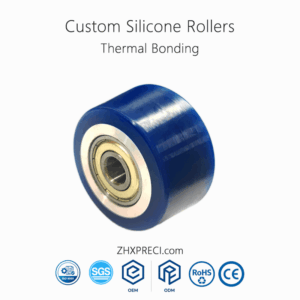
Blue Customized Silicone Rubber Coated Roller & High Quality Drive Guide Roller
Read more -
Custom ATEX Compliant Silicone Wheels Hazardous Area
Read more -
Custom Bracket Mount Silicone Wheels Easy Installation
Read more -
Custom Compact Size Silicone Wheels Space Saving
Read more -
Custom Hollow Bore PU Wheels For Direct Motor Mount
Read more -
Custom Hollow Bore PU Wheels For Direct Motor Mount
Read more -
Custom Low Temperature Silicone Wheels Freezer Trolley
Read more -
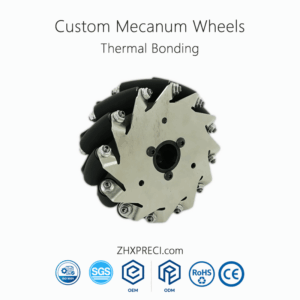
Custom Mecanum Wheel Set 152mm (6 Inch) NM152A: Heavy-Duty PU Rollers, 300kg Load Capacity, Omni-Directional for AGV & Robotics
Read more -
Custom NSF Certified Silicone Wheels Food Industry
Read more -
Custom Oil Resistant Silicone Wheels Industrial Cart
Read more -
Custom Ozone Resistant Silicone Wheels Outdoor Caster
Read more -
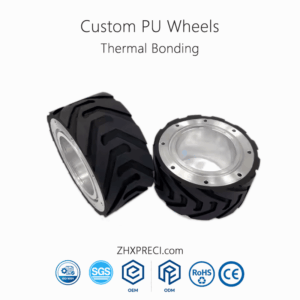
Custom PU Wheel Heavy Duty for Walking Robot & Trolley – Wear-Resistant, Non-Marking, Replacement for Rubber Rollers
Read more -
Custom Quiet Rolling Silicone Wheels Hospital Bed
Read more -
Custom Reinforced Silicone Wheels High Capacity
Read more -
Custom Reversing Duty Silicone Wheels Conveyor System
Read more -
Custom Silent Operation Silicone Wheels Medical Trolley
Read more
Overview of Custom Heavy Load Industrial Rubber Wheels
When selecting mobility solutions for extreme-duty applications, engineering teams and procurement specialists frequently evaluate custom heavy load industrial rubber wheels as a primary option. These components are designed to support substantial static and dynamic loads while offering controlled floor protection, reduced rolling resistance, and reliable performance across diverse operating environments. As a product category, custom heavy load industrial rubber wheels encompass a wide range of compounds, tread patterns, hub fittings, and bearing configurations, each tailored to specific material handling equipment, automotive assembly lines, aerospace ground support, and heavy machinery platforms.
Custom Heavy Load Industrial Rubber Wheels from ZHXPRECI | China OEM/ODM Factory Manufacturer Supplier Custom Elastomer Wheels & Rollers represent a significant portion of this category, with manufacturing processes that adhere to internationally recognized quality management systems. The engineering rationale behind these wheels involves careful selection of elastomer grades, reinforcement fabrics, and vulcanization cycles to achieve targeted hardness, tensile strength, and abrasion resistance. For B2B buyers, understanding the interplay between wheel diameter, tread width, hub material, and load capacity is essential for making informed sourcing decisions.
Core Technical Characteristics and Material Science
Custom heavy load industrial rubber wheels are typically manufactured using natural rubber (NR), styrene-butadiene rubber (SBR), or polyurethane-based elastomers, depending on the required balance between load-bearing capacity, resilience, and environmental durability. The load capacity of a single wheel can range from 500 kg to over 5,000 kg, with dual-wheel assemblies offering proportional increases. Hardness, measured on the Shore A scale, commonly falls between 60 and 95, with higher values indicating greater resistance to indentation but reduced shock absorption.
Key performance parameters that engineers assess include:
- Static load capacity – the maximum weight a wheel can support when stationary, typically 30–50 % higher than dynamic ratings.
- Dynamic load capacity – the recommended working load under continuous motion, influenced by speed, floor conditions, and duty cycle.
- Tread compound – choices include oil-resistant, heat-resistant, anti-static, and non-marking variants for specialised environments.
- Hub materials – pressed steel, ductile iron, aluminium, or nylon, selected based on corrosion resistance and torque transmission requirements.
- Bearing types – plain bore, roller bearings, or precision ball bearings, affecting rolling efficiency and maintenance intervals.
The manufacturing process for custom heavy load industrial rubber wheels involves mixing raw elastomers with carbon black, sulphur, accelerators, and plasticizers, followed by compression or injection moulding. Post-cure finishing includes trimming, balancing, and concentricity checks to ensure minimal vibration at operational speeds up to 4 m/s (depending on diameter).
Application Domains and Operational Scenarios
These wheels are extensively deployed in sectors where floor conditions are less than ideal and loads exceed typical warehouse thresholds. Common applications include:
- Steel coil transport trailers and coil buggies
- Automotive body-in-white (BIW) skid systems
- Aerospace engine stands and maintenance dollies
- Container handling equipment in ports and rail yards
- Mining support vehicles and heavy-duty transfer cars
- Construction machinery undercarriages and levelling jacks
In each scenario, the wheel's design must accommodate not only vertical loads but also lateral forces, impact shocks, and exposure to hydraulic fluids, diesel, or de-icing chemicals. Custom Heavy Load Industrial Rubber Wheels from ZHXPRECI | China OEM/ODM Factory Manufacturer Supplier Custom Elastomer Wheels & Rollers are often specified with additional features such as tapered roller bearings for thrust loads, or polyurethane treads for enhanced cut resistance on sharp debris.
Frequently Asked Questions (FAQ) – Engineering & Procurement
What is the typical load range for custom heavy load industrial rubber wheels?
Load capacities vary significantly with wheel diameter, tread width, and compound formulation. Standard heavy-duty models generally support dynamic loads from 1,000 kg to 4,500 kg per wheel, while ultra-heavy variants can reach 8,000 kg or more under specific configurations. Static load ratings are typically higher, but engineers should always base their selection on the peak dynamic load encountered during operation, factoring in acceleration, turning angles, and floor unevenness.
How do I select the correct hardness (Shore A) for my application?
Hardness selection depends on the surface type and load profile. Softer compounds (60–70 Shore A) provide greater floor protection and shock absorption, suitable for polished concrete or epoxy floors. Medium-hard compounds (75–85 Shore A) offer a balanced trade-off between rolling resistance and cushioning, widely used in general manufacturing. Harder compounds (90–95 Shore A) exhibit lower rolling friction and higher wear resistance, preferred for rough outdoor surfaces or high-temperature areas. It is advisable to test sample wheels under actual operating conditions before finalising specifications.
What materials are available for custom heavy load industrial rubber wheels?
Manufacturers offer a variety of elastomer blends, including natural rubber (NR) for high resilience, styrene-butadiene rubber (SBR) for cost-effective abrasion resistance, and polyurethane (PU) for superior oil, ozone, and cut resistance. Additionally, reinforced rubber compounds incorporating aramid or nylon fibres improve tear strength and reduce chunking under severe impact. For specialised environments, conductive or anti-static compounds are available to dissipate electrostatic charges.
How does temperature affect the performance of these wheels?
Rubber properties are sensitive to temperature extremes. Most industrial rubber compounds maintain operational integrity between -20 °C and +70 °C. Beyond this range, material hardening (below -20 °C) may increase rolling resistance and risk chipping, while elevated temperatures (above +70 °C) accelerate ageing and reduce load-bearing capacity. For high-temperature applications, heat-resistant compounds containing EPDM or silicone-modified rubbers can extend the usable range to +120 °C, albeit with trade-offs in load capacity.
Can I customise the hub fitting and bolt pattern?
Yes, hub configurations are fully customisable. Standard options include plain bore, keyway, splined, or flanged hubs, with bolt-hole patterns matching common industry standards or bespoke drawings. Most OEM/ODM suppliers, including those producing Custom Heavy Load Industrial Rubber Wheels from ZHXPRECI | China OEM/ODM Factory Manufacturer Supplier Custom Elastomer Wheels & Rollers, offer CNC machining of hubs to accommodate specific axle diameters, key sizes, and mounting hole positions. This flexibility enables retrofitting without modifying existing equipment structures.
What are the maintenance requirements for heavy-duty rubber wheels?
Routine inspections should focus on tread wear patterns, sidewall cracking, hub tightness, and bearing lubrication. Monitoring for flat spots, particularly after prolonged stationary periods, is recommended. In environments with oil or chemical exposure, periodic cleaning with mild detergents can extend service life. Bearing maintenance intervals depend on the type used – sealed-for-life bearings require minimal attention, while tapered roller bearings benefit from regular greasing according to the manufacturer's schedule.
How do I calculate the required wheel diameter for a given load and floor condition?
Wheel diameter influences rolling resistance and the ability to traverse obstacles. Larger diameters reduce rolling friction and ease passage over floor joints, debris, or ramps. A practical starting point is to ensure the wheel diameter is at least three times the height of the largest expected floor irregularity. For load calculations, the total equipment weight plus maximum payload divided by the number of wheels (taking into account load distribution factors) gives the per-wheel load, which must fall within the manufacturer's dynamic rating for the chosen diameter and compound.
What is the typical lead time for custom orders?
Lead time for custom heavy load industrial rubber wheels is subject to order quantity, current production schedule, and final specification confirmation. For low-volume prototypes or samples, the timeframe is generally shorter, whereas large-batch orders with complex compound formulations or non-standard hub machining may require extended scheduling. It is recommended to discuss your required delivery window with the supplier early in the procurement process to align expectations.
Are there certifications or test standards applicable to these wheels?
Reputable manufacturers often test their products against ISO 22883 (industrial castors and wheels – requirements), DIN EN 12530, and ASTM D5963 (abrasion resistance). Depending on the industry, additional certifications such as ATEX for explosive atmospheres or FDA compliance for food-contact applications may be available. Buyers should request relevant test reports and quality certificates as part of the technical documentation package.
Can these wheels be used on inclined or sloped surfaces?
Yes, but with careful consideration of the braking mechanism and swivel lock features. On slopes, the effective load on the wheel increases due to the gradient component, and the rolling resistance changes. Typically, a braking system – either total lock or directional lock – is recommended for safety. Additionally, the tread compound should provide adequate grip; smooth treads may be less suitable than patterned treads for inclines exceeding 5 degrees.
How does swivel vs. rigid wheel arrangement affect manoeuvrability?
Swivel castors offer 360° rotation, enhancing manoeuvrability in tight spaces, but they may reduce directional stability at higher speeds. Rigid wheels provide straight-line tracking and are often paired with swivel castors on the steering axle. For heavy loads, a combination of two rigid and two swivel wheels is common, with the swivel wheels typically fitted with locking mechanisms to prevent unintended turning during long traverses.
What surface finishes are available for steel hubs?
Hub finishes include zinc plating, powder coating, epoxy paint, and electroless nickel plating, each offering different levels of corrosion resistance and aesthetic appearance. In humid or outdoor environments, zinc plating with a chromate conversion coating is a cost-effective choice, while powder coating provides enhanced impact resistance and colour options for equipment branding.
Engineering Design Considerations for Optimised Performance
Beyond the basic specifications, engineers must evaluate dynamic factors such as acceleration torque, braking forces, and side thrust during turning. The wheel's moment of inertia, determined by mass distribution, affects acceleration and energy consumption. For automated guided vehicles (AGVs) or towline systems, low rolling resistance compounds and precision bearings are critical to maintain positional accuracy and reduce battery drain. Furthermore, the wheel's tread profile – flat, crowned, or grooved – influences footprint pressure distribution and self-cleaning properties in muddy or dusty environments.
Custom Heavy Load Industrial Rubber Wheels from ZHXPRECI | China OEM/ODM Factory Manufacturer Supplier Custom Elastomer Wheels & Rollers are engineered with these multifaceted requirements in mind, utilising finite element analysis (FEA) to optimise tread thickness and hub reinforcement. This simulation-driven approach helps predict failure modes under overload conditions and validates the design before tooling commences.
Comparative Material Selection Guide
A structured comparison of common elastomer options assists in narrowing down the appropriate compound:
- Natural Rubber (NR): High tensile strength, excellent resilience, good abrasion resistance. Limitations include poor oil and ozone resistance.
- Styrene-Butadiene Rubber (SBR): Superior abrasion resistance compared to NR, good ageing properties, moderate cost. Less resilient than NR.
- Polyurethane (PU): Exceptional cut, tear, and oil resistance, high load capacity, low rolling resistance. Higher cost and limited to moderate temperatures.
- EPDM (Ethylene Propylene Diene Monomer): Excellent heat, ozone, and weather resistance. Suitable for outdoor applications but lower load capacity per volume.
- Nitrile Rubber (NBR): Outstanding oil and fuel resistance, good mechanical strength. Preferred in hydraulic fluid environments.
Each material family can be further modified with fillers, plasticisers, and process aids to fine-tune hardness, resilience, and dynamic properties. It is advisable to consult with the supplier's technical team to correlate material choices with your specific operational profile.
Quality Assurance and Inspection Parameters
Quality control for custom heavy load industrial rubber wheels typically encompasses dimensional checks, hardness verification, tensile and elongation tests, abrasion loss measurements (DIN or NBS methods), and dynamic fatigue testing. For bonded wheels, the adhesive strength between rubber and hub is assessed via push-out or peel tests. Visual inspection for surface defects, porosity, and flash removal ensures that each wheel meets the agreed-upon cosmetic and functional standards. Reputable manufacturers maintain traceability from raw material batches to finished goods, enabling rapid corrective action if anomalies arise.
Environmental and Safety Considerations
Industrial rubber wheels should be evaluated for their environmental footprint, including the use of non-toxic processing oils, compliance with REACH or RoHS directives, and end-of-life recyclability. For safety, anti-static or conductive wheels are mandatory in explosive atmospheres, while non-marking compounds protect sensitive flooring in food processing or cleanroom facilities. Braking systems, where integrated, must meet regional machinery directives regarding stopping distance and holding torque.
Procurement Strategy and Supplier Collaboration
For B2B buyers, developing a clear specification document that outlines load requirements, environmental conditions, dimensional constraints, and quality expectations is the first step toward a successful sourcing outcome. Engaging with suppliers that offer in-house mould design, material development, and testing laboratories can significantly reduce iteration cycles. Custom Heavy Load Industrial Rubber Wheels from ZHXPRECI | China OEM/ODM Factory Manufacturer Supplier Custom Elastomer Wheels & Rollers provide a comprehensive service envelope, from initial compound selection through to volume production, with technical support available for design optimisation.
When requesting quotations, it is prudent to provide detailed drawings or 3D models of the wheel assembly space, including axle clearance, bolt circle dimensions, and interference zones. This minimises the risk of fitment issues and enables the supplier to offer value-engineering suggestions, such as lightweight hub designs or alternative bearing arrangements that reduce total cost of ownership.
Common Pitfalls and How to Avoid Them
One frequent oversight is underestimating the effect of floor surface texture on wheel wear. Smooth, polished floors allow harder compounds with longer wear life, while rough or abrasive surfaces necessitate resilient, softer compounds to absorb shocks, albeit with higher rolling resistance. Another pitfall is neglecting to account for side loads during tight turning, which can prematurely fail bearings or hub attachments. Employing a comprehensive duty cycle analysis, including turns per hour and average travel distance, helps in selecting the appropriate bearing type and lubrication schedule.
Additionally, temperature fluctuations in non-conditioned environments can alter the wheel's diameter and hardness, affecting clearances and rolling behaviour. Specifying materials with low thermal expansion coefficients and stable dynamic properties over the expected temperature range mitigates these risks.
Future Trends in Heavy-Duty Rubber Wheel Technology
Advances in material science are introducing thermoplastic elastomers (TPEs) and bio-based rubber compounds that offer improved sustainability without compromising load capacity. Sensor-embedded wheels with integrated strain gauges and temperature monitors are emerging for predictive maintenance applications, allowing real-time monitoring of wheel condition. These innovations align with the broader Industry 4.0 movement, where operational data drives decision-making and reduces unplanned downtime.
For buyers evaluating long-term partnerships, suppliers that invest in research and development, and who maintain flexible production lines for both standard and custom orders, are better positioned to adapt to evolving requirements.
Conclusion and Technical Summary
Custom heavy load industrial rubber wheels are precision-engineered components that require a systematic approach to specification, testing, and integration. By understanding the material options, load calculations, environmental influences, and maintenance needs, engineers and procurement professionals can make choices that enhance equipment reliability and operational efficiency. Custom Heavy Load Industrial Rubber Wheels from ZHXPRECI | China OEM/ODM Factory Manufacturer Supplier Custom Elastomer Wheels & Rollers represent a capable solution within this category, supported by manufacturing expertise and a commitment to technical collaboration.
It is strongly recommended to engage with the supplier's engineering team early in the project to define clear acceptance criteria, agree on test protocols, and establish a communication plan for progress updates. This collaborative approach, combined with a thorough review of the data presented in this overview, will form a solid foundation for a successful procurement and deployment of heavy-duty mobility solutions.