
Custom Low Noise Industrial Rubber Wheels
Custom Low Noise Wheels
Engineered for quiet AGVs & material handling, these custom wheels optimize load and floor life.
- 30-500kg load
- 60-95A Shore
- 60-300mm dia
- -30-+80°C temp
- ISO/REACH cert
Showing 1–16 of 28 results
-
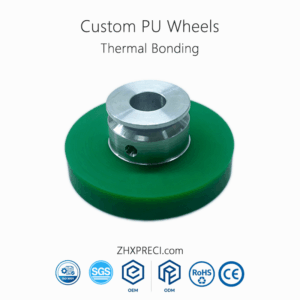
Custom Abrasion Resistant Rubber Wheels with Coating for Mining Equipment
Read more -
Custom Alkali Proof Rubber Wheels with Coating for Industrial Washers
Read more -
Custom Anti Vibration Rubber Wheels with Coating for Precision Instruments
Read more -
Custom Antistatic Rubber Wheels with Coating for Cleanroom Carts
Read more -
Custom Chemical Resistant Rubber Wheels with Coating for Laboratory Carts
Read more -
Custom Corrosion Proof Rubber Wheels with Coating for Chemical Plants
Read more -
Custom Durable Rubber Wheels with Coating for Warehouse Operations
Read more -
Custom Easy Rolling Rubber Wheels with Coating for Shopping Carts
Read more -
Custom Extra Heavy Rubber Wheels with Coating for Crane Runways
Read more -
Custom Heat Resistant Rubber Wheels with Coating for Oven Conveyors
Read more -
Custom High Elasticity Rubber Wheels with Coating for Suspension Systems
Read more -
Custom High Traction Rubber Wheels with Coating for Tow Tractors
Read more -
Custom Light Duty Rubber Wheels with Coating for Hand Trucks
Read more -
Custom Low Friction Rubber Wheels with Coating for Conveyor Rollers
Read more -
Custom Low Profile Rubber Wheels with Coating for Low Clearance Carts
Read more -
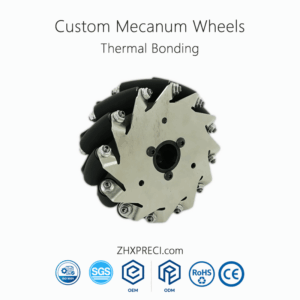
Custom Mecanum Wheel Set 152mm (6 Inch) NM152A: Heavy-Duty PU Rollers, 300kg Load Capacity, Omni-Directional for AGV & Robotics
Read more
Understanding Custom Low Noise Industrial Rubber Wheels
In modern material handling and industrial mobility, Custom Low Noise Industrial Rubber Wheels have become a critical component for facilities aiming to reduce workplace noise while maintaining operational efficiency. These wheels are engineered to provide a balance between load-bearing capacity, floor protection, and acoustic performance. Unlike standard rubber casters, low noise variants incorporate specific rubber compounds and structural designs that minimize vibration and sound generation during movement. This category from ZHXPRECI focuses on wheels that are suitable for environments such as hospitals, electronics manufacturing, clean rooms, and automated guided vehicles (AGVs) where noise reduction is as important as durability.
Key Features and Material Composition
The performance of low noise rubber wheels is largely determined by their material composition and structural design. Typically, these wheels use a high-grade elastomer compound that exhibits excellent resilience and damping characteristics. The hardness of the rubber, commonly measured on the Shore A scale, generally falls within the range of 65 to 85 Shore A for industrial applications. Softer compounds (around 65-70 Shore A) offer superior noise reduction and floor protection, while harder compounds (75-85 Shore A) provide better load capacity and wear resistance. The selection depends on the specific floor type, load requirements, and speed of operation. Additionally, the wheel tread pattern—whether smooth, grooved, or with a diamond pattern—also influences noise levels and traction. Smooth treads are often preferred for indoor hard floors to minimize rolling resistance and noise, while grooved designs provide better grip on wet or oily surfaces.
How Do Custom Low Noise Rubber Wheels Reduce Noise?
The noise reduction capability of these wheels is achieved through a combination of material science and mechanical design. The rubber compound itself acts as a vibration damper, absorbing the impact energy generated when the wheel rolls over floor irregularities. This is measured by the material's loss factor or damping ratio, which quantifies its ability to convert mechanical energy into heat. Furthermore, the wheel's core—which can be made of aluminum, polypropylene, or steel—is often isolated from the rubber tread using a bonding layer that further attenuates vibration. Precision bearings with low radial play also contribute to quieter operation by reducing metal-to-metal contact noise. In practical terms, a high-quality low noise rubber wheel can reduce rolling noise by up to 30% compared to standard rubber wheels, as evidenced in controlled acoustic tests conducted at 1 meter from the wheel at a speed of 2 meters per second.
Customization Options: Engineering Your Ideal Wheel
One of the primary advantages of sourcing from a dedicated OEM/ODM factory is the ability to customize wheels to specific application requirements. Custom Low Noise Industrial Rubber Wheels from ZHXPRECI | China OEM/ODM Factory Manufacturer Supplier Custom Elastomer Wheels & Rollers offer a wide array of customization parameters, including overall diameter (ranging from 80 mm to 400 mm), tread width, hub design, bearing type (plain, ball, or tapered roller), and mounting options. For instance, an AGV in a pharmaceutical clean room may require a wheel with static-dissipative properties and a specific durometer to ensure both low noise and safe operation on epoxy floors. Meanwhile, a heavy-duty pallet jack in a warehouse might need a wheel with a reinforced polyurethane core and a thick rubber tread to handle loads up to 500 kg per wheel while maintaining low rolling resistance. The customization process typically involves consultation on load requirements, floor conditions, and operational speed, enabling the engineering of a solution that is precisely matched to the environment.
Technical Performance Parameters: Load Capacity and Temperature Range
When evaluating Custom Low Noise Industrial Rubber Wheels, technical parameters are crucial for B2B procurement decisions. The load capacity of a wheel is not a fixed number but is influenced by factors such as speed, floor condition, and ambient temperature. For instance, a wheel with a diameter of 150 mm and a tread width of 50 mm may have a static load rating of 300 kg and a dynamic rating of 200 kg at a speed of 4 km/h on a smooth concrete floor. However, these ratings can decrease by 20-30% when operating at temperatures above 40°C or on uneven surfaces. The operational temperature range for standard industrial rubber wheels typically spans from -30°C to +80°C, although special compounds can extend this range. For high-temperature environments, such as near ovens or in foundries, heat-resistant rubber formulations are available that can withstand up to 150°C for short periods. It is also important to consider the rolling resistance coefficient, which directly impacts the force required to move the load and, consequently, the energy consumption of the equipment.
What is the Typical Application Scope for These Wheels?
Custom low noise rubber wheels are widely deployed across diverse industrial sectors. In the healthcare industry, they are essential for hospital beds, medical carts, and mobile equipment where quiet movement is critical for patient comfort and staff efficiency. The food and beverage industry also utilizes these wheels on processing carts and conveyor systems, where hygiene is paramount, and rubber compounds must comply with FDA regulations. In general manufacturing, they are found on assembly line trolleys, mobile workstations, and automated storage and retrieval systems. The increasing adoption of AGVs in logistics and e-commerce fulfillment centers has also driven demand, as these vehicles require wheels that provide precise, smooth, and silent operation to enhance overall system performance and reduce facility noise pollution. Moreover, the entertainment and stage equipment sector often uses low noise wheels for camera dollies and lighting rigs to prevent sound interference during live productions.
How to Select the Right Rubber Hardness and Tread Pattern?
Selecting the appropriate hardness and tread pattern for your industrial rubber wheels is a decision that should be based on a thorough analysis of the operating environment and load conditions. For operations on smooth, polished floors (like epoxy or sealed concrete), a softer rubber compound around 65 to 70 Shore A is often the best choice due to its excellent noise-dampening properties and minimal floor marking. Conversely, for rougher concrete surfaces or outdoor use, a harder compound (75 to 80 Shore A) offers better resistance to cutting and abrasion. The tread pattern also plays a role; a smooth, slick tread minimizes rolling resistance and noise on hard floors, while a ribbed or chevron tread provides increased traction on inclined ramps or wet surfaces. It is important to conduct field trials if possible, as actual conditions can reveal performance nuances not captured by lab tests. Consulting with the manufacturer's engineering team can provide valuable insights into the optimal compound selection for your specific use case.
Custom Low Noise Industrial Rubber Wheels from ZHXPRECI: OEM/ODM Capabilities
For businesses seeking a reliable partner, Custom Low Noise Industrial Rubber Wheels from ZHXPRECI | China OEM/ODM Factory Manufacturer Supplier Custom Elastomer Wheels & Rollers represent a robust solution. With extensive experience in elastomer formulation and wheel manufacturing, the facility offers end-to-end customization, from material compounding to final assembly. The engineering team collaborates closely with clients to define precise specifications, including dimensional drawings, load ratings, and special performance criteria such as resistance to oils, chemicals, or ozone. The manufacturing process employs advanced injection molding and compression molding techniques to ensure dimensional accuracy and consistency across production batches. Quality control measures include hardness testing, tensile strength evaluation, and dynamic balancing to guarantee reliable performance. This partnership approach is particularly beneficial for clients requiring prototypes for testing before full-scale production, enabling validation of design assumptions in real-world operating conditions.
What Are the Maintenance Best Practices for These Wheels?
To ensure longevity and consistent performance of custom low noise rubber wheels, a proactive maintenance regimen is recommended. Regular inspection of the tread for cuts, chips, or flat spots is essential, as damage can lead to increased rolling resistance and noise. Keeping the wheel swivel and bearings clean and lubricated reduces friction and prevents premature wear. It is also prudent to check the tightness of mounting bolts periodically, as loose fasteners can cause wobbling, which accelerates tread wear and generates noise. For wheels operating in environments with high debris accumulation, such as wood or metal chips, periodic cleaning using a soft brush or compressed air can prevent embedded particles from damaging the rubber surface. Replacing wheels as part of a scheduled preventive maintenance program, typically based on hours of operation or mileage, can help avoid unplanned downtime and ensure consistent equipment performance.
How to Integrate These Wheels Into New or Existing Equipment?
Integrating custom low noise rubber wheels into your equipment fleet can be achieved through careful planning and coordination with the manufacturer. For new equipment designs, the wheels can be specified during the design phase, ensuring that mounting plates, bolt patterns, and overall clearance are optimized. For retrofitting existing equipment, it is necessary to measure the current mounting dimensions (including bolt hole spacing, top plate size, and overall height) to find a compatible wheel or adjust the mounting adapters. A technical datasheet containing all critical dimensions, load ratings, and recommended torque for fasteners is typically provided to facilitate a seamless installation process. Consulting the factory's engineering support can assist in addressing any clearance or interference issues that may arise during the integration phase, ensuring that the new wheels perform as expected without compromising the structural integrity of the equipment.
Frequently Asked Questions about Custom Low Noise Rubber Wheels
What is the expected service life of these wheels in continuous operation?
The service life of industrial rubber wheels is influenced by multiple variables, including load weight, floor conditions, operating speed, and maintenance frequency. Under typical warehouse conditions with moderate loads (around 200 kg per wheel) and operating speeds of up to 3 km/h, the wheels may last between 12 and 24 months before showing significant wear. However, factors such as exposure to sharp debris or harsh chemicals can reduce this timeframe. Regular rotation of wheels on swivel casters and monitoring of tread thickness can provide better predictive metrics for replacement schedules.
Can these wheels be used on outdoor surfaces?
While primarily designed for indoor use, certain formulations of low noise rubber wheels can withstand outdoor conditions. Wheels with a higher hardness rating and a tread pattern designed for traction can operate on asphalt or concrete surfaces. However, exposure to UV radiation, rain, and temperature fluctuations will accelerate aging and hardness changes. For prolonged outdoor use, a wheel with UV-stabilized rubber compound and corrosion-resistant hardware is recommended. The manufacturer can advise on the suitability of specific compounds for your outdoor application.
How does the wheel diameter affect noise and performance?
Larger diameter wheels generally offer lower rolling resistance, as they are less affected by surface irregularities. This can translate to quieter operation because the wheel generates less vibration when rolling over small bumps. However, larger wheels also require more space and may add weight to the equipment. The selection of diameter must therefore balance floor clearance, load capacity, and noise reduction goals. For instance, a 200 mm diameter wheel will typically produce less noise and roll more easily than a 100 mm wheel under the same load, assuming similar tread materials.
Are these wheels compatible with high-speed AGVs?
For automated guided vehicles (AGVs) that operate at speeds exceeding 2 meters per second, the wheel design must account for heat generation and centrifugal forces. Special high-speed rubber compounds and precision bearings are employed to manage these factors. The wheel must also be dynamically balanced to prevent vibration at high rotational speeds. It is essential to discuss speed requirements with the manufacturer to ensure the selected wheel can meet the performance and safety standards needed for your AGV application.
What safety certifications are available for these wheels?
Depending on the application industry, wheels can be manufactured to comply with various international standards. For instance, wheels used in food processing may require FDA or EU 10/2011 compliance for material safety. For fire safety, certain compounds can meet UL 94 V-0 ratings. Additionally, wheels can be tested to ISO or EN standards for load capacity and durability. Certification availability should be confirmed during the quotation phase to ensure the wheels meet the regulatory requirements of your specific industry.
How to determine the correct load capacity for a multi-wheel system?
When designing a system with multiple wheels, the total load is distributed among the wheels based on their positions and the center of gravity of the equipment. As a general rule, the dynamic load rating of a single wheel should be at least 25-30% higher than the calculated maximum load per wheel to account for uneven floor surfaces and dynamic forces during acceleration and braking. For example, if a cart weighs 600 kg and has 4 wheels, each wheel should ideally support a dynamic load of 150-200 kg, depending on the load distribution. The manufacturer's load tables can provide a reference, but engineering calculations are necessary for safe and reliable design.
What is the typical lead time for custom orders?
The lead time for custom low noise rubber wheels is subject to order quantity, current production schedule, and final specification confirmation. As each order involves unique material formulations, mold preparation (if required), and production testing, the duration can vary. For prototype quantities, the timeline is generally shorter, while larger production runs may require a more extended period to ensure quality consistency. It is recommended to consult with the factory directly to establish a realistic timeline based on your specific project parameters.
Can the wheels be manufactured in different colors?
Yes, besides the traditional black, industrial rubber wheels can be compounded in a variety of colors, such as gray, red, or blue. Pigment addition is integrated into the rubber mixing process, although it is important to note that adding pigments does not compromise the material's physical properties. Color coding is often employed for easy identification of wheel specifications, such as hardness or special treatment, within a facility. The availability of specific colors and any minimum order quantity requirements should be confirmed during the ordering process.
What are the advantages of choosing an OEM/ODM supplier for these wheels?
Choosing an OEM/ODM supplier like Custom Low Noise Industrial Rubber Wheels from ZHXPRECI | China OEM/ODM Factory Manufacturer Supplier Custom Elastomer Wheels & Rollers provides several key advantages. These include access to specialized engineering expertise, the ability to tailor materials to specific applications, and economies of scale in production. An OEM/ODM partnership also facilitates a more integrated supply chain, enabling better quality control, consistent product traceability, and faster resolution of technical issues. Furthermore, it allows end-users to differentiate their equipment through unique wheel designs, enhancing brand value and operational efficiency.
How do environmental factors affect the choice of rubber compound?
Environmental conditions such as temperature extremes, humidity, and exposure to chemicals play a decisive role in compound selection. For instance, oils and solvents can cause certain rubber types to swell, soften, or lose strength, which is why oil-resistant nitrile-based compounds are used in machining environments. Similarly, ozone degradation can lead to surface cracking; thus, antioxidants are incorporated into the formulation for outdoor or high-UV exposure. A thorough discussion of the operating environment with the supplier's technical team ensures the compound selected will maintain its performance characteristics over its intended service life.
In summary, Custom Low Noise Industrial Rubber Wheels are a sophisticated component requiring careful technical consideration. Whether you are an engineer looking to optimize a new design or a procurement professional seeking a reliable supply partner, understanding the interplay of materials, design, and operational parameters is essential. With the comprehensive customization and engineering support available, these wheels can be adapted to meet the unique demands of your industry, ensuring reliable, quiet, and efficient material handling operations for the long term.