
Custom Hydrolysis Resistant Polyurethane Wheels
Showing 65–77 of 77 results
-
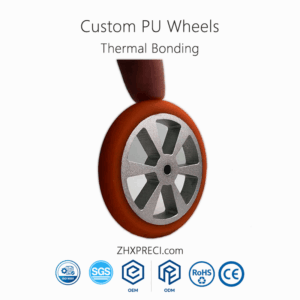
Custom Tapered Bore Polyurethane Wheels For Quick Shaft Change
Read more -
Custom Threaded Axle Polyurethane Wheels For Conveyor Rollers
Read more -
Custom UL Listed Polyurethane Wheels For Electrical Equipment
Read more -
Custom UV Resistant Polyurethane Wheels For Marina Carts
Read more -
Custom UV Resistant Polyurethane Wheels For Outdoor Equipment
Read more -
Custom Vibration Damping Polyurethane Wheels For CNC Machines
Read more -
Custom Wear Resistant Polyurethane Wheels For Recycling Carts
Read more -
Custom Weld On Polyurethane Wheels For Heavy Trailers
Read more -
Custom Wide Tread Polyurethane Wheels For Uneven Floors
Read more -
Custom With Brake Polyurethane Wheels For Material Handling
Read more -
Custom With Grease Fitting Polyurethane Wheels For Assembly Lines
Read more -
Custom With Swivel Lock Polyurethane Wheels For Medical Beds
Read more -
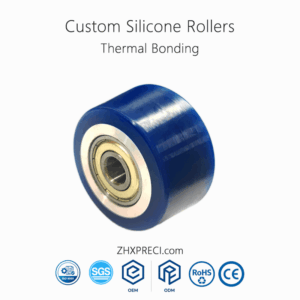
Custom With Swivel Lock PU Wheels For Tight Spaces
Read more
Custom Hydrolysis Resistant Polyurethane Wheels – China OEM/ODM Factory Manufacturer & Supplier
Custom hydrolysis resistant polyurethane wheels are cast elastomer wheels built on polyether or polycaprolactone prepolymer systems rather than conventional polyester-based formulations. In wet, humid, steamed or frequently washed production areas, standard polyurethane can absorb moisture, soften near the surface and gradually lose mechanical strength. These hydrolysis resistant polyurethane wheels are formulated so that the polymer backbone slows that moisture-driven degradation, helping hardness, rebound and load-bearing behaviour stay closer to the original specification across a long working life.
As a China-based OEM/ODM factory manufacturer and supplier, ZHXPRECI produces these custom polyurethane wheels from a drawing, a sample or an application brief. Durometer, tread profile, hub material, bearing seat and bonding method are all defined per project, so the wheel is matched to the machine rather than the machine being adapted to a catalogue part. Both the custom element and the hydrolysis resistant property are treated as engineering decisions, not marketing labels.
What Are Custom Hydrolysis Resistant Polyurethane Wheels?
Polyurethane wheels are elastomer wheels made by casting or machining a liquid polyurethane system around a metal, plastic or composite core. The polyurethane becomes the tread and, in many designs, the entire load-bearing body. Hydrolysis resistance describes how that polyurethane behaves when exposed to water, water vapour and humid air over time, rather than referring to a single additive or coating.
Hydrolysis is a chemical reaction in which water molecules attack certain bonds in the polymer chain. Polyester-based polyurethane contains ester linkages that are relatively vulnerable, particularly in warm and humid conditions. Under sustained exposure, the material can become tacky, develop surface crazing and lose tensile strength. Polyether-based and polycaprolactone-based systems use linkages that are considerably more stable against moisture attack, which is why they are commonly chosen for wet-service custom wheels.
The three polymer routes used in these wheels
- Polyether (PTMEG) systems — the most widely used route when hydrolysis resistance is the priority. Good low-temperature flexibility, good rebound and strong resistance to humid and wet environments.
- Polycaprolactone systems — bridge the gap between polyester and polyether behaviour, combining good hydrolysis resistance with high mechanical strength and abrasion performance.
- Blended or hybrid systems — formulated to balance cost, oil resistance, cut resistance and moisture stability for specific applications.
Because the polymer choice drives the outcome, a custom project normally starts with a question about the environment: how much water, steam, detergent or humidity the wheel will meet, at what temperature, and for how many hours per shift.
Why Hydrolysis Resistance Matters in Real Industrial Conditions
Many buyers encounter hydrolysis not as a sudden failure but as a slow drift in performance. A wheel that starts at 90 Shore A may read noticeably softer after months in a humid washdown bay. Tread edges round off, rolling resistance rises, and the wheel begins to mark floors or vibrate. By the time the change is visible, the wheel is usually approaching the end of its service life.
The conditions that tend to accelerate hydrolysis include:
- Continuous or repeated contact with water, condensate or steam
- Washdown with alkaline or acidic cleaning agents, often at elevated temperature
- Ambient humidity above roughly 70 percent over extended periods
- Storage in unheated or unventilated warehouses in tropical or coastal climates
- Duty cycles where the wheel remains wet and warm for hours at a time
Where this shows up in practice
Food processing conveyors, poultry and seafood handling lines, car wash gantries, bottling and dairy plants, laundry transfer trolleys, cold storage doors and humid-climate logistics operations all place wheels under exactly these conditions. In such settings, a standard polyester-cast wheel may need frequent replacement, while a hydrolysis resistant polyurethane wheel keeps its dimensions and hardness for a substantially longer period. The result is fewer unplanned stoppages and more predictable maintenance planning.
It is not only about chemistry
Formulation is part of the answer, but not the whole answer. Curing schedule, moisture control during casting, correct isocyanate index and adequate post-cure all influence how stable the finished wheel is. A well-formulated polyether system that is under-cured can still perform poorly in wet service. Process control at the factory matters as much as the raw material specification.
Material Performance Data for Custom Hydrolysis Resistant Polyurethane Wheels
The values below are typical ranges for polyether and polycaprolactone cast systems used in wheel production. Actual figures depend on the specific formulation, hardness and cross-section of the part, and are confirmed by testing on the finished product rather than on a laboratory plaque alone.
| Property | Typical Range | Test Reference |
|---|---|---|
| Hardness | 60 Shore A to 98 Shore A; 50 Shore D to 75 Shore D | ISO 868 / ASTM D2240 |
| Tensile strength | 30 to 50 MPa for polyether and polycaprolactone cast systems | ISO 37 / ASTM D412 |
| Elongation at break | 300 to 600 percent depending on hardness | ISO 37 / ASTM D412 |
| Tear strength | 60 to 120 kN/m | ISO 34-1 / ASTM D624 |
| Abrasion resistance | 30 to 80 mm³ loss, DIN rotary drum | ISO 4649 / ASTM D5963 |
| Rebound resilience | 40 to 60 percent | ISO 4662 |
| Continuous service temperature | Approximately -20 °C to +80 °C for standard grades | Application dependent |
| Short-term temperature peaks | Up to about +100 °C for selected heat-resistant grades | Application dependent |
| Water absorption | Low, with minimal swelling in polyether and polycaprolactone grades | ISO 62 method comparison |
Values are indicative and are verified case by case. Where a project involves steam, chemical washdown or sustained immersion, the formulation and the test plan are agreed before production.
Customization Options for Hydrolysis Resistant Polyurethane Wheels
Almost every dimension of these hydrolysis resistant polyurethane wheels can be defined by the customer. The list below covers the parameters that are most often specified.
Hardness and formulation
- Hardness from soft 60 Shore A for quiet, floor-friendly running, up to 75 Shore D for high-load, low-rolling-resistance duties
- Polyether, polycaprolactone or blended systems selected against the moisture and chemical environment
- Anti-static and conductive grades for electronics and explosive-atmosphere areas, where required
- Colour pigments, including grades suitable for light-coloured flooring where a low-marking appearance is requested
- Additives for UV stability, microbial resistance or reduced floor marking
Geometry and tread profile
- Outer diameter from small guide rollers to large industrial wheels
- Tread width and crown, flat, tapered or contoured profiles
- Rounded or chamfered edges to reduce floor marking and edge chipping
- Grooved, ribbed or cleated treads for traction on wet or oily floors
- Machined tolerances agreed per drawing, including concentricity and runout limits
Hub, core and bearing interface
- Cast iron, steel, stainless steel, aluminium or engineering plastic cores
- Bonded, mechanically locked or keyed polyurethane-to-core construction
- Plain bore, keyway, square bore, threaded insert or tapered bore
- Ball bearings, roller bearings, stainless bearings and sealed precision bearings for wet service
- Bearing shields and labyrinth seals to limit water ingress at the hub
Surface finishing and marking
- As-cast finish or precision ground and polished surfaces
- Laser marking, embossed branding or moulded part numbers for traceability
- Batch identification so that replacement wheels match the original specification
Why Choose These Custom Hydrolysis Resistant Polyurethane Wheels
The reasoning behind specifying a hydrolysis resistant elastomer wheel rather than a general-purpose one comes down to a few practical points.
Feature: moisture-stable polymer chemistry
Polyether and polycaprolactone systems resist water attack far better than standard polyester types. The benefit is that hardness, dimensions and load behaviour stay closer to the original specification across months of wet service, which in turn reduces unexpected downtime for replacement. The evidence lies in comparative water-absorption and retained-tensile testing carried out on the finished formulation.
Feature: fully custom hardness, size and core
Because the wheel is made to order, the buyer is not forced to choose between a hard wheel that damages floors and a soft wheel that wears quickly. The advantage is a wheel tuned to the actual load, speed and floor condition. The benefit is longer service life, quieter running and less damage to the surfaces the equipment rolls on.
Feature: sealing and hub design for wet areas
Water reaching the bearing is a common cause of premature wheel failure, even when the polyurethane itself is sound. Shielded or sealed bearing arrangements, together with careful hub geometry, reduce that risk. The benefit is that the whole assembly, not just the tread, is matched to the washdown environment.
Feature: consistent factory process control
Moisture-controlled raw material handling, controlled curing schedules and regular testing of each batch help keep output consistent. The benefit for a purchasing team is repeatability: the fifth order behaves like the first, which simplifies maintenance planning and spare-part stocking.
Feature: OEM and ODM support from a China factory
Drawings, samples or even a worn part can be used as the starting point. The benefit is a shorter specification cycle and a wheel that fits existing shafts, brackets and bearing housings without modification.
Typical Specifications at a Glance for Custom Hydrolysis Resistant Polyurethane Wheels
| Parameter | Available Range |
|---|---|
| Outer diameter | From small guide and idler sizes up to large heavy-duty wheels |
| Tread width | Narrow rollers to wide load-carrying treads |
| Hardness | 60 Shore A to 75 Shore D |
| Polymer base | Polyether, polycaprolactone, hybrid systems |
| Core material | Cast iron, carbon steel, stainless steel, aluminium, engineering plastic |
| Bearing options | Plain bore, ball, roller, stainless, sealed precision bearings |
| Bore and fixing | Plain, keyed, threaded, tapered, square bore |
| Colour | Natural amber, black, grey, custom pigmented shades |
| Reference load capacity | Established per design by static and dynamic testing; indicative values for a 100 mm × 40 mm wheel at 85 Shore A fall in the region of 250 to 400 kg static load, subject to core and bearing selection |
| Packing | Export cartons, pallets, customer-specified labelling |
Load figures are indicative only. Final capacity depends on wheel diameter, tread width, hardness, core type, bearing size, speed and the nature of the floor. Confirmed figures are issued once the design is fixed.
Applications and Industries
Hydrolysis resistant polyurethane wheels are most often requested for environments where water or humidity is part of normal operation.
- Food and beverage processing — conveyor guide wheels, trolley castors and transfer wheels exposed to daily washdown
- Seafood and poultry handling — continuous wet operation, salt water contact and low-temperature rooms
- Car wash equipment — gantry rollers, guide wheels and brush support wheels in constant water spray
- Bottling and dairy plants — caustic and acid cleaning cycles, high humidity, frequent sanitation
- Laundry and textile transfer — hot, wet and detergent-laden conditions
- Cold storage and freezer rooms — combined low temperature and condensation
- Port and marine logistics — coastal humidity, salt mist and outdoor exposure
- Water treatment and pumping stations — splash zones and damp plant rooms
- Printing and paper — damp plant environments where dimensional stability matters
- Pharmaceutical and cleanroom lines — washdown-compatible, low-particle wheel systems
Applications outside wet environments are also served, where the extra moisture stability is wanted as insurance against humid storage or seasonal condensation.
Quality Control and Testing
Each production batch is checked against the agreed specification before dispatch.
- Hardness verification on the finished wheel, not only on a sample plaque
- Dimensional inspection against approved drawings, including diameter, width, bore and runout
- Bond integrity checks between polyurethane and core
- Visual inspection for voids, blisters and surface defects
- Batch traceability records kept for repeat orders
- Optional third-party inspection and pre-shipment sampling on request
Where the application demands it, additional testing such as water immersion, retained hardness measurement or load cycling can be arranged and reported. The scope of testing is agreed in advance so that results are meaningful for the specific application.
About ZHXPRECI – OEM and ODM Manufacturing Support from China
ZHXPRECI works as an OEM and ODM partner for custom hydrolysis resistant polyurethane wheels and related elastomer rollers, wheels and custom elastomer components. Projects typically begin with one of the following inputs:
- A technical drawing with tolerances and material requirements
- A physical sample, including a worn part that needs to be reverse engineered
- An application description covering load, speed, environment and floor type
From that point, the team proposes a polymer system, hardness and construction, produces samples where required, and moves to volume production once the specification is approved. Export documentation, labelling and packaging are aligned with the destination market, and repeat orders are produced against the same recorded specification so that performance stays consistent.
Typical customers include equipment manufacturers, maintenance and reliability engineers, distributors, and procurement teams sourcing custom polyurethane wheels and rollers from China.
How to Specify and Order Custom Hydrolysis Resistant Polyurethane Wheels
Providing the following information at the enquiry stage shortens the specification cycle considerably:
- Outer diameter, width and bore dimensions, or a drawing
- Required hardness and polymer preference, if known
- Load per wheel and number of wheels under each piece of equipment
- Operating speed and travel distance per shift
- Environment: water, steam, chemicals, temperature range, humidity
- Floor type and whether floor marking is a concern
- Core and bearing requirements
- Annual or per-order quantity and delivery destination
If some of these values are not yet decided, the engineering team can propose a starting specification and adjust it after sample testing.
Production & Inventory Policy
Lead time: Actual lead time is affected by raw material supply, machining schedules and peak-season workload, so it moves within a reasonable range. A realistic delivery estimate is provided after the order is confirmed, and progress is communicated throughout production.
Stock status: As a rule, these wheels are made to order. A limited number of popular standard sizes are sometimes held in stock, and the quantity available changes with ongoing sales and production. Please contact the sales team to confirm live stock before placing an order.
Bulk & urgent orders: For large quantities or tight deadlines, please discuss capacity and scheduling with us in advance. We will do our best to align production with your timeline.
Frequently Asked Questions
What are custom hydrolysis resistant polyurethane wheels?
They are polyurethane wheels produced from polymer systems, usually polyether or polycaprolactone based, that resist the moisture-driven breakdown affecting conventional polyester polyurethane. The custom element means they are made to order in the required hardness, size, tread profile, core and bearing configuration for a specific machine or application.
How do hydrolysis resistant polyurethane wheels differ from standard polyurethane wheels?
The main difference is the polymer backbone. Standard cast polyurethane frequently uses polyester prepolymers, which offer good mechanical strength but are more sensitive to warm, humid conditions. Hydrolysis resistant grades replace or modify that chemistry so fewer moisture-sensitive bonds are present. The visible difference appears over time: less softening, less swelling and less surface degradation in wet service.
What causes polyurethane to hydrolyse in the first place?
Water molecules react with certain chemical linkages in the polymer chain. Heat accelerates the reaction, and acidic or alkaline cleaning agents can accelerate it further. Once the chain structure is attacked, tensile strength and hardness drop and the surface may become tacky. Keeping the wheel dry between shifts, avoiding prolonged storage in humid conditions, and choosing a moisture-stable formulation all help slow this process.
How to choose the right hardness for custom hydrolysis resistant polyurethane wheels?
Start with the load and the floor. Heavier loads generally call for higher hardness, provided the floor can take it. Soft grades in the 60 to 75 Shore A range run quietly and protect delicate flooring but deform more under load. Grades around 85 to 95 Shore A are common for industrial trolleys and conveyor wheels. Above 60 Shore D, rolling resistance falls further and load capacity rises, but the wheel transmits more vibration. The practical approach is to define load, speed and floor, then let the hardness follow.
What temperature range can these wheels handle?
Standard hydrolysis resistant grades are typically used from about -20 °C to +80 °C in continuous service, with short excursions to around +100 °C for selected heat-resistant formulations. Performance at the extremes depends on hardness, cross-section and load. Applications combining steam with heavy load should be reviewed individually before the formulation is fixed.
Can these wheels be used in steam or washdown environments?
Yes, this is one of their main uses, provided the specification is matched to the conditions. Washdown with detergents at moderate temperature is well within normal service. Direct steam contact and aggressive chemical cleaning require a formulation review, and sealed or shielded bearings are strongly recommended so that water does not reach the bearing raceway.
How to store polyurethane wheels to prevent hydrolysis?
Keep them in a dry, ventilated area away from direct sunlight, ozone sources such as electric motors and welding equipment, and standing water. Stack them so that the tread is not deformed for long periods. In coastal or tropical locations, sealed packaging with desiccant helps. Storage conditions matter most for wheels that will not enter service for several months.
What hub and bearing options are available?
Cast iron, steel, stainless steel, aluminium and engineering plastic cores are all available, with bonded, keyed or mechanically locked construction. Bore options include plain, keyed, square, tapered and threaded. Bearing choices range from plain bushings to sealed precision ball and roller bearings, including stainless versions for wet areas.
Do polyurethane wheels mark or damage floors?
Polyurethane is generally gentler on floors than hard metal or nylon wheels, and softer grades reduce marking further. Some pigments and formulations can leave traces on light-coloured flooring, so non-marking grades are available for applications where appearance matters. The condition of the floor and the presence of grit also influence marking.
Can you produce wheels to match an existing sample?
Yes. A physical sample, including a worn original, can be measured and used as the basis for a drawing. Hardness is measured, the polymer type is assessed where possible, and a matching formulation is proposed. In some cases the original can be improved, for example by moving to a more moisture-stable system if the failure was water related.
What is the minimum order quantity?
Minimum order quantities depend on wheel size, construction and tooling requirements. Small trial batches are possible for development projects, while production volumes receive more favourable terms. The exact quantity is confirmed when the specification and drawing are finalised.
How to order custom hydrolysis resistant polyurethane wheels from ZHXPRECI?
Send the drawing, sample or application details through the contact form or by email. The team reviews the requirement, proposes a specification and quotation, and discusses sampling if needed. Once the sample is approved, production is scheduled and the order proceeds with agreed inspection and packing arrangements.
What is the lead time?
Lead time is subject to order quantity, current production schedule, and final specification confirmation. Sampling adds an additional stage for new designs, and custom tooling or non-standard cores may extend the schedule further. A confirmed timeline is provided once the order details are fixed.
Do you supply samples before mass production?
Yes, samples are normally produced for new designs or significant changes to an existing specification. Sample cost and timing depend on size, complexity and tooling. Sample approval is treated as the formal point at which the specification is locked for production.
Request a Specification Review for Custom Hydrolysis Resistant Polyurethane Wheels
If your equipment runs in a wet, humid or frequently washed environment and standard wheels are wearing out faster than expected, a hydrolysis resistant formulation may extend the replacement interval. Food processing, car wash, cold storage, marine and general industrial users are all welcome to request a review.
Custom hydrolysis resistant polyurethane wheels from ZHXPRECI are produced to order in the hardness, size, core and bearing configuration that suits your equipment. Share your drawings and duty conditions, and the team will respond with a specification proposal and quotation.