
Custom Polyurethane Wheels Heavy Duty
Custom Polyurethane Wheels Heavy Duty
Custom polyurethane wheels heavy duty built for load and wear.
- 500–5,000kg load
- 60–98A hardness
- 50–1,000mm dia
- -30–+80°C temp
- ISO9001/REACH cert
Showing 1–16 of 80 results
-
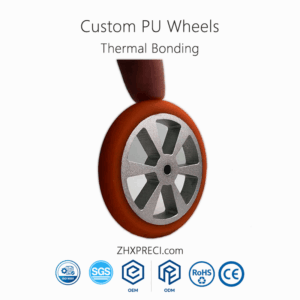
Custom Abrasion Proof PU Wheels For Sand Blasting Areas
Read more -
Custom Abrasion Resistant Polyurethane Wheels For Mining Carts
Read more -
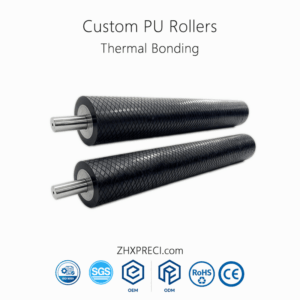
Custom Anti-Static PU Rollers For Explosive Dust Environments
Read more -
Custom ATEX Compliant Polyurethane Wheels For Hazardous Areas
Read more -
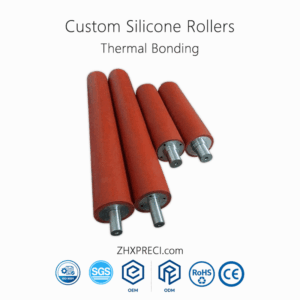
Custom Bearing Mounted Silicone Coated Rollers Quick Change
Read more -
Custom Bolt On Polyurethane Wheels For Utility Trailers
Read more -
Custom CE Certified Polyurethane Wheels For European Machinery
Read more -
Custom Chemical Resistant Polyurethane Wheels For Battery Carts
Read more -
Custom Chemical Resistant Polyurethane Wheels For Etching Lines
Read more -
Custom Conductive Polyurethane Wheels For Battery Packs
Read more -
Custom Conductive Polyurethane Wheels For Semiconductor Factories
Read more -
Custom Continuous Duty Polyurethane Wheels For Assembly Lines
Read more -
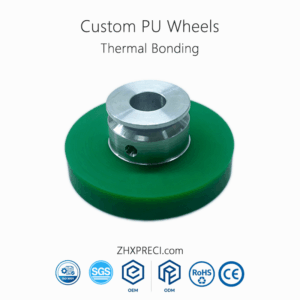
Custom Corrosion Proof Rubber Wheels with Coating for Chemical Plants
Read more -
Custom Corrosion Resistant Polyurethane Wheels For Coastal Carts
Read more -
Custom Corrosion Resistant Polyurethane Wheels For Pier Carts
Read more -
Custom Double Flange Polyurethane Wheels For Overhead Rails
Read more
Custom Polyurethane Wheels Heavy Duty: Engineered for Load, Wear, and Control
Custom polyurethane wheels heavy duty applications call for more than a standard catalog part. They require a wheel that carries substantial static and dynamic loads, resists abrasion over long service intervals, protects floors and rails, and still rolls smoothly under continuous operation. That is the exact brief behind this product family from ZHXPRECI, a China-based OEM/ODM factory manufacturer and supplier of custom elastomer wheels and rollers. Every wheel in this category is built to order, combining a high-performance polyurethane tread with a rigid metal or engineering-plastic core, so the finished product matches your load, speed, surface, and environment rather than forcing your equipment to adapt to an off-the-shelf item.
This category page explains what custom polyurethane wheels heavy duty products are, how they are specified, which hardness and core combinations suit particular duties, and how to evaluate them technically. The content is written for procurement engineers, maintenance managers, machine designers, and OEM buyers who need verifiable information before requesting a quotation.
What Are Custom Polyurethane Wheels Heavy Duty?
A custom polyurethane wheel is a wheel whose polyurethane tread is formulated, molded, and machined to a buyer's specification, then bonded to a core selected for the intended load. A heavy duty polyurethane wheel is one designed from the outset for elevated load capacity, repeated dynamic cycling, and harsh operating conditions such as steel floors, concrete aisles, wash-down areas, or elevated temperatures. When the words custom, polyurethane, heavy duty, and wheel are combined, the result is a purpose-built rolling element rather than a general-purpose catalog SKU.
Custom covers several dimensions of freedom: outside diameter, tread width, bore size, keyway or hub configuration, hardness, color, surface finish, crown or flat profile, flange or groove geometry, and the choice of bearing. Heavy duty refers to the structural design intent — thicker tread sections, higher-durometer compounds where appropriate, reinforced cores, larger bearing seats, and tighter concentricity and balance requirements.
Typical base materials are polyether-based or polyester-based polyurethane elastomers, cast or compression-molded and then finish-machined to tolerance. The core may be cast iron, ductile iron, steel, aluminum, nylon, or polypropylene, depending on the balance of strength, weight, corrosion resistance, and cost that the application requires. The bond between tread and core is a critical quality point and is controlled through surface preparation and process parameters during manufacture.
Why Polyurethane for Heavy Duty Wheels?
Polyurethane sits between rubber and hard engineering plastics in behavior. Compared with rubber, polyurethane generally offers higher load capacity for the same volume, better cut and tear resistance, lower rolling resistance, and improved resistance to oils, greases, and many industrial chemicals. Compared with solid steel or cast iron wheels, polyurethane provides a degree of shock absorption, reduces noise, and protects floors and rails from damage. These combined characteristics make it a common choice for heavy duty rolling applications where both load and floor protection matter.
Key material characteristics for custom polyurethane wheels heavy duty are outlined in the table below. Values are typical ranges for industrial polyurethane wheel compounds and vary with formulation, hardness, and cross-section.
Typical Material Performance of Polyurethane Wheel Compounds for Heavy Duty Use
| Property | Typical Range | Notes |
|---|---|---|
| Hardness | Shore A 60 to 98; Shore D 50 to 75 | Softer grades for grip and floor protection; harder grades for load and low rolling resistance |
| Tensile strength | Approximately 30 to 60 MPa | Depends on formulation and hardness |
| Tear strength | Approximately 60 to 120 kN/m | Higher values support cut and chunk resistance |
| Abrasion resistance | Approximately 30 to 80 mm³ (DIN 53516) | Lower volume loss indicates better wear resistance |
| Rebound resilience | Approximately 20 to 50% | Affects rolling comfort and heat generation |
| Operating temperature | -30°C to +80°C standard; up to +120°C with high-temperature formulation | Continuous service limits depend on load and compound |
| Oil and grease resistance | Good for many industrial oils and greases | Confirm with specific media before selection |
| Hydrolysis resistance | Polyether grades generally better than polyester grades | Relevant for humid or wash-down environments |
These figures describe general industrial behavior of custom polyurethane wheels heavy duty rather than a warranty of performance in a specific machine. Final suitability depends on load per wheel, speed, duty cycle, floor condition, and temperature, and should be confirmed during the specification stage.
The Custom Advantage in Polyurethane Wheels
Off-the-shelf wheels rarely match the exact mounting envelope, load profile, and environment of a given machine. Custom polyurethane wheels solve this by starting from the application rather than from a stock list. A custom build allows the engineer to set the outside diameter precisely so that travel distance, speed ratio, or ground clearance is correct; to set the tread width so that contact pressure stays within the floor's allowable limit; to set the bore, keyway, and hub length so that the wheel mounts directly onto an existing axle; and to choose a hardness that balances rolling effort against grip and floor protection.
Customization also extends to the tread profile. Flat treads distribute load over a wider area and are common for heavy duty carts and transfer systems. Crowned treads reduce edge loading and can help tracking on rails. V-groove and flanged profiles are used where the wheel must follow a track or guide. Tapered and contoured profiles appear in specialized conveying and guiding equipment.
Color and marking can be customized as well, which is useful for maintenance programs that identify wheel type by sight. Because each order is produced to drawing or sample, custom polyurethane wheels heavy duty programs can also standardize a fleet of vehicles on one wheel specification, simplifying spares management.
The Heavy Duty Difference
Heavy duty is not a marketing label; it is a set of design and manufacturing decisions. Compared with light-duty wheels of similar diameter, heavy duty polyurethane wheels typically use thicker tread walls, higher core rigidity, larger bearing bores, and more robust tread-to-core bonding. They are also produced with tighter control of concentricity and radial runout, because at higher loads any eccentricity translates into vibration, accelerated bearing wear, and uneven floor pressure.
Load capacity is a function of several variables acting together: wheel diameter, tread width, hardness, core material, bearing type, and speed. A larger diameter spreads the contact patch and lowers rolling resistance. A wider tread increases the contact area and reduces floor pressure. A harder compound increases load capability but reduces grip and shock absorption. A rigid core prevents deflection that would otherwise concentrate stress at the bond line. A bearing rated for the load and speed keeps friction and heat within acceptable limits.
For these reasons, heavy duty polyurethane wheel selection is normally done per wheel position, not as a single figure for the whole vehicle. A four-wheel cart may have one or two positions carrying most of the load, and those positions may require a different wheel than the idler positions.
Hardness Selection Guide for Custom Polyurethane Wheels Heavy Duty
Hardness is one of the most consequential choices in a heavy duty polyurethane wheel project. It influences load capacity, rolling resistance, grip, noise, and floor protection. The following general guidance is used in industrial practice.
- Shore A 60 to 75: Soft grades that grip well and absorb shock. Often selected where floor protection and quiet operation are priorities and loads are moderate.
- Shore A 80 to 88: A common middle range for general material handling. Balances load capacity, rolling ease, and floor protection.
- Shore A 90 to 95: Harder grades suited to higher loads and lower rolling resistance. Frequently used on heavy carts, tow lines, and industrial dollies.
- Shore A 96 to 98 and Shore D grades: Very hard compounds for high load support and low rolling loss, where grip and floor cushioning are secondary.
Softer is not automatically better, and harder is not automatically stronger. A grade that is too soft can deform excessively under heavy load, generating heat and increasing rolling resistance. A grade that is too hard can reduce traction, increase noise, and transmit shock to the equipment. The right choice comes from matching hardness to load, speed, floor, and operating temperature together.
Core and Bearing Options
The core carries the load and transfers it to the bearing and axle. Common core materials for heavy duty polyurethane wheels include cast iron, ductile iron, steel, aluminum, nylon, and polypropylene. Cast iron and steel cores are chosen for high rigidity and load capacity. Aluminum reduces weight while retaining good strength, which matters on manually moved equipment and on vehicles where unsprung mass affects energy use. Nylon and polypropylene cores suit lighter heavy duty duties and environments where corrosion resistance or non-marking behavior is important.
Bearing selection follows the same logic. Precision ball bearings suit moderate to high speeds and provide low friction. Tapered roller bearings handle combined radial and axial loads and are common on heavy duty casters and drive wheels. Plain bores are used where the wheel runs on a fixed axle and speed is low, or where the customer supplies their own bearing. Stainless steel bearings and sealed variants are available for wet, wash-down, or corrosive environments. The bearing bore, hub length, and any keyway or set-screw provision are all defined during the custom specification.
Technical Specifications for Custom Polyurethane Wheels Heavy Duty
The table below summarizes the range in which custom polyurethane wheels heavy duty products are commonly produced. Final values are confirmed per project drawing or sample.
| Parameter | Typical Custom Range |
|---|---|
| Wheel outside diameter | Approximately 50 mm to 1,000 mm |
| Tread width | Approximately 30 mm to 300 mm |
| Hardness | Shore A 60 to 98; Shore D 50 to 75 |
| Tread material | Cast or molded polyurethane elastomer, polyether or polyester based |
| Core material | Cast iron, ductile iron, steel, aluminum, nylon, polypropylene |
| Bearing type | Precision ball, tapered roller, plain bore, stainless, sealed variants |
| Tread profile | Flat, crowned, V-groove, flanged, tapered, contoured |
| Operating temperature | -30°C to +80°C standard; up to +120°C with high-temperature formulation |
| Dimensional tolerance | Diameter typically within ±0.5 mm; tighter where required |
| Concentricity / runout | Runout achievable within approximately 0.2 mm depending on size |
| Color | Natural amber or custom color on request |
Why Choose Custom Polyurethane Wheels Heavy Duty from ZHXPRECI
ZHXPRECI operates as a China OEM/ODM factory manufacturer and supplier focused on custom elastomer wheels and rollers. For custom polyurethane wheels heavy duty projects, the value comes from combining formulation, molding, machining, and assembly under one roof, which shortens the loop between a specification change and a finished part.
Polyurethane formulation and casting are handled in-house, with hardness adjustable from Shore A 60 to 98 and Shore D grades available where required. This means the compound can be tuned to the load, speed, and temperature of the application rather than selected from a limited catalog, so the finished wheel performs closer to the design intent and the risk of premature wear and unplanned downtime is reduced. Batch-level hardness and dimensional checks are performed, and material property data can be provided for engineering review.
Multiple core materials and bearing options are available. This allows the wheel to be matched to the mounting envelope and load path of existing equipment, so it can serve as a direct replacement or integrate into a new design without adapter plates or axle modification. Bore, hub, keyway, and bearing seat dimensions are produced to the approved drawing or sample.
Custom diameters, widths, and tread profiles are supported. Because contact pressure and rolling characteristics can be controlled precisely, floor loading can stay within limits and tracking or steering behavior becomes predictable. First-article samples can be submitted for fit and function testing before series production.
OEM and ODM programs are supported as well. Buyers can request private labeling, custom packaging, and coordinated delivery schedules, so the wheel becomes part of the buyer's own product line rather than a generic component. Documentation, labeling, and packaging requirements are agreed in writing before production.
Applications of Custom Polyurethane Wheels Heavy Duty
Heavy duty polyurethane wheels are used wherever significant loads must be moved repeatedly with control and with reasonable protection of the running surface. Common application areas include:
- Industrial carts, tow tractors, and material handling dollies
- Automated guided vehicles and autonomous mobile robots
- Caster assemblies for heavy machinery and production equipment
- Conveyor and transfer systems in manufacturing and logistics
- Rail-guided and track-guided trolleys
- Printing, packaging, and converting equipment
- Food processing and wash-down environments where non-marking and corrosion-resistant options are needed
- Warehouse and distribution center transport equipment
- Special-purpose machinery where standard wheels do not fit the mounting envelope
In these settings, the wheel is often a maintenance item rather than a one-time purchase. Choosing a consistent, well-specified custom polyurethane wheel can simplify spare-part planning and reduce the number of different wheel types held in inventory.
How to Specify Custom Polyurethane Wheels Heavy Duty
Specifying a heavy duty polyurethane wheel is a structured process. The following steps reflect how most engineering and procurement teams approach it.
- Define the load per wheel. Calculate the maximum static and dynamic load at each wheel position, including any off-center loading or impact. Do not average across the vehicle.
- Determine the speed and duty cycle. Continuous high-speed operation generates more heat and requires different hardness and bearing choices than intermittent low-speed movement.
- Describe the running surface. Concrete, steel, tile, epoxy, and uneven floors behave differently. Surface condition affects hardness, tread width, and profile selection.
- Record the mounting envelope. Provide outside diameter, tread width, bore diameter, hub length, keyway or set-screw details, and any flange or groove dimensions.
- State the operating environment. Temperature range, moisture, wash-down frequency, oils, greases, solvents, and outdoor exposure all influence compound and bearing selection.
- Specify hardness and profile. Confirm the durometer range and tread profile that match the load, floor, and tracking needs.
- Provide a drawing or sample. A dimensioned drawing or a physical sample removes ambiguity and speeds up first-article approval.
- Confirm tolerances and acceptance criteria. Agree on diameter tolerance, runout, hardness range, and any functional test before production.
When these inputs are available, a quotation can be prepared accurately and the risk of a mismatch between design intent and delivered part is reduced considerably.
Quality Control and Testing
Quality control for heavy duty polyurethane wheels focuses on the properties that determine service life: hardness consistency, dimensional accuracy, bond integrity between tread and core, and concentricity. Incoming raw materials are checked against specification. During production, process parameters for casting or molding are monitored. Finished wheels are inspected for diameter, width, bore, runout, and hardness. Where required, bond strength and compression set can be evaluated through laboratory testing.
Documentation such as material certificates, dimensional inspection reports, and first-article inspection reports can be supplied on request. These records help buyers maintain traceability and support their own quality management systems.
Factory, Equipment, and Documentation
Production of custom polyurethane wheels heavy duty covers formulation, casting or molding, machining, and assembly, with hardness and dimensional checks at batch level. Material certificates, dimensional inspection reports, and first-article inspection reports can be provided on request. Buyers are encouraged to discuss inspection, packaging, and documentation requirements before production.
OEM and ODM Capabilities
For buyers developing their own wheel product lines, ZHXPRECI provides OEM and ODM support. OEM work follows the customer's drawings, specifications, and branding. ODM work begins with the application requirements and results in a wheel design proposed by the manufacturer, which the customer can review, test, and approve. In both cases, the goal is a repeatable product that meets the agreed specification across production batches.
Custom packaging, labeling, and private branding can be arranged so that the wheels integrate into the buyer's catalog and logistics. Production planning is discussed at the order stage so that delivery expectations are aligned with order quantity, current production schedule, and final specification confirmation.
About ZHXPRECI
ZHXPRECI is a China-based manufacturer and supplier of custom elastomer wheels and rollers, serving industrial buyers, equipment builders, and distributors. The product range includes custom polyurethane wheels heavy duty variants, rubber rollers, and other elastomer rolling components produced to customer drawings or samples. The company's focus is on custom work: matching material, hardness, geometry, and bearing configuration to the application, and maintaining consistency across repeat orders.
Buyers working with ZHXPRECI typically value direct technical communication, the ability to request samples before series production, and a manufacturing setup oriented toward non-standard dimensions rather than fixed catalog sizes.
Production & Inventory Policy
Lead time: Actual lead time is affected by raw material supply, machining capacity, and peak-season workload, and reasonable fluctuations should be expected. Once an order is confirmed, we provide the most accurate delivery estimate possible and maintain close communication throughout production.
Stock status: As a rule, we do not hold finished stock because most wheels are produced to customer specifications. A limited number of fast-moving standard sizes may be available, but actual quantities change with sales and production. Please confirm real-time availability with our team before placing an order.
Bulk & urgent orders: For large-volume or time-sensitive requirements, please contact us in advance so that capacity and scheduling can be reviewed. We will make every reasonable effort to align with your timeline.
Frequently Asked Questions
What is a custom polyurethane wheel heavy duty?
It is a polyurethane-treaded wheel produced to a buyer's specification and designed for elevated load, repeated movement, and demanding environments. Unlike a standard catalog wheel, it is defined by the application: diameter, width, hardness, core material, bearing type, and tread profile are all selected to match the equipment and operating conditions. Custom polyurethane wheels heavy duty products are commonly used on industrial carts, AGVs, casters, and conveyor systems.
How to choose the right hardness for a heavy duty polyurethane wheel?
Start with the load per wheel and the running surface. Softer grades around Shore A 60 to 75 provide grip and floor protection and suit moderate loads. Shore A 80 to 88 is a general-purpose range for material handling. Shore A 90 to 95 and above support higher loads and lower rolling resistance. Higher speed and continuous duty generally favor harder grades with appropriate bearings, while uneven or damage-sensitive floors favor softer grades. The final choice should be confirmed with load, speed, and temperature data.
How to calculate load capacity for custom polyurethane wheels heavy duty?
Determine the maximum load at each wheel position, including static load, dynamic load, and any impact or off-center conditions. Then match that figure against the wheel's rated capacity, which depends on diameter, tread width, hardness, core material, and bearing type. Because capacity is not a single fixed number, it is normal to confirm it per project. Dividing total equipment weight by the number of wheels is a starting point, not a final answer, since load distribution is rarely even.
What temperature range can heavy duty polyurethane wheels handle?
Standard industrial polyurethane wheel compounds are typically used from about -30°C to +80°C. For higher temperatures, special formulations can extend the upper limit to approximately +120°C, though continuous service limits depend on load and compound. At elevated temperatures, load capacity and hardness behavior should be reviewed, and the application conditions should be shared during specification.
Can custom polyurethane wheels heavy duty be used on concrete floors?
Yes. Polyurethane is frequently chosen for concrete and steel floors because it rolls with lower resistance than rubber and does not mark floors the way some harder materials can. The appropriate hardness and tread width depend on the load and the condition of the concrete. For rough or damaged floors, a slightly softer compound and wider tread can help distribute pressure and reduce point loading.
What core materials are available for heavy duty polyurethane wheels?
Common core materials include cast iron, ductile iron, steel, aluminum, nylon, and polypropylene. Cast iron and steel cores provide high rigidity and load capacity. Aluminum reduces weight while maintaining strength. Nylon and polypropylene are used where lower weight, corrosion resistance, or non-marking behavior is important. The core is selected together with the bearing and tread to match the application.
Do custom polyurethane wheels heavy duty require special bearings?
Not necessarily special, but they do require bearings rated for the load and speed of the application. Precision ball bearings suit moderate to high speeds. Tapered roller bearings handle combined radial and axial loads. Plain bores work for low-speed, fixed-axle applications. Stainless and sealed bearings are options for wet or corrosive environments. Bearing selection should be confirmed alongside the wheel specification.
Can you produce wheels to a drawing or a sample, and are samples available?
Yes. Both a dimensioned drawing and a physical sample are supported. A drawing is preferred because it defines tolerances and material requirements clearly; a sample can also be used, with dimensions measured and recorded before production. Where both are available, the drawing takes precedence and the sample is used for confirmation. Sample or first-article production can be arranged so that buyers can verify fit, function, and performance before committing to a larger order.
What is the price and minimum order quantity for custom polyurethane wheels heavy duty?
Price and minimum order quantity depend on wheel diameter, tread width, hardness, core material, bearing type, and order volume. Because each wheel is produced to specification, quotations are prepared per project. Sharing your drawing, target quantity, and application details allows us to provide a clear quotation and to discuss whether trial or sample quantities are feasible before series production.
What is the lead time for custom polyurethane wheels heavy duty orders?
Lead time is subject to order quantity, current production schedule, and final specification confirmation. Because custom wheels involve material preparation, tooling or process setup, and inspection, the schedule is best confirmed during the quotation stage once the drawing and quantity are agreed. Buyers with fixed installation dates are encouraged to share them early so that planning can account for them.
Request Custom Polyurethane Wheels Heavy Duty from ZHXPRECI
If your equipment requires wheels that carry substantial loads, resist wear, and match an exact mounting envelope, custom polyurethane wheels heavy duty from ZHXPRECI — a China OEM/ODM factory manufacturer and supplier of custom elastomer wheels and rollers — is a practical starting point. Share your load data, dimensions, operating environment, and target quantity, and the technical team can review the specification and advise on hardness, core material, bearing type, and tread profile. Drawings, samples, and application details all help move the project forward efficiently, and sample production can be discussed before series orders are placed.
For buyers in material handling, automation, logistics, food processing, and general industrial manufacturing, the objective is a wheel that performs consistently over its service life and can be reordered to the same specification. Send us your requirements through our contact page and our team will respond with a tailored proposal.
Request a Quote