
Custom Durable Polyurethane Wheels
Custom Durable Polyurethane Wheels
Custom durable polyurethane wheels made to your drawing.
- 50–500kg wheel load
- 70–98A Shore hardness
- 40–600mm dia
- -30–+80°C temp
- ISO 9001 / REACH cert
ZHXPRECI China OEM/ODM factory. Free CAD review & direct quote.
Showing 1–16 of 80 results
-
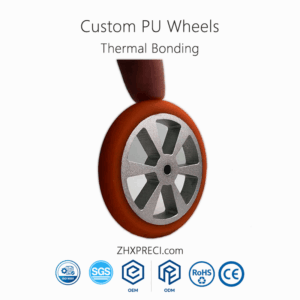
Custom Abrasion Proof PU Wheels For Sand Blasting Areas
Read more -
Custom Abrasion Resistant Polyurethane Wheels For Mining Carts
Read more -
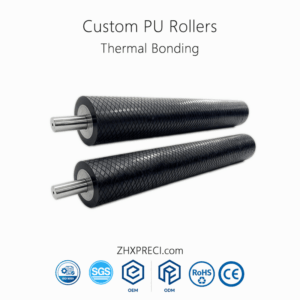
Custom Anti-Static PU Rollers For Explosive Dust Environments
Read more -
Custom ATEX Compliant Polyurethane Wheels For Hazardous Areas
Read more -
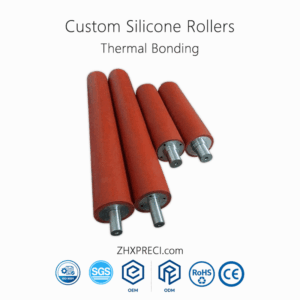
Custom Bearing Mounted Silicone Coated Rollers Quick Change
Read more -
Custom Bolt On Polyurethane Wheels For Utility Trailers
Read more -
Custom CE Certified Polyurethane Wheels For European Machinery
Read more -
Custom Chemical Resistant Polyurethane Wheels For Battery Carts
Read more -
Custom Chemical Resistant Polyurethane Wheels For Etching Lines
Read more -
Custom Conductive Polyurethane Wheels For Battery Packs
Read more -
Custom Conductive Polyurethane Wheels For Semiconductor Factories
Read more -
Custom Continuous Duty Polyurethane Wheels For Assembly Lines
Read more -
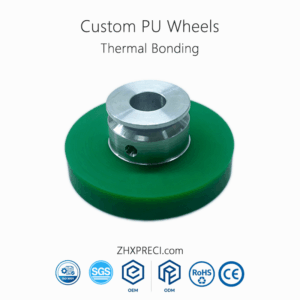
Custom Corrosion Proof Rubber Wheels with Coating for Chemical Plants
Read more -
Custom Corrosion Resistant Polyurethane Wheels For Coastal Carts
Read more -
Custom Corrosion Resistant Polyurethane Wheels For Pier Carts
Read more -
Custom Double Flange Polyurethane Wheels For Overhead Rails
Read more
Custom Durable Polyurethane Wheels | China OEM/ODM Manufacturer & Supplier
Custom durable polyurethane wheels are elastomer wheels produced by casting polyurethane around a prepared core, or by bonding a polyurethane tread to a metal, aluminium, or engineering-plastic core and then machining it to final dimensions. Rather than being picked from a catalogue, each wheel is manufactured against a drawing, a 3D model, or a physical sample supplied by the buyer, so diameter, width, hardness, tread crown, bore, and bearing arrangement are matched to the actual equipment. Within this category you will find solid polyurethane wheels, PU-tyred wheels with cast iron or aluminium centres, PU rollers for conveyor and drive duty, and PU-coated assemblies for material handling, food processing, printing, packaging, and automated logistics equipment. Most industrial demand falls between 70 Shore A and 98 Shore A, with Shore D grades used where deflection must stay low under high load. Because the compound, the core design, and the bonding process are selected together, a properly specified polyurethane wheel can deliver extended service life, reduced rolling resistance, and dependable traction on both smooth and mildly contaminated floors.What Are Custom Durable Polyurethane Wheels?
A polyurethane wheel is a wheel whose outer running surface is made from polyurethane elastomer rather than rubber, nylon, phenolic resin, or steel. Polyurethane occupies a useful middle ground: it is harder and more abrasion-resistant than general-purpose rubber, yet more resilient and quieter than solid steel or cast iron. That combination is the reason PU wheels are widely used on carts, trolleys, castors, conveyors, and automated guided vehicles. The word "custom" matters. Polyurethane is a family of formulations rather than a single material. By changing the prepolymer, the curative, the chain extender, and the filler package, a manufacturer can shift hardness, rebound, compression set, oil resistance, hydrolysis resistance, and electrical conductivity across a wide range. The word "durable" then refers to how that formulation behaves in service: resistance to abrasion, resistance to chunking and tearing under impact, and the ability to hold its shape after thousands of load cycles. When these two ideas are combined, the result is a wheel engineered for a specific duty cycle instead of a generic replacement. A 150 mm wheel running in a chilled warehouse on polished concrete may need a different compound from a 150 mm wheel running in a foundry or a bakery wash-down area, even if the drawing looks identical.Material Performance of Custom Durable Polyurethane Wheel Compounds
The values below describe typical commercial ranges for cast polyurethane elastomers used in custom durable polyurethane wheels. Exact figures depend on the selected grade, the section thickness, and the service conditions, and are confirmed for each project through sample testing.| Property | Typical Range | Notes on Selection |
|---|---|---|
| Hardness | 70–98 Shore A; 40–80 Shore D | Softer grades grip and absorb shock; harder grades carry more load with less rolling resistance |
| Density | Approximately 1.05–1.25 g/cm³ | Higher density grades generally offer better load support |
| Tensile strength | Approximately 30–55 MPa | Influences resistance to tearing at the wheel edge |
| Tear strength | Approximately 60–120 kN/m | Important where wheels roll over gratings or expansion joints |
| Rebound resilience | Approximately 40–70% | Higher rebound gives lower rolling resistance; lower rebound gives better vibration damping |
| Abrasion loss | Approximately 20–60 mm³ (DIN 53516 test method) | Lower loss indicates better wear resistance on abrasive floors |
| Compression set | Approximately 10–30% after prolonged load | Lower set helps the wheel keep its roundness under static storage load |
| Continuous service temperature | Commonly -30 °C to +80 °C | Heat-resistant grades extend the upper limit; low-temperature grades are available for cold stores |
| Short-term temperature peak | Up to approximately +120 °C for selected grades | Peak exposure must be brief and confirmed against the application |
| Electrical behaviour | Insulating, antistatic, or conductive grades | Antistatic and conductive compounds are used in electronics and explosive-atmosphere handling |
Why Choose Custom Durable Polyurethane Wheels?
The value of a custom polyurethane wheel comes from matching the material to the duty, not from the material alone. The points below explain how each design decision translates into measurable value in the field.- Adjustable hardness is one of the main reasons a custom polyurethane wheel can be matched to a duty. Compounds are available from soft, shock-absorbing grades through to hard, low-deflection grades. This lets the same wheel geometry be tuned for push effort, floor protection, or load capacity, so operators and equipment are not forced into unnecessary compromises. Hardness is verified on finished parts with a durometer and recorded batch by batch.
- High abrasion resistance is another advantage of cast PU elastomers, which typically wear more slowly than general-purpose rubber on concrete and tile. The tread keeps its profile for longer, which helps reduce replacement frequency and unplanned downtime. Abrasion loss is checked against the selected grade using standard laboratory test methods.
- Custom core design allows the wheel to match the existing axle or castor fork. Cores can be produced in cast iron, steel, stainless steel, aluminium, or engineering plastics, with keyways, flats, threads, or press-fit bores. This avoids adapters and on-site re-machining, supporting faster assembly. Bore tolerances and runout are measured on the finished assembly.
- Bonding integrity is central to durability under impact. The chemical bond between polyurethane and a properly prepared core reduces the risk of tread separation or slippage on the rim, which supports safer operation and fewer field failures. Bonding is inspected after cure and validated through load and impact testing on sample wheels.
- Quiet running and floor protection come from the elastomer tread, which dampens vibration and reduces point loading compared with metal wheels. This means less noise and less marking of sensitive floors, improving the working environment and reducing floor maintenance cost. Rolling performance and floor marking are reviewed with customer samples in the intended environment.
- Low rolling resistance is available in harder PU grades with good rebound, which require less push force than soft rubber. This makes heavy carts and towed trains easier to move, reducing operator fatigue and, in powered applications, lowering energy consumption. Starting and rolling resistance are measured on sample wheels under representative loads.
- OEM and ODM support covers wheels produced to a drawing, reverse-engineered from a sample, or co-developed from a performance requirement. A single supplier can cover prototype and series production, simplifying sourcing and maintaining consistent quality from first article to repeat order. Dimensional reports accompany first-article submissions on request.
Customization Options for Durable Polyurethane Wheels
Because the category is built around customisation, the variables below are the ones most often defined during a project review. Not every item applies to every wheel, and the final combination is agreed in writing before production.| Parameter | Available Options |
|---|---|
| Hardness | Shore A and Shore D grades across the elastic range, selected for load and floor conditions |
| Compound type | Standard wear grades, oil-resistant, hydrolysis-resistant, heat-resistant, low-temperature, antistatic, conductive, flame-retardant, and food-contact-compatible formulations |
| Colour | Natural amber, black, grey, red, green, blue, white, or matched to a customer colour reference |
| Core material | Cast iron, carbon steel, stainless steel, aluminium alloy, or engineering plastic |
| Core finish | Painted, zinc-plated, nickel-plated, or untreated machined surface |
| Bore and fixing | Plain bore, keyway, tapered bore, threaded hub, press-fit, or journal for bearing assembly |
| Bearing options | Precision ball bearings, stainless bearings, sealed bearings, tapered roller bearings, plain bushings, or no bearing |
| Tread profile | Flat, crowned, chamfered, grooved, ribbed, or contoured to drawing |
| Surface | Machined finish, moulded finish, or textured surface for grip |
| Marking | Part number, batch code, hardness, or customer logo applied by mould engraving or laser marking |
| Packaging | Cartons, pallets, individual wrapping, or customised export packing |
Typical Applications
Custom durable polyurethane wheels are selected across a broad range of industries, usually wherever a balance of load capacity, wear life, and floor protection is required.- Material handling and warehousing. Trolleys, platform carts, order-picking carts, towed trains, and pallet trucks running on concrete or epoxy floors.
- Automated guided vehicles and autonomous mobile robots. Drive wheels and idler wheels where consistent traction, controlled hardness, and repeatable dimensions support accurate navigation.
- Food processing and pharmaceutical production. Wash-down areas using food-contact-compatible grades and stainless cores, with compounds chosen for moisture resistance.
- Printing, labelling, and paper converting. Feed rollers, nip rollers, and guide wheels where surface finish and dimensional accuracy influence web tracking.
- Packaging and conveying. Drive rollers, idler rollers, and curve wheels on conveyor lines, including antistatic grades for film and electronics packaging.
- Textile and wire production. Guide rollers and tension wheels that need smooth surfaces and low marking.
- Medical and laboratory equipment. Castors and rollers for beds, trolleys, and instrument cabinets where quiet operation and floor protection matter.
- Cold storage and refrigeration logistics. Low-temperature grades that retain flexibility in chilled and frozen environments.
- Heavy industrial equipment. High-load wheels with cast iron or steel cores for foundry, steel mill, and heavy fabrication environments.
Specification Range for Custom Durable Polyurethane Wheels
The table below shows the ranges normally produced. Items outside these ranges can usually be discussed, provided the load case and operating environment are clearly defined.| Parameter | Typical Range |
|---|---|
| Outer diameter | Approximately 40 mm to 600 mm |
| Tread width | Approximately 20 mm to 200 mm |
| Hardness | 70–98 Shore A; 40–80 Shore D |
| Bore diameter | Approximately 8 mm to 120 mm |
| Bore tolerance | Typically H7 or as specified on the drawing |
| Dimensional tolerance | Typically within 0.2 mm to 0.5 mm on machined dimensions, depending on size |
| Radial runout | Controlled according to the intended speed and tracking requirement |
| Load capacity | Determined by diameter, width, hardness, core design, and duty cycle; verified by compression testing |
| Operating speed | Selected according to application; higher speeds call for tighter runout and harder grades |
| Service temperature | Commonly -30 °C to +80 °C, with extended ranges available by grade |
How to Select the Right Hardness and Profile
Selection is normally a sequence of trade-offs rather than a single calculation. The following order of questions tends to produce a workable specification quickly.- Establish the load per wheel. Divide the total equipment weight, including payload, by the number of load-bearing wheels, then apply an allowance for uneven floors and dynamic loading. Because polyurethane is viscoelastic, a wheel that is loaded continuously will deflect more than one loaded briefly.
- Define the floor condition. Smooth epoxy and polished concrete allow harder grades with lower rolling resistance. Tiled, cracked, or jointed floors favour softer grades that roll over discontinuities instead of chipping.
- Decide the priority: push effort or floor protection. Harder compounds reduce push force but transmit more vibration and point load. Softer compounds protect floors and reduce noise but increase push force.
- Check the chemical and temperature environment. Oils, solvents, cleaning agents, steam, and hot water all influence compound choice. Ester-based systems suit oil exposure; ether-based systems suit moisture. Heat-resistant grades are available where ambient or contact temperatures are elevated.
- Confirm the mounting interface. Bore diameter, keyway, flat, thread, and bearing type determine the core design. Measuring an existing wheel or supplying a sample shortens this step considerably.
- Choose the tread profile. A flat tread distributes load broadly; a crowned tread improves steering on castors; grooved or ribbed treads help with traction or with clearing debris.
- Validate with a sample. Where the duty is demanding or the application is new, a sample wheel tested on the actual equipment is a reliable way to confirm the specification before series production.
How Custom Polyurethane Wheels Are Manufactured
Production begins with the core. Metal cores are machined, degreased, and prepared with the surface treatment required for the selected bonding system. The polyurethane is then cast around the core in a heated mould, or bonded and subsequently machined to final dimensions. Casting allows thicker tread sections and complex profiles; machining after casting provides tighter dimensional control and a cleaner surface finish. Cure time and post-cure temperature are controlled according to the formulation, because these variables affect hardness development, compression set, and the final bonding strength. After cure, wheels are trimmed, machined where required, and inspected. Depending on the application, the finished wheel may be balanced, marked, and packed for export.Quality Control and Testing
Inspection is applied at several points rather than only at the end of the process.- Incoming inspection of raw materials, including batch traceability for polyurethane components and core steel.
- Core dimensional checks before casting, covering bore, hub, and keyway.
- Process monitoring of mix ratio, mould temperature, and cure schedule.
- Hardness verification on finished parts using a durometer, recorded per batch.
- Dimensional inspection of outer diameter, width, bore, and runout against the agreed drawing.
- Visual inspection of the tread surface and bonding line for voids, inclusions, or separation.
- Load and rolling checks on sample wheels where the application requires them.
- Pre-shipment inspection with photographs and dimensional reports available on request.