
Custom Wear Resistant Polyurethane Wheels
Custom Wear Resistant Polyurethane Wheels
Custom wear resistant polyurethane wheels, made to your drawing.
- 80–95A Shore PU hardness
- −20 to +80°C temp
- 20–500 mm dia, AGV use
- 1,500 kg load
- RoHS & REACH cert
Showing 1–16 of 73 results
-
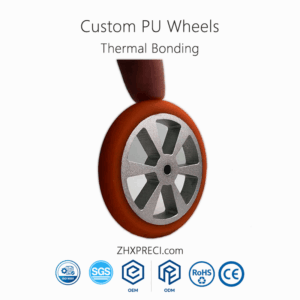
Custom Abrasion Resistant Polyurethane Wheels For Mining Carts
Read more -
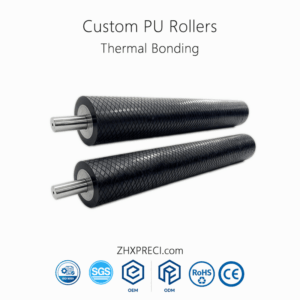
Custom Anti-Static PU Rollers For Explosive Dust Environments
Read more -
Custom ATEX Compliant Polyurethane Wheels For Hazardous Areas
Read more -
Custom Bolt On Polyurethane Wheels For Utility Trailers
Read more -
Custom CE Certified Polyurethane Wheels For European Machinery
Read more -
Custom Chemical Resistant Polyurethane Wheels For Battery Carts
Read more -
Custom Chemical Resistant Polyurethane Wheels For Etching Lines
Read more -
Custom Conductive Polyurethane Wheels For Battery Packs
Read more -
Custom Conductive Polyurethane Wheels For Semiconductor Factories
Read more -
Custom Continuous Duty Polyurethane Wheels For Assembly Lines
Read more -
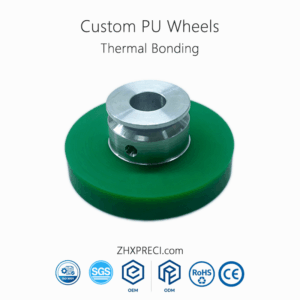
Custom Corrosion Proof Rubber Wheels with Coating for Chemical Plants
Read more -
Custom Corrosion Resistant Polyurethane Wheels For Coastal Carts
Read more -
Custom Corrosion Resistant Polyurethane Wheels For Pier Carts
Read more -
Custom Double Flange Polyurethane Wheels For Overhead Rails
Read more -
Custom ESD Safe Polyurethane Wheels For Circuit Assembly
Read more -
Custom ESD Safe Polyurethane Wheels For Electronics Assembly
Read more
Custom Wear Resistant Polyurethane Wheels from ZHXPRECI | China OEM/ODM Factory Manufacturer Supplier Custom Elastomer Wheels & Rollers
Custom wear resistant polyurethane wheels are elastomer wheels produced by casting liquid polyurethane systems or machining cast polyurethane blanks into a defined hardness, profile and bore configuration, then bonding or mechanically locking that elastomer to a metal or engineering-plastic core. They are specified in place of rubber, nylon, cast iron and steel wheels whenever an application requires a combination of abrasion resistance, load-bearing capacity, floor protection and predictable rolling behaviour. As a China-based OEM/ODM factory manufacturer and supplier of custom elastomer wheels and rollers, ZHXPRECI builds these wheels to drawing, to sample, or to a performance brief supplied by the buyer.
Getting the specification right depends on understanding hardness, the dominant abrasion mechanism, the load carried by each wheel and the mounting interface. For procurement teams, maintenance engineers and design engineers, working through these parameters in sequence is the most reliable route from an operating condition to a confirmed specification.
What Are Custom Wear Resistant Polyurethane Wheels?
Wear resistant polyurethane wheels are wheels whose outer tyre is made from a polyurethane elastomer formulated for high abrasion resistance. Polyurethane sits between rubber and engineering plastics in the material spectrum: it offers the resilience and floor protection associated with rubber, together with the load capacity, cut resistance and dimensional stability more typical of harder polymers. The modifier "wear resistant" refers to the compound formulation and the hardness selected, not to a single universal grade. Two wheels of identical dimensions can behave very differently if their formulations or hardness differ.
The term "custom" indicates that the wheel is not taken from a fixed catalogue. Instead, the buyer defines one or more of the following: outside diameter, tread width, bore diameter, bore type, hub material, hardness, colour, tread profile, flange geometry, keyway, bearing arrangement or surface finish. Production then follows a documented drawing or a physical sample.
Custom wear resistant polyurethane wheels are commonly used in:
- Automated guided vehicles and autonomous mobile robots
- Conveyor and sorting systems in warehouses and distribution centres
- Material handling carts, tow tractors and pallet trucks
- Printing, packaging and converting machinery
- Textile winding, spinning and finishing lines
- Food processing and pharmaceutical equipment where non-marking behaviour matters
- Woodworking, ceramic and glass handling lines
- Escalator and lift components, guide rollers and drive rollers
Why Polyurethane Is Chosen Over Rubber, Nylon and Steel
Material selection drives both service life and operating cost. The comparison below reflects general industry experience; actual results depend on load, speed, surface condition and compound selection.
| Property | Polyurethane Elastomer | Rubber | Nylon / Engineering Plastic | Steel / Cast Iron |
|---|---|---|---|---|
| Abrasion resistance | Generally high; can be several times that of natural rubber depending on grade | Moderate | Moderate to high | Low relative to its hardness, but resists wear by sacrificing the mating surface |
| Load capacity | Moderate to high, dependent on hardness and core design | Lower | High | Very high |
| Floor protection | Good; non-marking grades available | Good | Limited; can scuff or crack floors | Poor; damages most floors |
| Noise and vibration | Low to moderate | Low | Higher | High |
| Oil and grease resistance | Good with appropriate formulation | Generally poor | Good | Good |
| Cut and tear resistance | Good to high | Moderate | Can chip or craze | Not applicable |
| Operating temperature | Typically −20 °C to +80 °C for standard grades; heat-resistant grades extend this range | Broad but degrades with heat | Broad | Very broad |
In practice, polyurethane is selected when a steel wheel is too aggressive on the floor, a rubber wheel wears too quickly, and a nylon wheel is too noisy or too brittle. That middle ground is where most custom wear resistant polyurethane wheels are specified.
Understanding the Two Defining Attributes
Attribute One: Custom Engineering
Custom engineering means the wheel is built around the machine, not the other way around. A standard wheel forces the designer to adapt the mounting, the axle, the clearance and sometimes the frame geometry. A custom polyurethane wheel allows the bore, hub length, tread radius, flange position and hardness to be fixed by the application. This matters in retrofit work, in equipment where space is constrained, and in machines that must meet a defined rolling resistance or a specific load per wheel.
Customisation also applies to the compound itself. Different formulations favour abrasion resistance, hydrolysis resistance, oil resistance, low-temperature flexibility or heat resistance. Because these properties trade off against each other, the specification process should start from the operating conditions rather than from a catalogue number.
Attribute Two: Wear Resistance
Wear resistance is not a single number. It depends on the abrasion mechanism present. A wheel running on a smooth concrete floor at moderate speed experiences a different wear pattern from a wheel operating on a grit-contaminated steel track. Recognising the dominant mechanism is the first step in selecting a compound. The second step is matching hardness to load and rolling conditions, because an excessively hard wheel may reduce rolling resistance while increasing the risk of tread cracking under shock loading.
Because wear resistance cannot be assessed from hardness alone, meaningful specification usually relies on abrasion testing, application history or a trial program. Buyers who can describe the floor material, the presence of abrasive contamination, the load per wheel and the duty cycle will receive a more accurate recommendation.
Hardness and Durometer Selection
Hardness is expressed on the Shore A or Shore D scale. Wheels are most often specified between 70 Shore A and 98 Shore A, with harder grades in the 55 to 75 Shore D range used for high-load or low-rolling-resistance duties. The table below offers general guidance rather than fixed rules.
| Hardness Range | Typical Behaviour | Common Duties |
|---|---|---|
| 60–75 Shore A | Soft, high grip, high rolling resistance | Light carts, delicate floors, quiet operation |
| 80–88 Shore A | Balanced grip, cushioning and load capacity | General material handling, conveyors, AGV drive wheels |
| 90–95 Shore A | Higher load capacity, lower rolling resistance | Heavy carts, tow tractors, industrial castors |
| 96 Shore A – 60 Shore D | Low deformation under load | High point loads, pallet truck wheels, press rollers |
| Above 60 Shore D | Lowest rolling resistance, reduced shock absorption | Roller applications where floor protection is less critical |
Two practical cautions apply. First, a harder wheel concentrates pressure at the contact patch, which increases floor loading. Second, a wheel that is too soft for the load deforms excessively, generates heat and can fail earlier than expected. Matching hardness to the load per wheel is therefore more important than matching it to a catalogue norm.
Wear Mechanisms and Compound Selection
Understanding what is actually destroying the wheel is the fastest route to a durable specification.
- Abrasive wear: caused by grit, sand, metal chips or mineral dust. Favours harder compounds with high tear strength.
- Fatigue wear: caused by repeated deformation under load. Favours compounds with good resilience and low compression set.
- Cut and chunking: caused by sharp debris or rough surfaces. Favours higher tear resistance rather than higher hardness alone.
- Thermal degradation: caused by continuous running at elevated temperature. Requires a heat-stabilised formulation.
- Hydrolysis: caused by prolonged exposure to moisture or humid environments. Requires a hydrolysis-resistant polyurethane system, often based on polyether rather than polyester chemistry.
- Oil and chemical attack: requires a formulation selected against the specific fluid present.
Where several mechanisms act at once, the specification usually favours the one that shortens service life most. This is a judgement call and is best made with test data or field history.
Customisation Options Available
- Outside diameter: produced within a practical range defined by the mould or machining capacity, typically from small guide rollers up to large industrial wheels.
- Tread width and profile: flat, crowned, grooved or flanged profiles.
- Bore and hub: plain bore, keyed bore, threaded bore, tapered bore, with or without bearing seats.
- Core material: aluminium, steel, stainless steel, cast iron or engineering plastic, selected for corrosion resistance and weight.
- Bonding method: chemically bonded cast elastomer or mechanically retained tread.
- Hardness: specified on Shore A or Shore D, with tolerance agreed in advance.
- Colour: non-marking and colour-coded options are available.
- Surface finish: machined, ground or moulded finish depending on dimensional and cosmetic requirements.
- Assembly: bearings, axles, brackets and mounting hardware can be supplied pre-assembled where required.
Technical Specification Framework for Polyurethane Wheels
The table below shows the parameters that should be confirmed before production of custom wear resistant polyurethane wheels begins. Values are indicative and are finalised against the approved drawing or sample.
| Parameter | Typical Range or Option |
|---|---|
| Polyurethane hardness | 60 Shore A to 80 Shore D, commonly 80–95 Shore A |
| Tensile strength | Typically 25–55 MPa depending on grade |
| Tear strength | Typically 40–110 kN/m depending on grade |
| Abrasion loss | Measured by DIN 53516 or equivalent; value depends on compound |
| Operating temperature | Standard grades −20 °C to +80 °C; heat-resistant grades extended upward |
| Compression set | Influenced by formulation and by continuous load |
| Outside diameter tolerance | Confirmed against drawing; tighter tolerances available on machined wheels |
| Bore tolerance | Matched to shaft or bearing fit |
| Concentricity | Specified for high-speed or precision duties |
| Load per wheel | Determined by diameter, width, hardness and core design |
| Core material | Aluminium, steel, stainless steel, cast iron, engineering plastic |
| Colour | Natural amber, black, grey, white, or custom colour |
Details Images
Because every custom wear resistant polyurethane wheel is produced to a specific drawing or sample, the images supplied during quotation match the actual configuration under discussion rather than a generic catalogue picture. Dimensional sketches, tread profile views, core and bore details, and photographs of representative finished wheels are available on request. Buyers who need to verify a profile before committing to tooling are welcome to request these documents alongside the technical proposal.
Material Performance Considerations
Custom wear resistant polyurethane wheels perform differently depending on how the elastomer is processed. Cast systems generally offer a wider hardness range and better bonding to the core, which suits high-load and high-integrity applications. Machined treads allow tighter dimensional control and are often chosen where concentricity or a specific profile matters.
| Performance Factor | Practical Consideration |
|---|---|
| Abrasion resistance | Improves with compound selection and with hardness, up to the point where brittleness increases |
| Load capacity | Rises with hardness, width and core stiffness; limited by floor pressure limits |
| Rolling resistance | Decreases with hardness; affects manual pushing effort and energy use |
| Shock absorption | Decreases with hardness; important where floors are uneven or loads are dynamic |
| Noise | Generally lower than hard plastic or metal wheels |
| Temperature stability | Determined by formulation; sustained heat shortens service life in standard grades |
| Moisture resistance | Well served by polyether-based systems in humid or wash-down environments |
The right combination of polyurethane grade, hardness and core material determines how well a custom wear resistant polyurethane wheel performs in service. Because these factors interact, the specification should be confirmed as a whole rather than parameter by parameter.
Why Choose This Product
Custom wear resistant polyurethane wheels are specified when the cost of wheel replacement, floor repair or unplanned downtime exceeds the cost of engineering the wheel correctly the first time.
- Elastomer hardness, profile and bore are defined by the application, so the wheel fits the machine without adapters. This reduces retrofit time and assembly cost, with each specification confirmed against an approved drawing or physical sample.
- Abrasion-resistant compound options extend tread life in dusty or contaminated environments, which means fewer replacements and lower maintenance labour. These compounds are supported by abrasion testing and field performance history.
- Metal or plastic core selection allows weight and corrosion behaviour to be matched to the operating environment, making the wheel suitable for wash-down, outdoor or high-cycle duties. Material and dimensional inspection records accompany each batch.
- Non-marking and colour-coded formulations help keep floors clean and make wheels easy to identify at a glance, supporting compliance with clean-area and hygiene requirements. Colour and hardness tolerances are agreed in advance.
- OEM and ODM support means designs can be produced to a buyer's drawing or developed jointly, enabling private-label and equipment-integrated solutions. The specification and sample approval process is documented at every stage.
Where These Wheels Are Used
Wear resistant polyurethane wheels appear across industries because the same core properties, abrasion resistance, load capacity and floor protection, are valued in different ways.
- Warehousing and logistics: AGV drive and idler wheels, conveyor rollers, cart castors and sorting equipment.
- Manufacturing: assembly line carts, transfer rollers, guide wheels for automated production cells.
- Printing and packaging: nip rollers, guide rollers and feed wheels where marking must be avoided.
- Food and pharmaceutical: wash-down compatible wheels in non-marking and colour-coded formulations.
- Textile and wire: low-friction guide wheels that resist abrasion from continuous fibre or filament contact.
- Glass and ceramic handling: wheels that protect brittle surfaces while carrying significant loads.
- Elevator and escalator: guide rollers and drive rollers requiring consistent dimensions and quiet operation.
How to Select the Right Custom Wear Resistant Polyurethane Wheel
A structured selection process reduces the risk of premature failure. The steps below outline a practical approach.
- Measure the load per wheel. Divide the total moving load by the number of load-bearing wheels, then add a margin for dynamic and uneven loading.
- Describe the floor or track. Concrete, epoxy, tile, steel rail, grated surface and the presence of grit all influence compound choice.
- Define the duty cycle. Continuous operation generates more heat than intermittent use and may require a different formulation.
- Confirm the mounting interface. Bore diameter, bore type, hub length, keyway and bearing seat must be known before production.
- Set the operating environment. Temperature range, humidity, wash-down, oils, solvents and UV exposure all affect compound selection.
- Choose hardness against load, not against habit. Start from the load and floor pressure, then refine with rolling resistance requirements.
- Decide on tolerance and finish. High-speed or precision duties generally justify machined treads and tighter tolerances.
- Request a sample or trial batch. Field evaluation remains a highly reliable confirmation before volume production.
Installation and Maintenance Guidance
Correct installation protects both the wheel and the equipment. The bore should be a proper fit on the shaft or bearing; excessive clearance leads to impact loading and accelerated wear. Axle alignment deserves attention because a misaligned wheel runs at an angle and wears unevenly across the tread. Where bearings are fitted, seals help exclude dust and grit, which are among the most common causes of reduced service life in industrial environments.
Routine maintenance is straightforward:
- Inspect tread wear periodically and compare it against the replacement limit agreed at specification stage.
- Remove accumulated debris from the running surface and from around bearings.
- Check for cracking, chunking or flat spots, which indicate a mismatch between compound and load or surface condition.
- Verify that fasteners and axle fixings remain correctly torqued.
- Store spare wheels away from direct sunlight, excessive heat and ozone sources.
Quality Control and Documentation
Consistency matters more than occasional peak performance. Production of custom wear resistant polyurethane wheels at ZHXPRECI follows a documented workflow covering incoming material verification, mixing and casting control, cure parameters, bonding inspection, machining, and final dimensional checks. Material and dimensional inspection reports can be provided on request, and declarations relating to RoHS and REACH can be supplied where the buyer requires them.
Where a buyer supplies a drawing, production is checked against that drawing. Where a buyer supplies a sample, dimensions and hardness are measured and recorded before the batch is released. This approach keeps successive orders aligned with the approved specification.
Production & Inventory Policy
Lead time: Actual lead time is subject to order quantity, current production schedule, raw material availability, and final specification confirmation. We provide an estimated delivery window after order confirmation and maintain close communication throughout production.
Stock status: We generally do not hold finished stock, although a limited range of fast-moving standard sizes may be available. Actual inventory changes with sales and production, so please confirm current availability with our team before placing an order.
Bulk & urgent orders: For large-volume or time-critical requirements, please contact us in advance to discuss capacity and scheduling. We will make every effort to align with your timeline.
About ZHXPRECI
ZHXPRECI manufactures custom elastomer wheels and rollers for industrial buyers, equipment makers and distributors. Our work centres on polyurethane and related elastomer systems, covering compound selection, casting, bonding, machining and assembly. Custom wear resistant polyurethane wheels form a core part of our product range, alongside rubber rollers, silicone rollers and specialty elastomer components.
We work with buyers who need a specification partner rather than a catalogue supplier. That means reviewing the application, proposing a configuration, producing samples for evaluation, and then holding the approved specification stable across repeat orders. Whether the requirement is a single prototype set or an ongoing production program, the same documented process applies.
Factory visits, video inspections and third-party quality checks can be arranged. We can also provide documentation to support buyer audits, including material declarations and inspection records where applicable.
Frequently Asked Questions
What is the difference between cast and machined polyurethane wheels?
Cast wheels are produced by pouring liquid polyurethane into a mould around a prepared core. This method suits a wide hardness range and strong core bonding. Machined wheels start from a cast or extruded blank that is then turned to final dimensions, which allows tighter tolerances, sharper profiles and better concentricity. Many custom wear resistant polyurethane wheels combine both processes: a cast blank followed by finish machining.
How do I choose the right hardness for my application?
Work from the load per wheel and the floor condition first. Higher loads and lower rolling resistance requirements point toward harder grades in the 90 to 95 Shore A range. Where shock absorption, quiet running or floor protection matters more, softer grades around 80 to 88 Shore A are often appropriate. Compression set and heat build-up should also be reviewed for continuous duty.
What load can a polyurethane wheel carry?
Load capacity depends on outside diameter, tread width, hardness, core design and the number of wheels sharing the load. Larger diameters and wider treads distribute pressure over a greater area, which generally allows higher loads. Because floor pressure limits often govern the practical maximum, it is advisable to confirm load capacity against the specific configuration rather than assume a figure from a general table.
What temperature range can these wheels operate in?
Standard polyurethane grades are generally used between about −20 °C and +80 °C. Heat-resistant formulations extend the upper limit, though continuous operation near a material's limit tends to shorten service life. Applications with sustained heat should be discussed at specification stage so that the compound and core are selected together.
Are these wheels suitable for wet or wash-down environments?
Yes, provided the correct formulation is selected. Polyether-based polyurethane systems generally offer better hydrolysis resistance than polyester-based systems in humid or frequently washed environments. For food and pharmaceutical areas, non-marking and colour-coded options are commonly specified alongside stainless steel or coated cores.
How do I specify a custom wheel?
Provide as much of the following as possible: outside diameter, tread width, bore diameter and type, hub length, core material, hardness, colour, operating load, speed, floor or track material, temperature range and any chemical exposure. A drawing or sample accelerates the process considerably. Where only a performance requirement exists, our engineering team can propose a configuration for review.
Can these wheels be supplied with bearings or as complete assemblies?
Yes. Bearings, axles, brackets and mounting hardware can be fitted before shipment where the application benefits from a complete assembly. Bearing selection should account for load, speed and contamination level, since the bearing is often the limiting component in dusty environments.
How should I evaluate a trial sample?
Install the sample in the actual application and monitor tread wear, heat build-up, noise, floor marking and dimensional change over a defined period. Record the load, running hours and surface condition so the results can be compared with the previous wheel. This data forms a reliable basis for confirming the production specification.
What information is needed for a quotation?
A drawing or sample, the required quantity, the hardness or performance requirement, the core material and any documentation needs are the main inputs. Lead time is subject to order quantity, current production schedule, and final specification confirmation, so it is best confirmed at the time of enquiry rather than assumed in advance.
Do you support OEM and ODM projects?
Yes. As a China OEM/ODM factory manufacturer and supplier of custom elastomer wheels and rollers, ZHXPRECI supports both routes. OEM projects follow the buyer's drawing and specification. ODM projects begin from a performance requirement or an existing problem, with the configuration developed jointly and validated through samples before volume production.
Request a Specification Review
If you are sourcing custom wear resistant polyurethane wheels for material handling, automation, printing, packaging or any other industrial duty, send us your drawing, your sample, or simply a description of the problem. Our team will review the load, environment and mounting interface, then recommend a hardness, compound and core combination for evaluation.
Custom Wear Resistant Polyurethane Wheels from ZHXPRECI | China OEM/ODM Factory Manufacturer Supplier Custom Elastomer Wheels & Rollers — share your requirements and we will respond with a technical proposal and a quotation based on your confirmed specification.