
Custom UV Resistant Polyurethane Wheels
Custom UV Resistant Polyurethane Wheels
Custom UV resistant polyurethane wheels for outdoor use.
- 30‑500kg load UV
- 60‑95A Shore
- 40‑600mm dia
- -30‑+80°C temp
- ISO/REACH cert
Showing 1–16 of 77 results
-
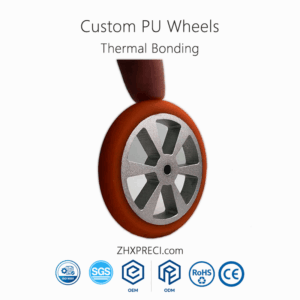
Custom Abrasion Resistant Polyurethane Wheels For Mining Carts
Read more -
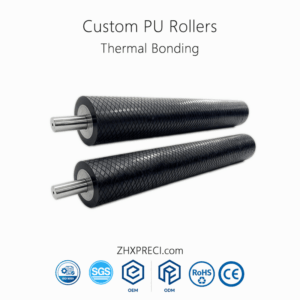
Custom Anti-Static PU Rollers For Explosive Dust Environments
Read more -
Custom ATEX Compliant Polyurethane Wheels For Hazardous Areas
Read more -
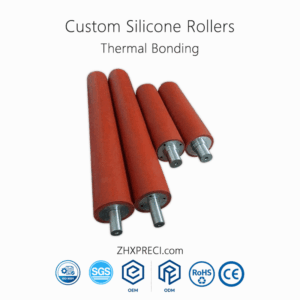
Custom Bearing Mounted Silicone Coated Rollers Quick Change
Read more -
Custom Bolt On Polyurethane Wheels For Utility Trailers
Read more -
Custom CE Certified Polyurethane Wheels For European Machinery
Read more -
Custom Chemical Resistant Polyurethane Wheels For Battery Carts
Read more -
Custom Chemical Resistant Polyurethane Wheels For Etching Lines
Read more -
Custom Conductive Polyurethane Wheels For Battery Packs
Read more -
Custom Conductive Polyurethane Wheels For Semiconductor Factories
Read more -
Custom Continuous Duty Polyurethane Wheels For Assembly Lines
Read more -
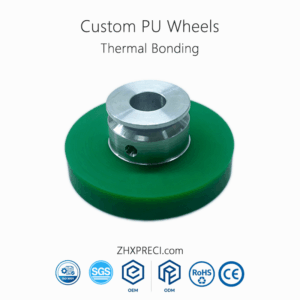
Custom Corrosion Proof Rubber Wheels with Coating for Chemical Plants
Read more -
Custom Corrosion Resistant Polyurethane Wheels For Coastal Carts
Read more -
Custom Corrosion Resistant Polyurethane Wheels For Pier Carts
Read more -
Custom Double Flange Polyurethane Wheels For Overhead Rails
Read more -
Custom Durable Rubber Wheels with Coating for Warehouse Operations
Read more
Custom UV Resistant Polyurethane Wheels
Custom UV Resistant Polyurethane Wheels from ZHXPRECI, a China OEM/ODM factory manufacturer and supplier of custom elastomer wheels and rollers, are developed for equipment that operates outdoors or in environments where sunlight, ozone, humidity and temperature cycling accelerate the ageing of ordinary elastomer wheels. Unlike standard polyurethane wheels, which may yellow, chalk or develop surface micro-cracks after prolonged exposure to ultraviolet radiation, these wheels use light-stable polymer formulations combined with UV stabiliser packages and weathering-resistant pigments. The result is a wheel that retains a useful balance of hardness, elasticity, abrasion resistance and load-bearing capability over a longer service window in exposed conditions. Because every application imposes its own combination of load, speed, floor condition and climate, these wheels are supplied as custom-engineered components rather than fixed catalogue items, with the tread compound, hardness, geometry, hub and bearing configuration selected to match the duty cycle you describe.
What Are Custom UV Resistant Polyurethane Wheels?
Custom UV resistant polyurethane wheels are wheels in which the outer tread is cast or machined from polyurethane elastomer that has been formulated to resist degradation from ultraviolet light and outdoor weathering, and in which at least one key dimension, compound property or mounting feature is produced to a customer's specification rather than taken from a standard size list. The term covers a broad family of products: solid tyres for outdoor automated guided vehicles, load wheels for material handling carts, guide rollers for sliding gates and folding doors, drive wheels for solar tracking systems, press rollers for outdoor printing equipment, and idler rollers for conveyor lines in yards, ports and open-air production areas.
Polyurethane as the Base Elastomer
Polyurethane is a family of polymers formed by the reaction of isocyanates with polyols. By adjusting the polyol type, the isocyanate type, the chain extender and the stoichiometry, manufacturers can produce elastomers with hardness values ranging from a soft rubber-like Shore A 60A to a rigid Shore D 75D and beyond. Compared with natural rubber, nitrile rubber or EPDM, polyurethane generally offers higher load capacity for the same volume, better resistance to cutting and chunking, and lower rolling resistance. Compared with metal wheels, polyurethane provides a degree of shock absorption, reduces noise, and protects floors from point loading and marking. These characteristics are the reason polyurethane is widely used where a wheel must carry meaningful weight while still protecting the running surface.
What "UV Resistant" Actually Means in Practice
UV resistance does not mean that a wheel is unaffected by sunlight. No organic elastomer is entirely immune to ultraviolet radiation, oxygen and moisture. What it means is that the compound has been designed to slow the chemical reactions that cause surface degradation. In practice, this is achieved in three ways. First, the base polymer chemistry is chosen so that the material is less prone to photo-oxidation and discolouration; aliphatic polyurethane systems, for example, are typically more colour-stable under UV exposure than aromatic systems. Second, hindered amine light stabilisers and UV absorbers are added to interrupt the free-radical chain reactions that break polymer bonds. Third, light-stable pigments such as carbon black or selected inorganic pigments are used instead of dyes that fade quickly. Together, these measures extend the period during which the wheel keeps its intended hardness, surface texture and dimensional stability.
Why "Custom" Matters for This Product Family
A UV stable compound alone does not solve an application problem. The wheel also has to fit, carry the load, run at the required speed and interface correctly with the axle or mounting bracket. That is why the custom element is central. Customisation in this category typically covers outside diameter, tread width, tread profile, hardness, colour, hub material and geometry, bearing type and size, bore and keyway dimensions, and the presence of grooves, shoulders, flanges or crowned running surfaces. It also covers the balance between properties. A harder tread carries more load and rolls more easily but offers less grip and less floor protection. A softer tread grips better and cushions more but deforms further under load and generates more rolling resistance. Custom formulation lets those trade-offs be tuned to a specific machine rather than accepted as a compromise.
Key Performance Attributes of Custom UV Resistant Polyurethane Wheels
The following characteristics are the ones most frequently reviewed by engineers and procurement teams when evaluating this product family.
Weathering and UV Stability
Light-stable formulations are intended to limit yellowing, surface chalking, gloss change and micro-cracking during outdoor service. Accelerated weathering tests such as ASTM G154 or ISO 4892 are commonly used to compare formulations, and results are normally expressed as a change in colour, hardness or surface appearance after a defined exposure period. Buyers should treat such results as comparative indicators rather than absolute service-life predictions, because real outdoor exposure varies with latitude, altitude, shading, airborne pollutants and the angle at which the wheel faces the sun.
Abrasion Resistance
Polyurethane generally performs well in abrasion testing compared with many general-purpose rubbers. The advantage is particularly noticeable on smooth or moderately textured concrete, tile and asphalt surfaces where the wheel rolls rather than slides. In applications where the wheel frequently skids, spins or encounters sharp debris, abrasion resistance depends heavily on hardness and rebound characteristics, and a compound that resists cutting may be a better choice than one optimised purely for low abrasion loss.
Load Capacity and Compression Behaviour
Load capacity is not a single fixed number. It depends on the hardness and thickness of the tread, the wheel diameter and width, the number and spacing of wheels in the assembly, the speed of travel, the duty cycle, the temperature, and the allowable permanent deformation. In general, larger diameter and wider tread distribute load over a larger contact patch, while higher hardness reduces deformation for a given load. Engineers evaluating custom UV resistant polyurethane wheels should therefore work from the actual contact pressure and rolling conditions rather than from a generic rating.
Rolling Resistance and Energy Demand
Lower rolling resistance reduces the torque and energy required to move a load, which matters for battery-powered equipment such as outdoor automated guided vehicles and electric material handling carts. Softer compounds deform more and return less energy, while harder compounds deform less. UV stabilisers and pigments themselves have only a minor effect on rolling resistance, but the base polymer choice does, and so does tread thickness.
Noise and Vibration
Polyurethane wheels typically run more quietly than hard metal or solid nylon wheels, and the difference is more pronounced at higher speeds and on hard floors. Bonded tread designs, in which polyurethane is chemically bonded to a metal hub, generally transmit less vibration than mechanically assembled wheels because there is no relative movement between tread and core.
Chemical and Environmental Resistance
Resistance to oils, greases, diluted acids and alkalis varies with the polyol system. Polyester-based polyurethanes generally show good resistance to oils and hydrocarbons, while polyether-based grades usually offer better resistance to hydrolysis in humid or wet conditions. Polycaprolactone-based grades are often selected where both hydrolysis resistance and mechanical strength are required. Because UV exposure outdoors is frequently accompanied by moisture, choosing a hydrolysis-resistant base polymer is often as important as choosing the light stabiliser package.
Temperature Behaviour
Polyurethane hardness changes with temperature. In cold conditions, the material becomes harder and less resilient; in hot conditions, it becomes softer and more prone to permanent deformation under load. Standard grades are commonly used within a service window of roughly -30 °C to +80 °C, with the exact limits depending on the formulation, the load and the duration of exposure. Applications that combine high ambient temperature with heavy static load require particular attention during compound selection.
Material and Performance Reference for Custom UV Resistant Polyurethane Wheels
The table below summarises typical property ranges for the polyurethane tread compounds used in Custom UV Resistant Polyurethane Wheels for outdoor and UV-exposed applications. Values are indicative and are confirmed against the actual compound selected for each project.
| Property | Typical Range or Value | Test Reference |
|---|---|---|
| Base polymer | Polyether, polyester or polycaprolactone-based polyurethane | Supplier specification |
| Hardness | Shore A 60A to 95A; Shore D 45D to 75D | ASTM D2240 / ISO 868 |
| Tensile strength | Commonly in the range of 25 to 55 MPa | ASTM D412 |
| Tear strength | Typically 40 to 120 kN/m depending on grade | ASTM D624 |
| Rebound resilience | Commonly around 40% to 65% | ASTM D2632 |
| Compression set | Often under 25% after 22 h at 70 °C | ASTM D395 Method B |
| Abrasion resistance | Low volume loss relative to general-purpose rubbers | ASTM D5963 / DIN 53516 |
| Service temperature | Commonly -30 °C to +80 °C, grade dependent | Supplier specification |
| UV stabilisation | Hindered amine light stabilisers, UV absorbers, light-stable pigments | ASTM G154 / ISO 4892 |
| Hydrolysis resistance | Polyether and polycaprolactone grades preferred for wet or humid service | Supplier specification |
Values shown are indicative. The final compound for Custom UV Resistant Polyurethane Wheels is confirmed against the duty cycle, load case and exposure conditions of each individual project.
Specification Options for Custom UV Resistant Polyurethane Wheels
The following parameters can be adapted to suit a specific machine, load case or environment. Where a dimension or property is critical to function or safety, it is normally confirmed on a drawing before production begins.
| Parameter | Available Options |
|---|---|
| Outside diameter | Commonly 40 mm to 600 mm, subject to mould and hub design |
| Tread width | Typically 20 mm to 300 mm |
| Tread hardness | Shore A 60A to 95A, or Shore D grades where higher stiffness is required |
| Hub material | Aluminium, carbon steel, stainless steel, cast iron, glass-filled nylon |
| Bearing type | Precision ball bearing, stainless steel bearing, tapered roller bearing, plain bushing |
| Bore and keyway | Plain bore, keyed bore, threaded bore, tapered bore, custom geometry |
| Tread profile | Flat, crowned, grooved, flanged, shouldered, chamfered |
| Surface finish | As-cast, precision machined, ground |
| Colour | Light-stable pigments including black, grey, white, blue, green and red |
| Dimensional tolerance | Typically around ±0.1 mm on critical machined dimensions, confirmed per drawing |
Why Choose Custom UV Resistant Polyurethane Wheels from ZHXPRECI
Selecting a supplier for outdoor-rated elastomer wheels is largely a question of formulation knowledge, tooling capability and consistency. The points below describe what the ZHXPRECI manufacturing platform is set up to deliver for this product category.
Compound Engineering Rather Than Compound Selection
Because UV resistance interacts with hardness, hydrolysis resistance, rebound and abrasion behaviour, the useful approach is to engineer the compound around the duty cycle rather than to pick the closest available grade. The light stabiliser package, base polyol, isocyanate system and pigment set are reviewed together so that the outdoor performance is not achieved at the expense of mechanical performance.
Bonding and Hub Integration
For wheels with a bonded polyurethane tread, the bond between elastomer and hub is a critical performance factor. Surface preparation, primer selection, casting temperature and cure schedule all influence bond strength. Controlling these variables supports consistent performance under repeated load cycling and reduces the risk of tread separation during service.
Tooling and Dimensional Capability
Custom diameters, tread profiles and hub geometries require moulds, fixtures and machining capacity that match the drawing. Dimensional consistency across production batches matters particularly for wheels used in matched sets, where differences in diameter can cause uneven loading or steering drift.
OEM and ODM Support
For buyers developing a new machine or replacing an existing wheel, support can extend beyond manufacturing to include material recommendations, dimensional review, prototype sampling and drawing documentation. This is the practical meaning of the OEM/ODM role in this category, and it is why Custom UV Resistant Polyurethane Wheels from ZHXPRECI, a China OEM/ODM factory manufacturer and supplier of custom elastomer wheels and rollers, are typically supplied against a specification agreed with the customer rather than selected from a generic list.
How Custom UV Resistant Polyurethane Wheels Are Manufactured
Understanding the production sequence helps buyers evaluate quotations, tolerances and sampling plans.
- Application review. Load, speed, floor condition, exposure environment, temperature range and mounting interface are reviewed to define the target compound and geometry.
- Compound formulation. Base polyol, isocyanate, chain extender, light stabiliser, UV absorber, pigment and any functional additives are selected and documented.
- Tooling preparation. Moulds, cores and fixtures are prepared to match the required dimensions and surface finish.
- Hub preparation. Metal or composite hubs are cleaned, degreased and, where a bonded tread is required, treated with a bonding primer.
- Casting or processing. The polyurethane system is processed according to the formulation schedule, whether that involves casting around a hub, moulding a sleeve or machining from a cast blank.
- Curing. Controlled cure and post-cure steps develop the final hardness, strength and compression-set properties.
- Machining. Diameter, width, profile, bore and keyway are machined to drawing, with dimensional checks at defined intervals.
- Assembly. Bearings, bushes, seals or retaining components are fitted where applicable.
- Inspection and documentation. Hardness, dimensions, appearance and, where requested, bond integrity are checked, and inspection records are maintained against the batch.
- Packing. Wheels are packed to reduce the risk of deformation, contamination or surface damage during transport and storage.
Application Scenarios for Custom UV Resistant Polyurethane Wheels
Outdoor Automated Guided Vehicles and Mobile Robots
Outdoor AGVs and delivery robots operate on concrete, paving and asphalt under direct sunlight. A light-stable tread helps maintain consistent traction and rolling behaviour over extended use, and the custom element allows the wheel diameter, hardness and bearing type to be matched to the vehicle's drive system and floor surface.
Material Handling Carts and Trolleys
Carts used in yards, loading docks, garden centres and open-air warehouse areas are often parked outside for long periods. UV-resistant tread compounds help limit surface cracking and hardness drift that can otherwise increase pushing effort over time.
Gate, Door and Barrier Rollers
Sliding gates, folding doors, shutters and perimeter barriers use guide and load rollers that are permanently exposed to weather. Here the wheel must combine UV stability with reliable rolling under dust, grit and occasional impact.
Solar Tracking and Renewable Energy Equipment
Solar trackers and related positioning equipment operate in high-UV, high-temperature environments with frequent small movements. Wheels and rollers in these systems benefit from formulations that resist both photo-oxidation and compression set.
Agricultural and Landscape Equipment
Seeders, sprayers, harvesters and landscaping machinery encounter soil, plant residue, moisture and sunlight. A hydrolysis-resistant polyurethane with UV stabilisation can be appropriate where the wheel is exposed continuously during the working season.
Outdoor Printing, Packaging and Converting Lines
Rollers and wheels used in equipment installed near windows, in tents or in open sheds can be affected by daylight. A light-stable, dimensionally stable tread helps maintain nip pressure and web alignment over time.
Marine, Port and Coastal Installations
Salt spray, humidity and UV exposure occur together in coastal environments. Compound selection here typically favours hydrolysis-resistant base polymers combined with corrosion-resistant hubs and bearing options.
How to Select the Right Custom UV Resistant Polyurethane Wheels
The following sequence helps narrow the specification efficiently and reduces the risk of an unsuitable selection.
- Define the load per wheel. Include the static load, the dynamic load during travel, and any peak loads from starts, stops or uneven floors.
- State the running speed and duty cycle. Continuous high-speed running generates more heat in the tread than intermittent low-speed movement.
- Describe the floor. Smooth concrete, tiled surfaces, asphalt, grating and uneven ground place different demands on hardness, grip and cut resistance.
- Specify the exposure environment. Sun intensity, average and peak temperature, humidity, salt, chemicals and ozone all influence compound choice.
- Choose the hardness band. As a general guide, softer treads favour grip, floor protection and quiet running, while harder treads favour load capacity and low rolling resistance.
- Select the base polymer. Polyether and polycaprolactone systems are generally preferred where moisture is present; polyester systems may suit dry conditions with oil or hydrocarbon contact.
- Confirm the hub and bearing arrangement. Bonded treads suit smooth, continuous running; mechanically assembled or bolted designs can suit applications that require field replacement.
- Provide a drawing or sample. A drawing with bore, keyway, width and tolerance information allows the wheel to be produced to a defined and repeatable specification.
- Plan a validation step. Where practical, trial a small quantity under representative conditions before committing to volume production.
Installation, Storage and Maintenance Notes
Correct handling extends the useful life of polyurethane wheels.
- Store wheels in a cool, dry, shaded area, away from direct sunlight, ozone-generating equipment such as electric motors, and sources of solvent vapour.
- Avoid stacking heavy wheels in a way that imposes sustained point loads on the tread, particularly in warm conditions where permanent deformation is more likely.
- Check axle alignment during installation, since misalignment increases side loading on the tread and can accelerate edge wear.
- Keep running surfaces free of sharp metal debris, screws and glass, which can cut or tear polyurethane even when the compound is UV stable.
- Inspect periodically for flat spots, cracks, embedded debris and bearing play, and replace wheels as a set where matched diameters are important.
- Clean with mild soap and water. Avoid prolonged contact with strong solvents, which can swell or soften polyurethane.
Frequently Asked Questions About Custom UV Resistant Polyurethane Wheels
What are custom UV resistant polyurethane wheels?
They are polyurethane wheels with an elastomer tread that has been formulated to resist ultraviolet light and outdoor weathering, and that are produced to customer-specific dimensions, hardness, hub and bearing requirements. They are used in outdoor equipment where standard elastomer wheels would degrade faster.
How does UV exposure affect ordinary polyurethane wheels?
Prolonged ultraviolet exposure can cause surface yellowing, chalking, loss of gloss and, in more severe cases, micro-cracking of the tread surface. These changes can gradually alter hardness and surface friction. UV-stabilised compounds slow these processes, though no elastomer is entirely immune to long-term outdoor exposure.
What is the difference between aliphatic and aromatic polyurethane for UV resistance?
Aromatic polyurethane systems, based on isocyanates such as MDI or TDI, generally offer good mechanical properties and cost efficiency but are more prone to discolouration under UV light. Aliphatic systems, based on isocyanates such as HDI or IPDI, are typically more colour-stable and are often chosen where appearance retention matters, though they usually cost more. The final choice for Custom UV Resistant Polyurethane Wheels is normally made against the exposure conditions and the required service window.
Can the hardness, diameter and hub be customised?
Yes. Hardness, outside diameter, tread width, tread profile, hub material, bearing type, bore and keyway are all commonly customised. The practical limits depend on the mould and machining capability required, so an efficient approach is to supply a drawing or a sample with the key dimensions and duty conditions marked.
What load can a UV resistant polyurethane wheel carry?
There is no single figure, because capacity depends on tread hardness and thickness, wheel diameter and width, number of wheels sharing the load, speed, duty cycle and allowable deformation. For a reliable assessment, the actual contact pressure and running conditions should be evaluated rather than a generic rating applied.
What temperature range can these wheels operate in?
Many standard grades are used within roughly -30 °C to +80 °C, but the exact range depends on the formulation, the applied load and the duration of exposure. High temperature combined with heavy static load is a demanding combination and should be reviewed during compound selection.
How do I choose between polyether, polyester and polycaprolactone?
Polyether-based systems are usually preferred where moisture and humidity are present. Polyester-based systems often perform well in dry conditions with oil or hydrocarbon contact. Polycaprolactone-based systems are frequently selected where a combination of hydrolysis resistance and mechanical strength is required.
How long do UV resistant polyurethane wheels last?
Service life varies widely with load, speed, floor condition, temperature and exposure. Rather than quoting a fixed life, it is more reliable to review the operating conditions and, where possible, validate a trial set under representative conditions before full deployment.
What is the minimum order quantity and lead time?
Minimum order quantity depends on whether the item requires new tooling or can be produced from existing moulds. Lead time is subject to order quantity, current production schedule, and final specification confirmation, and is quoted per project after the drawing and compound are agreed.
Can you produce a sample or prototype before mass production?
Yes. Prototype and sample production is a normal part of the development process for custom wheels, and it allows dimensional fit, hardness feel and running behaviour to be checked before a production commitment is made.
About ZHXPRECI
ZHXPRECI is a China-based manufacturer and supplier of custom elastomer wheels and rollers, serving OEM and ODM customers across material handling, automation, industrial equipment and outdoor machinery. The product range covers polyurethane wheels and rollers, rubber-coated wheels, solid tyres, guide rollers and custom elastomer components produced to customer drawings. This category page focuses specifically on Custom UV Resistant Polyurethane Wheels, where compound formulation, weathering stability and dimensional accuracy are the primary technical concerns. Working with ZHXPRECI means the wheel is developed against a documented specification, with the compound, geometry and mounting interface reviewed together rather than treated as separate decisions. Dimensional inspection records, hardness measurement records and material data for the selected compound can be provided with production orders, and third-party inspection can be arranged where buyers require it.
Production & Inventory Policy
Lead time: Actual lead time is influenced by raw material availability, machining and moulding capacity, and seasonal production load, so it may vary within a reasonable range. Once an order is confirmed, we provide the most accurate delivery estimate possible and keep you informed throughout production.
Stock status: We generally do not hold finished stock, although a limited number of fast-moving standard items are kept in inventory. Actual stock quantities change dynamically with sales and production, so we recommend contacting us to confirm real-time availability before placing an order.
Bulk & urgent orders: For large-volume orders or urgent requirements, please contact us in advance to discuss capacity and scheduling. We will make every effort to align production with your timeline.
Request a Quotation for Custom UV Resistant Polyurethane Wheels
To receive an accurate quotation, please provide the following information with your enquiry: the wheel dimensions or a drawing, the load per wheel, the running speed and duty cycle, the floor or running surface, the outdoor exposure conditions including typical temperature and humidity, and the hub and bearing requirements. If an existing wheel is being replaced, a sample or clear photographs with measurements help considerably. Typical applications include outdoor automated guided vehicles, material handling carts, gate and door rollers, solar tracking equipment, agricultural machinery and outdoor production lines.
Send your specification to ZHXPRECI and our engineering team will review the compound and geometry requirements for your Custom UV Resistant Polyurethane Wheels, confirm tooling feasibility where new moulds are needed, and provide a quotation with the relevant technical details. These custom elastomer wheels are supplied against agreed specifications, with sampling and dimensional documentation available to support qualification and volume production.
Contact ZHXPRECI for a quotation