
Custom Low Temperature Polyurethane Wheels
Showing 65–68 of 68 results
-
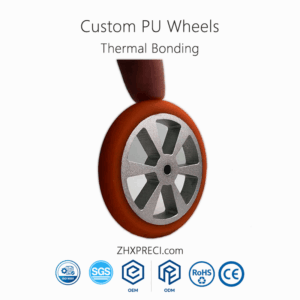
Custom Wide Tread Polyurethane Wheels For Uneven Floors
Read more -
Custom With Brake Polyurethane Wheels For Material Handling
Read more -
Custom With Grease Fitting Polyurethane Wheels For Assembly Lines
Read more -
Custom With Swivel Lock Polyurethane Wheels For Medical Beds
Read more
Custom Low Temperature Polyurethane Wheels — China OEM/ODM Factory Manufacturer & Supplier
Custom low temperature polyurethane wheels are elastomer wheels whose tread compound is selected to stay flexible and resilient in cold service. A general-purpose polyurethane tread tends to stiffen as temperatures fall, losing rebound and carrying a higher risk of cracking under impact. A low temperature grade is formulated differently, so the wheel keeps its elastic recovery, its cushioning and its load-bearing stability where a standard compound would struggle. ZHXPRECI is a China OEM/ODM factory manufacturer and supplier of custom elastomer wheels and rollers, and these cold-service wheels are produced from customer drawings, samples or application data, so the finished part fits the machine rather than the machine being adapted to a stock item.
Cold storage conveyors, refrigerated transport equipment, winter outdoor carts, food processing lines and industrial freezer doors are common places where this type of wheel is specified. In each case the design goal is the same: maintain traction, cushioning and rolling ease without the tread becoming brittle or taking a permanent set under static load.
Because low temperature polyurethane is a formulated system rather than a single material, buyers can tune hardness, rebound and damping within a practical window. That flexibility is what makes the custom route useful for engineers who need a specific combination of cold flexibility, abrasion resistance and load capacity in one wheel, rather than accepting whatever a catalogue offers.
What Are Custom Low Temperature Polyurethane Wheels?
These wheels use an outer tread made from polyurethane elastomer formulated to remain flexible below the temperatures that standard grades handle comfortably. The core may be steel, stainless steel, aluminium, cast iron, nylon or a composite, chosen according to load, corrosion exposure and weight limits. Because the part is custom, bore diameter, hub length, keyway, tread contour, hardness and surface finish are produced to the buyer's specification.
General-purpose polyurethane is commonly used from roughly minus ten degrees Celsius upward. Below that range, many grades show a rise in stiffness, a drop in rebound and a greater chance of cracking under impact or shock loading. A low temperature polyurethane wheel uses a different polyol and curing system, which lowers the glass transition temperature and widens the elastic working range of the material.
The distinction matters most in applications that combine cold with movement. A wheel that only sits still in a freezer is less demanding than one that rolls, starts, stops and absorbs vibration at low temperature. That is where formulation quality becomes visible in service life, and it is the main reason engineers move away from a general-purpose tread for cold duty.
Key Characteristics of a Custom Low Temperature Polyurethane Wheel
The word custom covers a wide range of decisions. The characteristics below are the ones that most often separate a wheel that performs well in cold service from one that fails early.
Low temperature flexibility comes first. The elastomer is formulated so that it does not become glassy or brittle at the operating temperature. This is achieved by selecting polyols with low glass transition behaviour, matching them with a suitable curative, and then verifying the result through low temperature testing rather than assumption.
Custom hardness is the second characteristic. These wheels are commonly produced between 60 Shore A and 95 Shore A, though the most useful range in cold service is often narrower. Harder compounds carry more load but offer less cushioning; softer compounds absorb shock but may deform under sustained static load. Matching hardness to the actual duty cycle matters more than choosing the hardest grade available.
Custom geometry is the third. Diameter, width, crown or flat tread, radius edges, chamfers and bore features are all produced to drawing. Correct geometry reduces rolling resistance and avoids the edge loading that shortens tread life on uneven floors.
Custom hub and bearing configuration is the fourth. Hub material and bearing type determine how the wheel mounts and how it behaves under radial and side load. Options include plain bore, keyed bore, ball bearings, roller bearings, sealed bearings and integrated shafts.
A fifth characteristic, often overlooked, is bond integrity. In cold service the interface between elastomer and core is subjected to repeated thermal cycling. A properly prepared core and a controlled casting process are what keep the tread attached through years of cold starts and stops.
Material Properties and Temperature Behaviour
Low temperature performance is not a single number. It depends on the base polymer, the curative, the hardness, the plasticiser level and the way the part is processed. The table below summarises typical working windows that buyers use as a starting point when specifying low temperature polyurethane wheels.
| Material | Typical low temperature working range | Notes |
|---|---|---|
| Standard polyurethane | about -10 °C to +80 °C | General purpose, not suited to sustained cold service |
| Low temperature polyurethane, 60 to 80 Shore A | about -40 °C to +70 °C | Softer grades retain rebound best in deep cold |
| Low temperature polyurethane, 85 to 95 Shore A | about -30 °C to +80 °C | Harder grades carry more load with less cushioning |
| Nylon | about -40 °C to +100 °C | Hard, low cushioning, high load capacity |
| Natural rubber | about -50 °C to +70 °C | Good cold flexibility, lower abrasion resistance than polyurethane |
| Cast iron | wide range | Hard and durable, no cushioning, higher noise |
These figures are typical values for low temperature polyurethane wheels, provided for guidance and not as a substitute for testing with the actual load, speed and temperature cycle. In cold service, impact resistance and rebound are usually more important than raw hardness, because a brittle failure under sudden load is more damaging than gradual wear.
Custom Engineering Options
Because every cold environment is different, the custom path lets the buyer define each design variable. Bore size can be produced to metric or imperial dimensions, with tolerances set according to the bearing or shaft that will be used. Keyways, set screw holes, retaining grooves and shoulders are added where the mounting method requires them.
Tread profile is another important choice. Flat treads distribute load evenly and are common on carts and dollies. Crowned treads reduce edge pressure and help the wheel track straight on uneven floors. Rounded or chamfered edges reduce damage during mounting and handling.
Colour and marking are available where they help with identification, safety coding or branding. Cast-in logos, colour coding by hardness and printed part numbers on the hub are practical options for industrial buyers managing many wheel variants in one plant.
Bonding quality is a design variable as well. The polyurethane tread is bonded to the core through casting or machining, and the preparation of the core surface controls how well the two materials stay together. For cold and shock-loaded applications, a properly prepared and tested bond is important, because a tread that separates from the hub ends the service life of the wheel regardless of the elastomer quality.
Typical Specifications for Low Temperature Polyurethane Wheels
The following parameters are commonly specified when ordering custom low temperature polyurethane wheels. Final values depend on the application and are confirmed at the quotation stage.
| Parameter | Typical range |
|---|---|
| Tread material | Low temperature polyurethane elastomer |
| Hardness | 60 to 95 Shore A |
| Tread thickness | 5 to 50 mm |
| Wheel diameter | 25 to 500 mm |
| Wheel width | 15 to 200 mm |
| Core material | Steel, stainless steel, aluminium, cast iron, nylon, composite |
| Bore type | Plain, keyed, bearing, shaft |
| Bearing options | Ball, roller, sealed, stainless |
| Colour | Natural amber, black, grey, custom |
| Tolerance | Produced to drawing |
Dimensions outside these ranges can often be produced, but they should be discussed early so that tooling, cure cycle and testing can be planned together.
Why Choose These Wheels Rather Than Standard Polyurethane
Cold service places demands on a wheel that a general-purpose polyurethane may not meet. The main reason to specify a low temperature grade is to avoid the two most common failure modes in cold environments: cracking under impact, and taking a permanent flat spot under static load.
Another reason is consistency. In a refrigerated plant, a wheel that behaves well in summer may behave differently in winter, and the reverse. A formulation chosen for the full operating range reduces that variability and makes maintenance planning easier.
Custom production also allows the wheel to fit the equipment without compromise. If a conveyor requires a specific bore and tread width, or if a cart needs a particular hub length to clear a frame, the wheel can be made to those dimensions rather than modified on site. This shortens installation time and avoids adapters that can loosen over time.
There is a cost dimension as well. A cold-service wheel that is correctly specified usually lasts longer in the freezer than a cheaper general-purpose wheel that has to be replaced more often. Buyers who track total cost per operating hour often find that the low temperature grade pays for itself through fewer changeovers and less downtime.
Typical Applications and Industries
Low temperature polyurethane wheels are most often specified where cold, movement and load meet at the same time. Common examples include:
- Cold storage and freezer room carts, pallet movers and shelf trolleys
- Refrigerated transport rollers and loading dock equipment
- Food processing lines that operate in chilled rooms or wash-down areas
- Outdoor winter service equipment such as snow handling carts and utility trolleys
- Pharmaceutical and laboratory cold rooms
- Industrial freezer doors, sliding panels and track rollers
- Agricultural equipment used in cold climates
- Automated guided vehicles serving chilled warehouses
- Bakery and dairy lines with chilled holding sections
- Cold chain logistics equipment used at ports and distribution centres
In each case the deciding factors are usually temperature range, load per wheel, rolling speed, floor condition and whether the wheel experiences shock loading. Food processing and cold storage applications often add cleaning requirements, which may call for stainless steel hubs or sealed bearings.
Outdoor winter applications bring a further variable: temperature can change quickly, and the wheel may be exposed to salt, grit and ice. In these conditions, hub corrosion resistance and bearing sealing matter as much as the elastomer itself.
Cold chain logistics deserves a separate mention. In a distribution centre, the same pallet may move from an ambient dock to a chiller and then to a deep freezer within minutes. A wheel chosen only for the coldest point may behave poorly elsewhere, so a formulation with a wide working range is often the better answer.
How to Select the Right Wheel
Selection usually begins with four questions. What is the lowest temperature the wheel will see? What is the maximum load per wheel? What surface will it roll on? And how often will it move?
Once those answers are known, hardness and geometry can be narrowed. Cold environments with frequent movement and moderate loads generally suit medium hardness grades with crowned treads. Heavy static loads may call for harder grades and a wider tread to reduce pressure on the floor.
The hub and bearing decision follows. A plain bore is simple and low cost, but it relies on the shaft for rotation and offers no sealing. Ball bearings reduce rolling effort and suit higher speeds, while sealed bearings protect the rolling elements from moisture and dust. Stainless steel hubs and bearings are common in wash-down and food-contact areas.
Finally, confirm tolerances. A wheel that fits too loosely on a shaft will wear quickly, while one that is too tight can be difficult to install and may damage the bearing. Providing the shaft diameter, tolerance and mounting method at the quotation stage avoids rework later.
It also helps to share the expected duty cycle rather than only the peak load. A wheel used in short bursts has different requirements from one that rolls continuously for hours. Matching the formulation to the real pattern of use usually gives better value than specifying for the most extreme moment alone.
Installation, Storage and Maintenance
Correct installation protects both the wheel and the equipment. The shaft or axle should be clean, free of burrs and within the specified tolerance. Bearings should be pressed or fitted without hammering on the outer race, and retaining rings, washers and spacers should be installed as designed.
Storage matters for polyurethane. Wheels should be kept away from direct sunlight, ozone sources such as electric motors and welding equipment, and heavy static loads that could deform the tread. A cool, dry, ventilated store is suitable, and stacked wheels should be supported so that the tread is not compressed for long periods.
During service, inspection should focus on tread wear, cracking, flat spotting and bond condition. In cold environments, small cracks can grow quickly under repeated shock loading, so early replacement of a worn wheel is usually cheaper than repairing the equipment it damages.
Lubrication of bearings should follow the bearing supplier's guidance. Sealed bearings generally require no field lubrication, while open bearings need periodic attention. In cold rooms the lubricant itself must be suitable for the temperature, because a grease that thickens in the cold will raise rolling resistance noticeably.
Quality Control and Testing
Consistency in cold-service wheels depends on control at several stages. Raw materials are checked before mixing, and the mixing ratio is controlled within a narrow band, because small variations in curative level can shift hardness and low temperature behaviour.
Cure cycles are recorded, and finished parts are inspected for dimensions, hardness, appearance and bond integrity. Where the application calls for it, low temperature tests such as cold flex or impact checks can be arranged. Dimensional inspection typically covers bore, hub length, outside diameter, width and runout.
Records are kept so that repeat orders can be compared against the original production data. This helps maintain consistency when the same wheel is ordered again months or years later.
OEM and ODM Services
ZHXPRECI works with buyers in both OEM and ODM modes. In OEM projects, the customer supplies drawings, samples or detailed specifications, and the factory produces to those requirements. In ODM projects, the customer describes the application and the performance targets, and engineering support is provided to help define a practical wheel design.
Supporting services include material selection advice, prototype sampling, hardness and dimension verification, packaging design and private labelling. Drawings and specifications are treated as confidential, and tooling can be retained for repeat production when the buyer requires it.
Production & Inventory Policy
Lead time: Actual lead time is affected by raw material supply, machining and casting capacity, and peak-season workload, so it varies within a reasonable range. Once an order is confirmed we provide the most accurate delivery estimate available and keep you informed of progress.
Stock status: We generally do not hold finished stock, although a limited number of fast-moving standard sizes may be available. Real stock quantities change continuously with sales and production, so please contact us to confirm current availability before ordering.
Bulk and urgent orders: For large quantities or urgent requirements, please discuss capacity and scheduling with us in advance. We will do our best to align production with your timetable.
Frequently Asked Questions
What is a low temperature polyurethane wheel?
Custom low temperature polyurethane wheels are wheels whose tread compound is formulated to remain flexible and resilient at low temperatures, typically well below the range where standard polyurethane becomes stiff or brittle. The hub, core and bearing can be specified to match the mounting and load.
How do I know whether I need a low temperature grade instead of a standard one?
If the wheel will operate below about minus ten degrees Celsius, if it experiences impact or shock loading in the cold, or if it sits under load for long periods in a freezer, a low temperature grade is usually worth evaluating.
How are custom low temperature polyurethane wheels made?
The core is prepared and placed in a mould, the polyurethane components are mixed and cast around or onto the core, and the part is cured. It is then machined where required, inspected and finished. Machining from a cast blank is also used for some designs.
What hardness is suitable for cold environments?
Between 60 and 95 Shore A is the common range. Softer grades retain rebound better in deep cold, while harder grades carry more load but offer less cushioning. The right choice depends on load, speed and floor condition.
Can these wheels be used in freezers and cold storage rooms?
Yes. Freezer carts, cold room trolleys and refrigerated conveyors are among the most common applications for custom low temperature polyurethane wheels, and the formulation is selected with the room temperature and duty cycle in mind.
How do I choose the hub and bearing?
Start with the mounting method and the load. Plain or keyed bores suit simple shafts. Ball or roller bearings suit higher speeds and lower rolling effort. Sealed or stainless options are used where moisture, cleaning or condensation is present.
How should these wheels be stored and maintained?
Store them in a cool, dry, ventilated area away from direct sunlight, ozone sources and sustained compression. Inspect periodically for cracking, flat spotting, tread wear and bond condition, and replace worn parts early.
Can you produce wheels to my drawing or sample?
Yes. Drawings, samples and application descriptions are all accepted. Where a drawing is incomplete, engineering support can help fill in the missing dimensions before production begins.
What information do you need for a quotation?
Quantity, wheel diameter and width, bore and hub details, hardness, core material, bearing type, operating temperature, load per wheel, floor surface, and any colour or marking requirements.
What is the minimum order quantity?
Minimum order quantity depends on the design and tooling involved. Standard tooling designs can usually be produced in smaller batches, while fully new tooling generally requires a larger first order. Please send your specification for a specific answer.
How are the wheels packaged for export?
Wheels are normally packed in cartons or on pallets with protective separators, and export packing can be arranged for sea or air shipment. Labelling and pallet marks can follow your requirements.
Are these wheels suitable for wash-down areas?
They can be, provided the hub and bearing are selected for moisture. Stainless steel hubs with sealed or stainless bearings are the usual recommendation for wash-down and food-contact zones.
How do cold temperatures affect rolling resistance?
As polyurethane cools it stiffens, which can raise rolling resistance and starting effort. A low temperature formulation limits this effect, and a bearing lubricant suited to the operating temperature helps as well.
Request a Quotation
If you are working on a cold-environment handling project and need a wheel built to your drawing, sending the specification is the fastest way to begin. Share the dimensions, load, temperature range and mounting details, and a quotation with material recommendations can be prepared.
Custom low temperature polyurethane wheels are produced to order for cold storage, refrigeration, food processing, cold chain logistics and outdoor winter applications, with engineering advice available at every stage.
Contact Us for a QuotationAbout ZHXPRECI
ZHXPRECI is a China-based manufacturer and supplier of custom elastomer wheels and rollers, serving industrial buyers, engineers and equipment builders in many markets. The product range covers polyurethane wheels, rubber rollers, casters and specialty elastomer parts produced for OEM and ODM projects.
Production combines material formulation, casting, machining, bonding and inspection under one roof, which allows closer control over the variables that affect cold-service performance. Buyers work directly with the factory on specification, sampling and repeat orders, keeping communication short and changes easy to manage.
With years of experience in elastomer processing, the team supports customers from the first enquiry through prototyping, production and after-sales follow-up, so that a cold-environment wheel project moves forward with clear technical answers at each step.