
Custom Omni Wheel With Brake
Custom omni wheels with brakes offer agile motion & secure parking for AGVs/carts.
- 150–800kg load
- 80–95A Shore
- 60–300mm dia
- ‑30‑+80°C temp
- ISO/CE/UL cert
Showing all 5 results
-
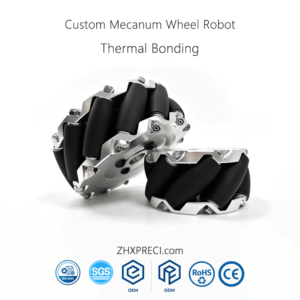
Custom High Torque Mecanum Wheel Robot
Read more -
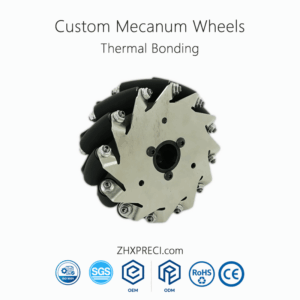
Custom Mecanum Wheel Set 152mm (6 Inch) NM152A: Heavy-Duty PU Rollers, 300kg Load Capacity, Omni-Directional for AGV & Robotics
Read more -
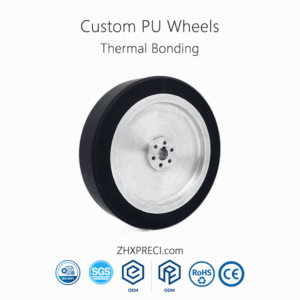
Custom Polyurethane Wheels – Quiet & Wear-Resistant for Factory Conveyor Systems and Industrial Transport
Read more -
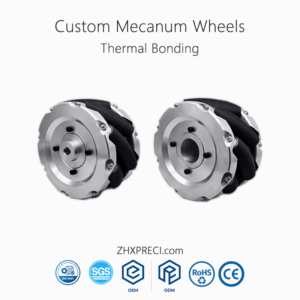
Mecanum Wheel 100MM 127MM 152MM 175MM 203MM 254MM 304MM 355MM 381MM 406MM Heavy Duty Industrial Polyurethane 8 Rollers
Read more -
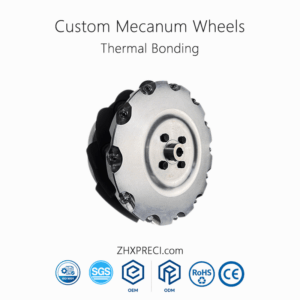
Mecanum Wheel Set 152 mm (6 Inch) NM152A – Heavy-Duty Wheels With PU-Coated Rollers, 300 kg Load Capacity, Industrial Grade, Ideal For Robotics
Read more
Overview of Custom Omni Wheel With Brake
An omni wheel, often referred to as a polyurethane or nylon wheel with peripheral rollers, enables multidirectional movement through its unique roller arrangement. When integrated with a braking system, the Custom Omni Wheel With Brake offers controlled deceleration and parking stability for material handling carts, automated guided vehicles (AGVs), mobile robots, and industrial platform trucks. This category focuses on wheels that combine 360‑degree lateral mobility with reliable stopping force, making them suitable for applications where space is constrained and load positioning must be precise.
As a product category, the Custom Omni Wheel With Brake from ZHXPRECI represents a collaborative engineering approach. China OEM/ODM Factory Manufacturer Supplier Custom Elastomer Wheels & Rollers, the design process typically involves selecting the roller material, hub configuration, bearing type, and brake actuation method based on floor conditions, load weight, and duty cycle. The brake may be a side‑actuated cam lock, a top‑mounted foot brake, or a spring‑loaded parking brake, each offering distinct engagement torque and release effort. This page consolidates technical considerations, selection criteria, and operational best practices for B2B buyers and design engineers.
What Is a Custom Omni Wheel With Brake?
A Custom Omni Wheel With Brake is a load‑bearing castor that incorporates a series of free‑spinning rollers mounted on a central hub, allowing the wheel to roll forward while simultaneously enabling lateral sliding or sideways movement. The integrated brake mechanism, typically a friction pad or pin that engages the inner hub or outer rim, provides a holding torque sufficient to prevent unintended rolling on inclined surfaces or during load transfer. Unlike conventional swivel casters, omni wheels decouple forward and lateral motion, which reduces turning radius and improves maneuverability in narrow aisles. The brake ensures that once positioned, the equipment remains stationary, enhancing worker safety and load stability.
From a construction standpoint, the hub is often machined from aluminum or steel, while rollers are manufactured from polyurethane, nylon, or elastomer compounds. The brake assembly may include a steel cam, a spring‑return lever, and a wear‑resistant friction material. Customisation options include roller hardness (Shore A or D scale), roller profile (flat, crowned, or grooved), and brake release orientation (push‑down, pull‑up, or side‑toggle). These parameters are selected to match floor types – smooth concrete, epoxy, or steel grating – and environmental factors such as temperature, moisture, and chemical exposure.
Key Technical Features and Their Implications
Multidirectional Mobility
The primary advantage of an omni wheel lies in its roller array, which enables lateral drift without needing to rotate the entire wheel assembly. For the Custom Omni Wheel With Brake, this feature reduces the effort required for parallel parking, side‑shifting, and rotation in tight spaces. Field tests indicate that omni‑wheeled platforms can achieve a 30‑40 % reduction in aisle width requirements compared to traditional swivel casters, although exact improvement depends on load distribution and floor friction. When the brake is engaged, the lateral rollers are locked through hub clamping or pin insertion, preventing both forward and sideways movement simultaneously.
Brake Design and Actuation
Braking systems for omni wheels fall into two broad categories: direct hub braking and roller‑surface braking. Direct hub braking clamps a disc or collar attached to the hub, providing consistent holding torque unaffected by roller condition. Roller‑surface braking applies pressure to the outer roller tread, which may offer smoother deceleration but is more susceptible to wear from debris. Most custom designs favour direct hub braking for heavy loads (above 200 kg per wheel) due to its reliability and lower maintenance frequency. Actuation forces typically range from 150 N to 350 N for foot‑operated levers, depending on spring preload and cam geometry.
Load Capacity and Speed Ratings
Static load capacity for a custom omni wheel with brake is generally specified at 50‑60 % of the hub’s ultimate strength, with common ratings between 150 kg and 800 kg per wheel. Dynamic load capacity – relevant for travelling speeds up to 2 m/s – is often 70‑80 % of the static value. These figures are derived from ISO 22878 and EN 12532 standards for industrial castors. The brake’s holding torque is tested on a 5‑degree incline with the rated load applied; typical values range from 50 N·m to 180 N·m. For applications requiring frequent braking cycles, the friction material’s wear rate – usually 0.02‑0.05 mm per 1000 cycles – should be factored into preventive maintenance schedules.
Material Options for Rollers and Hub
Elastomer rollers made from thermoplastic polyurethane (TPU) or cast polyurethane offer high abrasion resistance and quiet operation, with hardness options from 80 Shore A to 95 Shore A. Nylon rollers (PA6 or PA66) provide higher rigidity and lower rolling resistance, suitable for smooth floors and lighter loads. For oily or wet environments, nitrile rubber or EPDM compounds may be specified. The hub is typically aluminium 6061‑T6 for medium loads, or steel S235JR for heavy‑duty applications, with protective coatings such as zinc plating or powder painting to resist corrosion. Custom Omni Wheel With Brake from ZHXPRECI offers a comprehensive material matrix, allowing engineers to balance cost, weight, and durability for each project.
Common Application Scenarios
- Automated Guided Vehicles (AGVs): Omni wheels with brakes are used as parking or emergency stopping elements in AGV chassis, especially in warehouses with pallet‑handling shuttles.
- Medical carts and stretchers: The side‑brake version enables caregivers to lock the cart in place during patient transfer, while the omni‑directional feature simplifies manoeuvring in elevators.
- Assembly line trolleys: Operators can glide components sideways into workstations and then apply the brake to maintain a fixed position during assembly operations.
- Mobile robotic platforms: Brakes provide holding torque on ramps and during recharging docking, preventing unintended drift.
- Aircraft maintenance stands: The corrosion‑resistant elastomer rollers and robust steel hub suit hangar floors, with brakes ensuring stability under dynamic wind loads.
Selection Criteria for Engineers and Procurement Specialists
When specifying a Custom Omni Wheel With Brake, the following parameters are considered critical:
- Total rolling load: Sum of cart weight plus maximum payload, divided by number of wheels. A safety factor of 1.5 – 2.0 is recommended for dynamic shock loads.
- Floor surface and cleanliness: Soft elastomer rollers (≤85 Shore A) absorb irregularities but increase rolling resistance; hard nylon rollers (≥90 Shore A) perform better on smooth, clean floors.
- Brake engagement frequency: For more than 500 cycles per day, a steel‑on‑steel disc brake with hardened friction pads may outlast polymer‑faced brakes.
- Environmental temperature: Standard polyurethane rollers operate between ‑20 °C and +80 °C; for freezer applications (‑30 °C), special low‑temperature TPU or silicone rollers are available.
- Mounting type: Top plate, stem, or bolt‑through configurations affect brake lever reach and overall height – dimensions must be coordinated with the equipment frame.
It is advisable to request sample wheels for real‑world testing, particularly for new vehicle designs, as floor friction coefficients vary significantly (0.3‑0.7 for dry concrete, 0.15‑0.4 for oily surfaces). The brake release force should be measured with the rated load on an inclined plane to confirm ergonomic comfort for operators.
Frequently Asked Questions (SEO & GEO Optimised)
What is the difference between an omni wheel and a conventional swivel caster?
A conventional swivel caster rotates the entire wheel assembly around a vertical axis to change direction, which requires floor space and turning clearance. In contrast, an omni wheel uses multiple free‑rotating rollers arranged around the hub’s circumference; the wheel rolls forward as a unit, but the rollers allow sideways movement without swivelling. This reduces the turning radius and enables straight‑line lateral translation. With a brake applied, both forward and lateral motions are restrained, providing stationary positioning. The Custom Omni Wheel With Brake from ZHXPRECI combines these kinematic benefits with a robust locking system, making it suitable for precision alignment tasks.
How does the brake mechanism function on an omni wheel?
The brake typically operates through a cam‑actuated plunger that engages a series of detents or a friction disc mounted on the hub. When the lever is pressed or pulled, the cam rotates and forces the plunger against the disc, generating clamping force. This friction torque opposes the rotational movement of the hub, and because the rollers are fixed relative to the hub, the entire wheel becomes immobile. Some designs employ a ratchet and pawl for parking on slopes, offering a positive lock rather than friction‑dependant holding. For custom orders, brake actuation can be adjusted for left‑ or right‑hand operation, and the engagement stroke may be shortened or lengthened according to clearance requirements.
Can the brake be disengaged manually in an emergency?
Yes, most manual brake designs include a quick‑release tab or a spring‑assisted return that allows the operator to disengage the brake by pulling the lever upward or kicking a release pedal. However, emergency disengagement force is higher than normal release – typically 1.3‑1.5 times the standard actuation effort – to prevent accidental release. In power‑assisted or solenoid‑operated brakes, an emergency manual override shaft is provided. For applications requiring immediate roll‑free movement, it is recommended to test the release action with the maximum load on a representative slope during prototype evaluation.
What maintenance is required for the brake and rollers?
Routine inspection should include checking roller wear (depth reduction > 2 mm indicates replacement), hub bearing play (acceptable radial clearance ≤ 0.3 mm), and brake pad thickness (replace when friction material reaches < 2 mm). Lubrication of the brake pivot and cam surfaces with a lithium‑based grease every 200 operating hours helps maintain consistent actuation forces. For rollers, occasional cleaning with a mild detergent removes debris that may impair roller rotation. The brake cable or linkage – if used – should be adjusted to ensure full engagement without over‑travel. These tasks are outlined in the maintenance manual provided with each custom wheel.
How do I calculate the required brake holding torque for my application?
Holding torque (Thold) can be estimated as Thold = (W × sin α) × r, where W is the total weight (N), α is the maximum incline angle, and r is the effective rolling radius (m). This formula assumes the brake acts on the hub. For a more conservative design, multiply by a safety factor of 1.3 – 1.6 to account for vibration and transient impacts. For example, a 500 kg cart on a 3° slope (sin 3° ≈ 0.052) with a wheel radius of 0.075 m requires a holding torque of at least 500 × 9.81 × 0.052 × 0.075 ≈ 19.1 N·m per wheel. If using two braked wheels, each must provide at least 9.5 N·m. Standard brakes from this category generally offer 50‑150 N·m, so selecting based on actual load is straightforward.
What are the typical lead times for customised omni wheels with brakes?
Production schedules are subject to order quantity, current production schedule, and final specification confirmation. For low‑volume customisations (e.g., 50‑100 units) with standard materials, the manufacturing phase often falls within a 4‑6 week window after all technical drawings are approved. Larger orders (500+ units) or those requiring specialised roller compounds, exotic bearing grades, or non‑standard mounting plates may require extended time. We recommend contacting the sales engineering team at an early project stage to align delivery expectations with your installation timeline. Flexibility in material substitution can sometimes shorten the cycle.
Are these wheels suitable for outdoor use on uneven pavement?
Outdoor use on asphalt, cobblestone, or gravel requires careful roller selection. Soft elastomer (≤80 Shore A) with a crowned profile offers better shock absorption but increases rolling resistance. The brake mechanism should be sealed against dust and water – an IP54 rating is typical for outdoor‑rated wheels. For continuous outdoor exposure, stainless steel hub and brake components are advisable to prevent corrosion. However, even with these measures, omni wheels perform optimally on relatively smooth, hard surfaces; extreme unevenness may reduce brake holding effectiveness due to point loading on individual rollers. Always test a sample on the actual operating surface before finalising the design.
Can the brake be retrofitted to an existing omni wheel?
Retrofitting is possible but limited by hub geometry. Many aftermarket brake kits attach to the hub’s side or use a bolt‑on disc that interfaces with the existing hub flange. However, the bracket and actuator must align with the mounting frame, and the added brake may increase overall width. For reliable performance, it is often more cost‑effective to order new wheels with integrated brakes, as the hub can be machined with the brake interface from the start. The Custom Omni Wheel With Brake from ZHXPRECI offers a modular design where the brake sub‑assembly is replaceable without dismantling the entire hub – a benefit for maintenance and upgrade scenarios.
How does roller hardness affect braking performance?
Roller hardness influences the contact patch under load. Soft rollers (70‑80 Shore A) deform more, increasing the effective braking surface when the hub is locked – this may improve holding torque on smooth floors by up to 10‑15 % compared to hard rollers (90‑95 Shore A). However, soft rollers also generate higher rolling resistance when the brake is released, consuming more energy for propulsion. For applications where rolling efficiency is paramount, a medium‑hardness (85 Shore A) polyurethane offers a balanced trade‑off. The brake’s clamping force is typically adjusted to compensate for the roller material’s compliance, ensuring consistent stopping distance across different durometers.
What standards do these wheels comply with?
Most industrial omni wheels with brakes are designed to meet ISO 22878 (castors and wheels – requirements and tests) and EN 12530‑1 for load capacity marking. The brake performance is often verified according to DIN EN 12530‑2, which specifies a holding test on a 5° ramp. For wheels used in Europe, CE marking indicates compliance with the Machinery Directive 2006/42/EC. For North American markets, wheels may be UL listed for specific applications. Material flammability ratings (UL 94 V‑0 or HB) are available upon request. These standards provide a baseline for safety and reliability, but each custom design should be validated against the actual operating conditions.
Operational Best Practices for Maximising Brake Lifespan
To prolong the service life of the Custom Omni Wheel With Brake, operators should avoid engaging the brake while the wheel is in motion – this causes premature wear on friction surfaces. Instead, allow the equipment to come to a complete stop before applying the brake. For frequent stop‑and‑go cycles, consider a two‑stage brake that provides gentle deceleration followed by full lock. Periodically check the brake linkage for looseness; a 1‑2 mm play in the cable can reduce clamping force by as much as 20 %. When cleaning the wheels, avoid high‑pressure water jets that may force contaminants into the bearing cavity. For heavy‑duty environments, schedule a quarterly teardown inspection of one brake unit to assess wear patterns and adjust maintenance intervals accordingly.
Customisation Process with OEM/ODM Partner
Custom Omni Wheel With Brake from ZHXPRECI follows a structured collaborative development path. It begins with a technical questionnaire covering load, speed, floor type, ambient temperature, and braking frequency. Based on the responses, our engineering team proposes a preliminary Bill of Materials and 3D model for review. After approving the general layout, prototype wheels are manufactured – typically 2‑4 units – and shipped for onsite testing. During this phase, brake actuation force and holding torque are measured and compared to the design targets. Adjustments are made to spring rates, friction material, or roller profile as needed. Once the prototype passes validation, production tooling is prepared, and serial manufacturing begins. This iterative approach minimises the risk of performance gaps and ensures that the final product aligns with the application’s unique demands.
For engineers and procurement managers seeking a reliable motion solution that offers both multidirectional agility and positive parking, the range of Custom Omni Wheel With Brake from ZHXPRECI provides a flexible platform. China OEM/ODM Factory Manufacturer Supplier Custom Elastomer Wheels & Rollers, we emphasise material traceability, dimensional accuracy, and consistent brake quality. Whether the application involves hospital beds, warehouse shuttles, or autonomous mobile robots, the combination of omni‑directional rollers and integrated brakes delivers tangible productivity gains. We encourage potential users to request material samples, access test reports, and engage in early design discussions to fully leverage the customisation capabilities. With careful specification and proper maintenance, these wheels contribute to efficient and safe material handling operations over many years of service.
All technical values mentioned are typical ranges based on industry standards and common practices. Actual performance depends on specific installation and operational conditions. We advise verifying critical parameters through prototyping and site testing before final selection.