
Custom High Speed Omni Wheel
Custom High Speed Omni Wheel
Engineered omni wheel for AGV & robotics, with tailored specs.
- 30‑500 kg load
- 60‑95A hardness
- 60‑300 mm dia
- -30‑+80°C temp
- ISO/REACH cert
Showing 1–16 of 29 results
-
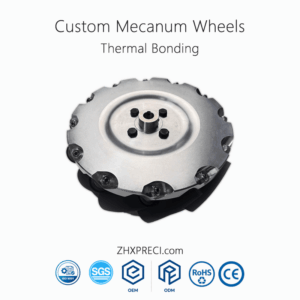
6 Inch Mecanum Wheel for AGV Robot Omni Directional Drive System High Precision Control Smooth Movement Stable Performance
Read more -
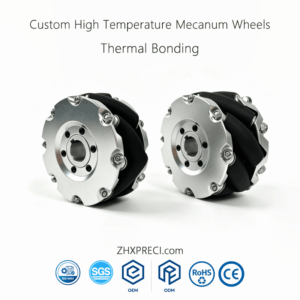
Custom CE Certified High Temperature Mecanum Wheels
Read more -
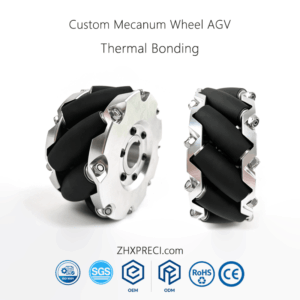
Custom CE Certified Mecanum Wheel AGV
Read more -
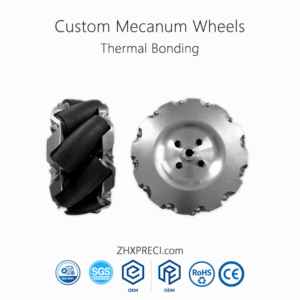
Custom Corrosion Resistant High Temperature Mecanum Wheels
Read more -
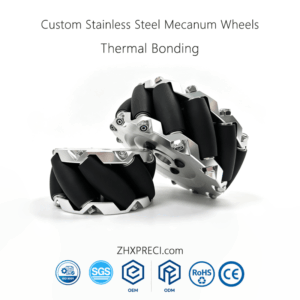
Custom Explosion Proof Heavy Duty Mecanum Wheels
Read more -
Custom Explosion Proof Mecanum Wheel AGV
Read more -
Custom Explosion Proof With Brake Mecanum Wheels
Read more -
Custom Flanged Type Mecanum Wheel RC Car
Read more -
Custom Flanged Type Stainless Steel Mecanum Wheels
Read more -
Custom Galvanized Stainless Steel Mecanum Wheels
Read more -
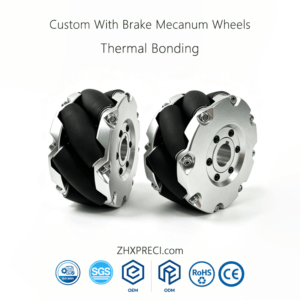
Custom High Speed Mecanum Wheel RC Car
Read more -
Custom High Speed Mecanum Wheel Robot
Read more -
Custom High Speed With Brake Mecanum Wheels
Read more -
Custom High Temperature Mecanum Wheel AGV
Read more -
Custom High Temperature Mecanum Wheel Forklift
Read more -
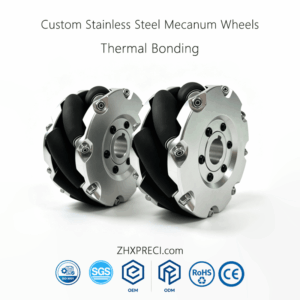
Custom High Temperature Stainless Steel Mecanum Wheels
Read more
Overview of Custom High Speed Omni Wheel
In the realm of material handling, automated guided vehicles (AGVs), and precision conveyance systems, the wheel assembly is a critical determinant of overall equipment efficiency. The Custom High Speed Omni Wheel represents a specialized category of directional wheel solutions engineered for applications requiring multi-directional movement, reduced friction, and elevated operational speeds. Unlike conventional caster wheels that restrict motion to a single axis, omni wheels incorporate passive rollers arranged along the wheel's circumference, enabling lateral and rotational movement simultaneously. This design philosophy is particularly relevant for systems where spatial constraints demand agile maneuvering without compromising load stability or throughput.
When sourced from a reputable manufacturing partner, these components are not off-the-shelf commodities but rather engineered subsystems that can be tailored to specific chassis designs, load profiles, and environmental conditions. The phrase Custom High Speed Omni Wheel from ZHXPRECI | China OEM/ODM Factory Manufacturer Supplier Custom Elastomer Wheels & Rollers encapsulates the value proposition of integrating tailored engineering with scalable production capacities. For procurement professionals and design engineers, understanding the interplay between roller durometer, hub material, bearing selection, and dynamic balancing is essential to achieving reliable performance in high-duty-cycle environments.
What Is a Custom High Speed Omni Wheel?
A Custom High Speed Omni Wheel is a multi-directional wheel assembly that incorporates a central hub equipped with multiple free-rotating rollers positioned at a specific angle—typically 45 degrees to the wheel's primary axis. This roller arrangement allows the wheel to generate motion in two orthogonal directions: forward/backward and lateral (side-to-side), while also facilitating smooth turning. The "high speed" designation refers to the wheel's capability to sustain rotational velocities exceeding 200 rpm under defined load conditions, which is notably higher than standard omni wheels commonly rated for 80–120 rpm.
Key performance parameters that define this category include:
- Dynamic load capacity per wheel: typically ranging from 50 kg to 350 kg, depending on roller material and hub construction.
- Roller durometer: available in Shore A 85–98 for polyurethane elastomers or Shore D 60–75 for engineering plastics.
- Operating temperature range: -20°C to +80°C for standard polyurethane formulations, with specialized compounds available for extreme conditions.
- Bearing types: sealed ball bearings, needle rollers, or hybrid ceramic configurations for reduced friction at elevated speeds.
The "custom" aspect distinguishes these wheels from standard catalog items. Customization can encompass hub diameter (typically 80 mm to 250 mm), roller width, shaft bore dimensions, roller material, roller count, and even the roller angle to optimize for specific omnidirectional movement patterns. This level of adaptation is essential for OEMs integrating omni wheels into new vehicle architectures or retrofitting existing fleets with improved agility.
How to Select the Right Custom High Speed Omni Wheel for Your Application
Selecting a Custom High Speed Omni Wheel involves a systematic evaluation of operational parameters and environmental factors. The following decision framework is commonly applied by engineering teams during the specification phase.
Step 1: Define Load and Speed Requirements
Calculate the maximum static and dynamic loads each wheel will support, factoring in acceleration forces and potential shock loads. For high-speed applications, the centrifugal force acting on the rollers becomes a significant design constraint. As rotational speed increases, roller retention mechanisms—such as retaining rings or through-shaft pins—must be robust enough to prevent roller ejection. Industry practice suggests that for speeds above 250 rpm, additional dynamic balancing of the wheel assembly is advisable to minimize vibration and bearing wear.
Step 2: Evaluate Environmental Conditions
Ambient temperature, humidity, and exposure to chemicals or abrasive particulates directly influence material selection. Polyurethane elastomers offer good abrasion resistance and load-bearing capacity, making them suitable for warehouse floors and indoor AGV tracks. For outdoor or washdown environments, stainless steel hubs and corrosion-resistant roller axles are recommended. In cleanroom or food-grade settings, rollers must comply with FDA or EU 10/2011 regulations, and the wheel assembly must be designed to minimize particle shedding.
Step 3: Determine Mounting Interface and Dimensional Constraints
The hub bore diameter, keyway or spline requirements, and overall wheel width must align with the host vehicle's axle design. Custom machining of the hub or adapter plates is often necessary to accommodate non-standard shaft sizes. For applications with limited ground clearance, the overall wheel diameter and roller protrusion beyond the hub periphery must be carefully balanced against the desired omni-directional performance.
Step 4: Assess Lifetime and Maintenance Expectations
While omni wheels are generally lower-maintenance than mechanical omnidirectional systems like Mecanum wheels (which rely on complex roller arrangements), they still require periodic inspection of roller bearings and hub integrity. For high-cycle operations, selecting wheels with grease-packed or permanently lubricated bearings can extend service intervals. It is prudent to consult the manufacturer's fatigue test data, which typically reports endurance at 80% of maximum rated load for 1 million cycles as a baseline benchmark.
Throughout this selection process, engaging early with the manufacturing partner is advisable. A collaborative approach ensures that material grades, heat treatment of shafts, and roller bonding processes are validated against the specific duty cycle. The value of Custom High Speed Omni Wheel from ZHXPRECI | China OEM/ODM Factory Manufacturer Supplier Custom Elastomer Wheels & Rollers lies not only in the physical product but also in the application engineering support that helps translate performance requirements into manufacturable specifications.
Key Characteristics and Technical Differentiators
Understanding the technical nuances of Custom High Speed Omni Wheels enables engineers to make informed comparisons among different suppliers and configurations.
Roller Configuration and Contact Geometry
The number of rollers per wheel directly affects smoothness of motion and ground contact pressure distribution. A wheel with 8 to 12 rollers generally offers a good compromise between continuous contact and manufacturing complexity. Each roller is a small wheel mounted on a pin or axle perpendicular to the main hub axis. The contact patch between the roller and the floor is elliptical, with the effective contact area increasing with load. This distributed contact reduces localized stress on flooring surfaces compared to hard tread wheels.
Hub Material and Structural Integrity
Hub materials are typically aluminum alloy (e.g., 6061-T6 or 7075-T6) for lightweight applications, or ductile iron for heavier loads where inertia is less of a concern. For high-speed variants, aluminum hubs with hard-anodized surfaces provide good wear resistance while keeping rotational mass low—a critical factor in reducing motor torque requirements. Some designs incorporate composite hubs for additional damping of vibration and noise, though these are generally reserved for specialized low-noise environments.
Roller Material Selection
Polyurethane (PU) is the predominant material for rollers due to its excellent wear characteristics, load-bearing capacity, and noise absorption. PU rollers with a Shore A hardness of 90–95 are commonly specified for general-purpose use, offering a balanced combination of grip and rolling resistance. For applications with higher shock loads, a softer durometer (Shore A 80–85) may be chosen to absorb impacts, albeit with a slight increase in rolling friction. For extreme chemical resistance or high-temperature environments, thermoplastic polyurethane (TPU) or even polyamide (nylon) rollers may be considered, though these materials typically have lower load ratings than comparable PU formulations.
Bearing Systems and Friction Management
Bearings are the single most influential component regarding high-speed capability. Sealed deep-groove ball bearings with C3 internal clearance are standard for most industrial applications, allowing for thermal expansion during continuous operation. For speeds consistently above 300 rpm, angular contact bearings or paired bearings with preload may be specified to control shaft deflection and maintain roller alignment. The choice of bearing grease—whether high-speed lithium-based or synthetic hydrocarbon—should be aligned with the operating temperature range to prevent viscosity breakdown.
Common Applications and Industry Use Cases
Custom High Speed Omni Wheels find application across a spectrum of industries where precision motion and high throughput are paramount.
- Automated Guided Vehicles (AGVs) and Autonomous Mobile Robots (AMRs): These vehicles rely on omni wheels to execute lateral parking maneuvers, tight turning radii, and precise station docking without requiring excessive aisle width.
- Conveyor System Transfers: In assembly lines, omni wheels are used in transfer stations to redirect product flow at 90-degree angles without complex lifting mechanisms.
- Medical Equipment and Diagnostic Systems: Imaging platforms and patient handling systems benefit from the smooth, vibration-free motion of high-quality omni wheels.
- Warehouse Automation and Sortation: High-speed sorters and shuttle systems incorporate omni wheels for rapid directional changes, enabling throughput rates exceeding 2000 items per hour.
- Specialty Vehicle Applications: Electric wheelchairs, platform lifts, and utility carts in tight spaces exploit omni-wheel kinematics for intuitive maneuverability.
Each of these use cases presents unique demands regarding load, speed, duty cycle, and environmental exposure. A standard wheel may perform adequately in one context but fail prematurely in another. This is precisely why the custom aspect—enabling adjustments to roller durometer, hub geometry, and bearing selection—is not a luxury but a necessity for reliable system performance.
Technical Specifications and Performance Benchmarks
While exact specifications are determined through the customization process, industry-standard benchmarks provide useful reference points for initial feasibility assessments.
Diameter range: 80 mm to 300 mm, with 125 mm and 200 mm being common for medium-duty AGVs. Larger diameters generally support higher speeds for a given motor RPM and offer better obstacle traversal.
Roller width: Typically 25 mm to 50 mm, with wider rollers distributing load over a larger footprint, beneficial for softer floor surfaces or when operating at the upper end of the load spectrum.
Dynamic load rating: For a 200 mm diameter wheel with polyurethane rollers (Shore A 92), the dynamic load capacity is approximately 250 kg per wheel at 150 rpm. At higher speeds, the load rating is typically derated by 10–15% to account for increased centrifugal stress on the roller-bonding interface.
Maximum speed: For configurations with precision-balanced hubs and high-quality bearings, sustained speeds up to 500 rpm are achievable, though such applications require careful attention to radial and axial runout. Typical high-speed operation lies between 200 and 350 rpm.
Rolling resistance coefficient: On smooth steel or concrete floors, the rolling resistance coefficient for a PU omni wheel is around 0.03–0.06, depending on load and roller durometer. This low coefficient contributes to energy savings in battery-powered AGVs.
All these parameters are subject to validation through prototype testing. Manufacturers typically offer performance simulation reports based on finite element analysis (FEA) of the hub structure and contact stress analysis of the roller-floor interface.
Frequently Asked Questions
What is the difference between an omni wheel and a Mecanum wheel?
An omni wheel has passive rollers oriented at 45 degrees to the wheel axis and is typically used in pairs or four-wheel configurations to achieve omnidirectional movement. A Mecanum wheel, on the other hand, has rollers set at 45 degrees to the wheel plane but arranged such that each wheel provides both drive and lateral force. Mecanum wheels require specific rotational direction combinations for different movement vectors. Omni wheels are simpler in construction and generally more cost-effective for applications that do not demand the full vectoring capability of Mecanum systems. For high-speed applications, omni wheels are often preferred due to their lower rolling resistance and reduced mechanical complexity.
How does the "high speed" characteristic affect roller material selection?
Higher operational speeds increase the centrifugal force experienced by each roller, which can lead to deformation or detachment of the elastomer from its core if the bonding process is not robust. For speeds exceeding 250 rpm, manufacturers often recommend reinforced bonding layers or mechanical retention features such as undercut grooves on the roller core. Additionally, the roller material's heat generation under cyclical loading must be considered; thermoplastic polyurethanes with higher heat deflection temperatures (above 90°C) are preferred for sustained high-speed operation.
Can these wheels be used on uneven or rough surfaces?
Omni wheels are optimized for smooth, level surfaces such as epoxy-coated floors, concrete, or steel decking. On uneven surfaces, the individual rollers experience varying ground contact pressures, which may result in increased vibration and reduced directional accuracy. For applications involving floor irregularities, larger diameter wheels and softer roller durometers can mitigate these effects to some degree, but it is generally advisable to address floor flatness as a separate system consideration.
What customization options are typically offered?
Customization options extend to hub material (aluminum, steel, stainless), hub color, roller material and color, roller count (from 6 to 14), roller profile (crowned or flat), shaft bore diameter and tolerance, keyway or spline profiles, and bearing specifications. Some manufacturers also offer integrated encoder mounting features or custom-branded hub covers. The flexibility to tailor these parameters allows OEMs to maintain design consistency across their product lines while optimizing performance for specific vehicle weight distributions.
How do I determine the correct number of rollers for my application?
The number of rollers affects the contact continuity and smoothness of motion. For applications requiring very smooth low-speed maneuvering, a higher roller count (12–14) reduces the polygon effect—the slight up-and-down motion caused by rollers transitioning in and out of contact with the ground. For high-speed applications where smoothness is less critical but weight reduction is desired, a lower roller count (6–8) may be acceptable. The optimum number is often determined through simulation or prototype trials, balancing cost, weight, and motion quality.
What are the typical lead time considerations?
Production lead time is subject to order quantity, current production schedule, and final specification confirmation. For custom-engineered wheels, the initial design and prototype validation phase can extend the overall timeline. Engaging with the manufacturer early in the design cycle helps align expectations and allows for concurrent engineering of both the wheel and the host vehicle's mounting interface. For standard custom configurations that require only minor adjustments (such as bore diameter changes), the production schedule is generally shorter than for completely new designs requiring new molds or tooling.
Is it possible to obtain samples or prototypes before full production?
Most manufacturers, including those offering Custom High Speed Omni Wheel from ZHXPRECI | China OEM/ODM Factory Manufacturer Supplier Custom Elastomer Wheels & Rollers, support prototype runs of 2–10 units for testing and validation. This phase is highly recommended to verify dimensional fit, performance under actual operating conditions, and compatibility with the vehicle's control system. Prototype results often inform minor adjustments to roller durometer or hub dimensions before committing to mass production.
What quality assurance measures are in place during production?
Quality assurance typically includes dimensional inspection of hub and rollers, dynamic balancing verification, load testing on dedicated test rigs, and visual inspection for surface defects. Many manufacturers adhere to ISO 9001 quality management systems, and some offer material certificates or test reports for each batch. For critical applications, third-party inspection or witness testing can be arranged as part of the procurement agreement.
Manufacturing Processes and Supply Chain Considerations
The production of Custom High Speed Omni Wheels involves multiple process steps: hub machining (turning, milling, drilling), roller molding (injection or compression molding of polyurethane or engineering plastics), bearing insertion, and final assembly. For aluminum hubs, CNC machining centers ensure tight tolerances on bore diameter and face runout—typically within 0.02 mm for high-speed variants. Roller molding requires precise control of material temperature and curing time to achieve consistent durometer and bond strength between the elastomer and the roller core.
Quality control at each stage, including raw material verification and finished product testing, is essential to prevent defects that could lead to premature failure or suboptimal performance. Manufacturers with integrated production facilities are generally better positioned to maintain process consistency and respond to design changes efficiently. The supply chain for these components often involves global sourcing of bearings (from Japan, Germany, or China) and specialty raw materials, so procurement lead times should account for potential logistics fluctuations.
When evaluating suppliers, assessing their engineering capability is as important as their production capacity. A manufacturer that offers design assistance, FEA simulation, and failure analysis demonstrates a commitment to being a long-term engineering partner rather than just a parts supplier. This is particularly relevant for custom projects where performance validation is critical.
Conclusion and Procurement Guidance
Selecting a Custom High Speed Omni Wheel is a multidimensional engineering decision that directly influences vehicle dynamics, energy efficiency, and operational reliability. By focusing on the interplay of speed, load, environment, and customization requirements, engineering teams can specify wheels that deliver consistent performance over their intended service life. The availability of flexible manufacturing and engineering support from established suppliers ensures that even highly specialized design requests can be translated into practical, cost-effective solutions.
For organizations planning to integrate omni wheels into new or existing systems, it is advisable to initiate discussions with potential manufacturing partners during the conceptual design phase. This early engagement allows for the optimization of wheel parameters in concert with chassis and drive system design, reducing the risk of costly redesigns later. When seeking a supplier that combines technical expertise with scalable production, Custom High Speed Omni Wheel from ZHXPRECI | China OEM/ODM Factory Manufacturer Supplier Custom Elastomer Wheels & Rollers represents a sourcing option that addresses both performance and supply chain requirements.
Ultimately, the goal is not merely to acquire a wheel but to integrate a reliable motion component that enhances the overall value proposition of the host equipment. A well-specified omni wheel reduces downtime, lowers maintenance costs, and improves the user experience—factors that contribute to the long-term success of automated systems in increasingly competitive industrial landscapes.