
Custom Low Noise Omni Wheels
Custom Low Noise Omni Wheels
Precision omni wheels with low noise for AGVs, robots & material handling.
- 50‑500kg load
- 60‑95A Shore hardness
- 40‑305mm dia
- -30‑+120°C temp
- ISO/REACH cert
Showing all 6 results
-
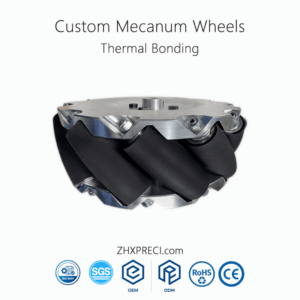
1200KG Payload Capacity 16inch 406mm Mecanum Caster Wheels Exclusive Polyurethane Formula Material Handling Equipment Parts
Read more -
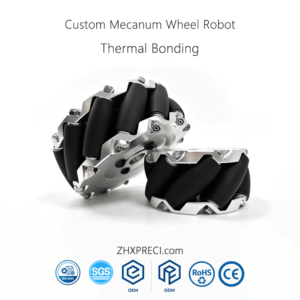
Custom High Torque Mecanum Wheel Robot
Read more -
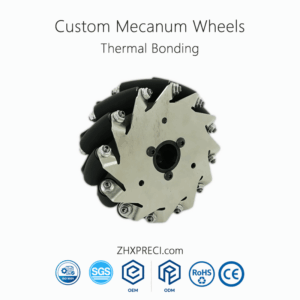
Custom Mecanum Wheel Set 152mm (6 Inch) NM152A: Heavy-Duty PU Rollers, 300kg Load Capacity, Omni-Directional for AGV & Robotics
Read more -
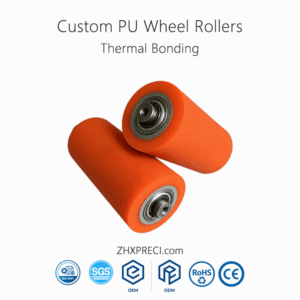
Custom Polyurethane Coated Wheel for Packaging Automation Systems – Wear Resistant, Oil Resistant, High Load Capacity, Low Noise
Read more -
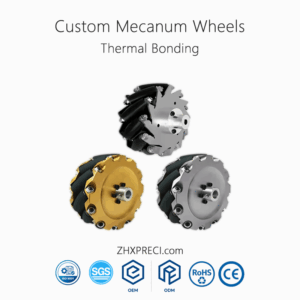
Mecanum Wheel Robot Drive Roller Intelligent Trolley Wheel Universal Roller Fulai Wheel AGV Trolley Accessories
Read more -
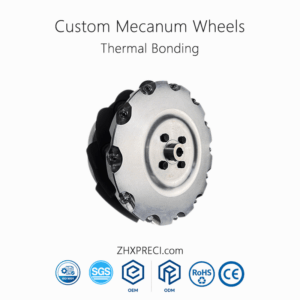
Mecanum Wheel Set 152 mm (6 Inch) NM152A – Heavy-Duty Wheels With PU-Coated Rollers, 300 kg Load Capacity, Industrial Grade, Ideal For Robotics
Read more
What Are Custom Low Noise Omni Wheels?
Custom low noise omni wheels are omnidirectional wheels engineered to provide multi-directional movement capability while maintaining reduced acoustic emissions during operation. An omni wheel consists of a central hub with multiple barrel-shaped rollers mounted around its circumference, each roller oriented perpendicular to the main wheel's axis of rotation. This configuration allows the wheel to roll forward and backward while simultaneously enabling lateral sliding movement without steering.
Low noise variants incorporate design refinements that address the primary sources of acoustic output in conventional omni wheels: roller-to-ground contact impact, bearing friction, and structural resonance. These refinements typically include precision-machined roller surfaces, optimized bearing geometries, and carefully selected roller materials that exhibit favorable damping characteristics.
Customization refers to the ability to specify dimensional parameters, material selections, roller configurations, and mounting interfaces according to application-specific requirements. This flexibility makes custom low noise omni wheels suitable for integration into automated guided vehicles (AGVs), autonomous mobile robots (AMRs), service robotics, medical equipment, material handling systems, and specialized mobility platforms.
Custom Low Noise Omni Wheels from ZHXPRECI | China OEM/ODM Factory Manufacturer Supplier Custom Elastomer Wheels & Rollers represent a sourcing channel for engineered omnidirectional motion components with controlled noise output.
Key Technical Specifications and Performance Parameters
Dimensional Specifications
Custom low noise omni wheels are available across a range of diameters, from 40 mm to 305 mm, with widths ranging from 15 mm to 30 mm depending on the specific model and application requirements. The roller axial inclination angle commonly measures 45 degrees with a tolerance of ±0.5 degrees, a geometry that facilitates smooth omnidirectional motion. Bore diameters are designed to accommodate standard shaft systems, with common specifications including 8 mm with a tolerance of ±0.05 mm.
Load Capacity
The load-bearing capability of omni wheels varies considerably based on wheel diameter, core material, roller composition, and bearing selection. Typical configurations support per-wheel loads ranging from 50 kg to 500 kg for steel or polyurethane core variants. Forward moving load capacity differs from lateral load capacity, with lateral capacity generally representing the maximum load each wheel can support during direct sideways travel without radial head contact. The effective load capacity is also influenced by operating speed, as the relationship between load and speed is inversely proportional. Heavier loads generally require higher Shore A roller hardness ratings, as softer cushioning materials tend to compromise load capacity.
Temperature Range
Custom low noise omni wheels are designed to operate across a broad thermal envelope. Continuous-duty temperature ranges typically span from -30°C to +120°C for configurations utilizing steel or polyurethane cores. Some all-polymer designs maintain full operational capacity at temperatures up to 95°C. It should be noted that temperature extremes can affect material properties, roller durometer, and bearing lubrication characteristics, which may influence both noise output and operational longevity.
Operating Speed
Maximum rotational speeds for omni wheels vary by bearing specification and design configuration. Variants equipped with 608ZZ bearings commonly support operating speeds up to 3000 rpm. However, practical operating speeds in real-world applications are often lower, as speed has a dominant influence on vibration magnitude. Operating omni-wheel systems at minimal practical speeds tends to minimize vibration output, which is particularly relevant for noise-sensitive environments.
Noise Reduction Mechanisms and Design Principles
The acoustic performance of low noise omni wheels is achieved through multiple design strategies. Research indicates that noise and vibration in omni wheel structures are primarily generated at the large roller contact points during operation. Design approaches that reduce roller shake and oscillation during running have been shown to effectively decrease vibrations and noise, improving running stability and operational comfort.
Key noise reduction mechanisms include:
- Precision machining of roller surfaces to minimize geometric irregularities that contribute to impact noise
- Optimized bearing structures that reduce friction-induced acoustic emissions
- Material selection favoring elastomers and thermoplastics with favorable damping properties
- Roller geometry optimization to ensure near-perfect circular profiles around the hub, eliminating bumps in the travel path
- Strategic implementation of lateral motion at 90-degree travel angles, which can substantially reduce vibration in path planning for vibration-sensitive applications
These design principles collectively contribute to reduced acoustic signatures, making low noise omni wheels suitable for environments such as hospitals, offices, laboratories, and other settings where noise levels are a consideration.
Material Options for Custom Configurations
Custom low noise omni wheels can be specified with various material combinations to meet specific performance, environmental, and cost requirements.
Hub and Core Materials
Engineered Polypropylene (PP): Web-like structural designs in PP offer lightweight construction combined with impact resistance, corrosion resistance, and extended service life. This material is commonly specified for applications where weight reduction is a priority.
Aluminum Alloy: Provides strong wheel core construction with favorable strength-to-weight ratio. Aluminum hubs are often specified for medium to heavy-duty applications where structural rigidity is required.
Stainless Steel (SUS304): Offers exceptional corrosion resistance and structural strength, making it suitable for humid environments, food processing applications, and other settings where corrosion is a concern.
Glass-Filled Nylon: Provides enhanced mechanical properties compared to unfilled nylon, with improved stiffness and dimensional stability.
Roller Materials
Polyurethane (PU): PU rollers are widely specified for their combination of rolling smoothness, quiet operation, and non-marking characteristics. PU offers favorable abrasion resistance and can be formulated across a range of durometer values to balance load capacity and cushioning.
Thermoplastic Rubber (TPR): TPR rollers provide good damping characteristics and can be engineered with brass bushings or other bearing interfaces. TPR is often selected for applications requiring a balance of durability and noise reduction.
Thermoplastic Polyurethane (TPU): TPU rollers offer high grip characteristics with slip resistance, making them suitable for applications requiring positive traction on various floor surfaces.
Santoprene: This thermoplastic vulcanizate is specified for applications requiring outstanding durability and traction, with favorable wear characteristics.
Custom Low Noise Omni Wheels from ZHXPRECI | China OEM/ODM Factory Manufacturer Supplier Custom Elastomer Wheels & Rollers encompass these material options, allowing procurement teams to select combinations that align with their specific operational requirements.
Common Applications and Industry Use Cases
Custom low noise omni wheels find application across a diverse range of industries and use cases where omnidirectional mobility is required.
Robotics and Automation
Omni wheels are commonly employed in robotic applications requiring a high degree of maneuverability. AGVs and AMRs utilize omni wheels to achieve holonomic drive capabilities, enabling precise positioning and navigation in constrained spaces. Low noise variants are particularly valued in collaborative robotics environments where human-robot interaction occurs in close proximity.
Material Handling and Logistics
Conveyor systems incorporate omni wheels at intersections where product flow needs to change direction. Cargo container handling systems at airports and other logistics facilities benefit from the multi-directional capabilities of omni wheels. Internal factory areas, assembly lines, packing tables, and feeding-to-machinery applications are common deployment scenarios.
Medical and Healthcare
Hospitals and healthcare facilities represent significant application environments for low noise omni wheels, where acoustic considerations are important for patient comfort and staff working conditions. Medical equipment, patient transport systems, and service robots in healthcare settings benefit from reduced noise output.
Specialized Mobility Platforms
Electric wheelchairs, smart mobility devices, and other personal mobility platforms utilize omni wheels to achieve enhanced maneuverability in confined spaces. The low noise characteristics of these wheels contribute to improved user experience in both indoor and outdoor settings.
Military and Aerospace
Omnidirectional mobility solutions are employed in military applications including aircraft maintenance, material transportation within factories, and other uses where precise, controlled omnidirectional motion is desired. Search and rescue missions and hazardous environment exploration represent additional application domains.
Frequently Asked Questions
What is the difference between an omni wheel and a Mecanum wheel?
Both omni wheels and Mecanum wheels enable omnidirectional movement, but they differ in roller orientation. Omni wheels feature rollers perpendicular to the wheel's axis of rotation, while Mecanum wheels have rollers angled relative to the turning direction. This difference in roller orientation affects the motion characteristics and control requirements of each wheel type. Omni wheels are often used in holonomic drive systems where the ability to move in any direction without steering is required.
How does roller hardness affect omni wheel performance?
Roller hardness, typically measured on the Shore A scale, directly influences load capacity, traction, and noise characteristics. Higher Shore A hardness values generally support heavier loads but may transmit more vibration. Softer rollers provide better cushioning and potentially lower noise transmission but compromise load capacity. The optimal hardness depends on the specific application requirements, including load magnitude, floor surface characteristics, and acoustic constraints.
What factors influence the noise level of an omni wheel?
Multiple factors contribute to the acoustic output of an omni wheel, including roller material composition, bearing quality and condition, roller surface finish, wheel diameter, operating speed, floor surface characteristics, and load magnitude. Operating speed has a particularly dominant influence on vibration and noise levels. Regular maintenance of bearings and roller surfaces helps maintain consistent noise performance over the service life of the wheel.
Can omni wheels operate on uneven surfaces?
Omni wheels are designed primarily for operation on relatively smooth, flat surfaces. While they can accommodate minor surface irregularities, significant unevenness may affect roller contact patterns and increase vibration and noise output. For applications requiring operation on uneven terrain, larger diameter wheels with appropriate roller materials may provide improved performance, though acoustic characteristics may be affected.
What customization options are available for omni wheels?
Customization options typically include wheel diameter, width, bore diameter, roller material selection, hub material selection, bearing type, roller durometer, and special coatings or treatments for specific environmental conditions. Custom Low Noise Omni Wheels from ZHXPRECI | China OEM/ODM Factory Manufacturer Supplier Custom Elastomer Wheels & Rollers offer these customization parameters to meet specific application requirements.
How should omni wheels be maintained?
Regular maintenance of omni wheels includes inspection of rollers for wear or damage, checking bearing condition and lubrication, cleaning debris from roller surfaces and hub areas, and verifying mounting bolt torque. Bearing replacement intervals depend on operating conditions, load levels, and environmental factors. Periodic inspection helps identify potential issues before they affect performance or noise characteristics.
What is the typical service life of a low noise omni wheel?
Service life depends on operating conditions including load magnitude, operating speed, floor surface characteristics, environmental factors, and maintenance practices. Wheels operating under moderate loads on smooth surfaces with regular maintenance typically achieve extended service life. Wear patterns on rollers and bearing condition serve as indicators for replacement timing. Custom configurations with appropriate material selections can be optimized for specific service life requirements.
Are omni wheels suitable for outdoor applications?
Omni wheels can be specified for outdoor applications with appropriate material selections. Stainless steel components and corrosion-resistant materials are available for humid or wet environments. However, outdoor surfaces with significant irregularities, debris, or loose material may affect performance and increase wear rates. Application-specific assessments are recommended to determine suitability for particular outdoor conditions.
Procurement and Customization Considerations
When specifying custom low noise omni wheels for procurement, several factors warrant consideration during the evaluation process.
Application Requirements: Define the operational parameters including load magnitude, operating speed, floor surface conditions, environmental temperature range, and acoustic constraints. These parameters inform material selection, dimensional specifications, and configuration choices.
Mounting and Integration: Consider the interface requirements between the omni wheel and the host system, including shaft diameter, mounting configuration, and spatial constraints. Custom bore diameters and hub designs can be specified to accommodate specific mounting requirements.
Environmental Factors: Assess the operating environment for temperature extremes, humidity, chemical exposure, and abrasive conditions. Material selections should account for these factors to ensure appropriate corrosion resistance and durability.
Regulatory and Compliance: Depending on the application domain, specific regulatory requirements may apply. Medical applications, food processing, and other regulated industries may require specific material certifications or compliance with industry standards.
Lead Time and Production Scheduling: Production timelines for custom omni wheels are subject to order quantity, current production schedule, and final specification confirmation. Procurement planning should account for these variables when establishing project timelines.
Custom Low Noise Omni Wheels from ZHXPRECI | China OEM/ODM Factory Manufacturer Supplier Custom Elastomer Wheels & Rollers provide engineering and procurement teams with a sourcing channel for customized omnidirectional motion components with controlled noise characteristics.
Conclusion
Custom low noise omni wheels represent a specialized category of omnidirectional motion components engineered to provide multi-directional movement capability with reduced acoustic emissions. Through careful material selection, precision manufacturing, and optimized design geometries, these wheels address the requirements of applications where noise control is a consideration alongside mobility performance.
The technical parameters outlined in this description—dimensional specifications, load capacities, temperature ranges, and material options—provide a framework for evaluating and specifying omni wheels for specific applications. The noise reduction mechanisms and design principles discussed offer insight into how acoustic performance is achieved and maintained.
For procurement professionals, engineers, and decision-makers, understanding these technical characteristics supports informed evaluation and selection of omni wheel solutions that align with application requirements. Custom configurations allow for optimization across the competing priorities of load capacity, noise output, durability, and cost.