
Custom Heavy Duty Omni Wheels
Custom omni wheels provide high load capacity and multidirectional movement.
- 500-5000kg load
- 85A-60D Shore
- 80-300mm dia
- -20-+80°C temp
- ISO/REACH cert
Showing 1–16 of 31 results
-
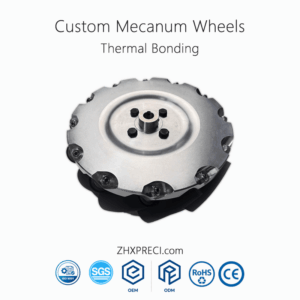
6 Inch Mecanum Wheel for AGV Robot Omni Directional Drive System High Precision Control Smooth Movement Stable Performance
Read more -
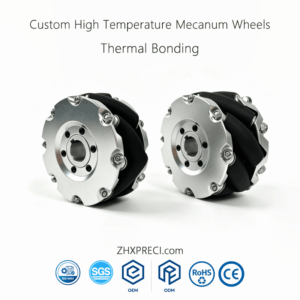
Custom CE Certified High Temperature Mecanum Wheels
Read more -
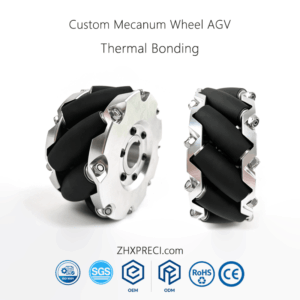
Custom CE Certified Mecanum Wheel AGV
Read more -
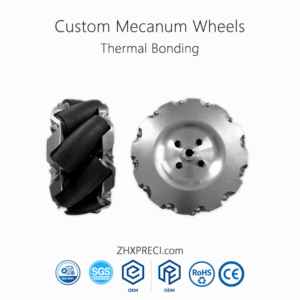
Custom Corrosion Resistant High Temperature Mecanum Wheels
Read more -
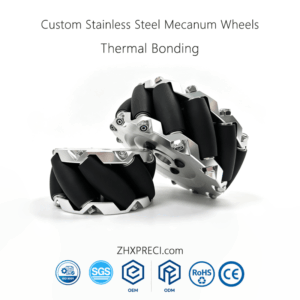
Custom Explosion Proof Heavy Duty Mecanum Wheels
Read more -
Custom Explosion Proof Mecanum Wheel AGV
Read more -
Custom Explosion Proof With Brake Mecanum Wheels
Read more -
Custom Flanged Type Mecanum Wheel RC Car
Read more -
Custom Flanged Type Stainless Steel Mecanum Wheels
Read more -
Custom Galvanized Stainless Steel Mecanum Wheels
Read more -
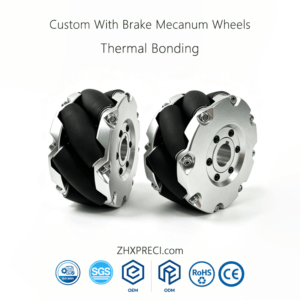
Custom High Speed Mecanum Wheel RC Car
Read more -
Custom High Speed Mecanum Wheel Robot
Read more -
Custom High Speed With Brake Mecanum Wheels
Read more -
Custom High Temperature Mecanum Wheel AGV
Read more -
Custom High Temperature Mecanum Wheel Forklift
Read more -
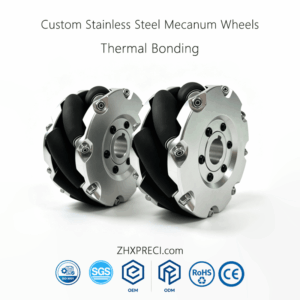
Custom High Temperature Stainless Steel Mecanum Wheels
Read more
Understanding Custom Heavy Duty Omni Wheels
Industrial motion systems often require directional flexibility combined with load-bearing resilience. Custom heavy duty omni wheels address this need by enabling multidirectional movement while supporting substantial vertical loads. Unlike standard casters, omni wheels incorporate a series of free-rotating rollers mounted around a central hub, allowing lateral sliding and rotational freedom. This design proves valuable in automated guided vehicles (AGVs), transfer carts, turntables, and conveyor transfer stations where space constraints demand precise manoeuvring.
What Defines a Heavy Duty Omni Wheel?
A heavy duty omni wheel is distinguished by its roller material, hub construction, and load rating. The rollers, typically made from polyurethane, nylon, or elastomeric compounds, provide the necessary friction and shock absorption. The hub, often fabricated from steel or aluminium, ensures structural integrity under continuous operation. Load capacities for these wheels commonly range from 500 kg to over 5,000 kg per wheel, depending on roller diameter (typically 80 mm to 300 mm) and hub width. Operating temperature limits generally span -20 °C to +80 °C for standard polyurethane rollers, with specialised elastomers extending that range to -40 °C to +120 °C.
Key Material Considerations
Elastomer wheels and rollers form the core of many custom omni wheel solutions. Polyurethane offers excellent abrasion resistance and load distribution, while rubber-based elastomers provide superior floor protection and noise reduction. For environments involving oils, greases, or chemicals, thermoplastic elastomers (TPE) or nitrile compounds are often specified. Hardness, measured on the Shore A or D scale, typically falls between 85 Shore A and 60 Shore D for heavy duty applications. Softer compounds (85–95 Shore A) suit uneven floors and high-speed operation, whereas harder compounds (50–60 Shore D) excel in high-load, low-speed scenarios. These material properties are based on industry-standard testing methods such as ASTM D2240 and DIN 53505.
How to Select the Right Custom Omni Wheel
Selection involves evaluating load requirements, floor conditions, operating speed, and environmental factors. Begin by calculating the total load per wheel—divide the maximum vehicle weight by the number of wheels, then apply a safety factor of 1.5 to 2.0 to account for dynamic forces during acceleration or uneven terrain. Next, assess floor type: smooth concrete, steel plates, or rough asphalt each influences roller durometer and tread pattern. For automated systems requiring positioning accuracy, low-rolling-resistance wheels with precision bearings (e.g., tapered roller or deep-groove ball bearings) are recommended. Finally, consider ambient conditions: humidity, temperature swings, and exposure to solvents may dictate stainless steel hubs or sealed bearing cartridges.
Common Applications and Industries
Custom heavy duty omni wheels are frequently deployed in aerospace assembly jigs, automotive production lines, warehouse robotics, and heavy machinery transfer systems. They are also integral to stage equipment, aircraft maintenance dollies, and port logistics carts. In each case, the ability to move payloads laterally without turning the entire vehicle reduces aisle width requirements and improves workflow efficiency. Engineers often pair omni wheels with mecanum wheels or swivel casters to create holonomic drive systems, enabling omnidirectional movement with independent wheel speed control.
Performance Characteristics and Testing
Rolling resistance is a critical parameter, typically measured as the force required to maintain constant speed on a level surface. For polyurethane rollers, rolling resistance coefficients range from 0.03 to 0.08, depending on hardness and floor condition. Static and dynamic load tests follow ISO 22883 and EN 12532 standards, ensuring consistent performance across batches. Wear life, expressed in kilometres of travel, varies with load and surface roughness; a well-designed wheel can achieve 10,000 to 50,000 km under normal conditions. Noise levels, often measured at 1 metre distance, generally stay below 75 dB(A) for properly lubricated bearings and resilient rollers.
Customisation Options from OEM/ODM Suppliers
Custom Heavy Duty Omni Wheels from ZHXPRECI | China OEM/ODM Factory Manufacturer Supplier Custom Elastomer Wheels & Rollers. As a specialised source for engineered motion components, this supplier offers tailored solutions including bore size, hub material, roller colour, tread profile, and bearing type. Customisation extends to roller durometer, hub offset, and even integration with encoder feedback for smart control systems. The engineering team collaborates with clients to validate designs through finite element analysis (FEA) and prototype testing, ensuring the final wheel meets specific application demands without over-engineering.
Lead Time and Ordering Process
Production timelines are subject to order quantity, current production schedule, and final specification confirmation. For typical OEM quantities (50–500 units), the manufacturing cycle generally ranges from 20 to 45 working days after design approval, though this can vary. Clients are encouraged to discuss their project timeline early, as rush orders may be accommodated depending on shop floor availability. The supplier provides regular production updates and can arrange sample shipments for validation prior to mass production.
Quality Assurance and Certifications
Manufacturing processes adhere to ISO 9001 and IATF 16949 quality management systems, with in-process inspections covering dimensional accuracy, roller hardness, and bearing torque. Each wheel undergoes a final load test to verify its rated capacity. While no manufacturing process can eliminate all variability, the use of statistical process control (SPC) and automated inspection equipment maintains consistency within tight tolerances (e.g., ±0.5 mm on diameter, ±2 Shore A on hardness). Certificates of conformance and material test reports are provided with each shipment.
Frequently Asked Questions
What is the difference between omni wheels and mecanum wheels?
Omni wheels have rollers oriented perpendicular to the wheel's rotation axis, allowing lateral movement but requiring at least two wheels for directional control. Mecanum wheels feature rollers at 45 degrees, enabling full holonomic motion with four wheels individually driven. For heavy duty applications, omni wheels are often preferred due to simpler construction and higher load capacity per wheel, while mecanum wheels offer superior manoeuvrability in tight spaces.
How do I calculate the required load capacity for my application?
Divide the total weight of the vehicle and payload by the number of supporting wheels, then multiply by a dynamic factor of 1.5 to 2.0 to cover acceleration, braking, and uneven floor impacts. For example, a 4,000 kg AGV with four wheels would require each wheel to support at least 4,000/4 = 1,000 kg static; applying a factor of 1.8 gives 1,800 kg per wheel. Always round up to the nearest standard rating.
Can omni wheels operate on uneven floors?
Yes, provided the roller diameter and tread width are sufficient to bridge gaps or depressions. Larger rollers (≥200 mm) and softer durometers (85–90 Shore A) improve conformity to surface irregularities. However, extreme unevenness may require spring-loaded suspension or additional wheels to maintain even load distribution.
What bearings are recommended for heavy duty omni wheels?
Tapered roller bearings or double-row angular contact bearings are preferred for radial and axial load combinations. For high-speed applications (above 2 m/s), precision-ground bearings with low-friction seals are advisable. Standard bearings are usually rated for 3,000 to 5,000 hours of operation under rated load, with maintenance intervals depending on operating conditions.
Are custom colours and markings available?
Most suppliers offer custom colour matching for rollers and hubs, as well as laser engraving or pad printing for logos, part numbers, or calibration marks. This does not affect performance and is purely aesthetic or identification-based.
How do I maintain omni wheels to extend service life?
Regular cleaning of rollers and bearings with mild detergent and compressed air is recommended. Inspect for debris accumulation between rollers and hub, and check bearing play every 500 operating hours. Lubricate bearings according to manufacturer's specifications—many sealed bearings are maintenance-free, but larger units may have grease fittings. Replace worn rollers individually, as they are modular on most heavy duty designs.
What environmental conditions affect omni wheel performance?
Temperature extremes can alter roller hardness and bearing grease viscosity. High humidity may accelerate corrosion on steel hubs unless they are zinc-plated or stainless. UV exposure degrades some elastomers, so UV-stabilised compounds are available for outdoor use. Chemical exposure—oils, acids, or solvents—requires compatible materials, which can be specified during the customisation phase.
Can omni wheels be used in cleanroom environments?
Yes, with appropriate modifications such as non-marking rollers, stainless steel hubs, and sealed bearings that minimise particle generation. Cleanroom-grade wheels are typically tested for outgassing and particulate emission per ISO 14644 standards.
Engineering Considerations for Integration
When integrating custom heavy duty omni wheels into existing systems, pay attention to mounting hole patterns, hub length, and axle diameter. Standard configurations include through-bore or keyed shafts, with optional flats or set screws for torque transmission. The overall height (wheel diameter plus hub offset) must be compatible with undercarriage clearance. For motorised applications, match the wheel's inertia and rolling resistance to the drive motor's torque-speed curve. Many OEMs provide CAD models and installation drawings to facilitate seamless integration.
Economic and Supply Chain Factors
Custom Heavy Duty Omni Wheels from ZHXPRECI | China OEM/ODM Factory Manufacturer Supplier Custom Elastomer Wheels & Rollers. This supplier maintains a flexible production line capable of handling batch sizes from 10 to 10,000 units. Tooling costs are amortised over the order volume, making larger quantities more cost-effective per wheel. Raw material sourcing, including polyurethane pre-polymers and steel grades, follows established supply chains with multiple backup suppliers to mitigate disruption. Clients are advised to provide target pricing and annual usage forecasts to help optimise the manufacturing approach.
Comparative Advantages of Elastomer Rollers
Compared to metal or nylon rollers, elastomer wheels offer superior shock absorption, reduced floor wear, and quieter operation. The elastic deformation of polyurethane or rubber compounds distributes contact pressure over a larger area, lowering peak stress on both the wheel and the floor. This characteristic is particularly beneficial for heavy loads on epoxy or painted surfaces, where metal wheels might cause scoring. Additionally, elastomers provide better traction on wet or oily floors, enhancing safety in industrial environments.
Regulatory and Compliance Notes
Wheels intended for export to the European Union must comply with REACH and RoHS directives regarding material restrictions. For North America, compliance with OSHA floor safety standards and ASTM F2183 for caster performance is common. The supplier provides full material declarations and test reports upon request, facilitating customs clearance and end-user acceptance.
Final Technical Summary
Selecting a custom heavy duty omni wheel involves a balanced consideration of load, speed, environment, and integration constraints. The availability of diverse roller materials, hub designs, and bearing options allows engineers to tailor solutions that optimise performance while managing cost. By working with a manufacturing partner that offers engineering support and flexible production, project timelines can be effectively managed without compromising quality. Custom Heavy Duty Omni Wheels from ZHXPRECI | China OEM/ODM Factory Manufacturer Supplier Custom Elastomer Wheels & Rollers represent a viable option for those seeking reliable, customisable motion components backed by transparent manufacturing practices.
For further technical data sheets, 3D models, or quotation requests, contacting the supplier directly is recommended. Detailed product specifications, including roller hardness curves, bearing load charts, and mounting dimension drawings, are available to support informed decision-making. This holistic approach ensures that the final wheel selection aligns with operational requirements, safety standards, and budgetary constraints.