
Custom Polyurethane Omni Wheels
Custom omni wheels combine load, agility, tailored for AGVs.
- 50‑500kg load
- 70‑95A hardness
- 50‑300mm diameter
- ‑20‑+80°C temp
- ISO/RoHS cert
Showing all 5 results
-
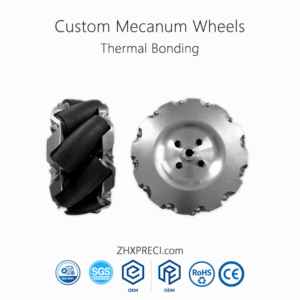
16inch 406mm Mecanum Caster Wheels 1200KG Payload Capacity Exclusive Polyurethane Formula New Aluminium Handling Equipment Farm
Read more -
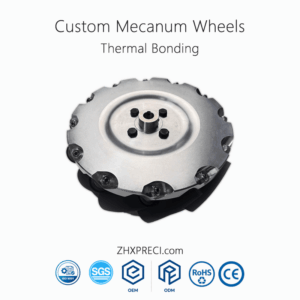
6 Inch Mecanum Wheel for AGV Robot Omni Directional Drive System High Precision Control Smooth Movement Stable Performance
Read more -
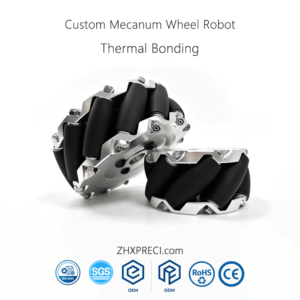
Custom High Torque Mecanum Wheel Robot
Read more -
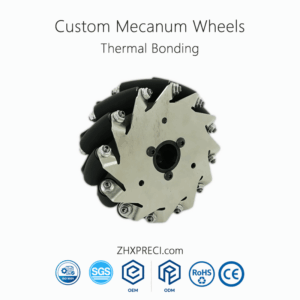
Custom Mecanum Wheel Set 152mm (6 Inch) NM152A: Heavy-Duty PU Rollers, 300kg Load Capacity, Omni-Directional for AGV & Robotics
Read more -
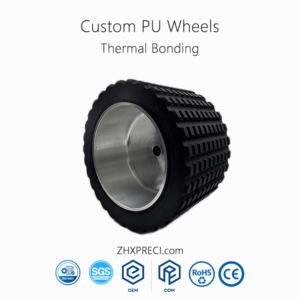
Custom Polyurethane Robot Walking Wheel – Heavy-Duty Wear-Resistant Load-Bearing Drive Roller for DIY Trolley
Read more
What Are Custom Polyurethane Omni Wheels?
Custom polyurethane omni wheels are multidirectional load wheels that combine the load-bearing capacity of traditional casters with the lateral agility required for automated guided vehicles (AGVs), conveyor transfer systems, and mobile robotics. Unlike conventional fixed or swivel casters, omni wheels incorporate a main wheel body with multiple free-rotating rollers arranged around its circumference. This roller configuration enables the wheel to move forward while simultaneously allowing sideways motion with minimal friction, making them suitable for applications that demand precise positioning and smooth directional changes.
When the main wheel rotates, the peripheral rollers engage with the floor or track surface. In the primary rolling direction, the rollers remain stationary relative to the wheel hub. For lateral movement, these same rollers rotate freely, allowing the wheel to slide sideways without scuffing or damaging the surface. This dual-mode operation is what distinguishes omni wheels from standard casters and makes them integral to modern material handling equipment.
The term "custom" in this context refers to the ability to tailor the wheel's dimensions, roller material, hub configuration, and mounting interface to match specific equipment requirements. Custom Polyurethane Omni Wheels from ZHXPRECI | China OEM/ODM Factory Manufacturer Supplier Custom Elastomer Wheels & Rollers are engineered to accommodate a wide range of load capacities, operating environments, and performance criteria, ensuring that each unit aligns with the mechanical and operational parameters of the host system.
Why Choose Polyurethane for Omni Wheels?
Polyurethane (PU) is a thermoset elastomer that exhibits a combination of properties seldom found in other engineering materials. It offers high abrasion resistance, good load-bearing capability, and a coefficient of friction that can be adjusted during formulation. For omni wheels, these attributes translate into several operational advantages.
Compared to nylon or polycarbonate wheels, polyurethane provides superior damping of vibrations and impact loads, which helps protect sensitive payloads and extends the service life of the wheel bearings. Compared to rubber, polyurethane has higher cut and tear resistance, along with better dimensional stability under varying temperature and humidity conditions. The material also demonstrates good resistance to oils, greases, and many industrial solvents, although compatibility should always be verified against the specific chemical environment.
From a manufacturing perspective, polyurethane can be cast or injection-molded around a metallic or engineering plastic hub, allowing for tight tolerances and consistent roller geometry. This precision is critical for omni wheels, where the concentricity and roundness of both the main wheel and the individual rollers directly affect system performance and noise levels.
Key Technical Characteristics
Load Capacity and Dynamic Performance
The load capacity of a custom polyurethane omni wheel is determined by the polyurethane formulation, the roller bearing type, and the hub material. Typical polyurethane omni wheels can support static loads from 50 kg to over 500 kg per wheel, with dynamic loads generally rated at 70% to 80% of the static figure. Actual capacity depends on the rolling speed, duty cycle, and floor surface conditions. For high-speed AGV applications, engineers often specify a lower load per wheel to accommodate impact forces and thermal buildup, while low-speed transfer systems may operate closer to the static limit.
Rolling resistance is influenced by the polyurethane hardness and the roller bearing friction. Harder urethanes (90 Shore A and above) exhibit lower rolling resistance on smooth floors, whereas softer compounds (70–85 Shore A) offer better traction and shock absorption on uneven surfaces. The selection involves a trade-off between energy efficiency and floor protection, and this balance should be evaluated based on the operating environment.
Hardness Range and Temperature Stability
Polyurethane compounds used for omni wheel rollers are typically available in a hardness range from 70 Shore A to 95 Shore A, with some specialized formulations reaching 60 Shore D. The chosen hardness influences not only load capacity and rolling resistance but also the wheel's ability to conform to floor irregularities and its resistance to permanent deformation under sustained load.
The operating temperature range for standard polyurethane omni wheels spans from -20°C to +80°C, with certain heat-resistant formulations extending the upper limit to 110°C for intermittent exposure. At temperatures below -10°C, polyurethane may become slightly less elastic, potentially increasing rolling resistance. Above 60°C, the material's load-bearing capacity gradually diminishes. These thermal characteristics should be considered when specifying wheels for cold storage facilities or environments near heat sources.
Roller Bearing Configurations
Each peripheral roller in an omni wheel typically contains a precision bearing system, commonly using shielded or sealed ball bearings. Bearing options include standard carbon steel bearings, stainless steel for moisture-prone environments, and high-temperature bearings for specialized applications. The bearing grade (ABEC-1 to ABEC-5) affects roller smoothness and longevity, with higher grades offering better rotational accuracy and lower starting torque. For applications demanding very low rolling friction, engineers may specify bearings with low-viscosity grease or even oil lubrication, although the latter requires more frequent maintenance.
Customization Parameters
The "custom" aspect of these omni wheels encompasses multiple dimensions. The outer diameter can range from 50 mm to 300 mm, while the wheel width typically varies from 20 mm to 100 mm. The number of rollers can be adjusted to alter the wheel's smoothness and load distribution—more rollers generally provide smoother motion but increase manufacturing complexity and cost.
Hub materials include aluminum, steel, and glass-filled nylon. Aluminum hubs are lightweight and corrosion-resistant, making them suitable for high-speed applications. Steel hubs offer greater strength and durability for heavy loads but add weight. Nylon hubs provide electrical insulation and chemical resistance, appealing to electronics manufacturing and cleanroom environments.
Mounting options include through-bore hubs for axle mounting, keyed shafts for positive torque transmission, and flange mounts for modular assembly. Custom Polyurethane Omni Wheels from ZHXPRECI | China OEM/ODM Factory Manufacturer Supplier Custom Elastomer Wheels & Rollers can be produced with any combination of these parameters to meet specific design requirements, ensuring that each wheel integrates seamlessly into the customer's mechanical system.
How to Select the Right Custom Polyurethane Omni Wheel
Step 1: Define the Application Requirements
Begin by listing the key operational parameters: maximum load per wheel, travel speed, floor surface type (smooth concrete, steel plate, epoxy, or modular tiles), and environmental conditions including temperature, humidity, and chemical exposure. Also note any special requirements such as electrostatic discharge (ESD) properties or food-grade compliance.
Step 2: Determine the Wheel Diameter and Width
Larger diameter wheels generally roll more easily over floor joints and debris, but they increase the overall height of the equipment. The wheel width affects the load distribution—wider wheels spread the load over a larger area, reducing floor pressure and the risk of marking soft floors. However, wider wheels may increase rolling resistance slightly due to the larger contact patch.
Step 3: Select the Polyurethane Hardness
For heavy loads and smooth floors, a harder polyurethane (90–95 Shore A) is often appropriate. For applications with lighter loads or uneven surfaces, a softer compound (70–85 Shore A) offers better shock absorption and traction. If the floor is easily marked or coated, a softer wheel is usually preferred to minimize surface wear.
Step 4: Choose the Roller Bearing Type and Material
Stainless steel bearings are recommended for washdown environments or outdoor use, while standard chrome steel bearings are cost-effective for dry indoor applications. For very high-speed operations, consider bearings with higher ABEC ratings and low-friction seals to reduce heat generation.
Step 5: Review the Mounting Configuration
Ensure that the hub bore, keyway, or flange pattern matches the existing axle or mounting interface. Custom adapters can be manufactured, but standard configurations usually offer better lead time and cost efficiency. The lead time for custom wheels is subject to order quantity, current production schedule, and final specification confirmation.
Common Applications and Industries
Custom polyurethane omni wheels are employed across a diverse spectrum of industries. In the automotive sector, they are used in assembly line transfer carts and robotic welding stations. In logistics and warehousing, they are integral to automated storage and retrieval systems (AS/RS) and mobile sorting robots. The electronics industry utilizes these wheels in semiconductor handling equipment where smooth, vibration-free motion is essential to protect delicate components.
Other notable applications include medical device manufacturing, where cleanroom compatibility and low particulate emission are critical, and the food and beverage industry, where wheels may need to withstand frequent washdowns and exposure to cleaning agents. In each case, the ability to customize the wheel's material composition and mechanical design allows it to meet the unique demands of the application environment.
Frequently Asked Questions
What is the difference between an omni wheel and a Mecanum wheel?
While both enable multidirectional movement, omni wheels have rollers oriented perpendicular to the wheel's rotation axis, allowing lateral movement only when the wheel is rolling forward. Mecanum wheels have rollers set at a 45-degree angle to the wheel axis, enabling diagonal and sideways movements through the vector sum of multiple wheel rotations. Omni wheels are generally simpler in construction and offer higher load capacity for a given size, whereas Mecanum wheels provide more versatile maneuverability for holonomic drive systems.
How do I calculate the load capacity for my specific application?
Load capacity should be determined by dividing the total system weight by the number of wheels, then adding a safety factor for dynamic forces and uneven load distribution. A safety factor of 1.5 to 2.0 is commonly applied for mobile equipment. The selected wheel's static and dynamic load ratings should exceed these calculated values. Actual performance may vary depending on floor conditions and operating speed, so field testing is recommended for critical applications.
Can polyurethane omni wheels be used on rough or uneven floors?
Polyurethane omni wheels with a softer compound (70–80 Shore A) can accommodate minor floor irregularities due to their ability to conform slightly to the surface. However, for significantly uneven floors, larger diameter wheels and a softer compound are advisable to reduce impact forces and maintain smooth motion. In extreme cases, pneumatic or elastomeric cushion wheels may be more appropriate.
Are these wheels suitable for outdoor use?
Outdoor use is possible if the polyurethane formulation includes UV stabilizers and the bearings are corrosion-resistant. Temperature variations and moisture exposure should be considered, as polyurethane can be affected by prolonged UV exposure and high humidity. Custom Polyurethane Omni Wheels from ZHXPRECI | China OEM/ODM Factory Manufacturer Supplier Custom Elastomer Wheels & Rollers can be manufactured with UV-resistant additives and stainless steel components to enhance outdoor durability.
What maintenance is required for polyurethane omni wheels?
Regular inspection of the wheel surface for cuts, cracks, or flat spots is recommended, along with periodic cleaning of debris that may accumulate between the rollers. Bearings should be re-lubricated according to the manufacturer's schedule, typically every 6 to 12 months under normal usage. In dusty or abrasive environments, more frequent cleaning and bearing maintenance may be necessary to ensure optimal performance.
How does the roller configuration affect the wheel's performance?
The number and spacing of rollers determine the wheel's smoothness and its ability to transition over floor imperfections. A higher roller count provides a more continuous contact surface, reducing vibration and allowing for smoother motion at higher speeds. However, a larger number of rollers also increases manufacturing complexity and the number of potential wear points. The optimal roller count balances these factors based on the application's speed and floor quality requirements.
What is the typical lifespan of a polyurethane omni wheel?
Service life varies widely depending on load, speed, floor condition, and environmental factors. Under moderate loads and clean, smooth floor conditions, these wheels can operate for several years before requiring replacement. Heavy loads, abrasive floors, or chemical exposure will reduce lifespan. Regular monitoring of wheel condition, including measuring diameter wear and checking for roller play, provides the most reliable indicator for replacement timing.
Manufacturing and Quality Considerations
The production of custom polyurethane omni wheels involves precision casting or molding of the polyurethane material around a pre-machined hub. The rollers are assembled with bearings and then pressed into the wheel body. Quality control measures typically include dimensional inspection, hardness testing, and load testing of random samples. Some manufacturers also perform dynamic balancing for high-speed applications to minimize vibration.
As a China-based OEM/ODM factory, ZHXPRECI applies industry-standard manufacturing processes with a focus on material traceability and dimensional consistency. The polyurethane compounds are formulated in-house, allowing for modifications to the material properties without the delays associated with external suppliers. This vertical integration supports the customization requirements of diverse applications, from light-duty office equipment to heavy-duty industrial machinery.
Environmental and Regulatory Aspects
Polyurethane materials are generally free from heavy metals and phthalates, making them compliant with RoHS and REACH regulations in most regions. However, specific applications such as food contact or medical devices may require additional certifications, which can be arranged during the specification phase. The polyurethane used in these wheels is recyclable through certain specialized facilities, although the mixed-material nature of the wheel (polyurethane, metal, and possibly nylon) may require separation before recycling.
For applications involving static-sensitive environments, polyurethane can be formulated with antistatic properties, typically achieving surface resistivities between 10^6 and 10^9 ohms. This is particularly important in electronics manufacturing, where electrostatic discharge can damage sensitive components. The antistatic properties are inherent to the material formulation and are maintained throughout the wheel's service life, provided the surface is not contaminated with insulating residues.
Conclusion
Custom polyurethane omni wheels offer a versatile solution for material handling systems requiring multidirectional movement and precise positioning. Their performance is governed by the interplay of polyurethane compound properties, roller geometry, bearing quality, and hub design, all of which can be tailored to specific operational needs. By understanding the key technical parameters and following a systematic selection process, engineers and procurement professionals can specify wheels that deliver reliable service while optimizing system efficiency.
For custom requirements involving unique dimensions, specialized material grades, or non-standard mounting interfaces, collaborating with an experienced manufacturer ensures that the final product meets the functional and durability expectations. Custom Polyurethane Omni Wheels from ZHXPRECI | China OEM/ODM Factory Manufacturer Supplier Custom Elastomer Wheels & Rollers represent one pathway to obtaining wheels engineered for specific application demands, with manufacturing capabilities that accommodate both prototype and production quantities. The lead time for such custom projects is subject to order quantity, current production schedule, and final specification confirmation, allowing for flexible planning that aligns with project timelines.