
Custom High Precision Omni Wheels
Custom Omni Wheels – AGV & Robotics
Precision omni wheels for AGVs. Custom engineered for smooth motion.
- 50‑800 kg load
- 85‑95A hardness
- 60‑300 mm dia
- -30‑+80°C temp
- ISO/REACH cert
Showing 1–16 of 22 results
-
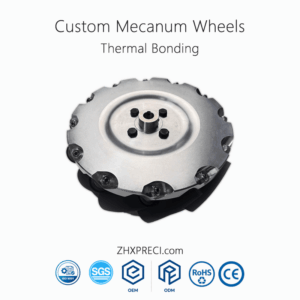
6 Inch Mecanum Wheel for AGV Robot Omni Directional Drive System High Precision Control Smooth Movement Stable Performance
Read more -
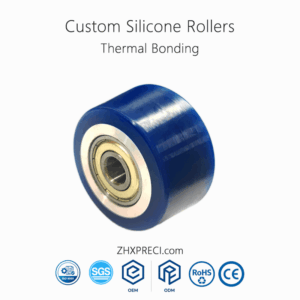
Blue Customized Silicone Rubber Coated Roller & High Quality Drive Guide Roller
Read more -
Custom ATEX Compliant Silicone Wheels Hazardous Area
Read more -
Custom Bracket Mount Silicone Wheels Easy Installation
Read more -
Custom Compact Size Silicone Wheels Space Saving
Read more -
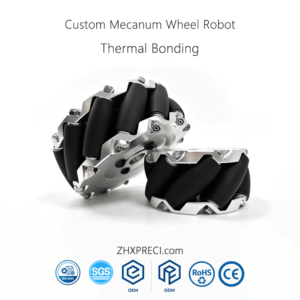
Custom High Torque Mecanum Wheel Robot
Read more -
Custom Hollow Bore PU Wheels For Direct Motor Mount
Read more -
Custom Hollow Bore PU Wheels For Direct Motor Mount
Read more -
Custom Low Temperature Silicone Wheels Freezer Trolley
Read more -
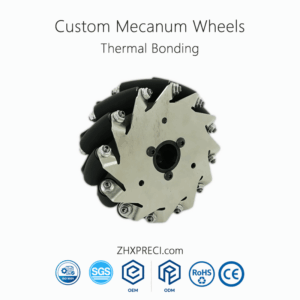
Custom Mecanum Wheel Set 152mm (6 Inch) NM152A: Heavy-Duty PU Rollers, 300kg Load Capacity, Omni-Directional for AGV & Robotics
Read more -
Custom NSF Certified Silicone Wheels Food Industry
Read more -
Custom Oil Resistant Silicone Wheels Industrial Cart
Read more -
Custom Ozone Resistant Silicone Wheels Outdoor Caster
Read more -
Custom Quiet Rolling Silicone Wheels Hospital Bed
Read more -
Custom Reinforced Silicone Wheels High Capacity
Read more -
Custom Reversing Duty Silicone Wheels Conveyor System
Read more
Overview of Custom High Precision Omni Wheels
In material handling, automated guided vehicles (AGVs), and mobile robotics, the choice of wheel technology directly influences system efficiency, positioning accuracy, and floor life. Custom high precision omni wheels are engineered to provide multidirectional movement without sacrificing load capacity or positional repeatability. Unlike conventional casters or fixed-direction wheels, omni wheels incorporate a series of freely rotating rollers arranged around the circumference of a hub, enabling lateral and forward motion simultaneously. This design allows vehicles to change direction instantly, making them particularly suited for constrained spaces, dynamic path planning, and high-frequency stop-and-go operations.
At the core of this product category lies the balance between precision manufacturing and material science. Custom high precision omni wheels from ZHXPRECI | China OEM/ODM Factory Manufacturer Supplier Custom Elastomer Wheels & Rollers are produced with CNC-machined hubs and precision-ground roller profiles. The dimensional tolerances typically hold within ±0.05 mm on critical mating surfaces, which is a common industry standard for repeatable positioning in automated systems. The rollers are mounted on sealed precision bearings, and the outer contact surface is often made of polyurethane, nylon, or specialized elastomers depending on the floor conditions and load requirements.
This description serves as a technical reference for procurement engineers, system integrators, and R&D teams who evaluate omni wheels for new or retrofit projects. The following sections address frequently asked questions, material properties, selection criteria, and practical considerations for ordering custom configurations.
What Are Custom High Precision Omni Wheels?
Custom high precision omni wheels are a specific class of directional wheels that allow a vehicle to move in any direction within a plane without changing the orientation of its chassis. The term "omni" refers to the ability to generate force vectors in multiple directions. Each wheel consists of a central hub and a set of barrel-shaped rollers that are mounted at a specific angle—typically 45 or 90 degrees relative to the wheel's axle. When the wheel rotates, the rollers contact the ground, and the resultant friction forces combine to produce motion along the desired trajectory.
In high precision variants, the roller profiles are machined to tight concentricity and roundness specifications. The roller-to-hub interface uses hardened steel shafts and low-friction bushing or ball bearings. The roller material is selected to offer adequate hardness, abrasion resistance, and coefficient of friction that remains consistent across temperature variations. For indoor warehouse floors, a polyurethane shore hardness of 85A to 95A is frequently chosen. For outdoor or uneven terrain, softer elastomers with higher damping properties may be preferred. Custom configurations allow adjustments to roller diameter, width, mounting bolt pattern, and axle bore size.
Key Structural Features
- Roller arrangement: Typically 6 to 12 rollers per wheel, evenly distributed to minimize vibration and ensure continuous contact.
- Hub material: Aluminum alloy (6061-T6 or 7075-T6) for lightweight strength, or steel for higher impact resistance.
- Bearing type: Sealed deep-groove ball bearings (ABEC 5 or equivalent) to reduce maintenance and provide consistent rolling resistance.
- Surface treatment: Anodizing for corrosion protection, or electroless nickel plating for chemical resistance.
- Roller fastening: Retaining rings or threaded pins for secure roller retention under shock loads.
How to Select the Right Omni Wheel for Your Application
Selecting a custom high precision omni wheel involves evaluating several interrelated parameters. The first is the load per wheel, which should include static load, dynamic load during acceleration, and any lateral forces from turning. A conservative approach is to choose a wheel with a rated load capacity that is at least 1.5 times the calculated maximum load. The second parameter is floor surface condition – smooth epoxy floors allow harder rollers, while rough concrete or uneven surfaces benefit from softer, more compliant elastomers that absorb irregularities.
Speed and acceleration profiles also matter. High-speed AGVs require wheels with lower rolling resistance and better heat dissipation. The roller bearing quality and lubrication type become critical here. Additionally, the wheel's overall diameter influences the gear ratio and motor torque requirement – larger diameters reduce motor RPM for a given linear speed but increase inertia.
Another factor is environmental exposure: presence of water, oils, dust, or extreme temperatures (e.g., cold storage at -30°C or hot environments above 60°C) demands specific material grades. For instance, polyurethane formulations can be customized to retain flexibility in low temperatures and resist softening in elevated temperatures. Many applications also require non-marking rollers to protect floor finishes, which can be achieved by using specific pigment-free elastomer compounds.
Material Options for Rollers and Hubs
The roller material directly affects traction, wear life, and floor marking. Common material families include:
- Polyurethane (PU): Offers an excellent combination of abrasion resistance, load-bearing capacity, and quiet operation. Standard hardness ranges from 70A to 98A. For high precision uses, a 90A-95A PU provides low deformation under load and consistent rolling.
- Nylon (PA6 or PA66): Provides high rigidity and low moisture absorption, suitable for lightweight applications where precision is paramount. Nylon rollers can be machined to very tight tolerances but may have higher rolling noise.
- Elastomer blends: Some suppliers offer custom compounds that combine PU with other polymers to achieve specific friction coefficients or static-dissipative properties (ESD-safe) for electronics manufacturing environments.
Hub materials are typically aluminum for its machinability and weight-to-strength ratio. For heavy-duty applications (loads exceeding 500 kg per wheel), steel hubs with induction-hardened bearing journals are specified. The mounting interface – whether a through-bore, keyway, or threaded shaft – is also customized to match the drive shaft or axle design of the host vehicle.
Performance Characteristics and Typical Specifications
While exact values depend on size and material selection, industry-typical performance ranges for custom high precision omni wheels include:
- Load capacity per wheel: From 50 kg to 800 kg, with larger diameter and wider rollers handling higher loads.
- Operating temperature range: Standard polyurethane versions are rated from -20°C to +80°C; special compounds can extend from -40°C to +100°C.
- Rolling resistance coefficient: Typically between 0.03 and 0.08 on smooth floors, influenced by roller shore hardness and bearing quality.
- Precision tolerance: Radial runout of the assembled wheel is often held below 0.1 mm to ensure smooth motion and minimize vibration at speeds up to 2 m/s.
- Bearing life: With proper lubrication and moderate loads, sealed bearings can operate for over 5,000 hours of continuous use.
These numbers are based on common engineering data and should be verified with the supplier for each specific configuration. Custom high precision omni wheels from ZHXPRECI | China OEM/ODM Factory Manufacturer Supplier Custom Elastomer Wheels & Rollers are typically supplied with a detailed test report showing radial runout, hardness, and load-deflection curves for the agreed batch.
Frequently Asked Questions (FAQ)
What is the difference between omni wheels and Mecanum wheels?
Both are omnidirectional, but Mecanum wheels have rollers mounted at a 45° angle to the wheel axle, which allows them to move at an angle relative to the wheel's driving direction. Omni wheels often have rollers at 90° to the axle, meaning they can move sideways but typically require more complex control algorithms for diagonal motion. For applications requiring true holonomic movement in any direction, Mecanum wheels are often preferred, whereas omni wheels are simpler and less expensive for lateral-only or combination movements.
How do I determine the required number of wheels for my vehicle?
This depends on the total vehicle weight (including payload), the wheel load capacity, and the suspension design. A common rule is to use at least four wheels for stability. Divide the total weight by the number of wheels to obtain the load per wheel, then apply a safety factor of 1.5–2.0 for dynamic loads during acceleration and uneven floor conditions. For six or more wheels, additional wheels can reduce the load per wheel but may increase steering complexity.
Can omni wheels be used on uneven floors?
Yes, but with limitations. Uneven surfaces cause variations in ground contact, leading to temporary loss of traction or increased wear. Softer elastomer rollers (shore 70A–85A) can conform to minor irregularities, but for significant unevenness (e.g., floor gaps exceeding 3 mm), suspension systems or spring-loaded wheel mounts are recommended to maintain consistent contact. In such cases, the wheel's mounting bracket should include a vertical compliance mechanism.
What maintenance do custom omni wheels require?
Routine inspection of bearing condition, roller tightness, and surface wear is advisable. Polyurethane rollers can degrade under exposure to UV light or aggressive cleaning chemicals – a periodic wipe with mild detergent and water is typically sufficient. Bearing lubrication intervals depend on duty cycle; sealed bearings usually require no re-lubrication for their service life. However, for high-speed or high-temperature applications, periodic re-greasing via a grease fitting (if equipped) may be specified. Always follow the supplier's maintenance guidelines.
What is the typical lead time for custom orders?
Lead time is subject to order quantity, current production schedule, and final specification confirmation. For standard sizes with moderate quantities, the schedule can be relatively short, but for large volumes or complex customizations (e.g., special materials or non-standard roller geometry), the timeline will be mutually agreed upon during order placement. It is advisable to discuss your project timeline early with the factory to align expectations.
Do you offer samples or prototypes?
Many manufacturers, including those in the OEM/ODM segment, offer prototype wheels for functional testing. Prototyping allows engineers to validate fit, performance, and durability under actual operating conditions before committing to full production runs. The cost and lead time for prototypes are typically higher per unit but are a worthwhile investment for mission-critical applications.
How to ensure compatibility with existing drive systems?
Provide the supplier with detailed drawings of your mounting interface, including axle diameter, keyway dimensions (if any), bolt circle diameter, and overall width. Specify the required hub length and any offset requirements. For motor integration, the wheel inertia value may be needed to calculate acceleration torque. The factory can adapt the hub design to match your specific shaft and fastening method.
Application Industries and Use Cases
Custom high precision omni wheels are deployed across a wide range of industries:
- Intralogistics and warehouse automation: AGVs and autonomous mobile robots (AMRs) for pallet transport, picking, and sorting systems.
- Medical equipment: Patient lifts, surgical robots, and hospital carts requiring smooth, noiseless movement.
- Semiconductor manufacturing: Cleanroom-compatible wheels with ESD-safe materials for wafer handling.
- Aerospace assembly: Large positioners and tooling stands that need precise lateral adjustments.
- Automotive production: Skillet conveyors and mobile workstations in assembly lines.
Each sector imposes distinct requirements – cleanliness, load dynamics, or environmental resistance – that drive the need for custom engineering. Working with a supplier that offers both material formulation and precision machining under one roof streamlines the development process.
Engineering Considerations for Customization
When ordering custom high precision omni wheels, the following technical inputs are typically required:
- Wheel diameter and width: Dictated by vehicle clearance and load height.
- Roller count and spacing: Affects smoothness and contact patch distribution.
- Roller profile radius: The curvature of each roller's contact surface – determines the wheel's effective rolling radius and side-shift characteristics.
- Bearing type and axle fit: Can be tailored to use standard metric or imperial bearings, with tolerances for press-fit or slip-fit assemblies.
- Material certifications: Often required for food-contact or pharmaceutical applications – suppliers can provide FDA-compliant or EU 10/2011 compliant materials upon request.
It is also prudent to request a 3D CAD model of the proposed wheel design for virtual integration checks. This reduces the risk of interference with surrounding components.
Quality Assurance and Testing
Reputable manufacturers perform a series of quality checks on every production batch. These typically include dimensional inspection of the hub and rollers, hardness testing of the elastomer, and dynamic balancing for high-speed variants. Some suppliers also conduct endurance tests on sample wheels – for example, running the wheel under rated load for a specified number of cycles to verify bearing life and wear rate. Requesting these test results as part of the delivery documentation is a common practice among professional buyers.
Summary and Recommendations
Custom high precision omni wheels represent a mature technology with well-established engineering principles. The key to successful selection lies in accurately defining your operational profile – loads, speeds, floor quality, environmental conditions, and required precision. Engage with suppliers early, providing clear specifications and performance expectations. Do not hesitate to ask for material data sheets, bearing specifications, and reference cases from similar applications.
For projects that demand tailored solutions, Custom high precision omni wheels from ZHXPRECI | China OEM/ODM Factory Manufacturer Supplier Custom Elastomer Wheels & Rollers offer a combination of in-house material compounding and precision machining that can accommodate a wide variety of custom requirements. Their engineering team can assist in reviewing your application parameters and proposing a wheel design that balances performance, durability, and cost-effectiveness. Remember that every application has unique constraints – a collaborative approach between your engineering team and the supplier's technical staff often yields the most reliable outcome.
Finally, always validate the final design through physical testing on your actual vehicle and floor surface. This step is essential to confirm that the selected omni wheels meet your motion accuracy, noise, and lifespan targets before full production deployment.