
Custom High Temperature Rubber Coated Wheels
Custom High-Temp Rubber Wheels
Resists 260°C – retains load, floor grip, and smooth rolling.
- 180-580kg load
- 70-95A hardness
- 100-300mm dia
- -30 to +260°C temp
- ISO/REACH cert
Showing 1–16 of 21 results
-
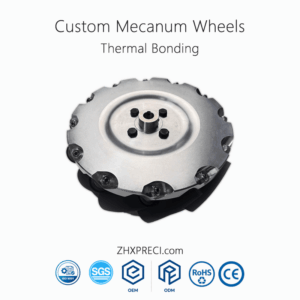
6 Inch Mecanum Wheel for AGV Robot Omni Directional Drive System High Precision Control Smooth Movement Stable Performance
Read more -
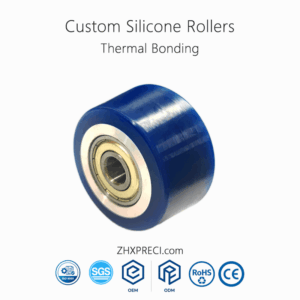
Blue Customized Silicone Rubber Coated Roller & High Quality Drive Guide Roller
Read more -
Custom ATEX Compliant Silicone Wheels Hazardous Area
Read more -
Custom Bracket Mount Silicone Wheels Easy Installation
Read more -
Custom Compact Size Silicone Wheels Space Saving
Read more -
Custom Hollow Bore PU Wheels For Direct Motor Mount
Read more -
Custom Hollow Bore PU Wheels For Direct Motor Mount
Read more -
Custom Low Temperature Silicone Wheels Freezer Trolley
Read more -
Custom NSF Certified Silicone Wheels Food Industry
Read more -
Custom Oil Resistant Silicone Wheels Industrial Cart
Read more -
Custom Ozone Resistant Silicone Wheels Outdoor Caster
Read more -
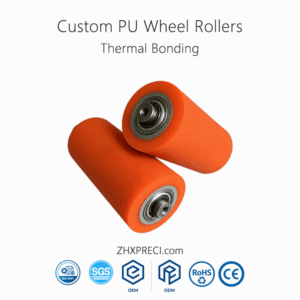
Custom Polyurethane Coated Wheel for Packaging Automation Systems – Wear Resistant, Oil Resistant, High Load Capacity, Low Noise
Read more -
Custom Quiet Rolling Silicone Wheels Hospital Bed
Read more -
Custom Reinforced Silicone Wheels High Capacity
Read more -
Custom Reversing Duty Silicone Wheels Conveyor System
Read more -
Custom Silent Operation Silicone Wheels Medical Trolley
Read more
Understanding Custom High Temperature Rubber Coated Wheels
Custom high temperature rubber coated wheels are engineered mobility solutions designed for applications where standard wheels would fail due to elevated thermal exposure. These wheels consist of a metal core—typically aluminium, steel, or nylon—with a vulcanised or chemically bonded rubber tread formulated to withstand sustained heat without compromising structural integrity, load-bearing capacity, or rolling performance.
The defining characteristic of these wheels lies in the rubber compound itself. Unlike general-purpose elastomers that soften, deform, or degrade when subjected to temperatures beyond 80°C, high temperature rubber compounds are formulated with specialised polymers and curing systems that maintain their physical properties across a broader thermal range. Depending on the specific compound formulation, operating temperatures can range from -30°C to +260°C for continuous service, with some specialised compounds accommodating intermittent exposure up to 300°C.
These wheels are specified across diverse industrial sectors including bakeries and commercial kitchens (oven racks, proofing trolleys, smoking kilns), food processing facilities (pasteurisation tunnels, drying ovens), autoclave operations, powder coating lines, glass manufacturing, ceramics processing, and medical equipment sterilisation systems. The common thread across these applications is the simultaneous requirement for thermal resilience, floor protection, load support, and manoeuvrability in environments where conventional wheels would rapidly deteriorate.
Custom High Temperature Rubber Coated Wheels from ZHXPRECI | China OEM/ODM Factory Manufacturer Supplier Custom Elastomer Wheels & Rollers represent a comprehensive approach to specialised mobility solutions, combining material science expertise with precision manufacturing capabilities to serve B2B procurement and engineering requirements globally.
Key Technical Parameters and Material Specifications
Operating Temperature Range
The thermal performance of high temperature rubber coated wheels is primarily determined by the elastomer compound and the bonding method between tread and core. Industry-standard compounds typically offer continuous service temperatures between -25°C and +200°C, while advanced formulations can sustain -30°C to +260°C continuously. Certain silicone-based compounds are specified for applications requiring exposure up to 300°C for short durations, though the wheel core temperature should remain within the compound's continuous rating.
It is worth noting that thermal performance is not solely a function of the rubber compound—the wheel core material and its thermal conductivity also influence how heat is distributed and dissipated during operation. Aluminium cores, for instance, offer superior heat dissipation compared to nylon or steel cores, which can affect the overall thermal stability of the wheel in high-temperature environments.
Hardness and Durometer
Tread hardness, measured on the Shore A scale, typically falls between 70 and 95 Shore A for high temperature rubber coated wheels. Common specifications include 80 Shore A (±5) and 85 Shore A (±5). Hardness selection involves trade-offs: softer compounds (70-80 Shore A) provide better shock absorption, floor protection, and traction, while harder compounds (85-95 Shore A) offer higher load capacity, reduced rolling resistance, and greater abrasion resistance.
The appropriate hardness for a given application depends on floor conditions, load characteristics, operating speeds, and the required balance between comfort and durability. For smooth indoor floors such as epoxy or polished concrete, harder compounds may be preferred for their lower rolling resistance. For uneven or rough surfaces, softer compounds provide superior shock absorption and traction.
Load Capacity
Load capacity varies significantly with wheel diameter, tread width, core material, and compound hardness. Typical load ratings for industrial-grade high temperature rubber coated wheels range from approximately 180 kg to over 580 kg per wheel, depending on configuration. Larger diameters and wider treads generally accommodate higher loads, while the core material—aluminium, steel, or engineered polymer—also influences the maximum permissible load.
Load capacity should always be evaluated in conjunction with operating temperature, as elevated temperatures can reduce the effective load-bearing capability of elastomeric treads. Engineering assessments should consider both static and dynamic loading conditions, including starting torque and rolling resistance, particularly when wheels are specified for manually propelled equipment.
Core Materials and Bonding Methods
The interface between rubber tread and wheel core is critical to wheel performance and service life. High temperature rubber coated wheels employ either chemical bonding (vulcanisation or adhesive systems) or mechanical retention methods to secure the tread to the core. Chemical bonding generally provides superior torsional strength and resistance to tread separation under dynamic loading, while mechanical retention may offer advantages in certain repair or replacement scenarios.
Common core materials include:
- Aluminium: Lightweight, excellent thermal conductivity, corrosion-resistant. Suitable for applications requiring frequent handling or where weight reduction is prioritised.
- Steel: High strength, superior load capacity, cost-effective. Appropriate for heavy-duty applications where weight is less critical.
- Engineered Nylon: Lightweight, corrosion-resistant, good thermal insulation properties. Often specified in applications involving moisture or chemical exposure.
Common Questions and Technical Considerations
What is a high temperature rubber coated wheel?
A high temperature rubber coated wheel is a wheel assembly consisting of a rigid core overmoulded or bonded with a specialised rubber compound engineered to maintain its mechanical properties—including hardness, elasticity, and load-bearing capacity—when subjected to elevated operating temperatures. These wheels are distinguished from standard rubber wheels by their ability to operate continuously at temperatures exceeding 80°C without significant degradation of tread material, loss of bond integrity, or reduction in performance characteristics.
The rubber compounds used in these wheels are formulated with heat-stable polymers, specialised curing agents, and thermal stabilisers that resist softening, hardening, or embrittlement across the specified temperature range. This makes them suitable for applications in ovens, autoclaves, drying systems, and other thermal processing environments where conventional wheels would fail prematurely.
How to select the right high temperature rubber coated wheel for an application?
Selection involves a systematic evaluation of several interdependent parameters:
- Operating temperature profile: Determine both continuous and intermittent temperature exposure. Continuous ratings are typically lower than intermittent ratings, and both should be verified against the wheel specification.
- Load requirements: Calculate the maximum static and dynamic loads per wheel, including safety factors for uneven load distribution and dynamic forces during starting, stopping, and cornering.
- Floor conditions: Assess floor surface—smooth, rough, wet, or contaminated—as this influences hardness selection and tread pattern requirements.
- Environmental factors: Consider exposure to chemicals, oils, moisture, or steam, which may affect rubber compound performance and core material selection.
- Manoeuvrability requirements: Evaluate rolling resistance, swivel resistance, and the need for directional stability or free rotation.
- Mounting and dimensional constraints: Verify bore diameter, tread width, overall wheel diameter, and mounting configuration compatibility with existing equipment.
Custom High Temperature Rubber Coated Wheels from ZHXPRECI | China OEM/ODM Factory Manufacturer Supplier Custom Elastomer Wheels & Rollers can be engineered to meet specific combinations of these parameters, offering flexibility in compound formulation, core material selection, and dimensional specifications.
What is the difference between rubber coated wheels and polyurethane wheels?
Rubber and polyurethane wheels serve different performance envelopes, and the choice between them depends on application requirements. Rubber compounds generally offer superior shock absorption, traction on uneven surfaces, and floor protection due to their inherent elasticity. They are also typically more cost-effective for general-purpose applications.
Polyurethane, by contrast, exhibits significantly higher abrasion resistance—typically 2 to 5 times that of rubber—and offers longer service life in applications involving sliding, scraping, or repeated impact. Polyurethane wheels also generally provide higher load capacities and lower rolling resistance on smooth surfaces. However, standard polyurethane compounds have lower thermal limits (typically around 70°C to 110°C) compared to specialised high temperature rubber compounds.
For applications requiring both thermal resilience and abrasion resistance, some manufacturers offer hybrid constructions combining rubber and polyurethane layers, though these involve additional complexity and cost.
How does temperature affect rubber wheel performance?
Temperature affects rubber wheels in several ways. As temperature increases, rubber compounds tend to soften, which reduces hardness, increases rolling resistance, and decreases load capacity. Prolonged exposure above the compound's continuous service temperature can cause permanent degradation, including loss of elasticity, surface cracking, tread separation, or complete material breakdown.
Conversely, at low temperatures, rubber compounds may become stiff and brittle, reducing traction and increasing the risk of tread cracking under impact loading. The specified operating temperature range accounts for these effects, and wheels should be selected with appropriate margins for the actual service conditions.
Thermal cycling—repeated heating and cooling—can also affect the bond between tread and core, particularly if the core material has a significantly different coefficient of thermal expansion. This is why bonding methods and material compatibility are critical considerations in high temperature wheel design.
What are the common applications for high temperature rubber coated wheels?
High temperature rubber coated wheels are specified in industries and applications where thermal exposure is a defining operational characteristic:
- Bakeries and commercial kitchens: Oven racks, proofing trolleys, smoking kilns, and bread dollies
- Food processing: Pasteurisation tunnels, drying ovens, and sterilisation systems
- Industrial thermal processing: Autoclaves, powder coating lines, and curing ovens
- Glass and ceramics manufacturing: Kiln carts and annealing lehrs
- Medical equipment: Sterilisation and autoclave loading systems
- Automotive and aerospace: Paint shop conveyor systems and component finishing lines
In each of these applications, the wheel must maintain structural integrity, rolling performance, and floor protection across the full thermal cycle, from ambient loading conditions to elevated operating temperatures.
How to maintain high temperature rubber coated wheels?
Maintenance requirements for high temperature rubber coated wheels are generally moderate, but certain practices can extend service life:
- Regular inspection: Check for tread wear, cracking, or separation from the core. Pay particular attention to the bond line between rubber and core.
- Cleaning: Remove debris, oils, or chemical residues that may accelerate tread degradation. Use cleaning agents compatible with the rubber compound.
- Bearing maintenance: If the wheel incorporates bearings, ensure they are lubricated according to manufacturer recommendations. High temperatures can affect bearing lubricant viscosity and service life.
- Load monitoring: Avoid exceeding the specified load capacity, particularly at elevated temperatures where load ratings may be derated.
- Storage: Store spare wheels in a cool, dry environment away from direct sunlight, ozone sources, and chemical contaminants.
Under normal operating conditions, high temperature rubber coated wheels are maintenance-free, though periodic inspection remains advisable for safety-critical applications.
What is the typical service life of high temperature rubber coated wheels?
Service life depends on operating conditions including temperature profile, load magnitude, duty cycle, floor surface, and environmental factors such as chemical exposure. Under moderate conditions with appropriate compound selection, these wheels can provide extended service intervals measured in years. In demanding applications with continuous high-temperature exposure and heavy loads, more frequent replacement may be necessary.
Factors that typically reduce service life include:
- Operation at or near the maximum continuous temperature rating
- Frequent thermal cycling between extreme temperatures
- Exposure to aggressive chemicals or solvents
- Operation on rough or abrasive floor surfaces
- Overloading or impact loading beyond design parameters
Regular condition monitoring and proactive replacement before visible degradation occurs is the recommended approach for maintaining operational reliability.
What customisation options are available for high temperature rubber coated wheels?
Customisation options typically include:
- Compound formulation: Tailored rubber compounds to meet specific temperature, hardness, chemical resistance, or abrasion requirements
- Core material and design: Selection of aluminium, steel, or nylon cores with custom bore sizes, keyways, or mounting configurations
- Dimensions: Custom diameters, tread widths, and overall wheel geometries to fit specific equipment
- Colour: Tread and core colour options for branding or identification purposes
- Bearing types: Plain bore, ball bearings, roller bearings, or specialised high-temperature bearing solutions
- Tread patterns: Smooth, grooved, or textured treads for specific traction or floor protection requirements
Custom High Temperature Rubber Coated Wheels from ZHXPRECI | China OEM/ODM Factory Manufacturer Supplier Custom Elastomer Wheels & Rollers offer comprehensive customisation capabilities, enabling engineers and procurement professionals to specify wheels that precisely match their application requirements.
What are the industry standards for high temperature rubber coated wheels?
While no single universal standard governs all high temperature rubber coated wheels, several standards and testing methods are commonly referenced:
- ISO 22883: Castors and wheels—Requirements for castors and wheels for manually propelled and power towed applications
- EN 12530: Castors and wheels—Test methods and apparatus
- ASTM D2240: Standard Test Method for Rubber Property—Durometer Hardness
- ISO 7619: Rubber, vulcanised or thermoplastic—Determination of indentation hardness
- Various manufacturer-specific: Thermal cycling tests, bond strength tests, and accelerated ageing tests
When specifying high temperature rubber coated wheels, it is advisable to request test data and certification relevant to the specific application requirements, particularly for safety-critical or regulated industries.
Selection Considerations for Procurement and Engineering Teams
For B2B procurement professionals and engineering teams, the selection of high temperature rubber coated wheels involves balancing technical performance, cost, and supply chain considerations. Key factors to evaluate include:
Technical alignment: The wheel specification must match the operating environment, load requirements, and equipment interface. This includes verifying temperature ratings, load capacities, hardness, dimensions, and mounting configurations against application requirements. Engineering drawings and performance data should be reviewed and validated before commitment.
Quality and consistency: Manufacturing process controls, material traceability, and quality assurance systems influence product consistency and reliability. Suppliers with established quality management systems and documented testing protocols generally offer greater confidence in product performance.
Supply chain reliability: For custom wheels, the supplier's ability to deliver consistent quality across production batches, maintain reasonable lead times, and provide responsive technical support are important considerations. Lead times are typically subject to order quantity, current production schedule, and final specification confirmation, and should be discussed directly with the supplier based on specific requirements.
Total cost of ownership: Initial purchase price should be evaluated alongside expected service life, maintenance requirements, and the cost of unplanned downtime. Higher-specification wheels may offer longer service life and lower lifecycle costs in demanding applications.
Final Technical Summary
Custom high temperature rubber coated wheels are specialised components that enable material handling and equipment mobility in thermally demanding environments. Their performance depends on careful selection of rubber compound, core material, bonding method, and dimensional specifications aligned with the specific application requirements.
Key technical parameters—operating temperature range, hardness, load capacity, and core material—must be evaluated holistically, as they interact to determine overall wheel performance and service life. For applications requiring thermal resilience combined with floor protection, shock absorption, and manoeuvrability, properly specified high temperature rubber coated wheels offer a proven solution across multiple industrial sectors.
Custom High Temperature Rubber Coated Wheels from ZHXPRECI | China OEM/ODM Factory Manufacturer Supplier Custom Elastomer Wheels & Rollers provide engineering and procurement teams with access to custom-engineered solutions backed by manufacturing expertise and quality control processes. For specific technical inquiries, detailed specifications, or customisation requirements, direct consultation with the manufacturer is recommended to ensure optimal wheel selection for the intended application.