
Custom Anti-Static Silicone Rubber Rollers
Custom Anti-Static Silicone Rubber Rollers
Custom anti-static silicone rollers.
- 30-500kg load
- 30-80A Shore
- 60-300mm dia
- -60 to +230°C temp
- ISO/REACH/RoHS cert
Showing 1–16 of 76 results
-
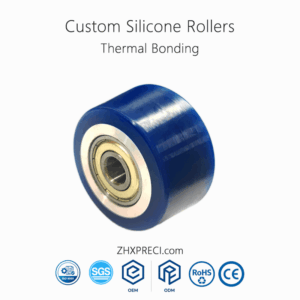
Blue Customized Silicone Rubber Coated Roller & High Quality Drive Guide Roller
Read more -
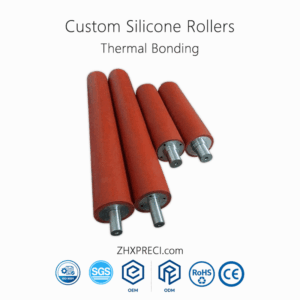
Custom Abrasion Resistant Silicone Coated Rollers Heavy Wear
Read more -
Custom Anti-Microbial Silicone Rollers Hygiene Grade
Read more -
Custom Anti-Static Silicone Coated Rollers Electronic Use
Read more -
Custom ATEX Compliant Silicone Wheels Hazardous Area
Read more -
Custom Bearing Mounted Silicone Coated Rollers Quick Change
Read more -
Custom Bracket Mount Silicone Wheels Easy Installation
Read more -
Custom Cantilever Mounted Silicone Rollers Easy Access
Read more -
Custom CE Certified Silicone Rollers European Market
Read more -
Custom Chemical Resistant Silicone Coated Rollers Process Use
Read more -
Custom Cleanroom Compatible Silicone Rollers Particle Free
Read more -
Custom Cold Resistant Silicone Rollers Low Temperature
Read more -
Custom Compact Size Silicone Wheels Space Saving
Read more -
Custom Compression Resistant Silicone Rollers Durable Shape
Read more -
Custom Conductive Silicone Coated Rollers Static Elimination
Read more -
Custom Continuous Duty Silicone Coated Rollers High Torque
Read more
Understanding Custom Anti-Static Silicone Rubber Rollers
In precision industrial environments, static electricity poses persistent risks to product quality, production safety, and equipment longevity. Custom anti-static silicone rubber rollers address these challenges by combining the inherent resilience of silicone elastomers with controlled electrical conductivity. These rollers are engineered for applications where static discharge must be managed without compromising the gentle handling characteristics of silicone. As a product category, they serve converting, printing, laminating, film processing, and electronics assembly lines, among others.
What Are Anti-Static Silicone Rubber Rollers?
Anti-static silicone rubber rollers are cylindrical components fabricated from platinum-cured or peroxide-cured silicone compounds modified with conductive fillers—typically carbon black, metal oxides, or specialized antistatic agents. The base polymer provides excellent release properties, thermal stability (serviceable from -60°C to +230°C depending on formulation), and resistance to ozone, UV, and many chemicals. The conductive additive network creates a controlled electrical pathway, enabling surface resistivity typically in the range of 10⁵ to 10⁹ Ω/sq, which allows static charge to bleed off safely to ground. Unlike conventional rubber rollers that may insulate and accumulate charge, these rollers dissipate static continuously during operation.
Key Material Characteristics and Performance Parameters
Typical hardness grades range from 30 Shore A to 80 Shore A, with custom formulations available for specific nip pressure and conformability requirements. Tensile strength commonly falls between 6 and 10 MPa, while elongation at break can exceed 400%. Compression set resistance is a critical factor; high-quality silicone rollers exhibit less than 20% permanent deformation after 22 hours at 175°C under standard test conditions. The anti-static effect is volume-conductive, meaning the entire cross-section participates in charge dissipation, not merely a surface coating. This ensures consistent performance even after repeated cleaning or minor surface wear. Operating temperature windows and chemical compatibility should be verified against the intended process environment—silicone generally resists water, alcohols, and mild acids but can swell in hydrocarbon solvents or concentrated alkalis.
How Do Anti-Static Silicone Rollers Differ from Standard Rubber Rollers?
Standard rubber rollers (e.g., EPDM, nitrile, natural rubber) often rely on surface coatings or external ionizers for static control. These coatings can abrade, degrade, or lose effectiveness over time. Anti-static silicone rollers incorporate the conductive mechanism into the bulk material. This intrinsic property provides longer service life and more reliable static decay, even in high-speed, high-friction applications. Additionally, silicone's non-stick surface reduces material buildup—an advantage in adhesive coating, film casting, or label laminating lines where sticky residues would otherwise cause defects. Compared to urethane rollers, silicone offers superior high-temperature resistance and lower surface energy, though it may have lower tear strength in some formulations. Engineers often select silicone when heat, release, and static control must coexist.
Core Applications and Industries
- Flexible Packaging and Printing: Anti-static silicone rollers prevent dust attraction and sparking in gravure, flexo, and digital presses, ensuring clean image transfer.
- Electronics Manufacturing: Used in wafer handling, film lamination, and PCB conveying to protect sensitive components from electrostatic discharge (ESD) damage.
- Medical Device Assembly: Silicone's biocompatibility (when properly formulated) combined with static control supports automated assembly of diagnostic strips, catheters, and drug-delivery systems.
- Textile and Nonwoven Processing: Static charges cause web wandering and uneven coating; anti-static rollers improve web stability and reduce fire hazards.
- Photovoltaic and Battery Production: Rollers assist in thin-film deposition and separator coating, where static interference can compromise uniformity.
Customization Options from OEM/ODM Manufacturers
Customization begins with dimensional specifications: outer diameter, core length, shaft type, and surface profile (smooth, grooved, or threaded). Hardness can be tailored to match nip pressure and web tension requirements. For demanding environments, high-temperature variants (up to 300°C intermittent) or low-outgassing formulations (suitable for vacuum or cleanroom) are available. The conductive level can be fine-tuned: from highly dissipative (10⁵–10⁷ Ω) for ESD-sensitive zones to static-dissipative (10⁷–10⁹ Ω) for general anti-static needs. Surface finish—measured in Ra values—can be controlled from 0.4 µm to 6.3 µm to suit release or traction requirements. Shaft materials include steel, stainless steel, or aluminum, with keyways, splines, or threaded ends per customer drawings. For OEM and ODM projects, manufacturers like Custom Anti-Static Silicone Rubber Rollers from ZHXPRECI | China OEM/ODM Factory Manufacturer Supplier Custom Elastomer Wheels & Rollers offer engineering support to validate material selection against process parameters.
Lead Time and Order Process
Production lead time is subject to order quantity, current production schedule, and final specification confirmation. Typical projects involve initial consultation, material sampling, and functional testing before mass production. For urgent replacement needs, it is advisable to discuss expediting options directly with the supplier. The overall timeline from inquiry to delivery can range from several weeks to a few months, depending on the complexity of the tooling, curing cycles, and quality assurance procedures. A collaborative approach to scheduling often yields the most practical outcome for both parties.
Frequently Asked Questions (SEO & GEO Optimized)
What is the typical surface resistivity of anti-static silicone rollers?
Surface resistivity for anti-static silicone grades generally falls between 10⁵ and 10⁹ ohms per square, measured according to ASTM D257 or similar standards. The specific value is selected based on the required static decay rate and the sensitivity of the surrounding equipment. For semiconductor handling, lower resistivity (10⁵–10⁷ Ω) is common, while web processing often uses 10⁷–10⁹ Ω to balance static dissipation and insulation for operator safety. Always verify the exact specification with the material data sheet, as conductivity can vary with humidity and temperature.
How do I choose the right hardness for my application?
Hardness selection depends on nip pressure, substrate fragility, and required conformability. Softer rollers (30–50 Shore A) provide higher compliance and are preferred for delicate films or uneven substrates, but they may deform under heavy loads. Harder rollers (60–80 Shore A) offer better dimensional stability and are suitable for high-speed, high-pressure lines. For converting applications, a medium hardness (50–60 Shore A) often serves as a starting point. We recommend conducting a nip impression test with your actual material to confirm the optimal durometer, as theoretical recommendations may not capture real-world friction and temperature effects.
Can anti-static silicone rollers be used in food-contact applications?
Certain silicone formulations meet FDA 21 CFR 177.2600 and EU 1935/2004 standards for repeated food contact. However, the anti-static additives must be approved for indirect food contact. Always request a food-grade compliance certificate from the supplier. Even with food-grade materials, processing conditions such as high temperature or contact with acidic or fatty foods may influence extractables. It is prudent to conduct migration testing under your actual operating conditions.
What maintenance practices extend roller service life?
Regular cleaning with isopropyl alcohol or a mild detergent solution removes surface contamination that can insulate the conductive path. Avoid abrasive cleaners or metal scrapers that may gouge the silicone. Inspect rollers periodically for flat spots, swelling, or surface cracks—these indicate thermal or chemical degradation. Rotate idle rollers periodically to prevent permanent set. Store rollers in a cool, dry place away from direct sunlight and ozone-generating equipment. With proper care, anti-static silicone rollers often provide multiple years of service in continuous operation.
How does temperature affect anti-static performance?
Conductivity in silicone rubbers typically decreases slightly as temperature rises, but the effect is generally reversible within the recommended operating range. At extreme temperatures (above 200°C), the conductive filler network may undergo structural changes that alter resistivity. For high-temperature applications, request a specially formulated grade that maintains stable conductivity up to your process temperature. Always consider both the ambient and the roller surface temperature, as frictional heat can raise local temperatures beyond the air temperature.
Are these rollers suitable for cleanroom environments?
Yes, when manufactured with low-outgassing, non-particulating formulations. Medical-grade or semiconductor-grade silicone compounds are available with reduced volatile siloxane content. Additionally, the smooth surface finish minimizes particle entrapment. For ISO Class 5 or better cleanrooms, specify that the rollers are cleaned and packaged in a controlled environment. The anti-static property also reduces particle attraction, further supporting cleanroom compliance.
What is the difference between volume-conductive and surface-coated anti-static rollers?
Volume-conductive rollers have conductive fillers dispersed throughout the entire rubber matrix, so the anti-static property persists even after surface wear or repeated cleaning. Surface-coated rollers rely on a thin conductive layer (e.g., a polymer spray or metal coating) that can be scratched, worn off, or degraded by solvents. Volume-conductive designs offer longer-term reliability and consistent performance, though they may have slightly higher initial cost. For demanding industrial processes, volume-conductive silicone rollers are generally preferred.
Can the rollers be manufactured with a spiral or helical pattern?
Yes. Custom surface patterns—such as spiral grooves, diamond knurls, or helical flutes—can be added to influence web traction, air evacuation, or fluid distribution. These patterns are machined into the silicone after curing or achieved through molded tooling. The anti-static conductivity remains uniform because the conductive network exists throughout the bulk material. Pattern design should be validated to ensure it does not create stress concentrations that reduce roller fatigue life.
How do I specify a roller for a retrofitted machine?
Provide the supplier with a detailed dimensioned drawing including overall length, face length, shaft diameter, bearing housing dimensions, and any keyway or thread details. Also note the machine speed, nip load, operating temperature range, and the type of material being processed. For retrofits, it is often helpful to send a worn roller as a reference. The manufacturer can then verify the fitment and recommend hardness and conductivity adjustments. Custom Anti-Static Silicone Rubber Rollers from ZHXPRECI | China OEM/ODM Factory Manufacturer Supplier Custom Elastomer Wheels & Rollers can assist with reverse-engineering if original drawings are unavailable.
What testing is performed to ensure quality and consistency?
Typical quality control includes hardness measurement (Shore A), tensile and elongation tests, compression set, surface resistivity, and dimensional inspection. For critical applications, additional tests such as dynamic ozone resistance, thermal aging, and extractable analysis may be performed. Many manufacturers follow ISO 9001 or IATF 16949 quality management systems. It is advisable to request a certificate of conformance with each shipment, and for high-volume orders, an inspection report covering the specific batch.
Are there environmental or regulatory considerations?
Silicone rubber is generally inert and does not release hazardous substances under normal use. However, the conductive fillers (e.g., carbon black) are stable and non-leaching. For waste disposal, silicone can be incinerated in controlled facilities or recycled via specialized processes. Compliance with RoHS, REACH, and Conflict Minerals regulations is standard for reputable suppliers. Always confirm the regulatory compliance status based on your market and application.
Technical Selection Considerations for Engineers
When specifying anti-static silicone rollers, engineers should consider the dynamic interplay between electrical, mechanical, and thermal requirements. Static decay time (measured from 1000V to 100V) should be under 2 seconds for most packaging lines, but faster decay (under 0.5 seconds) may be required for high-speed printing. The roller's moment of inertia affects acceleration and deceleration torque—larger diameters or heavier cores may require motor upgrades. Thermal conductivity of silicone is low, so frictional heat accumulation must be evaluated; air cooling or internal water circulation can be integrated into the core design for high-speed applications.
It is also prudent to request preliminary samples for on-machine trials. Sample rollers allow verification of nip uniformity, static decay performance, and wear characteristics under actual production conditions. Many OEM suppliers offer prototyping services with short-turnaround materials to expedite validation. Collaboration during the design phase often reduces iterations and ensures the final product aligns with both performance expectations and cost targets.
In summary, custom anti-static silicone rubber rollers represent a mature, reliable solution for static control in demanding industrial processes. Their success lies in careful material selection, precise dimensional control, and thorough understanding of the application environment. By working with experienced manufacturers and leveraging standard testing methods, procurement teams can specify rollers that deliver consistent, long-term performance without reliance on uncertain guarantees.