
Custom Liquid Silicone Rubber Rollers China
Custom LSR Rollers – Engineered for Industry
Precision LSR rollers for industrial tasks, with tailored durability and performance.
- 30–500 kg load
- 20–80A Shore
- 60–300 mm dia
- -50–+200°C temp
- RoHS/REACH cert
Showing 1–16 of 107 results
-
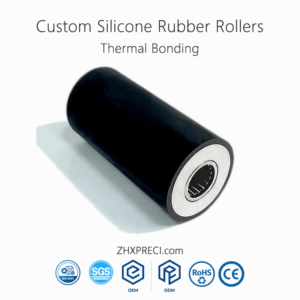
Black PU Rubber Coated Wheel Roller Industrial Grade for Automation Machinery Conveyor Transport and Factory Use
Read more -
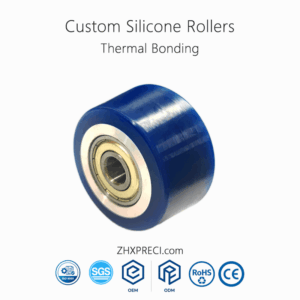
Blue Customized Silicone Rubber Coated Roller & High Quality Drive Guide Roller
Read more -
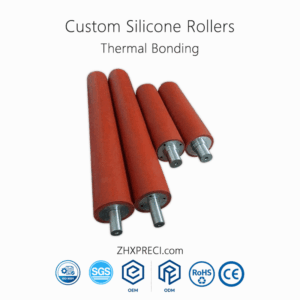
Custom Abrasion Resistant Silicone Coated Rollers Heavy Wear
Read more -
Custom Air Cooled Rubber Rollers with Internal Channels
Read more -
Custom Anti-Microbial Silicone Rollers Hygiene Grade
Read more -
Custom Anti-Static Silicone Coated Rollers Electronic Use
Read more -
Custom API Grade Rubber Rollers for Drill Pipe Wiper
Read more -
Custom ATEX Compliant Rubber Rollers for Grain Handling
Read more -
Custom ATEX Compliant Silicone Wheels Hazardous Area
Read more -
Custom Bearing Mounted Silicone Coated Rollers Quick Change
Read more -
Custom Bracket Mount Silicone Wheels Easy Installation
Read more -
Custom Cantilever Mount Rubber Rollers for Narrow Spaces
Read more -
Custom Cantilever Mounted Silicone Rollers Easy Access
Read more -
Custom CE Certified Silicone Rollers European Market
Read more -
Custom Chemical Resistant Silicone Coated Rollers Process Use
Read more -
Custom Cleanroom Compatible Silicone Rollers Particle Free
Read more
Defining Custom Liquid Silicone Rubber Rollers for Industrial Applications
In precision-driven industrial environments, the selection of roller materials directly influences production efficiency, product quality, and maintenance cycles. Custom liquid silicone rubber rollers represent a specialized category of elastomeric components engineered for applications that demand consistent performance across wide temperature ranges, controlled friction coefficients, and resistance to aggressive media. Unlike conventional silicone rubber, liquid silicone rubber (LSR) offers distinct processing advantages, including lower viscosity during injection molding, which enables the production of rollers with intricate geometries, superior surface finishes, and minimal flash. This product classification page provides a technical overview of custom liquid silicone rubber rollers, their material properties, manufacturing considerations, and selection criteria, serving as a reference for procurement specialists, design engineers, and operations managers evaluating elastomer roller solutions for their specific production lines.
Custom Liquid Silicone Rubber Rollers from ZHXPRECI | China OEM/ODM Factory Manufacturer Supplier Custom Elastomer Wheels & Rollers are developed through a collaborative engineering process that aligns material formulation with application-specific demands. The following sections address common technical inquiries, performance benchmarks, and practical considerations that inform a sound purchasing decision.
What Are Custom Liquid Silicone Rubber Rollers?
Custom liquid silicone rubber rollers are cylindrical elastomeric components manufactured from two-part liquid silicone polymers that cure through a platinum-catalyzed addition reaction. This chemistry yields rollers with a highly cross-linked molecular structure, contributing to their thermal stability, compression set resistance, and chemical inertness. The "liquid" designation refers to the material's flowable state prior to curing, which permits precise metering, mixing, and injection into cavity molds under controlled pressure and temperature conditions. This manufacturing route contrasts with solid silicone rubber processing, where high-viscosity compounds are compression-molded or extruded, often resulting in greater dimensional variation and longer cycle times.
These rollers serve in industries ranging from printing and packaging to textile processing, medical device manufacturing, and semiconductor fabrication. Their custom nature implies that each roller is designed and produced according to client-provided specifications, including outer diameter, length, durometer hardness, surface texture, core material, and special coatings or surface treatments. The ability to tailor these parameters makes LSR rollers suitable for both high-precision guidance applications and aggressive web-handling environments where other elastomers may fail prematurely.
Key Material Characteristics of Liquid Silicone Rubber for Rollers
The performance of a liquid silicone rubber roller is fundamentally determined by its material composition. Commercial LSR formulations typically exhibit a durometer range between 20 and 80 Shore A, with custom blends available for specific hardness requirements. The tensile strength of these materials generally falls between 5 and 12 MPa, while elongation at break ranges from 300% to over 800%, depending on the filler system and crosslink density. Tear resistance, a critical property for rollers subjected to repetitive flexing or edge loading, is typically measured using the trouser tear or angle tear method, with values ranging from 15 to 50 kN/m for standard grades.
Thermal stability is one of the defining attributes of liquid silicone rubber rollers. Many commercial LSR compounds retain their elastomeric properties continuously at operating temperatures between -50°C and 200°C, with intermittent exposure possible up to 230°C depending on the specific formulation and duration. This wide service temperature range makes LSR rollers viable for applications involving hot melt adhesives, high-temperature laminating processes, and cold-environment material transport. It should be noted that actual maximum operating temperatures depend on the dynamic conditions, including speed, pressure, and environmental exposure, and should be verified through application-specific testing.
Chemical resistance varies among LSR formulations, but generally these rollers demonstrate excellent resistance to water, steam, many organic solvents, dilute acids, and alkaline solutions. However, they are susceptible to swelling or degradation in contact with hydrocarbons, chlorinated solvents, and high-concentration acids, requiring careful material selection for each application.
How Are Custom Liquid Silicone Rubber Rollers Manufactured?
The production of custom liquid silicone rubber rollers involves a multi-stage process that begins with material selection and ends with final quality inspection. The following steps outline the typical manufacturing sequence:
- Material compounding: The base LSR polymer, filler systems (such as silica), crosslinkers, and additives are precisely metered and mixed under vacuum to remove entrapped air, ensuring a homogenous compound with consistent viscosity and cure characteristics.
- Mold preparation and design: Injection molds, typically constructed from hardened steel or aluminum, are designed with the roller's outer contour, core placement, and gating system in mind. The mold design must account for material shrinkage, typically around 2.5-3.5% depending on the specific LSR grade and cure conditions.
- Injection molding: The mixed LSR compound is injected into the closed mold cavity under pressures ranging from 50 to 200 bar, depending on the part geometry and material viscosity. Injection temperatures are typically maintained between 20°C and 40°C to prevent premature curing in the barrel.
- Curing: After injection, the mold is heated to temperatures between 150°C and 200°C, initiating the platinum-catalyzed crosslinking reaction. Curing times range from a few seconds for thin-walled rollers to several minutes for thick sections, with the process closely monitored to ensure complete cure without degradation.
- Demolding and deflashing: Once cured, the roller is extracted from the mold, and any flash or overflow material is trimmed. Automated deflashing techniques, including cryogenic deflashing, are often employed for high-volume production to maintain dimensional accuracy.
- Secondary operations: Depending on the application, secondary processes such as surface grinding to achieve precise outer diameter tolerances, corona treatment to improve surface energy, or the application of specialized release coatings may be performed.
- Quality inspection: Dimensional verification, hardness testing, visual inspection, and sometimes dynamic balancing or runout measurements are conducted to ensure the roller meets specified tolerances.
The customization aspect of these rollers extends to core materials as well. While standard rollers may feature aluminum or steel cores, custom designs can incorporate stainless steel, reinforced plastics, or composite cores to address weight, corrosion resistance, or thermal conductivity requirements.
What Are the Typical Applications of Custom Liquid Silicone Rubber Rollers?
Given their versatile performance profile, custom liquid silicone rubber rollers find application across a diverse range of industries and processes. Common use cases include:
- Printing and converting: As metering rollers, anilox rolls, and nip rollers in flexographic and gravure printing presses, where precise ink transfer and consistent nip pressure are essential.
- Textile processing: As guiding, spreading, and coating rollers in textile finishing lines, benefiting from the material's resistance to dye bath chemicals and steam.
- Paper and film handling: As drive rollers, pinch rollers, and idler rollers in paper mills and film extrusion lines, where non-marking and slip-resistant surfaces are required.
- Medical device manufacturing: As rollers in the production of transdermal patches, drug-eluting stents, and other medical components, where biocompatibility and cleanability are paramount.
- Food and beverage processing: As conveyor rollers and sealing rollers in food packaging equipment, where FDA-compliant LSR grades are used to ensure indirect food contact safety.
- Solar panel and semiconductor fabrication: As laminating rollers and cleaning rollers in photovoltaic module production and wafer handling, where low outgassing and cleanroom compatibility are critical.
- Automotive assembly: As pressure rollers and transfer rollers in adhesive tape application and gasket assembly, where resistance to oils and temperature cycling is necessary.
For each application, the roller's material hardness, surface roughness, and thermal conductivity can be fine-tuned to achieve the desired performance. For instance, in high-speed web handling, softer LSR rollers (20-30 Shore A) provide superior conformability and damping, while harder grades (60-80 Shore A) are preferred for high-pressure laminating tasks.
How to Choose the Right Custom Liquid Silicone Rubber Roller for Your Process?
Selecting the appropriate custom liquid silicone rubber roller involves evaluating several interrelated factors that collectively determine the roller's suitability for a given task. The following criteria should be considered systematically:
- Operating environment: Assess the temperature range, presence of chemicals (oils, solvents, acids, bases), humidity levels, and exposure to UV radiation or ozone. These factors influence the selection of the LSR base polymer and any protective surface treatments.
- Mechanical demands: Define the required hardness (Shore A), tensile strength, and tear resistance based on the applied loads, roller speed, and nip pressure. Softer materials offer better conformability and damping, while harder materials provide higher load capacity and wear resistance.
- Dimensional tolerances: Specify the acceptable outer diameter variation, taper, cylindricity, and runout. Tight tolerances may require post-molding grinding or precision machining of the elastomer surface.
- Surface finish and texture: Determine the required surface roughness (Ra) and any pattern requirements (e.g., knurling, grooving) that affect traction, release properties, or fluid transfer.
- Dynamic balancing: For high-speed applications, specify the required balance grade (e.g., ISO 1940 G-2.5) to minimize vibration and bearing wear.
- Cleanliness and compliance: For medical, food, or semiconductor applications, verify the LSR material's compliance with relevant standards, including FDA CFR 21 177.2600, USP Class VI, or UL 94 V-0 flame retardancy.
- Core integration: Evaluate the core material, wall thickness, and bonding method (adhesive or mechanical) to ensure reliable torque transmission and resistance to torsional stress.
Collaboration with the manufacturer during the design phase is advisable to refine these specifications. Custom Liquid Silicone Rubber Rollers from ZHXPRECI | China OEM/ODM Factory Manufacturer Supplier Custom Elastomer Wheels & Rollers are developed with a structured engineering review that addresses these parameters, helping to align the final product with operational requirements.
What Are the Advantages of Liquid Silicone Rubber Over Other Elastomers in Roller Applications?
While natural rubber, nitrile, EPDM, and polyurethane rollers each have their own merits, liquid silicone rubber offers distinct advantages in specific contexts. Compared to conventional solid silicone, LSR achieves higher clarity, fewer volatile residues, and superior consistency in mechanical properties due to the precision of the liquid injection process. The following table summarizes relative performance indicators based on standard industry data for general-purpose elastomers:
- Thermal stability: LSR maintains its mechanical properties over a broader temperature range than natural rubber (-50°C to 150°C for NR) and EPDM (-40°C to 130°C), with LSR typically operating continuously up to 200°C.
- Compression set resistance: LSR demonstrates excellent compression set resistance, typically below 20% after 22 hours at 175°C (ASTM D395), which is significantly better than many other elastomers, ensuring long-term sealing and conforming performance.
- Chemical inertness: LSR is inherently resistant to water, steam, and many polar solvents, whereas nitrile and polyurethane can be susceptible to hydrolysis or oxidation under humid or high-temperature conditions.
- Surface energy and release: The low surface energy of LSR (approx. 22 mN/m) provides excellent release properties, reducing the tendency for adhesive buildup on the roller surface in tape or label applications.
- Transparency and purity: LSR can be formulated to achieve high optical clarity and low extractables, making it suitable for applications in optical film processing and medical devices.
It must be acknowledged that LSR generally has a higher initial material cost compared to commodity rubbers, and its processing requires specialized injection molding equipment. However, the total cost of ownership—accounting for maintenance intervals, replacement frequency, and process uptime—often justifies the investment for demanding applications.
Understanding the Customization Options for LSR Rollers
The term "custom" in the context of liquid silicone rubber rollers encompasses a wide spectrum of possible variations. Beyond the basic dimensions of outer diameter, inner diameter, and length, customization options include:
- Hardness profile: Rollers can be manufactured with a uniform hardness across the cross-section or with a gradient (e.g., a harder core layer bonded to a softer outer layer) to achieve specific performance characteristics.
- Surface patterns: Custom surface geometries such as spiral grooves, diamond knurling, or perforations can be molded in to control fluid distribution, improve traction, or reduce air entrapment.
- Cored holes and keyways: The roller core can be designed with internal passages for cooling or heating fluids, or with keyways and splines to facilitate power transmission.
- Bonding systems: Depending on the application, LSR rollers can be supplied with adhesive-bonded elastomer layers, mechanically interlocked constructions, or integrally molded flanges.
- Specialty coatings: Additional surface treatments, including fluoropolymer coatings for reduced friction, plasma treatments for enhanced wettability, or anti-static coatings, can be applied to meet specialized process requirements.
These options allow the roller to be tailored for unique machinery designs and operating conditions, ensuring that the roller contributes positively to process efficiency and product quality.
What Are the Common Failure Modes and Preventive Measures for LSR Rollers?
Like any elastomeric component, liquid silicone rubber rollers can experience performance degradation over time if not properly matched to the application or maintained. Common failure modes include:
- Hardening or softening: Exposure to excessive temperatures, ultraviolet radiation, or incompatible chemicals can cause additional crosslinking or chain scission, resulting in altered hardness and reduced elasticity.
- Compression set: Prolonged static compression at elevated temperatures can lead to a permanent deformation, reducing the roller's ability to maintain proper nip pressure.
- Abrasion and surface damage: Contact with sharp edges, high-friction surfaces, or abrasive particulate matter can cause localized surface wear, affecting both the roller's dimensional accuracy and its surface finish.
- Adhesive failure: In bonded rollers, insufficient surface preparation or improper bonding agents can lead to delamination between the elastomer layer and the metal core.
- Swelling or extraction: Contact with hydrocarbons or aggressive solvents may cause the roller to swell, increasing its diameter and compromising its dimensional stability.
Preventive measures include selecting the appropriate LSR formulation for the chemical environment, specifying adequate wall thickness to distribute compression loads, using protective covers or surface treatments, and scheduling regular inspections for signs of wear or damage. For critical applications, many manufacturers provide reconditioning services that allow the roller to be re-ground or re-surfaced to restore its original dimensions.
Quality Standards and Testing Protocols for LSR Rollers
To ensure reliability and consistency, custom liquid silicone rubber rollers are typically subjected to a series of quality control tests, either during production or upon request. Common testing protocols include:
- Hardness measurement: According to ASTM D2240 or ISO 7619, using a durometer to verify the specified Shore A value at multiple points along the roller surface.
- Tensile and elongation testing: ASTM D412 or ISO 37 methods used to measure tensile strength, elongation at break, and modulus at specified strain levels.
- Tear resistance: ASTM D624 or ISO 34-1 to assess the material's resistance to propagating a tear, critical for applications with edge loading.
- Compression set testing: ASTM D395, method B, to measure the material's permanent deformation after sustained compression at elevated temperature.
- Dimensional inspection: Coordinate measuring machines (CMM) or laser micrometers are used to verify outer diameter, concentricity, and cylindricity against the drawing tolerances.
- Dynamic runout and balance testing: The roller is rotated on precision spindles to measure radial runout, and dynamic balancing is performed to ensure smooth operation at rated speeds.
These tests, combined with consistent process control during molding, contribute to the production of rollers that meet or exceed the specified performance criteria. It is important to note that the actual performance of an LSR roller in a given application depends on the specific conditions of use, and the results of standard tests should be considered as a guide rather than a definitive guarantee.
How Does the Custom Roller Ordering and Specification Process Work?
Engaging with a manufacturer for custom liquid silicone rubber rollers typically follows a structured process that ensures clarity of requirements and feasibility of the design. The process generally includes:
- Initial inquiry: The client provides preliminary information regarding the application, including operating conditions, roller dimensions, required hardness, and any special performance criteria.
- Feasibility review: The manufacturer's engineering team assesses the design for manufacturability, considering mold design, material flow, and cure characteristics. Suggestions may be offered to optimize the design for cost-effectiveness and performance.
- Material selection: Based on the application environment and performance requirements, the manufacturer recommends one or more LSR formulations, providing technical data sheets and cross-reference comparisons.
- Prototyping: Where appropriate, a prototype roller may be produced using a low-cost mold or machined from a cast block to validate the design and material choice.
- Production planning: Upon design approval, production tooling is finalized, and the manufacturing schedule is established.
- Quality assurance: During and after production, inspection data is collected and shared with the client to confirm conformance to specifications.
- Packaging and shipment: Rollers are carefully packaged to prevent damage during transit, often using anti-corrosion paper and foam supports.
This process can vary in duration depending on the complexity of the design and the availability of materials. The overall lead time is subject to order quantity, current production schedule, and final specification confirmation, allowing both parties to align on realistic delivery expectations.
Ensuring Long-Term Performance and Maintenance of LSR Rollers
To maximize the service life of custom liquid silicone rubber rollers, a proactive maintenance strategy is recommended. Key maintenance practices include:
- Routine cleaning: Rollers should be cleaned with mild detergents and soft cloths to remove accumulated debris, oils, or adhesive residues. The use of abrasive cleaning tools should be avoided to prevent surface damage.
- Inspection for wear: Periodic visual and dimensional inspections can detect early signs of wear, such as flat spots, cracks, or changes in surface texture.
- Storage conditions: When not in use, rollers should be stored in a cool, dry environment away from direct sunlight, ozone sources, and high-temperature equipment to prevent premature aging.
- Re-grounding and reconditioning: Depending on wear patterns, some rollers can be re-ground to restore their outer diameter and surface finish, extending their usable life.
- Monitoring operating conditions: Keeping records of operating temperatures, contact pressures, and any process changes can help correlate performance issues with specific operational variables.
Manufacturers can provide specific maintenance recommendations based on the LSR formulation and application. For high-value rollers, some suppliers offer service contracts that include periodic inspection and reconditioning.
Environmental and Regulatory Considerations for LSR Rollers
The selection of LSR rollers may also be influenced by environmental and regulatory factors. Many LSR formulations are free of volatile organic compounds (VOCs), and the curing process does not produce significant emissions. The material itself is generally recyclable through rubber recycling streams, though the presence of metal cores can complicate the recycling process.
For clients requiring regulatory compliance, manufacturers can provide documentation confirming that the LSR material meets standards such as RoHS, REACH, and FDA regulations. For food-contact applications, the material should be tested for extractable substances that could migrate into food products, with appropriate certificates provided upon request.
Frequently Asked Questions About Custom Liquid Silicone Rubber Rollers
This section addresses common queries raised by engineers and procurement professionals when evaluating LSR rollers for their operations.
What is the typical hardness range for custom liquid silicone rubber rollers?
The standard hardness range spans from 20 to 80 Shore A, with custom formulations available to achieve specific durometer targets outside this range, albeit with potential trade-offs in other mechanical properties. Softer rollers (20-40 Shore A) are commonly used for conformable sealing and damping, while harder rollers (60-80 Shore A) are employed in high-pressure applications.
How does the surface roughness of LSR rollers affect their performance?
Surface roughness influences traction, release properties, and transfer characteristics. A smoother surface (low Ra) is preferred for applications where low friction or easy release is required, while a textured surface (higher Ra) enhances grip and fluid retention. Typical surface roughness values for standard LSR rollers range from 0.2 to 1.6 μm Ra, but can be tailored per specification.
Can LSR rollers be manufactured with a metal core bonded directly to the elastomer?
Yes, LSR rollers are commonly produced with integrated metal cores, using either adhesive bonding or mechanical interlocking to secure the elastomer to the core. The bonding process is carefully controlled to ensure reliable torque transmission and resistance to thermal cycling.
Are liquid silicone rubber rollers suitable for use in cleanroom environments?
Many LSR formulations exhibit low outgassing and can be compounded to meet stringent cleanroom standards. They are frequently used in semiconductor, pharmaceutical, and medical device manufacturing, where particulate contamination is a critical concern.
What is the expected service life of a custom LSR roller?
Service life depends on the operating conditions, load profile, and maintenance practices. In moderate applications, LSR rollers can operate for several years before requiring replacement or reconditioning. However, under extreme conditions—such as continuous high-temperature exposure or abrasive media contact—the service life may be shorter. Regular monitoring and proactive maintenance are effective in maximizing the operational lifespan.
How does cost compare between liquid silicone rubber and other custom elastomer rollers?
The initial cost of LSR rollers tends to be higher than that of commodity rubber rollers due to the material cost and the specialized molding process. However, the total cost of ownership—considering reduced downtime, extended replacement intervals, and consistent performance—often provides a favorable economic rationale for applications that demand high reliability.
Can LSR rollers be color-matched to specific requirements?
Yes, pigments can be added to the LSR compound to achieve custom colors. This is often done for aesthetic purposes or to facilitate visual identification in production lines. The color addition does not typically affect the material's mechanical properties, but validation is advisable for critical applications.
What documentation is typically provided with a custom LSR roller order?
Standard documentation includes a material certificate of conformance, hardness test report, dimensional inspection report, and, if applicable, a RoHS or REACH compliance statement. Additional test reports, such as thermal aging or chemical resistance data, can be provided upon request.
How are LSR rollers packaged for shipment to prevent damage?
Rollers are typically wrapped in protective film, placed in cushioned packaging, and secured in wooden crates or heavy-duty cardboard boxes. The packaging method varies based on the roller's weight, dimensions, and the shipping distance.
Can existing roller designs be adapted to LSR material?
In many cases, existing roller designs can be adapted to LSR, provided the geometry is suitable for injection molding. The manufacturer's engineering team will assess the design for moldability, and modifications may be suggested to optimize the part for the LSR process.
What is the role of platinum catalysis in LSR curing, and how does it affect the final product?
Platinum-catalyzed addition curing forms strong, stable carbon-silicon bonds, resulting in a cured elastomer with minimal by-products. This chemistry contributes to the material's thermal stability, low compression set, and resistance to oxidative degradation, which are key performance differentiators.
How does the coefficient of thermal expansion of LSR impact roller dimensions in operation?
The coefficient of linear thermal expansion for LSR ranges from 200 to 300 μm/m·°C, which is higher than that of metal cores. This means that at elevated temperatures, the elastomer layer will expand more than the core, potentially affecting the nip pressure and diameter. This factor must be accounted for when specifying dimensions for applications with significant temperature fluctuations.
Are there any limitations regarding the maximum diameter or length of custom LSR rollers?
While LSR injection molding can accommodate a wide range of sizes, very large rollers (e.g., over 500 mm diameter or 3 meters length) may require specialized equipment and handling. The manufacturer can advise on the feasibility of specific dimensions based on their production capabilities.
What surface treatment options are available for LSR rollers to modify their surface properties?
Surface treatments include plasma treatment to increase surface energy for better adhesion, UV or corona treatment to modify wettability, and the application of anti-static coatings to reduce static charge accumulation. The selection of a treatment depends on the desired surface property change.
How is the concentricity of an LSR roller measured and controlled?
Concentricity is measured by rotating the roller and measuring the radial runout at multiple points along the circumference. In production, it is controlled through precise mold design, core alignment, and post-molding machining. Typical acceptable runout values are specified in the engineering drawing.
Can LSR rollers be produced with a closed-cell or sponge structure?
Yes, through the use of blowing agents or mechanical foaming techniques, LSR can be formulated to produce a sponge-like structure. These rollers are used for applications requiring low compression forces or conformability, such as toner transfer rollers in printers.
What is the difference between a solid LSR roller and a sleeve-type roller?
A solid LSR roller consists of a full elastomer body that is bonded to the core or may be integrally molded. A sleeve-type roller has a thin elastomer layer supported by a cylindrical core, often used in quick-change applications. The choice between them depends on the required stiffness, thermal management, and interchangeability needs.
Final Considerations for Specifying Custom Liquid Silicone Rubber Rollers
When preparing specifications for custom liquid silicone rubber rollers, it is advisable to engage with a manufacturer that has demonstrated expertise in both material science and precision molding. A collaborative approach ensures that the final product not only meets the dimensional and performance requirements but also considers manufacturability, cost-effectiveness, and long-term serviceability.
This page has covered the fundamental aspects of custom LSR rollers—their properties, manufacturing processes, application areas, selection criteria, and maintenance practices. Custom Liquid Silicone Rubber Rollers from ZHXPRECI | China OEM/ODM Factory Manufacturer Supplier Custom Elastomer Wheels & Rollers represent a comprehensive solution developed through a systematic engineering process. For specific inquiries regarding design, material selection, or prototyping, consulting directly with the manufacturer's technical team is recommended to ali