
Custom Non-Stick Silicone Rubber Rollers
Custom Silicone Rubber Rollers
Engineered for industrial lines with non-stick release.
- 30‑500 kg load
- 20‑90 Shore A hardness
- up to 400 mm dia
- -60‑230 °C temp
- ISO 9001 & IATF cert
Showing 1–16 of 130 results
-
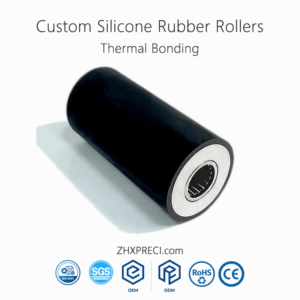
Black PU Rubber Coated Wheel Roller Industrial Grade for Automation Machinery Conveyor Transport and Factory Use
Read more -
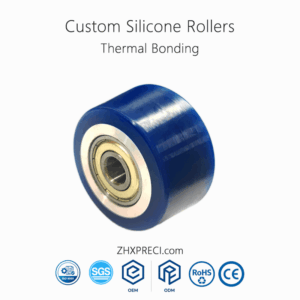
Blue Customized Silicone Rubber Coated Roller & High Quality Drive Guide Roller
Read more -
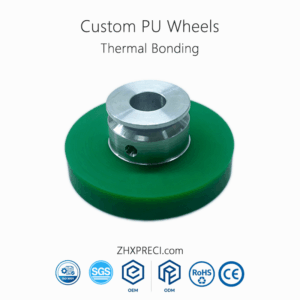
Custom Abrasion Resistant Rubber Wheels with Coating for Mining Equipment
Read more -
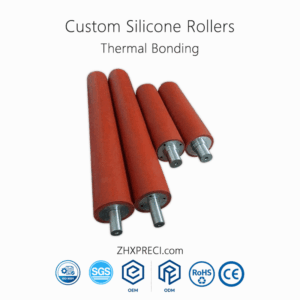
Custom Abrasion Resistant Silicone Coated Rollers Heavy Wear
Read more -
Custom Air Cooled Rubber Rollers with Internal Channels
Read more -
Custom Alkali Proof Rubber Wheels with Coating for Industrial Washers
Read more -
Custom Anti Vibration Rubber Wheels with Coating for Precision Instruments
Read more -
Custom Anti-Microbial Silicone Rollers Hygiene Grade
Read more -
Custom Anti-Static Silicone Coated Rollers Electronic Use
Read more -
Custom Antistatic Rubber Wheels with Coating for Cleanroom Carts
Read more -
Custom API Grade Rubber Rollers for Drill Pipe Wiper
Read more -
Custom ATEX Compliant Rubber Rollers for Grain Handling
Read more -
Custom ATEX Compliant Silicone Wheels Hazardous Area
Read more -
Custom Bearing Mounted Silicone Coated Rollers Quick Change
Read more -
Custom Bracket Mount Silicone Wheels Easy Installation
Read more -
Custom Cantilever Mount Rubber Rollers for Narrow Spaces
Read more
Custom Non-Stick Silicone Rubber Rollers – Technical Overview for Industrial Buyers
For engineers, procurement specialists, and production managers seeking reliable custom elastomer wheels and rollers, the category of Custom Non-Stick Silicone Rubber Rollers represents a critical intersection of material science, precision engineering, and application-specific design. This page provides a structured, data-driven examination of their properties, manufacturing considerations, and selection criteria, with a focus on factual performance characteristics rather than marketing claims. The content is intended to support informed technical evaluation and cross-functional decision-making.
What Are Custom Non-Stick Silicone Rubber Rollers?
Custom non-stick silicone rubber rollers are cylindrical components fabricated from high-consistency or liquid silicone rubber compounds, engineered with surface release properties to resist adhesion from tacky substrates, coatings, adhesives, and foodstuffs. Unlike conventional rubber rollers (e.g., EPDM, NBR, or polyurethane), the silicone matrix inherently exhibits low surface energy, which reduces friction and prevents material buildup. "Custom" denotes that dimensions, durometer, shaft integration, surface texture, and specific release formulations are tailored to the client's process equipment—whether for flexographic printing, laminating, coating, packaging, textile finishing, or food processing lines. The term "non-stick" further emphasizes that the roller face is either compounded with internal release agents or topically treated (or both) to achieve consistent peel force and minimal cleanup downtime. These rollers operate effectively across a wide service temperature range, typically from -60°C to 230°C (-76°F to 446°F) depending on the specific silicone grade, and exhibit stable mechanical damping over extended cycle life.
As a China-based OEM/ODM factory manufacturer supplier, ZHXPRECI specializes in producing these rollers with a focus on dimensional accuracy, surface finish uniformity, and material traceability. The manufacturing process encompasses compression molding, injection molding, or extrusion combined with precision grinding, ensuring concentricity tolerances within ±0.05 mm for diameters up to 400 mm, and runout values under 0.02 mm for high-speed applications. These rollers are available in shore A hardness from 20 to 90, with custom color coding, metal core materials (aluminum, stainless steel, or mild steel), and keyway or spline end configurations to match existing drive systems.
How to Select the Right Custom Non-Stick Silicone Rubber Roller for Your Application
Selection involves a systematic evaluation of five primary factors: operating environment (temperature, chemical exposure, and humidity), substrate or web material, nip pressure and line speed, required release efficacy, and mechanical load conditions. Start by defining the maximum and continuous operating temperatures—silicone's thermal stability is superior to most elastomers, but specific grades vary in their resistance to steam, solvents, and oils. Next, assess the tackiness of the product being handled; for high-tack adhesives, a high-release silicone with added fluorosilicone or specialized additives may be recommended. The hardness choice influences both gripping and wear resistance: softer rollers (20–40 Shore A) conform better to uneven surfaces and provide higher friction, whereas harder rollers (60–90 Shore A) offer lower deformation under load and reduced rolling resistance. Finally, consider the core-to-rubber bond integrity—ZHXPRECI uses proprietary primer systems and post-curing processes to ensure adhesion strength exceeding 8 MPa, with minimal risk of separation under dynamic bending stress.
Common questions from B-side buyers include: "What is the typical coefficient of friction for non-stick silicone?" – Under dry conditions, dynamic COF against steel ranges from 0.3 to 0.6, depending on surface finish and hardness. "Can these rollers handle FDA or food-grade requirements?" – Yes, food-contact compliant silicones meeting FDA 21 CFR 177.2600 or EU 1935/2004 are available, with third-party test reports upon request. "How does surface roughness affect release performance?" – A smoother surface (Ra 0.4–0.8 µm) generally improves release but may reduce nip grip; a micro-textured finish (Ra 1.6–3.2 µm) can balance both. These rollers are also used in battery electrode coating, where solvent resistance and particle contamination control are paramount.
Key Material Properties and Performance Benchmarks
Based on industry-wide technical data, the following parameters serve as reference points for specification development:
- Tensile Strength: 6–12 MPa (typical for general-purpose silicone; high-strength grades reach up to 15 MPa).
- Tear Resistance: 15–35 kN/m (Die C), influencing durability against edge nicks.
- Compression Set: 10–30% after 22 hours at 177°C, indicating long-term shape retention under nip pressure.
- Volume Resistivity: 10¹⁴–10¹⁶ Ω·cm, making them suitable for antistatic applications when conductive additives are incorporated.
- Maximum Continuous Service Temperature: 200°C for standard grades, with short-term spikes up to 250°C acceptable.
- Low-Temperature Flexibility: Maintains elasticity down to -60°C without brittle fracture.
These values are derived from ASTM D2240, D412, and D624 test methods, and represent general capability ranges. Actual figures depend on the specific compound formulation, curing cycle, and post-processing. ZHXPRECI provides material certificates with each batch, documenting shore hardness, specific gravity, and tensile data for quality assurance.
Manufacturing Process and Quality Control
The production of custom non-stick silicone rubber rollers involves several stages: raw material mixing, molding (or extrusion), vulcanization, grinding, coating (if applicable), and final inspection. For high-precision applications, the ground surface is laser-checked for uniformity, and each roller undergoes dynamic balancing to G6.3 or better. The non-stick property is achieved either through the silicone formulation itself (using internal release additives) or by applying a permanent fluoropolymer-based topcoat that reduces surface energy to around 20–25 mN/m. This dual approach allows end-users to choose between lower-cost all-silicone rollers and higher-durability coated rollers for abrasive or highly reactive media.
Custom Elastomer Wheels & Rollers from ZHXPRECI are manufactured with rigorous adherence to ISO 9001 and IATF 16949 principles, with process capability indices (Cpk) typically exceeding 1.33 for critical dimensions. The factory employs automated inspection systems for diameter, roundness, and hardness mapping, ensuring consistent quality across production batches. For rollers requiring FDA certification, selected materials are procured with full traceability from silicone gum to finished part.
Common Application Scenarios and Industry-Specific Considerations
In the printing industry, these rollers are used in UV flexo presses where ink adhesion and easy cleaning reduce press downtime. In laminating and coating lines, they provide even pressure distribution without sticking to hot-melt adhesives or emulsion coatings. Food processing applications rely on their non-toxicity and resistance to fats and oils, while medical device manufacturing uses them for film casting and patch assembly where cleanliness is critical. Solar panel production and lithium-ion battery coating also benefit from the roller's low particle shedding and chemical inertness.
Engineers often ask: "How do non-stick silicone rollers compare to PTFE-coated rollers?" – Silicone rollers offer better flexibility and shock absorption, while PTFE-coated rollers provide lower friction but are more susceptible to scratching. The choice depends on the web tension and presence of abrasive fillers. "Can existing rollers be re-covered?" – Yes, re-covering services are available, where old rubber is stripped, and new silicone is molded onto the existing core, provided the core geometry is within rework tolerance.
Customization Options and Design Collaboration
Customization extends beyond dimensions and hardness to include:
- Custom bore diameters, keyways, and thread mounting.
- Grooved or spiral patterns for air evacuation or fluid transfer.
- Color coding for production line identification.
- Conductive or antistatic versions (surface resistivity 10⁵–10⁹ Ω).
- End-face identification marking and serialization.
The design collaboration process typically involves a technical questionnaire covering operating speed, nip load, temperature profile, media contact, and required service life. From this, ZHXPRECI engineers propose compound options, finite element analysis (FEA) for deflection under load, and sample production for on-site testing. Prototype rollers can be delivered for evaluation, with final production quantities based on validation results.
Installation, Maintenance, and Operational Tips
Proper installation ensures optimal performance and longevity. Always clean the shaft and bore thoroughly before mounting; use a torque wrench to apply uniform tightening of end caps. Initial run-in at reduced speed for 15–30 minutes allows the roller surface to stabilize. Routine cleaning with mild soap and water or isopropyl alcohol (avoid strong solvents like acetone) preserves the non-stick surface. Inspect for wear or glaze formation periodically—if surface becomes shiny, it may indicate excessive heat or chemical attack; a light regrinding can restore surface roughness if dimensional tolerance allows.
For storage, keep rollers in a cool, dry place away from direct UV light and ozone sources. Stacking horizontally with padded supports prevents flat-spotting. Replacement intervals are highly variable, but typical service lives range from 12 to 48 months in continuous production environments, subject to actual abrasion and chemical exposure.
Lead Time and Ordering Process
Delivery scheduling for custom rollers is subject to order quantity, current production schedule, and final specification confirmation. The quoting phase includes a detailed design review, material selection, and mold feasibility analysis. For standard dimension rollers, the manufacturing cycle is generally shorter than for complex custom profiles; however, specific timelines are discussed individually with the project team. ZHXPRECI encourages early engagement to align production capacity with your project milestones, and we offer batch traceability and consignment stock options for regular consumable items.
Frequently Asked Questions (FAQ) for Engineering Buyers
- What is the maximum width you can produce? – Our lathes handle diameters up to 500 mm and face widths up to 3000 mm; larger sizes are possible with specialized equipment, subject to technical feasibility.
- How to verify the non-stick performance before full production? – We provide test coupons and small-scale sample rollers for peel-force measurement using standard release liner tests (e.g., TAPPI T-549 or ASTM D3330).
- Can you compound silicone with specific additive packages for flame retardancy or antimicrobial properties? – Yes, we work with masterbatches to incorporate flame retardants (UL94 V-0 rating) or silver-based antimicrobial additives, with validation testing available.
- What documentation is provided with each shipment? – Each batch includes a certificate of conformity, dimensional inspection report, material test report, and (where applicable) FDA or EU declaration of compliance.
- How to handle rollers that show premature wear or stickiness? – We recommend a root-cause analysis including temperature log review, cleaning procedure audit, and nip pressure measurement. Our technical support team assists in diagnosis and corrective actions.
- Is there a minimum order quantity for custom dimensions? – MOQ depends on mold tooling investment and raw material lead; we offer flexible terms for prototype quantities (e.g., 2–5 pieces) to validate design.
- What shipping methods are used for international deliveries? – Rollers are packed in custom wooden crates with anti-moisture film and shock-absorbing padding. Air freight or sea freight options are available depending on urgency and weight.
Why Choose an OEM/ODM Partner for Your Roller Needs
Partnering with a dedicated manufacturer like ZHXPRECI provides direct access to formulation expertise, production flexibility, and supply chain transparency. Custom Non-Stick Silicone Rubber Rollers from ZHXPRECI | China OEM/ODM Factory Manufacturer Supplier Custom Elastomer Wheels & Rollers are built to meet the specific demands of your process, not generic catalog items. This approach reduces trial-and-error costs, shortens qualification time, and ensures that the roller geometry and material are optimized for your line's mechanical and chemical constraints. Our engineering team supports you from concept through production, with in-house tooling and rapid prototyping capabilities.
Furthermore, OEM/ODM relationships enable continuous improvement—we collect performance feedback and adjust compounds or surface finishes for subsequent batches, resulting in progressive refinement. For high-volume repeat orders, we establish dedicated production cells and maintain safety stock of raw materials to reduce supply risk. All of these factors contribute to a total cost of ownership that is competitive, without sacrificing technical adequacy or regulatory compliance.
Technical Support and After-Sales Services
Post-delivery, we offer remote and on-site technical assistance for installation calibration, troubleshooting, and periodic inspection. Replacement rollers can be expedited through our rapid-response program for critical equipment. We also provide training materials for your maintenance team on proper handling and cleaning protocols. Our quality management system records every production parameter, enabling full traceability back to batch level, which is essential for industries with strict audit requirements like pharmaceuticals or automotive.
For new applications, we recommend a collaborative testing phase: we produce sample rollers with slightly varying hardness or release levels, and you evaluate them under actual production conditions. This empirical approach often yields the optimal specification before large-scale procurement, minimizing risk and ensuring the final product meets your performance targets consistently.
Environmental and Regulatory Compliance
All silicone materials used are RoHS and REACH compliant, with no restricted heavy metals or phthalates. For rollers destined for food contact, we source compounds that are BPA-free and do not contain migratory additives. Our manufacturing waste is recycled or disposed of according to local environmental regulations. We can supply a full declaration of compliance specific to your region upon request.
In summary, custom non-stick silicone rubber rollers represent a versatile, reliable solution for converting, printing, packaging, and processing industries. Their performance is grounded in measurable physical properties, and their customization potential allows precise alignment with your operational requirements. By focusing on factual data, collaborative engineering, and transparent manufacturing, ZHXPRECI supports your productivity and quality goals without overpromising—because every application is unique, and every roller must perform its function under your specific conditions.
For further technical discussions, dimension inquiries, or to request a design consultation, please contact our engineering sales team with your process parameters. We are committed to delivering rollers that work as intended, on your timeline, within your budget, and with the material integrity you expect from a specialized elastomer manufacturer.