
Custom Durable Silicone Rubber Rollers
High-temp, chemical-resistant rollers for demanding industrial processes.
- 30‑500 kg load
- 20‑80 Shore A hardness
- 60‑300 mm dia
- ‑60‑+230 °C temp
- ISO/REACH/FDA cert
Showing 1–16 of 59 results
-
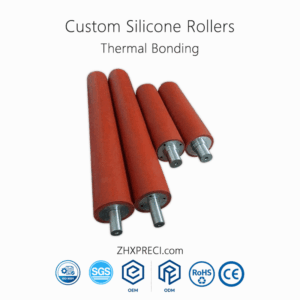
Custom Abrasion Resistant Silicone Coated Rollers Heavy Wear
Read more -
Custom Anti-Microbial Silicone Rollers Hygiene Grade
Read more -
Custom Anti-Static Silicone Coated Rollers Electronic Use
Read more -
Custom Bearing Mounted Silicone Coated Rollers Quick Change
Read more -
Custom Cantilever Mounted Silicone Rollers Easy Access
Read more -
Custom CE Certified Silicone Rollers European Market
Read more -
Custom Chemical Resistant Silicone Coated Rollers Process Use
Read more -
Custom Cleanroom Compatible Silicone Rollers Particle Free
Read more -
Custom Cold Resistant Silicone Rollers Low Temperature
Read more -
Custom Compression Resistant Silicone Rollers Durable Shape
Read more -
Custom Conductive Silicone Coated Rollers Static Elimination
Read more -
Custom Continuous Duty Silicone Coated Rollers High Torque
Read more -
Custom Dampening Vibration Silicone Rollers Print Stability
Read more -
Custom Explosion Proof Silicone Rollers Hazardous Area
Read more -
Custom FDA Compliant Silicone Coated Rollers Food Grade
Read more -
Custom Flame Retardant Silicone Coated Rollers Fire Safety
Read more
What Are Custom Durable Silicone Rubber Rollers?
Custom durable silicone rubber rollers are precision-engineered cylindrical components manufactured from high-grade silicone elastomers, designed for applications that demand consistent performance across wide temperature ranges, chemical resistance, and controlled friction characteristics. Unlike conventional polyurethane or EPDM rollers, silicone rubber rollers retain their physical properties from approximately -60 °C to +230 °C, making them suitable for both cryogenic environments and high-heat industrial processes. These rollers are typically fabricated through compression molding, injection molding, or extrusion, followed by precision grinding to achieve concentricity tolerances within ±0.05 mm. The term "custom" signifies that every parameter—including durometer hardness (typically ranging from 20 Shore A to 80 Shore A), surface texture, core material (aluminum, steel, or engineered plastic), and geometric dimensions—can be tailored to specific production line requirements.
Why Choose Silicone Rubber for Roller Applications?
Silicone rubber offers a unique combination of low compression set, high dielectric strength, and outstanding resistance to ozone, UV radiation, and oxidation. In roller applications, these properties translate into longer service intervals, reduced downtime, and consistent web tension control in printing, laminating, and converting machinery. The material's inherent non-stick surface reduces adhesive build-up, which is particularly valuable in label manufacturing and packaging lines. Additionally, silicone's broad operating temperature window allows rollers to function reliably in both deep-freeze food processing and hot-melt adhesive coating equipment. For engineers evaluating roller materials, silicone often provides a favorable balance between resilience and damping, absorbing vibration without sacrificing dimensional stability.
What Manufacturing Processes Are Used for Custom Silicone Rollers?
Production begins with compounding raw silicone gum with reinforcing fillers such as fumed silica, along with vulcanizing agents and optional additives for flame retardancy or antistatic properties. The compounded material is then shaped using one of three primary methods: compression molding for larger diameters (over 150 mm), injection molding for complex internal geometries, or extrusion for continuous profiles that are subsequently cut and finished. After molding, the rollers undergo post-curing in forced-air ovens to complete the crosslinking reaction and stabilize physical properties. Final machining involves CNC turning and cylindrical grinding to achieve the required roundness and surface roughness, often measured in Ra values between 0.4 and 1.6 micrometres. Quality control checks include durometer testing, tensile strength measurement (typically between 5 and 12 MPa), and dynamic balancing to minimize vibration at operational speeds.
Key Technical Parameters and Performance Characteristics
- Hardness range: 20–80 Shore A, with ±5 tolerance typical; softer compounds offer greater conformability, harder compounds provide higher load capacity.
- Operating temperature: Continuous use from -60 °C to +230 °C; intermittent exposure up to +260 °C permissible for short durations.
- Tensile strength: Generally 5–10 MPa for general-purpose grades; high-strength variants can achieve 12 MPa.
- Tear resistance: Values range from 15 to 40 kN/m (Die C), influencing durability under dynamic stresses.
- Compression set: Typically 10–25 % after 22 hours at 177 °C (ASTM D395), indicating good rebound resilience.
- Surface resistivity: Can be tailored from 10⁹ to 10¹² Ω/sq for antistatic requirements in electronics handling.
- Flame retardancy: UL 94 V-0 or V-1 ratings available with appropriate additives.
These values represent industry-standard ranges for commercial silicone elastomers. Actual data for a specific roller design depends on the selected compound grade, curing schedule, and post-finishing operations.
How to Select the Right Silicone Roller for Your Application?
Selection involves a systematic evaluation of operational conditions. Start by defining the operating temperature extremes—both ambient and process-induced—and any exposure to chemicals such as solvents, oils, or acidic solutions. Next, determine the required load-bearing capacity and nip pressure, which influence the roller's core diameter and wall thickness. Then consider the surface finish: smooth polished rolls are ideal for fusing and coating, while textured surfaces improve slip resistance in feeding and conveying. The durometer should be chosen based on the hardness of the counter-roller and the substrate material—softer rollers (30–50 Shore A) reduce marking on delicate surfaces, harder rollers (60–80 Shore A) provide better durability in abrasive environments. Finally, discuss with your supplier the mounting style (shafted or through-bore), dynamic balancing grade (e.g., ISO 1940 G6.3 or G2.5), and any special coatings or plasma treatments for enhanced release properties.
What Are the Typical Industries and Use Cases?
- Printing and packaging: Ink transfer, varnishing, laminating, and die-cutting rollers.
- Food processing: Dough sheeting, confectionery forming, and frozen product conveying.
- Medical and pharmaceutical: Tablet pressing, film coating, and sterile packaging lines.
- Electronics: Solder mask coating, flexible circuit lamination, and cleanroom material handling.
- Textile and nonwovens: Calendering, embossing, and synthetic leather finishing.
- Automotive: Gasket molding, film lamination for interior panels, and battery separator processing.
Each industry has specific compliance requirements—FDA-grade silicone for food contact, USP Class VI for medical devices, or low-fogging compounds for automotive interiors. Custom durable silicone rubber rollers from ZHXPRECI | China OEM/ODM Factory Manufacturer Supplier Custom Elastomer Wheels & Rollers are engineered to meet these diverse standards, with material certifications and traceability documentation provided upon request.
How to Integrate Custom Silicone Rollers into Existing Production Lines?
Integration begins with accurate dimensional mapping of the existing roller mounting positions and clearance envelopes. Provide the supplier with a detailed mechanical drawing indicating shaft diameter, total length, bearing journal dimensions, and any taper or thread details. For retrofitting, consider whether the new roller must match the original nip profile or if an adjustment in roller diameter can be accommodated by changing gear ratios or web tension controls. Silicone rollers are often lighter than metal alternatives, which may require recalibrating the drive motor torque settings. However, the lower inertia can improve acceleration and deceleration performance. Communication with the supplier regarding the operating speed range and the expected dynamic loads ensures that the roller core and shaft are designed with adequate safety margins. Custom durable silicone rubber rollers from ZHXPRECI are supplied with balancing certificates and run-out inspection reports to facilitate seamless installation.
What Are the Maintenance and Longevity Considerations?
Regular maintenance of silicone rollers involves periodic inspection for surface wear, grooving, or gloss changes that indicate compound degradation. Cleaning should be performed with mild detergents or isopropyl alcohol, avoiding aggressive solvents that may swell the elastomer. Store rollers in a cool, dry place away from direct sunlight and ozone-generating equipment. The useful life of a silicone roller in continuous service typically ranges from one to five years, depending on the severity of mechanical and thermal stress. Monitoring nip impression width and surface hardness quarterly can help predict when re-grinding or recoating becomes necessary. Unlike some other elastomers, silicone can often be re-finished by grinding a thin layer off the surface and re-polishing, extending the roller's total service life. The supplier can provide reconditioning guidelines specific to the compound used.
Frequently Asked Questions (FAQ)
Can silicone rollers be used with solvent-based inks?
Yes, but compatibility depends on the solvent type. Aromatic hydrocarbons and ketones may cause swelling, while aliphatic solvents and alcohols are generally safe. A compatibility chart based on the specific compound should be requested from the manufacturer.
What is the maximum speed for a silicone roller?
Speed capability is primarily limited by the roller's dynamic balancing and the bond strength between the silicone cover and the core. For balanced rollers with a bonded interface, surface speeds up to 500 m/min are achievable in converting applications, but this should be verified with the supplier for each unique design.
Are there antistatic silicone rollers available?
Antistatic grades are produced by incorporating conductive fillers such as carbon black or carbon nanotubes, achieving surface resistivity below 10⁶ Ω·sq. These are commonly specified in electronics assembly and film handling to prevent electrostatic discharge damage.
How does silicone compare to polyurethane in roller applications?
Silicone offers superior heat resistance and non-stick properties, while polyurethane generally provides higher abrasion resistance and load-bearing capacity. The choice depends on whether thermal stability or wear resistance is prioritized. Silicone is often preferred where adhesive buildup is a problem.
Can silicone rollers be repaired if damaged?
Minor surface damage can be addressed by re-grinding, but deep cuts or delamination require complete re-covering. Re-covering involves stripping the old silicone and molding a new layer onto the same core, which is a cost-effective alternative to manufacturing a new roller from scratch.
What certifications are available for silicone rollers?
Common certifications include FDA 21 CFR 177.2600 for food contact, USP Class VI for biocompatibility, UL 94 for flame resistance, and RoHS/REACH compliance for environmental regulations. The supplier can provide certified test reports for each batch.
Is it possible to have different hardness zones on the same roller?
Yes, through differential molding or by bonding separate sections, a roller can have varying durometer along its length—useful for applications requiring variable nip pressure across the web width.
What lead time can be expected for custom orders?
Lead time is subject to order quantity, current production schedule, and final specification confirmation. We encourage early engagement with our engineering team to align project timelines and prioritize urgent requirements. A preliminary schedule will be proposed after design review and material availability assessment.
Engineering Best Practices for Specification Writing
When drafting a specification for custom durable silicone rubber rollers, include the following sections: (a) dimensions with tolerances; (b) material grade and required certifications; (c) hardness and tolerance; (d) surface finish and roughness; (e) operating environment (temperature, chemicals, humidity); (f) load conditions and required safety factor; (g) balancing grade; (h) mounting details; (i) inspection and test criteria. This structured approach reduces miscommunication and ensures that the final product meets the functional needs without unnecessary over-engineering. Collaborate with the supplier during the design phase to optimize the roller geometry for manufacturability and cost-effectiveness.
Custom durable silicone rubber rollers from ZHXPRECI | China OEM/ODM Factory Manufacturer Supplier Custom Elastomer Wheels & Rollers represent a flexible, high-performance solution for demanding industrial applications. With in-house compounding, molding, and finishing capabilities, we offer end-to-end control over quality and customization. Our technical team provides material selection advice, finite element analysis support, and prototyping services to validate designs before full-scale production. For projects that require rapid iteration or special test protocols, we maintain a responsive engineering dialogue to refine specifications until the optimal balance of performance and durability is achieved.
Final Recommendations for Procurement Teams
Procurement decisions should consider total cost of ownership rather than initial purchase price. Factors such as energy consumption due to friction, maintenance frequency, and product waste reduction often tip the balance in favor of higher-quality silicone rollers. Request samples for on-site testing under actual production conditions—this yields the most reliable performance data. Evaluate the supplier's quality management system (ISO 9001 or IATF 16949) and their capacity for batch traceability. For global operations, ensure the supplier can provide consistent material properties across multiple production sites. By following these guidelines, procurement and engineering teams can make informed choices that enhance line efficiency and product quality.