
Custom High Speed Silicone Rubber Rollers
Custom High Speed Silicone Rubber Rollers
Precision rollers for high-speed industrial lines.
- 30‑500kg load
- 20‑80A hardness
- 60‑300mm diameter
- ‑60‑+230°C temp
- ISO/REACH certified
Showing 1–16 of 108 results
-
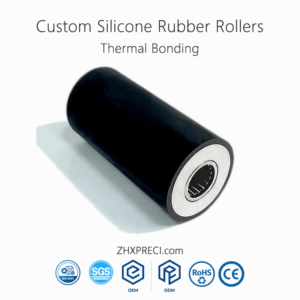
Black PU Rubber Coated Wheel Roller Industrial Grade for Automation Machinery Conveyor Transport and Factory Use
Read more -
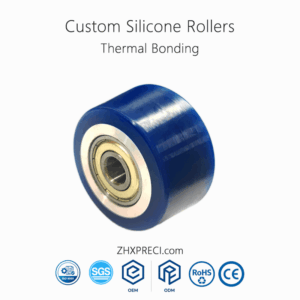
Blue Customized Silicone Rubber Coated Roller & High Quality Drive Guide Roller
Read more -
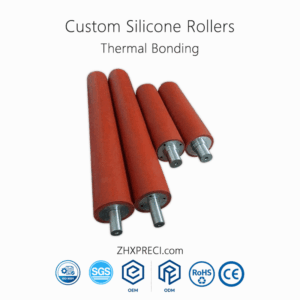
Custom Abrasion Resistant Silicone Coated Rollers Heavy Wear
Read more -
Custom Air Cooled Rubber Rollers with Internal Channels
Read more -
Custom Anti-Microbial Silicone Rollers Hygiene Grade
Read more -
Custom Anti-Static Silicone Coated Rollers Electronic Use
Read more -
Custom API Grade Rubber Rollers for Drill Pipe Wiper
Read more -
Custom ATEX Compliant Rubber Rollers for Grain Handling
Read more -
Custom ATEX Compliant Silicone Wheels Hazardous Area
Read more -
Custom Bearing Mounted Silicone Coated Rollers Quick Change
Read more -
Custom Bracket Mount Silicone Wheels Easy Installation
Read more -
Custom Cantilever Mount Rubber Rollers for Narrow Spaces
Read more -
Custom Cantilever Mounted Silicone Rollers Easy Access
Read more -
Custom CE Certified Silicone Rollers European Market
Read more -
Custom Chemical Resistant Silicone Coated Rollers Process Use
Read more -
Custom Cleanroom Compatible Silicone Rollers Particle Free
Read more
Engineering Overview: Custom High Speed Silicone Rubber Rollers
In modern industrial converting, printing, packaging, and material handling, the demand for rollers that operate reliably at elevated surface speeds while maintaining precise dimensional stability and gentle material contact is paramount. Custom high speed silicone rubber rollers represent a sophisticated category of elastomer wheels and rollers engineered specifically for applications where thermal resistance, low adhesion, and high release properties are as critical as rotational accuracy. This classification covers bespoke roller solutions manufactured to customer prints, with silicone elastomer compounds formulated to withstand continuous operation in environments where conventional rubber compounds would degrade or transfer undesirable residues onto substrates.
At ZHXPRECI, we approach each custom high speed silicone rubber roller project as a collaborative engineering exercise. Our role as an OEM/ODM factory manufacturer supplier means we engage with B‑side procurement professionals, design engineers, and maintenance leads to translate operational requirements into a roller design that balances performance, durability, and life‑cycle cost. The phrase Custom High Speed Silicone Rubber Rollers from ZHXPRECI | China OEM/ODM Factory Manufacturer Supplier Custom Elastomer Wheels & Rollers reflects our core capability: delivering rollers that are not off‑the‑shelf but meticulously matched to your line speed, nip pressure, temperature profile, and chemical exposure.
What Defines a High Speed Silicone Rubber Roller?
A high speed silicone rubber roller is distinguished by its ability to sustain peripheral velocities typically exceeding 300 metres per minute, with many designs comfortably operating in the 500–1,200 m/min range depending on diameter and dynamic balancing class. The defining characteristic is not merely rotational speed but the combination of speed with consistent runout and minimal vibration. Silicone rubber, as the covering material, offers a unique set of properties: service temperature from -60 °C to +230 °C (with special formulations extending to +300 °C), exceptional resistance to ozone and UV degradation, non‑stick surface behaviour, and stable hardness over a wide thermal interval.
Hardness availability spans Shore A 20 to 80, with typical high‑speed applications favouring 40 to 70 Shore A – soft enough to conform gently to uneven substrates yet firm enough to resist compressive set under repeated high‑frequency loading. Tensile strength generally ranges from 6 to 12 MPa, with elongation at break between 300 % and 700 %, depending on the specific vinyl‑methyl or phenyl‑based silicone gum stock used. These values are industry‑standard benchmarks derived from ASTM D2240 and D412 test methods, and they serve as starting points for custom compound development.
Key Technical Considerations for Specification
When specifying custom high speed silicone rubber rollers, several interdependent factors must be evaluated. The following list outlines primary engineering parameters that influence design and material selection:
- Dynamic Balancing Grade: For speeds above 600 m/min, ISO 1940‑1 G‑2.5 or better is commonly required to limit centrifugal force‑induced vibration and bearing stress.
- Shaft Deflection and Critical Speed: Roller core material (usually steel or aluminium) and wall thickness are selected to ensure the first critical speed is at least 20 % above maximum operating speed.
- Thermal Management: Internal cooling passages (water or air) may be incorporated for continuous high‑speed operations where hysteresis heating in the silicone layer could exceed 15–20 °C above ambient.
- Surface Finish and Texture: Ground, polished, or plasma‑treated surfaces affect release properties and coefficient of friction against papers, films, or foils.
- Chemical Compatibility: Silicone shows excellent resistance to water, dilute acids, and many polar solvents but can swell in hydrocarbons, so compound adjustment is made for specific fluid exposure.
It is important to note that all performance projections are based on typical material data sheets and prior application experience. Actual behaviour in your specific process should be validated through pilot testing or sample roller trials, as line conditions – such as substrate tension, ambient humidity, and nip dwell time – introduce variability that cannot be fully captured in a general specification.
Customization Process: From Print to Production
The journey from a customer’s mechanical drawing to a finished high speed silicone rubber roller follows a structured, quality‑controlled pathway. As a China‑based OEM/ODM factory manufacturer supplier, we have streamlined this process to reduce iteration cycles while maintaining exacting standards.
How to Order Custom High Speed Silicone Rubber Rollers
The process typically begins with a technical questionnaire covering: roller dimensions (overall length, face length, core diameter, journal sizes), operating speed range, nip load per unit length, process temperature (steady state and transient excursions), media contact (substrate type, cleaning solvents, release agents), and mounting arrangement (bearings, gears, sprockets). Based on this input, our engineering team proposes a preliminary construction – including core design, adhesive system, silicone compound grade, and grinding allowances.
Following drawing approval, a prototype roller or a short production run is manufactured. This stage allows for dimensional inspection, dynamic balancing verification, and if required, on‑site or off‑site functional testing under simulated line conditions. Once the design is validated, full‑scale production commences. This iterative approach ensures that the final roller meets not only the dimensional tolerances but also the operational behaviour expected in your specific high‑speed environment.
What Materials Are Used in the Bonding Layer?
The adhesion between the silicone rubber covering and the metallic core is achieved through a specially formulated primer system, often based on silane coupling agents. This interlayer must withstand both shear stresses from the roller’s rotational torque and peel forces during cleaning or web‑up incidents. Typical bond strength exceeds 40 kN/m (per ASTM D429), though values depend on core surface preparation – sandblasting or grit blasting to a defined roughness profile (Ra 3.2–6.3 µm) is standard practice. For high‑speed applications, the bond layer must also tolerate thermal cycling; a differential expansion coefficient between steel (approx. 12×10⁻⁶ /°C) and silicone (approx. 25×10⁻⁶ /°C) is accommodated by the primer’s elastic modulus gradient.
Quality Assurance and Testing Protocols
Every custom high speed silicone rubber roller leaving our facility undergoes a series of inspections aligned with international standards. While we do not claim absolute perfection, our quality system is designed to detect and correct deviations early. Routine checks include:
- Dimensional Verification: Diameter, concentricity, and face length measured with laser micrometers and coordinate measuring machines, with tolerances typically held to ±0.05 mm on critical diameters.
- Hardness Profile: Durometer readings taken at multiple circumferential and axial positions to ensure uniformity within ±3 Shore A points.
- Dynamic Balance: Performed on Schenk‑type balancing machines, with residual unbalance reported in gram‑millimetres per kilogram of roller mass.
- Runout and TIR: Total Indicator Reading measured at bearing journals and across the face – for high‑speed rollers, TIR is often held below 0.03 mm.
- Visual and Surface Defect Inspection: All surfaces are examined for blisters, pinholes, or foreign inclusions, using magnified lighting and, where specified, fluorescent dye penetrant.
It should be understood that test results represent conditions at the time of manufacture. In‑service performance can be affected by installation alignment, maintenance practices, and process changes. We therefore recommend periodic re‑inspection and re‑balancing as part of a preventive maintenance schedule.
Common Application Domains
Custom high speed silicone rubber rollers find extensive use across industries where heat resistance, anti‑stick surfaces, and gentle handling are required. Notable sectors include:
- Flexible Packaging: Lamination, coating, and adhesive application where release from hot melt or solvent‑based adhesives is essential.
- Label and Tape Manufacturing: Pressure‑sensitive adhesive transfer, liner release, and silicone‑coated backing rolls.
- Textile Finishing: Heat‑setting, calendering, and printing of synthetic fabrics at elevated temperatures.
- Paper and Board: Size press rolls, breaker stack rolls, and high‑speed calenders where temperature uniformity prevents sheet marking.
- Film Extrusion and Casting: Chill rolls and haul‑off rollers for polyolefin, polyester, and polycarbonate films.
For each application, the roller’s silicone compound can be tailored – for example, a higher tear‑strength grade for aggressive web handling, or a softer compound for delicate coated surfaces. The versatility of silicone chemistry allows us to adjust filler type (silica, diatomaceous earth), crosslinker density, and curing regime to meet specific needs without compromising high‑speed capability.
Frequently Asked Questions (Technical & Commercial)
What is the maximum operating temperature for these rollers?
Conventional high‑temperature silicone rubbers are rated for continuous service up to 230 °C, with peaks up to 260 °C for short durations. For specialised applications requiring temperatures above this range, phenyl‑silicone or fluorosilicone modifications can extend continuous use to around 300 °C, though mechanical properties (tensile strength and abrasion resistance) will decrease gradually. Always consider the combined effect of heat and mechanical load, since elevated temperatures reduce modulus and may accelerate compression set.
How to determine the appropriate hardness for my process?
Hardness selection is a trade‑off between conformability and durability. Softer rollers (Shore A 30–45) provide better nip uniformity and are used with delicate or uneven substrates; however, they generate more hysteresis heat and may require lower operating speeds to avoid thermal degradation. Harder compounds (Shore A 60–80) offer greater wear resistance and lower rolling resistance, suitable for high‑speed, high‑nip‑load conditions. We recommend starting from existing roller hardness in your line and adjusting based on observed performance – if you experience excessive marking or release issues, a softer compound may help; if you see premature wear or high drive torque, a harder compound could be beneficial.
What is the typical lead time for custom high speed silicone rubber rollers?
Production scheduling is subject to order quantity, current production schedule, and final specification confirmation. For prototype or single‑piece orders, we usually align with your project timeline through mutually agreed milestones. For volume production, the manufacturing cycle is determined after design finalisation and material sourcing. We encourage early engagement – ideally during the equipment design phase – to integrate roller delivery with your overall commissioning plan. We commit to transparent communication on progress and any factors that may affect delivery, rather than promising a fixed day‑count.
How to maintain and clean silicone rubber rollers?
Routine cleaning should use mild detergents or isopropyl alcohol, applied with soft cloths or non‑abrasive sponges. Avoid strong solvents (e.g., toluene, MEK, or chlorinated hydrocarbons) as they can swell or extract plasticisers from the silicone matrix. For in‑line cleaning, doctors blades or oscillating brushes are common, but care must be taken to prevent mechanical scoring. Periodic inspection for surface glazing or hardening is advised; if detected, light regrinding (removing 0.2–0.5 mm) can restore surface uniformity. The roller should be re‑balanced after any significant removal of rubber covering.
Can these rollers be supplied with ceramic or plasma coatings?
While silicone rubber itself is the primary covering, some designs incorporate a thin plasma‑applied fluoropolymer topcoat to further reduce surface energy and improve release. This is an optional enhancement and is not always necessary, as silicone already exhibits low surface tension. We evaluate the need for additional coatings based on your specific adhesive or substrate interaction; in many cases, a custom‑formulated silicone with high release properties suffices without extra processing layers.
What certifications or documentation do you provide?
Each shipment includes a dimensional inspection report, hardness profile, balancing certificate, and material test certificate (indicating tensile, elongation, and tear strength from the batch used). If required, we can also supply REACH and RoHS compliance declarations, as well as FDA‑compliant documentation for food‑contact applications (subject to compound confirmation). All documentation is provided in English and is traceable to production lot numbers.
Why Choose an OEM/ODM Factory Supplier for Silicone Rollers?
Engaging a factory‑based manufacturer like ZHXPRECI offers advantages beyond cost – it provides direct access to compounding expertise, rapid prototyping capabilities, and the flexibility to adjust formulations without third‑party intermediaries. As a China‑based supplier, we combine vertical integration (mixing, moulding, grinding, balancing, and finishing under one roof) with a responsive engineering team. This structure allows for tighter control over quality and faster iteration when design changes are needed. The phrase Custom High Speed Silicone Rubber Rollers from ZHXPRECI | China OEM/ODM Factory Manufacturer Supplier Custom Elastomer Wheels & Rollers summarises our value proposition: one partner for design, material science, production, and after‑sales support.
We recognise that procurement decisions for critical process components involve risk assessment. Therefore, we offer transparency in our material sourcing – all silicone gums and curing agents are purchased from established global suppliers (such as Dow, Wacker, or Shin‑Etsu) to ensure batch‑to‑batch consistency. Our manufacturing facility operates under ISO 9001:2015 quality management principles, with documented standard operating procedures for each production step. Third‑party audits are welcomed by appointment.
Comparative Perspective: Silicone vs. Other Elastomers for High Speed
While nitrile (NBR), EPDM, and polyurethane are also used for industrial rollers, silicone stands out for high‑speed applications due to its low hysteresis loss – meaning less heat generation from repeated deformation – and its stable damping behaviour across a wide frequency range. At speeds above 800 m/min, NBR compounds show significant modulus rise (stiffening) which increases drive power consumption, whereas silicone maintains relatively constant dynamic properties. Polyurethane offers excellent abrasion resistance but has a narrower service temperature window (typically -30 °C to +80 °C) and can hydrolyse in moist, hot environments. EPDM is a cost‑effective alternative for general‑purpose rollers but lacks silicone’s release characteristics and high‑temperature endurance.
These material distinctions are well documented in polymer handbooks and industry papers; they are not absolute rules but general tendencies. The final choice should be validated through your own risk‑based evaluation, considering total cost of ownership – which includes energy consumption, downtime for cleaning, and roller replacement intervals – rather than initial purchase price alone.
Practical Recommendations for Roller Installation and Commissioning
Proper installation significantly affects roller life and performance. When mounting high speed silicone rubber rollers, ensure bearings are correctly aligned and preloaded according to the bearing manufacturer’s specification. Misalignment of just 0.1 mm across the roller length can induce edge loading, leading to uneven wear and vibration. Use a dial gauge to check parallelism between the roller axis and the machine frame; this is especially important for rollers exceeding 2 metres in face length.
During the first hours of operation, gradually ramp up speed in increments of 20 % of nominal, allowing the silicone covering to stabilise thermally. Monitor bearing housing temperatures – a rise of more than 40 °C above ambient may indicate excessive preload or insufficient lubrication. After the initial run, re‑check tightening torques on bearing locknuts and coupling bolts, as thermal expansion can relax initial settings. Document these baseline measurements; they form the reference for future maintenance assessments.
Environmental and Operational Limitations
Although silicone rubber is remarkably durable, it is not suited for environments with prolonged exposure to steam (above 130 °C) because moisture can hydrolyse the siloxane backbone over time. Similarly, contact with strong bases or concentrated acids should be avoided. If your process involves aggressive cleaning agents, we recommend a fluorosilicone blend, which offers enhanced chemical resistance at the cost of slightly lower mechanical strength. These trade‑offs are discussed during the design review, and we provide material compatibility charts based on published data from resin suppliers.
Static electricity accumulation can be an issue on high‑speed insulating substrates. Where static discharge is a concern, conductive or static‑dissipative silicone compounds (with surface resistivity between 10⁶ and 10⁹ ohm/sq) are available. This modification does not significantly alter hardness or thermal properties but may affect colour and cost. We assess the need based on your substrate type and environmental humidity – for example, dry winter conditions often increase static propensity.
Conclusion: A Collaborative Approach to Roller Engineering
Selecting a custom high speed silicone rubber roller is not a commoditised purchase; it is a partnership where the manufacturer’s technical input can directly influence your line’s uptime, product quality, and operating cost. We encourage procurement teams and engineers to share as much process data as possible early in the conversation – including actual line speed profiles, nip load variations, and maintenance records from existing rollers. This information enables us to propose a more precise solution, reducing the need for costly trial‑and‑error later.
Ultimately, the goal is to achieve a roller that performs reliably within your defined parameters, with known limitations and predictable wear patterns. We do not overstate capabilities; instead, we offer honest assessments of what our silicone compounds can and cannot do, backed by test data and field references. For a detailed proposal or to discuss your specific application, please contact our technical sales team with your roller drawing and operating conditions. We look forward to engineering a solution that meets your high‑speed production requirements without compromising on durability or safety.