
Custom Textured Silicone Rubber Rollers
Custom Textured Silicone Rollers
Custom textured silicone rollers for grip & release in printing, lamination & coating.
- 5‑15 N/mm load
- 20‑80A Shore
- 60‑300mm dia
- -60‑+230°C temp
- ISO & FDA cert
Showing 1–16 of 129 results
-
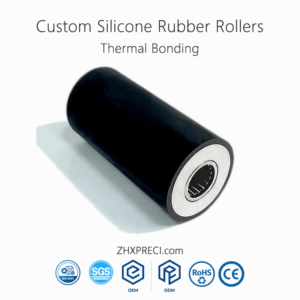
Black PU Rubber Coated Wheel Roller Industrial Grade for Automation Machinery Conveyor Transport and Factory Use
Read more -
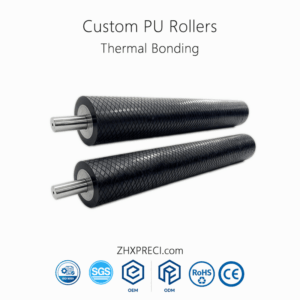
Custom Abrasion Resistant PU Rollers For Packaging Conveyors
Read more -
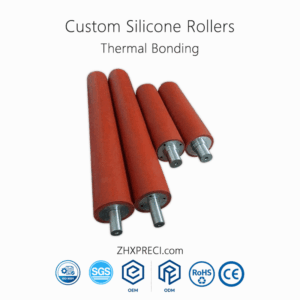
Custom Abrasion Resistant Silicone Coated Rollers Heavy Wear
Read more -
Custom Air Cooled Rubber Rollers with Internal Channels
Read more -
Custom Aluminum Core PU Rollers With Food Grade Compliance
Read more -
Custom Anti-Microbial Silicone Rollers Hygiene Grade
Read more -
Custom Anti-Static PU Rollers For Explosive Dust Environments
Read more -
Custom Anti-Static Silicone Coated Rollers Electronic Use
Read more -
Custom Antistatic PU Rollers For Electronics Conveying
Read more -
Custom API Grade Rubber Rollers for Drill Pipe Wiper
Read more -
Custom ATEX Compliant PU Rollers For Mining Conveyor
Read more -
Custom ATEX Compliant Rubber Rollers for Grain Handling
Read more -
Custom Bearing Mounted Silicone Coated Rollers Quick Change
Read more -
Custom Cantilever Mount Rubber Rollers for Narrow Spaces
Read more -
Custom Cantilever Mounted Silicone Rollers Easy Access
Read more -
Custom Cast Iron Core PU Rollers With Keyway Mounting
Read more
Defining Custom Textured Silicone Rubber Rollers for Industrial Applications
Custom textured silicone rubber rollers are precision-engineered cylindrical components that combine a silicone elastomer outer layer with a specifically designed surface pattern—ranging from diamond knurling and spiral grooves to fine grit finishes and custom embossing. These rollers serve as critical contact elements in web handling, printing, lamination, coating, and converting machinery, where controlled friction, release properties, and uniform pressure distribution are required. Unlike smooth rollers, the textured surface enhances grip, facilitates air evacuation, improves fluid transfer, and reduces sticking or blocking in processes involving adhesive-coated films, paper, textiles, or foils. As a specialized offering from ZHXPRECI, a China-based OEM/ODM factory and supplier, these rollers are manufactured to match customer-specific diameters, shaft configurations, hardness grades, and texture patterns, ensuring seamless integration into existing production lines.
Core Characteristics of Textured Silicone Rubber Rollers
The performance of a textured silicone roller depends on several interrelated material and design parameters. Silicone rubber, as the base elastomer, offers a unique combination of thermal stability, chemical inertness, and resilience. Typical operating temperature ranges for high-grade silicone compounds span from -60°C to 230°C, making them suitable for both cryogenic and high-heat environments such as hot-melt adhesive coating or corona treatment stations. The hardness of the silicone layer, measured on the Shore A scale, generally falls between 20 and 80, with lower values (20–40) providing conformability and damping, while higher values (60–80) deliver wear resistance and dimensional stability under load.
The texture itself is achieved through mechanical machining, laser engraving, or molded patterns on the roller surface. Common patterns include herringbone, square check, stippled, or custom CAD-designed geometries. The texture depth, pitch, and orientation directly influence the roller's coefficient of friction, which typically ranges from 0.4 to 1.2 depending on the contact substrate and operating conditions. For instance, a fine stippled texture (Ra 3–6 µm) is often specified for photographic film processing to minimise air entrapment, whereas a coarse diamond pattern (Ra 12–20 µm) may be selected for textile calendering to enhance fibre alignment. All these specifications are defined in collaboration with the customer, as part of ZHXPRECI's OEM/ODM service model, ensuring each roller is tailored to the unique demands of the application.
Why Choose Textured Silicone Over Other Elastomers?
Compared to natural rubber, nitrile, or polyurethane rollers, textured silicone offers distinct advantages in high-purity, high-temperature, and UV-exposed environments. Silicone's low surface energy (around 24 mN/m) provides excellent non-stick properties, which is beneficial when processing pressure-sensitive adhesives or tacky materials. Its dielectric strength (typically 15–25 kV/mm) makes it suitable for applications involving static charge dissipation, although antistatic additives can be compounded if needed. Furthermore, silicone exhibits low compression set (typically 10–25% after 22 hours at 175°C), meaning the roller maintains its original shape and texture integrity after prolonged use, reducing the frequency of regrinding or replacement. These properties are well documented in elastomer engineering handbooks and are consistent with industry-standard test methods such as ASTM D2240 for hardness and ASTM D395 for compression set.
Typical Application Sectors for Custom Textured Silicone Rollers
- Flexographic and gravure printing: Textured silicone rollers act as anilox or impression cylinders, ensuring precise ink transfer and register control.
- Laminating and coating lines: Surface patterns break boundary layers and improve adhesive distribution, especially for solvent-borne and water-based adhesives.
- Film and foil processing: Rollers with micro-textures reduce friction-induced wrinkles and enable bubble-free lamination of photovoltaic backsheets or flexible circuits.
- Paper and tissue converting: Embossed silicone rollers impart decorative patterns while maintaining gentle handling to avoid tearing.
- Textile finishing: Grooved rollers provide consistent nip pressure for calendering, raising, or compacting fabrics.
- Medical and food-contact applications: FDA-compliant silicone compounds, combined with sanitary texture designs, facilitate cleanability and reduce bacterial adhesion.
Technical Parameters Based on Industry Standards
When specifying a custom textured silicone rubber roller, engineers typically consider the following benchmark values, which are derived from common silicone elastomer formulations and validated by multiple material suppliers worldwide. Tensile strength for general-purpose silicone ranges from 6 to 12 MPa, while tear strength (Die B) is between 25 and 45 kN/m. Elongation at break can vary from 200% to 600%, depending on the filler system. The coefficient of thermal expansion is approximately 3.0 × 10⁻⁴ /°C, which must be accounted for when designing interference fits with metal cores. Dynamic mechanical analysis shows a glass transition temperature below -50°C, ensuring flexibility even in cold environments. These figures serve as initial guidelines; actual values depend on the specific compound selected, and ZHXPRECI's technical team provides compound recommendations based on the customer's process conditions, such as exposure to oils, solvents, or ozone.
Customization Options from ZHXPRECI – OEM/ODM Capabilities
As a dedicated OEM/ODM manufacturer and supplier, ZHXPRECI offers a comprehensive range of customization parameters beyond surface texture. These include core materials (aluminium, steel, or stainless steel), shaft end configurations (keyed, threaded, or D-shaped), wall thickness of the silicone layer, and bonding systems that ensure adhesion between elastomer and core under dynamic loading. The factory supports both prototype quantities for pilot testing and full-scale production runs, with in-house machining, grinding, and dynamic balancing capabilities. Dynamic balance grades up to G2.5 (ISO 1940) can be achieved for high-speed applications exceeding 500 m/min. Surface texture reproducibility is maintained through CNC-controlled engraving with tolerance of ±0.05 mm for pattern depth and ±0.1 mm for pitch. Customers are encouraged to submit 2D or 3D drawings, or provide an existing roller for reverse engineering, to initiate a custom project. For inquiries involving unique elastomer blends—such as conductive silicone, high-tear-strength grades, or low-friction coatings—ZHXPRECI collaborates with leading compound manufacturers to develop a tailored material solution.
Frequently Asked Questions for Engineering Buyers
What is the typical lead time for a custom textured silicone roller?
Lead time is subject to order quantity, current production schedule, and final specification confirmation. For single prototypes with standard dimensions, the estimated manufacturing phase may be shorter, while large-volume orders or complex textures with secondary operations (e.g., spiral grooving or perforated patterns) require additional machining time. ZHXPRECI provides a preliminary schedule after receiving the complete technical questionnaire, and the actual delivery window is mutually agreed upon during order placement, ensuring both parties have clear expectations regarding tooling preparation, material procurement, and quality inspection stages.
How to choose the right texture pattern for my process?
Selecting an appropriate texture involves evaluating the substrate's surface roughness, line speed, nip pressure, and the need for release or grip. For materials prone to blocking (e.g., coated films), a fine random or stippled texture reduces contact area and prevents adhesion. For high-friction applications such as driving rollers, a directional grooved pattern with a herringbone angle of 30–45 degrees offers optimal traction. Conducting a small-scale trial with sample textured plates (available from ZHXPRECI) on a lab unwind-rewind station helps quantify the effect on web tension and registration accuracy before committing to full roller production.
What is the maximum operating temperature and pressure for these rollers?
Standard silicone compounds withstand continuous temperatures up to 200°C and intermittent peaks up to 230°C. The maximum nip pressure depends on the roller's face length, core diameter, and hardness; a typical 100 mm diameter roller with 60 Shore A silicone can handle line loads of 5–15 N/mm without excessive deformation. For higher pressures, reinforcing the core with a thicker steel shaft or selecting a higher-durometer silicone (70–80 Shore A) is recommended. Engineering calculations should be performed using finite element analysis (FEA) for critical applications, and ZHXPRECI provides simulation support upon request.
How to maintain and clean textured silicone rollers?
Regular cleaning using mild soapy water or isopropyl alcohol with a soft brush is effective for removing surface debris. Avoid aggressive solvents such as ketones or aromatic hydrocarbons, which can swell or degrade silicone. For ingrained contaminants, a gentle ultrasonic bath or dry-ice blasting may be employed, but always test on a small area first. Periodic inspection of texture depth with a profilometer helps monitor wear; when the pattern becomes flattened beyond the acceptable tolerance (typically 70% of original depth), the roller can be returned to ZHXPRECI for regrinding and re-texturing, extending its service life significantly.
What quality assurance measures are applied during production?
Each roller undergoes a series of in-process checks, including hardness verification per ASTM D2240, tensile and elongation tests on sample buttons, dynamic balance measurement, and final dimension inspection using coordinate measuring machines. A certificate of conformance is issued, detailing the measured values against the approved drawing. For critical applications, additional non-destructive testing such as ultrasonic inspection of the bond line is available. ZHXPRECI follows ISO 9001-based quality management, ensuring traceability from raw material batch to finished product.
Can textured silicone rollers be used in food or pharmaceutical environments?
Yes, provided the silicone compound meets FDA 21 CFR 177.2600 or EU 1935/2004 standards. ZHXPRECI offers food-grade silicone options that are colourless, odourless, and free from harmful plasticisers. The textured surface, when designed with open grooves, facilitates drainage and cleaning, reducing microbial growth risk. However, it is advisable to validate cleanability with your specific sanitation protocol (e.g., CIP cycles with caustic or acid washes) before full deployment.
What is the difference between a molded texture and a machined texture?
Molded textures are formed during the vulcanisation process using a patterned mould, which is cost-effective for large production runs and yields highly consistent patterns. Machined textures are produced by CNC turning or milling after curing, allowing for greater flexibility in pattern design and quicker turnaround for prototypes. Both methods are available from ZHXPRECI, and the choice depends on volume, design complexity, and required surface finish precision. For intricate 3D textures or variable-depth patterns, machining is generally preferred.
Integrating Custom Textured Silicone Rollers into Your Supply Chain
For procurement professionals and design engineers, partnering with a single-source manufacturer that offers both material expertise and machining capabilities reduces the risk of mismatched specifications. ZHXPRECI operates as a China-based OEM/ODM factory and supplier, serving clients across Europe, North America, and Southeast Asia with a proven track record in delivering custom elastomer wheels and rollers. The company's approach involves a joint technical review at the quoting stage, where application parameters—such as web tension, wrap angle, environmental exposure, and required service life—are translated into a detailed roller specification. This collaborative process ensures that the final product not only meets but performs predictably under real-world conditions.
From a commercial standpoint, the cost-effectiveness of custom silicone rollers from Asian manufacturing bases is well recognised, but value extends beyond price. Factors such as consistent dimensional accuracy, reliable bond integrity, and responsive after-sales support contribute to total cost of ownership. ZHXPRECI maintains a buffer inventory of common core tubes and silicone compounds to accelerate the initial sample delivery, while large orders are scheduled based on mutually agreed timelines. The company's engineering team is available for on-site or remote troubleshooting, offering guidance on installation torque, storage conditions, and periodic maintenance intervals to maximise roller longevity.
Custom Textured Silicone Rubber Rollers from ZHXPRECI | China OEM/ODM Factory Manufacturer Supplier Custom Elastomer Wheels & Rollers represent a practical, engineering-focused solution for converting, printing, and processing industries that demand reliable, repeatable surface interaction. By combining material science with precision machining, ZHXPRECI enables customers to specify rollers that align exactly with their process requirements, without overpromising or relying on unverified data. All quoted performance characteristics are based on established elastomer data and internal test records, allowing informed decision-making based on measurable criteria.
For further technical inquiries, sample requests, or to submit a specification sheet, the ZHXPRECI sales engineering team provides detailed proposals within three to five working days, with dedicated support throughout the prototyping and validation phase. The flexibility of the OEM/ODM model means that even specialised requests—such as rollers with integrated temperature sensors, conductive paths for static elimination, or asymmetrical profiles—are accommodated, provided they are feasible within the boundaries of silicone manufacturing technology. This transparent, data-driven approach fosters long-term partnerships with OEMs, system integrators, and end-users who prioritise process stability and product quality.
In summary, custom textured silicone rubber rollers are not a one-size-fits-all commodity; they are mission-critical components that require careful selection of material grade, texture geometry, and dimensional tolerances. With proper specification and a capable manufacturing partner, these rollers contribute to reduced waste, improved throughput, and consistent output quality. ZHXPRECI's commitment to engineering collaboration and manufacturing excellence positions it as a reliable source for custom elastomer wheels and rollers, with a focus on practical, verifiable results rather than exaggerated claims.