
Custom Conductive Silicone Rubber Rollers
Custom Conductive Silicone Rubber Rollers
Custom conductive silicone rollers for ESD control, precision engineered.
- 30‑500kg load
- 30‑80A Shore
- 60‑300mm dia
- -60‑+230°C temp
- ISO/REACH cert
Showing 1–16 of 108 results
-
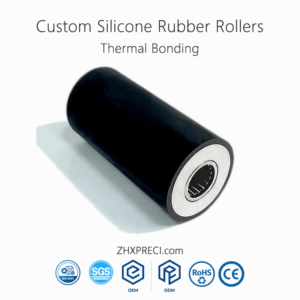
Black PU Rubber Coated Wheel Roller Industrial Grade for Automation Machinery Conveyor Transport and Factory Use
Read more -
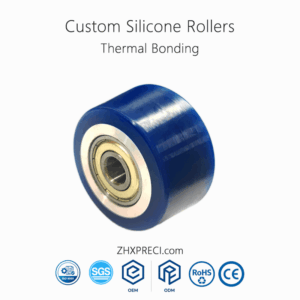
Blue Customized Silicone Rubber Coated Roller & High Quality Drive Guide Roller
Read more -
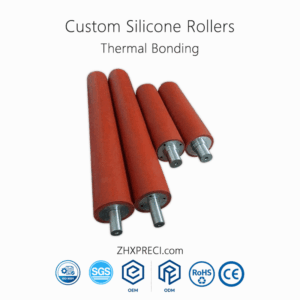
Custom Abrasion Resistant Silicone Coated Rollers Heavy Wear
Read more -
Custom Air Cooled Rubber Rollers with Internal Channels
Read more -
Custom Anti-Microbial Silicone Rollers Hygiene Grade
Read more -
Custom Anti-Static Silicone Coated Rollers Electronic Use
Read more -
Custom API Grade Rubber Rollers for Drill Pipe Wiper
Read more -
Custom ATEX Compliant Rubber Rollers for Grain Handling
Read more -
Custom ATEX Compliant Silicone Wheels Hazardous Area
Read more -
Custom Bearing Mounted Silicone Coated Rollers Quick Change
Read more -
Custom Bracket Mount Silicone Wheels Easy Installation
Read more -
Custom Cantilever Mount Rubber Rollers for Narrow Spaces
Read more -
Custom Cantilever Mounted Silicone Rollers Easy Access
Read more -
Custom CE Certified Silicone Rollers European Market
Read more -
Custom Chemical Resistant Silicone Coated Rollers Process Use
Read more -
Custom Cleanroom Compatible Silicone Rollers Particle Free
Read more
What Are Custom Conductive Silicone Rubber Rollers?
Custom conductive silicone rubber rollers are precision-engineered cylindrical components designed to manage electrostatic discharge (ESD) in industrial processes. These rollers combine the inherent thermal stability and release properties of silicone elastomers with controlled electrical conductivity, achieved through the incorporation of specialized carbon or metallic fillers. The result is a roller that not only performs its primary mechanical function—transporting, guiding, or processing substrates—but also safely dissipates static charges that could otherwise damage sensitive electronic assemblies or create safety hazards in explosive environments. Unlike standard rubber rollers, conductive silicone variants offer a unique balance: they remain resilient across a wide temperature window, resist degradation from UV exposure and ozone, and provide consistent surface resistivity. For B2B purchasers, these rollers represent a critical subsystem in high-speed printing, flexible packaging, semiconductor fabrication, and battery film manufacturing.
How to Select the Right Conductive Silicone Roller for Your Application
Selecting an appropriate custom conductive silicone rubber roller demands a systematic assessment of operational parameters. The following factors should be carefully evaluated:
- Surface resistivity: Typical ranges span from 10³ to 10⁶ ohms per square for antistatic grades, and down to 10¹ to 10³ ohms·cm for fully conductive versions. The choice depends on the sensitivity of the substrate and the required dissipation speed.
- Hardness (Shore A): Softer rollers (30–50 Shore A) offer better conformation to uneven surfaces, ideal for laminating or gentle handling. Firmer compounds (60–80 Shore A) sustain higher nip pressures and provide longer service life in abrasive environments.
- Temperature profile: Conductive silicone rubbers can typically operate continuously from -60°C to +230°C, with short-term excursions up to 260°C. This makes them suitable for hot-melt adhesive applications and curing ovens.
- Chemical exposure: Resistance to oils, solvents, and cleaning agents must be verified. While silicone exhibits broad chemical inertness, certain hydrocarbons can cause swelling. A qualified supplier will recommend specific formulations based on your process chemistry.
- Dimensional precision: Run-out, concentricity, and surface finish directly affect product quality. For high-speed web handling, total indicator readings of less than 0.05 mm are often specified.
Custom Conductive Silicone Rubber Rollers from ZHXPRECI | China OEM/ODM Factory Manufacturer Supplier Custom Elastomer Wheels & Rollers are engineered with these variables in mind. The selection process is iterative; we encourage customers to share process details early so that material grades, core designs, and shaft interfaces can be optimized collaboratively.
Key Technical Characteristics and Material Data
Conductive silicone rubber rollers derive their performance from a cross-linked polysiloxane network. The electrical conductivity is typically imparted by acetylene black, carbon nanotubes, or metal-coated particles, yielding volume resistivities between 0.5 and 10⁵ Ω·cm depending on the grade. Mechanical properties are equally well-defined: tensile strength sits in the region of 4–10 MPa, tear strength ranges from 8 to 20 kN/m, and elongation at break can exceed 400%. These values can be tailored by adjusting the vinyl content and filler loading. Thermal conductivity, although lower than metals, is sufficient for most industrial processes; however, for high-energy applications, thermally conductive variants are available that combine electrical conductivity with heat dissipation. It is important to note that hardness and conductivity are interdependent—higher filler loads tend to increase stiffness, so a compromise may be necessary. ASTM D2240 is the standard method for hardness measurement, while ASTM D257 governs resistivity testing. All data cited are typical values observed under standard laboratory conditions and should be verified with prototype testing under actual production loads.
Common Applications in Industrial Sectors
Custom conductive silicone rubber rollers serve a versatile role across numerous industries. In the printing and converting industry, they prevent static-induced misregistration and dust attraction, ensuring clear halftone reproduction. In battery electrode calendering, they apply uniform pressure while safely grounding the high-voltage charges generated during foil rolling. Semiconductor cleanrooms use them in wafer handling and lamination, where even a minor electrostatic event can compromise yield. Other notable applications include:
- Textile processing (controlling fiber fly and static cling)
- Medical device manufacturing (non-marking, biocompatible grades)
- Automotive film lamination (high-temperature resistance)
- Paper and label converting (reducing jams and improving cut quality)
- Flexible printed circuit (FPC) pressing and bonding
Each environment imposes specific demands on surface cleanliness, release properties, and wear resistance. For high-volume OEM programs, Custom Conductive Silicone Rubber Rollers from ZHXPRECI | China OEM/ODM Factory Manufacturer Supplier Custom Elastomer Wheels & Rollers can be adapted to meet industry-specific certifications, such as UL94 V-0 flame retardancy or FDA-compliant surfaces for food contact.
Customization Options and Engineering Support
The term "custom" in conductive silicone rollers encompasses far more than just dimensions. From the initial design phase, engineers can tailor:
- Core materials (aluminum, steel, stainless steel, or engineered plastics)
- Shaft configurations (straight, stepped, or threaded with keyways)
- Surface finishes (matt, glossy, textured, or grooved for air release)
- End structures (solid or tubular, with internal cooling passages)
- Color coding for quick identification in multi-roller assemblies
Additionally, the elastomer compound itself can be optimized for specific conductivity targets, compression set resistance, or flame retardancy. Custom Conductive Silicone Rubber Rollers from ZHXPRECI | China OEM/ODM Factory Manufacturer Supplier Custom Elastomer Wheels & Rollers are produced using a closed-loop manufacturing system, allowing for batch-to-batch consistency. Our in-house laboratory performs Fourier-transform infrared spectroscopy (FTIR) and thermogravimetric analysis (TGA) to verify material integrity, ensuring that every shipment matches the agreed specification. For customers exploring new product lines, we offer rapid prototyping with 3D-printed mandrels and short-run trial quantities to validate performance before committing to full-scale production.
Quality Assurance and Testing Protocols
Quality control for conductive silicone rollers is a multi-stage process. Incoming raw materials—base polymers, crosslinkers, and conductive fillers—undergo incoming inspection for viscosity, particle size, and moisture content. During production, every roller is dynamically balanced to minimize vibration, and surface roughness is measured using contact profilometers. Final testing typically includes the following:
- Resistivity mapping at multiple circumferential points
- Hardness verification using a calibrated Shore durometer
- Concentricity and run-out checks on a coordinate measuring machine (CMM)
- Adhesion testing between the elastomer and the metal core (pull-out force measurement)
- Accelerated aging tests (heat, ozone, and humidity) to predict service life
All testing is performed in accordance with ISO 3302-1 for rubber tolerance classifications and ASTM F2774 for conductive roller characterization. Defective units, if any, are flagged and root-cause analysis is conducted. However, in practice, the use of statistical process control (SPC) and real-time monitoring during vulcanization yields high first-pass yields. While no manufacturing process is entirely without variation, our documented quality system aims to minimize deviations, providing buyers with traceable records for each batch.
Frequently Asked Questions
What is the typical lifespan of a conductive silicone rubber roller?
Service life depends heavily on operating conditions such as line speed, nip pressure, temperature, and the abrasiveness of the substrate. In moderate-duty converting applications, rollers often exceed two to three years of continuous operation before requiring re-covering. In high-wear scenarios, regular maintenance and periodic surface inspection are recommended. We advise customers to schedule routine dimensional checks and, when wear exceeds a specified limit, to return the roller for re-sleeving rather than replacement of the entire core, offering a cost-effective refurbishment route.
How do conductive silicone rollers compare with EPDM or nitrile rollers?
Each elastomer family has distinct advantages. EPDM rollers offer excellent ozone and weather resistance but lack the high-temperature stability of silicone. Nitrile (NBR) rollers are superior in oil resistance but have higher compression set and narrower temperature windows. Conductive silicone stands out for its low surface energy, which minimizes adhesive buildup, and its broad service temperature range. Furthermore, silicone’s inherent release properties often reduce cleaning frequency. The choice ultimately depends on the chemical and thermal environment—there is no universal "best" material, only the most suitable one for a given process.
Can the conductivity change over time or with repeated cleaning?
Conductive fillers are uniformly dispersed within the silicone matrix, so the bulk resistivity remains stable throughout the roller's service life. However, surface conductivity can be affected by contamination from process residues or aggressive cleaning agents that leave non-conductive films. We recommend using mild detergents or isopropyl alcohol (IPA) for cleaning and avoiding strong acids or caustic solutions. Routine re-measurement of surface resistivity is a prudent practice, especially in ESD-sensitive production lines.
What are the lead time and minimum order quantity?
Lead times for custom conductive silicone rollers are subject to order quantity, current production schedule, and final specification confirmation. For standard dimensions and widely used compounds, the overall timeline is relatively predictable; however, unique material formulations or complex core designs may require additional engineering and prototyping phases. We work closely with each customer to align delivery schedules with their project milestones, and we can accommodate both small-batch trials and large-volume OEM contracts. Please contact our sales engineers with your detailed requirements for a tailored schedule.
Is it possible to integrate these rollers into existing equipment without redesign?
Yes. Our design team can match existing core dimensions, shaft lengths, and bearing fits to ensure drop-in compatibility. Where necessary, we also supply adaptor sleeves or custom mounting hardware. For retrofitting high-speed lines, we can perform dynamic simulation to ensure the new roller's inertia and resonance characteristics are compatible with the drive system. This collaborative approach minimizes downtime and simplifies the upgrade process.
How does temperature affect the roller's hardness and conductivity?
As temperature increases, the silicone polymer chain mobility rises, which leads to a moderate softening effect—typically 2–4 Shore A points per 50°C rise. The electrical conductivity is more stable, as the filler network is largely unaffected by thermal expansion within the recommended operating range. At extreme temperature excursions approaching the material's upper limit, temporary softening may occur, but the roller returns to its baseline properties upon cooling, provided no thermal degradation has taken place. For applications with strict dimensional tolerance over fluctuating temperatures, we can specify a low-compression-set compound to minimize hysteresis effects.
What documentation is provided with each shipment?
Every roller consignment is accompanied by a detailed inspection report that includes dimensional measurements, hardness values, volume resistivity readings, and balance grade. Material certificates (based on the supplied compound batch) are also provided, alongside a user manual with maintenance recommendations. For international shipments, we include commercial invoices, packing lists, and, if required, certificates of origin. We can also provide non-disclosure agreements (NDAs) and quality agreements for customers with stringent compliance requirements.
Partnering with an OEM/ODM Supplier
Engaging an OEM/ODM partner for conductive silicone rollers offers several strategic advantages. It allows companies to focus on their core manufacturing operations while leveraging the roller supplier's material expertise and production capacity. Custom Conductive Silicone Rubber Rollers from ZHXPRECI | China OEM/ODM Factory Manufacturer Supplier Custom Elastomer Wheels & Rollers are developed through a stage-gate process: conceptual design, feasibility review, prototype validation, and production ramp-up. We maintain an open-book policy on material sourcing and quality control, ensuring transparency. Customers are welcome to visit our facility for factory acceptance testing (FAT) prior to shipment. Our aim is to become a long-term partner in improving your process efficiency, not merely a transactional vendor.
When evaluating potential suppliers, we recommend assessing their in-house testing capabilities, the flexibility of their manufacturing lines, and their track record in delivering comparable components. A supplier who can demonstrate a thorough understanding of the interplay between roller parameters and your specific production outcome is more likely to contribute value beyond the product itself.
Technical Data Summary Table (Typical Values)
| Property | Typical Value / Range | Test Method |
|---|---|---|
| Volume Resistivity (Ω·cm) | 10¹ – 10⁵ (adjustable) | ASTM D257 |
| Surface Resistivity (Ω/sq) | 10³ – 10⁶ | ASTM D257 |
| Hardness (Shore A) | 30 – 80 | ASTM D2240 |
| Tensile Strength (MPa) | 4 – 10 | ASTM D412 |
| Tear Strength (kN/m) | 8 – 20 | ASTM D624 |
| Elongation at Break (%) | 300 – 500 | ASTM D412 |
| Service Temperature (°C) | -60 to +230 (continuous) | Internal |
| Compression Set (22h @ 177°C, %) | 10 – 25 | ASTM D395 |
The data presented are average values obtained from standard test specimens and do not constitute a binding specification. Actual roller performance is influenced by construction, core material, and specific process conditions. We always recommend validating through on-site trials.
For engineers and procurement specialists, the decision to invest in custom conductive silicone rubber rollers is justified by improved process reliability, reduced reject rates, and lower total cost of ownership. The combination of tailored conductivity, thermal robustness, and mechanical resilience makes these components indispensable in modern industrial workflows. We encourage a dialogue based on your unique technical challenges—our team is prepared to provide calculations, failure mode analysis, and comparative material selection advice.
As you evaluate potential solutions, consider not only the immediate price but also the value of technical support, rapid iteration capability, and consistent quality over multiple re-orders. Custom Conductive Silicone Rubber Rollers from ZHXPRECI | China OEM/ODM Factory Manufacturer Supplier Custom Elastomer Wheels & Rollers offer a balanced approach to meeting these requirements, with a commitment to continuous improvement and customer-driven innovation. We look forward to discussing your specific needs and engineering a roller solution that contributes positively to your production performance.